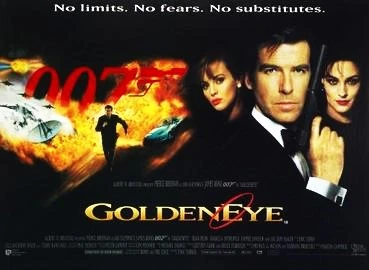
May Day
A European festival of ancient origins marking the beginning of summer, celebrated with maypoles, bonfires, and regional traditions.

May Day is a formidable antagonist and secondary boss in the 1997 video game GoldenEye 007, based on the James Bond film of the same name. She is a skilled and ruthless henchwoman working for the Janus crime syndicate and General Ourumov, known for her acrobatic fighting style and loyalty to her employers.
- Role
- Antagonist, secondary boss
- Affiliation
- Janus crime syndicate, General Ourumov
- Status
- Deceased (in-game narrative)
Lore & Background
May Day is a professional assassin and henchwoman for the Janus crime syndicate, led by Alec Trevelyan (Janus). She serves alongside General Arkady Ourumov, carrying out high-stakes operations including the theft of the GoldenEye satellite weapon. In the game's narrative, she is encountered as a boss in the 'Bunker' level, where she engages Bond in a deadly confrontation. Her character is defined by her physical prowess, agility, and unwavering dedication to her mission, ultimately meeting her end during the game's events.
In Their Own Story
The elevator doors slid open with a hydraulic hiss. Bond stepped into the control room, his Walther PPK trained ahead. The room was silent, save for the hum of servers and the distant drip of water. Then, a shadow moved. May Day emerged from behind a pillar, a detonator in her gloved hand. 'You're persistent, 007,' she said, her voice flat. 'But persistence won't save you.' She pressed the button, and the floor erupted in a cascade of explosions. Bond dove behind a console as debris rained down. When he looked up, she was already closing in, a knife glinting in the dim light. The fight was brutal and short. Bond disarmed her with a precise strike, but she kicked him back, buying time to prime another charge. This time, Bond was faster. His shot hit the detonator, and the resulting blast consumed her. The explosion echoed through the facility, marking the end of a formidable foe.
Reader's Guide
In rural regions of Germany, especially the Harz Mountains, Walpurgisnacht celebrations are traditionally held on the night before May Day, including bonfires and the wrapping of a Maibaum (maypole). Young people use this opportunity to party, while the day itself is used by many families to get some fresh air. Motto: "Tanz in den Mai" ("Dance into May"). In the Rhineland, 1 May is also celebrated by the delivery of a maypole, a tree covered in streamers to the house of a girl the night before. The tree is typically from a love interest, though a tree wrapped only in white streamers is a sign of dislike. Women usually place roses or rice in the form of a heart at the house of their beloved one. It is common to stick the heart to a window or place it in front of the doormat. In leap years, it is the responsibility of the women to place the maypole. All the action is usually done secretly and it is an individual's choice whether to give a hint of their identity or stay anonymous. In The Golden Bough: A Study in Magic and Religion, Sir James George Frazer reported May Day customs in Tyrol during the 19th century. It was a time for banishing evil powers from the community. On the last three days of April, all houses were fumigated with juniper and rue incense. At sunset on May Day, the people held a ceremony they called "burning out the witches". The church bells were rung and people made as much noise as possible by shouting, banging pots and pans, ringing bells and cracking whips. Men carried lighted bundles of herbs fasted on poles, while women carried censers. Then they would run seven times round the houses and the village, so that the witches would be "smoked out of their lurking-places and driven away". In Sweden, there are bonfires and outdoor celebrations on May Eve or Walpurgis Night ("Valborgsmässoafton") in the evening of 30 April. Most of the traditions associated elsewhere with May Day are held at Midsummer instead; such as Maypole dancing. Up until the 19th century, on May Day itself, there were mock battles between Summer and Winter. Sir James George Frazer wrote in The Golden Bough (1911): "on May Day two troops of young men on horseback used to meet as if for mortal combat. One of them was led by a representative of Winter clad in furs, who threw snowballs and ice in order to prolong the cold weather. The other troop was commanded by a represen
Did You Know?
- The earliest known May celebrations appeared with the Floralia, festival of Flora, the Roman goddess of flowers, held from 27 April to 3 May during the Roman Republic era.
- Maiouma was a festival celebrating Dionysus and Aphrodite held every three years during the month of May, with all-night revels and banquets.
- In Germanic countries, May Eve became Walpurgis Night, commemorating the canonization of Saint Walpurga on 1 May 870.
- In Ireland, Bealtaine bonfires were believed to have protective powers, and cattle were driven between or over them.
- Since the 18th century, many Roman Catholics have observed May Day with May devotions to the Blessed Virgin Mary, including May crownings.
More in Characters
Elsewhere in the GoldenEye universe
Spotted an error? Know more?
This is a living reference — every entry is fact-audited, and reader corrections feed straight into our audit queue. Suggest an edit · See this site's audit record