
Game of skill
Outcome determined mainly by skill, not chance.

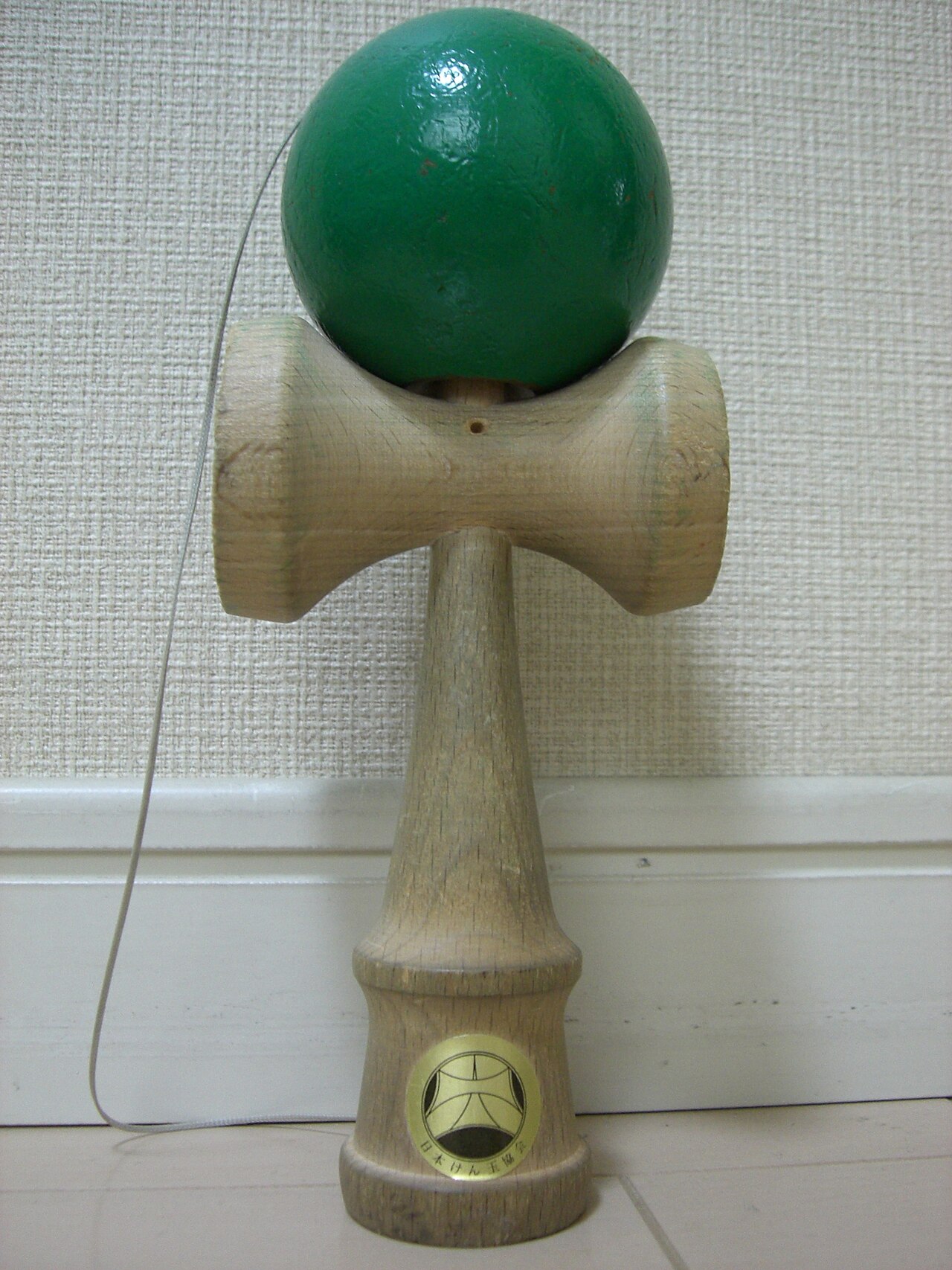
ジダネ · Public domain
A game of skill is one in which the outcome depends primarily on a player's mental or physical abilities, not on luck. In contrast, a game of chance relies heavily on random elements like dice, spinning tops, playing cards, roulette wheels, or numbered balls. Even if a game of chance includes some skill, chance still has the bigger influence on the result. Similarly, a game of skill may involve luck, but skill remains the dominant factor.
Many games blend both skill and chance. Examples include poker, collectible card games, contract bridge, backgammon, and mahjong. Most skill-based games incorporate some randomness—from natural environmental factors, randomizing devices (such as dice, cards, or coin flips), or guessing due to incomplete information. In games where skill and chance coexist—like poker or certain physical games—players often need to calculate mathematical probabilities and apply game theory. This can lead to tactics like bluffing and other forms of deception.
The legal distinction between games of skill and games of chance carries significant weight in countries that regulate them differently. Games of chance, such as lotteries, are often more strictly controlled or banned to protect consumers from addiction. However, the legal line between the two is often unclear and varies by jurisdiction. In Germany, for instance, poker is legally considered a game of chance and is only allowed in casinos, while a skat tournament is deemed a game of skill, permitting money prizes.
Examples of skill games requiring special equipment include air hockey, billiards, Operation, pinball machines, skee ball, snooker, table football, table ice hockey, and Whac-A-Mole. With the rise of computer games, many digital skill games emerged. Originally these were mostly jump'n'run games, but the range has expanded to include strategic titles like various Tetris variants. Unlike physical skill games that involve the whole body, these digital versions focus on eye-hand coordination. Whether they encourage player responsiveness and imagination is debated, but some online skill games and jump'n'run adventures are used in child psychotherapeutic work.
- definition
- Outcome determined mainly by mental or physical skill
- contrast
- Game of chance: outcome strongly influenced by randomizing device
- legal_impact
- Distinction varies by jurisdiction; affects regulation of wagers
- example_games
- Poker, collectible card games, contract bridge, backgammon, mahjong
- skill_components
- Calculation of mathematical probabilities, game theory, bluffing
- physical_examples
- Air hockey, billiards, pinball, snooker, table football, Whac-A-Mole
Lore & Background
A game of skill is defined as one where the outcome is determined mainly by mental or physical skill, rather than chance. In contrast, a game of chance has its outcome strongly influenced by a randomizing device such as dice, playing cards, or roulette wheels. While a game of chance may have some skill element, chance generally plays a greater role; similarly, a game of skill may have elements of chance, but skill plays the greater role.
Reader's Guide
The distinction between games of skill and games of chance carries significant legal weight in many jurisdictions. For example, in Germany, poker is legally considered a game of chance and thus only allowed in casinos, whereas a tournament of skat is considered a game of skill and competitions with money prizes are allowed. This legal classification affects how wagers on game outcomes are treated—whether as gambling or not. The boundary between the two categories is often vague and varies widely from one jurisdiction to the next. Many games of skill also involve a degree of chance due to natural environmental aspects, randomizing devices, or incomplete information. In games where skill and chance coexist—such as poker—the skills needed include calculating mathematical probabilities and applying game theory, which can lead to tactics like bluffing and deception. The category also includes physical skill games requiring special equipment, such as air hockey, billiards, pinball, and table football. With the spread of computer games, digital skill games have emerged, originally jump'n'run games but later expanding to include strategic components like Tetris variants. These digital games emphasize eye-hand coordination rather than full-body movement, and their use in child psychotherapeutic work is noted.
Did You Know?
- A game of skill is defined as one where the outcome is determined mainly by mental or physical skill, rather than chance.
- In Germany, poker is legally considered a game of chance, while skat tournaments are considered games of skill.
- Games of skill may involve elements of chance, such as dice, playing cards, or incomplete information.
- Digital skill games, originally jump'n'run games, now include strategic variants like Tetris and are used in child psychotherapy.
The Elusive Definition
Game mechanics remain one of the most debated concepts in game studies, with no single agreed-upon definition. Some scholars frame them as the systems of interaction between a player and the game itself, while others describe them as the rules and procedures that direct both player behavior and the game's response to those actions. A third perspective argues that mechanics extend beyond what a player consciously recognizes, encompassing any element that shapes the play experience. At the most granular level, a rule is simply an instruction on how to play, whereas a ludeme is a specific element of play—like the L-shaped movement of a chess knight. Every game, whether a tabletop board game or a digital title, relies on mechanics to function, yet academic theories disagree on how central those mechanics truly are to what makes a game work. The field of game design is, in part, the ongoing effort to craft mechanics that hold a player's attention and create meaningful engagement.
Mechanics, Theme, and the Boundaries of Play
A critical distinction in game studies separates mechanics from theme. A theme is the representational layer of a game—for instance, Monopoly's property buying and selling is a thematic wrapper around its underlying rules. Two games can share nearly identical mechanics while presenting entirely different thematic skins, and the reverse is equally true. When a game's mechanical systems clash with its narrative or representational layer, the result is what scholars call ludonarrative dissonance. Abstract games sidestep this tension entirely; Go, for example, carries no representational theme because its actions are not meant to depict anything beyond the board. Separately, some researchers draw a line between mechanics and gameplay. Gameplay, in their framing, is the interactive process that emerges when a player engages with those mechanics—performing cognitive tasks, responding to the game's feedback. Yet in everyday conversation and even some design writing, the two terms are frequently used interchangeably, blurring the scholarly distinction.
Classifying the Building Blocks
Because no universal taxonomy exists, scholars have developed their own frameworks for organizing game mechanics into categories. These categories, used alongside theme and gameplay, serve as tools for classifying and comparing games. One prominent example comes from Geoffrey Engelstein and Isaac Shalev, whose work on tabletop game design sorts mechanisms along axes such as game structure, turn order, available actions, resolution methods, victory conditions, sources of uncertainty, economic systems, auction systems, worker placement, movement, area control, set collection, and card-based mechanics. Common mechanics that appear across many game types include turn-taking, the movement of tokens across a board, collecting sets of items, competitive bidding, capturing opponent pieces, and managing limited resources such as spell slots. The interplay among these various mechanics is what ultimately shapes a game's complexity and determines how players interact with one another and with the game system itself.
Mechanics in Action: From Action Points to Enclosure
Concrete mechanics take many forms across different games. In action-point systems, each player receives a finite budget of points per turn, which can be allocated to actions like moving pieces, drawing cards, or gathering money. Alignment mechanics, found in tabletop and video role-playing games, encode a character's moral orientation—good versus evil—and can gate access to other mechanics; in one title, alignment determines which demon companions a player may recruit, while in another, light- and dark-side alignment grants different bonuses to attacks, healing, and speed. Auction and bidding mechanics let players compete for the right to perform specific actions, either by paying a game resource or by making a binding promise to achieve a future outcome, as in contract bridge. Capture mechanics are perhaps the most varied: tokens can be removed through displacement, push, jump, flying, custodian, approach, withdrawal, intervention, declared attacks, or enclosure—each method defining a distinct spatial relationship between opposing pieces on the board.
Gallery

Frequently Asked Questions
What is a game of skill in gaming design?
A game of skill is any game whose final result is driven primarily by a player's mental or physical abilities rather than by random outcomes. This can mean calculating probabilities, applying game theory, or executing precise physical movements in games like billiards or air hockey.
How does a game of skill differ from a game of chance?
In a game of chance, a randomizing device such as dice, a roulette wheel, or a shuffled deck carries the dominant weight in deciding the winner. A game of skill, by contrast, places the primary burden of winning on the player's strategic decisions, calculations, or physical execution.
Can a game of skill still involve some luck?
Yes, many skill-based games include a degree of randomness, but the skill component must remain the dominant factor shaping the outcome. Titles like poker, backgammon, and mahjong blend both elements, yet the player's strategic choices ultimately outweigh the random draw.
What kinds of abilities count as 'skill' in these games?
Mental skill can include calculating mathematical probabilities, applying game-theoretic reasoning, or reading opponents through bluffing. Physical skill covers dexterity and timing in games such as snooker, pinball, table football, and Whac-A-Mole.
Why does the skill-versus-chance distinction matter outside the game itself?
Because legal classification as skill-based or chance-based varies by jurisdiction, it directly shapes how wagers and betting on that game are regulated. A game deemed skill-based may face fewer gambling restrictions than one classified as purely chance-driven.
More in Gaming Mechanics & Design 1-17
Spotted an error? Know more?
This is a living reference — every entry is fact-audited, and reader corrections feed straight into our audit queue. Suggest an edit · See this site's audit record