
Game controller
Input devices used to control video games and entertainment systems.

InclusiveGameLab · CC BY-SA 4.0
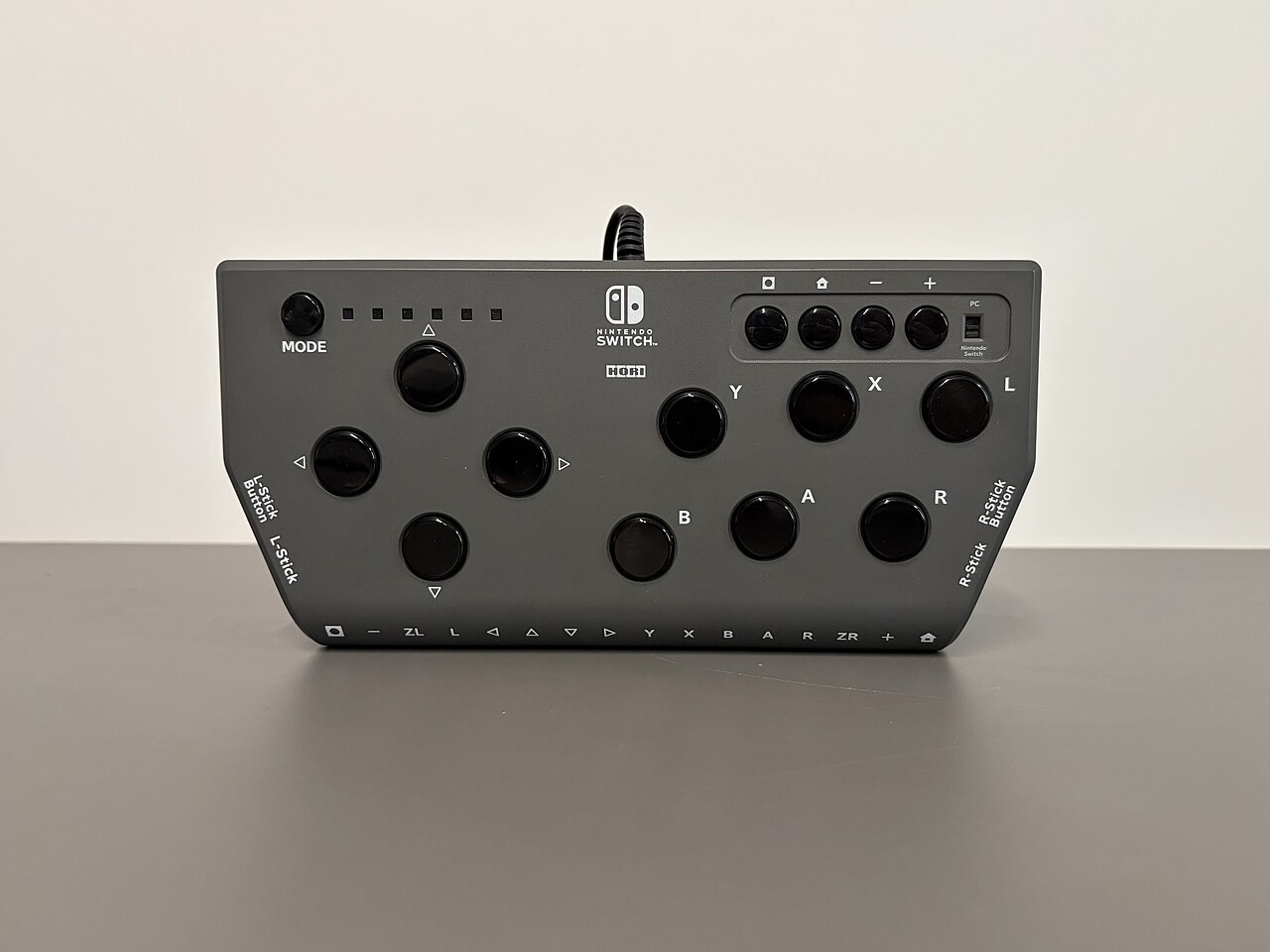
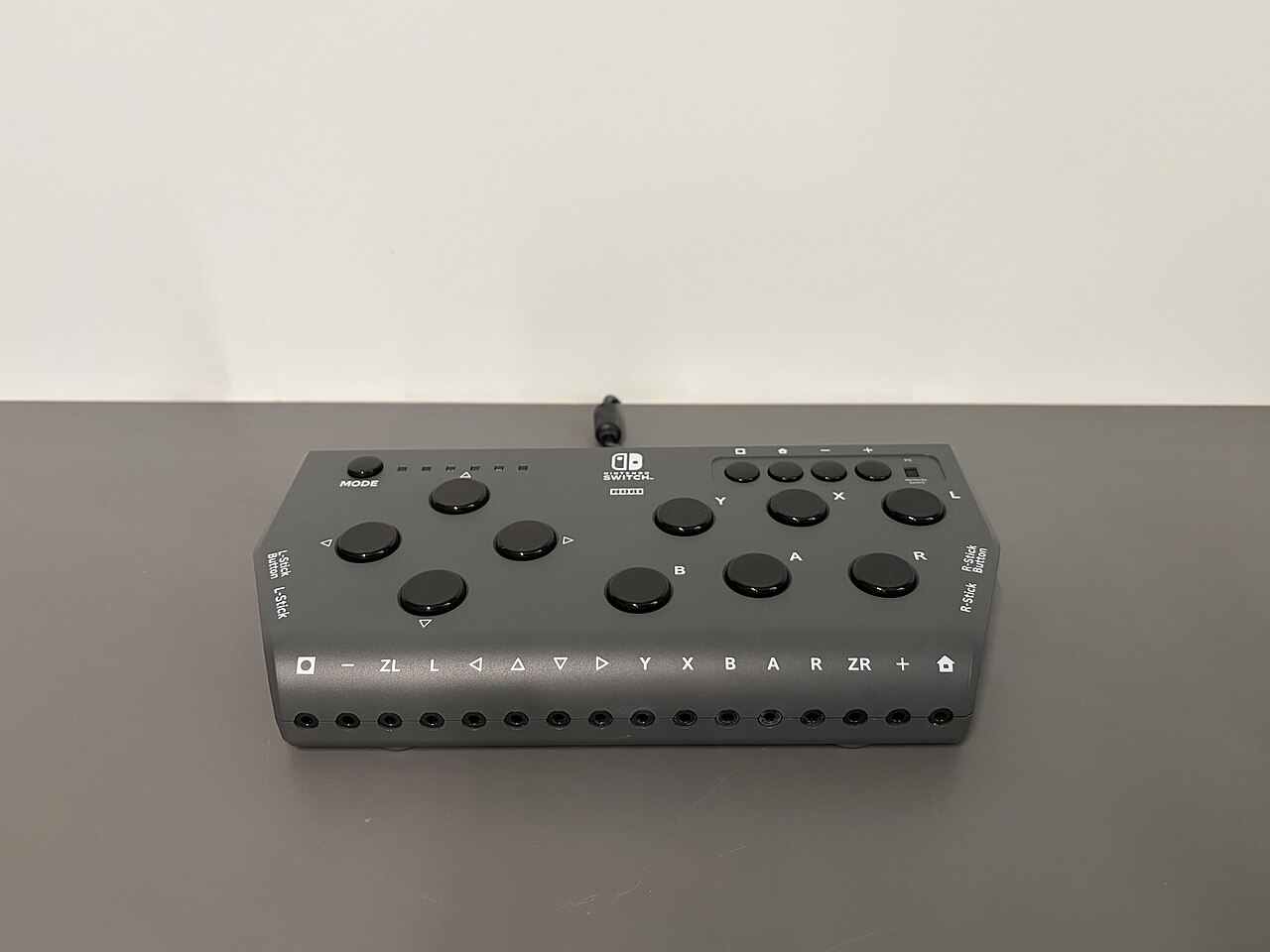
A game controller is an input or input/output device used with video games or entertainment systems to send commands to a game. Devices classified as game controllers include keyboards, mice, gamepads, and joysticks, along with specialized items like steering wheels for driving games and light guns for shooting games. Controllers can be purely input devices, or they can also receive data from the system and produce feedback, such as vibration or sound. Those that come with a home console are called standard controllers, while those sold separately by the console maker or by third parties are considered peripheral controllers.
The earliest video game controller is often traced back to the 1947 cathode-ray tube amusement device, which used overlays and switches. Later, in 1958, *Tennis for Two* used two separate controllers, each with a knob and a button. Over time, controllers have gained directional pads, multiple buttons, analog sticks, joysticks, motion detection, touch screens, and many other features. They have been refined to be as user-friendly as possible; for example, the Microsoft Xbox controller’s shoulder triggers, which mimic real triggers on guns, became popular for shooting games. Before the seventh generation of consoles, controllers typically plugged into ports on the console, but since then, wireless, battery-powered controllers have become common. USB game controllers can also connect to a computer via a USB port.
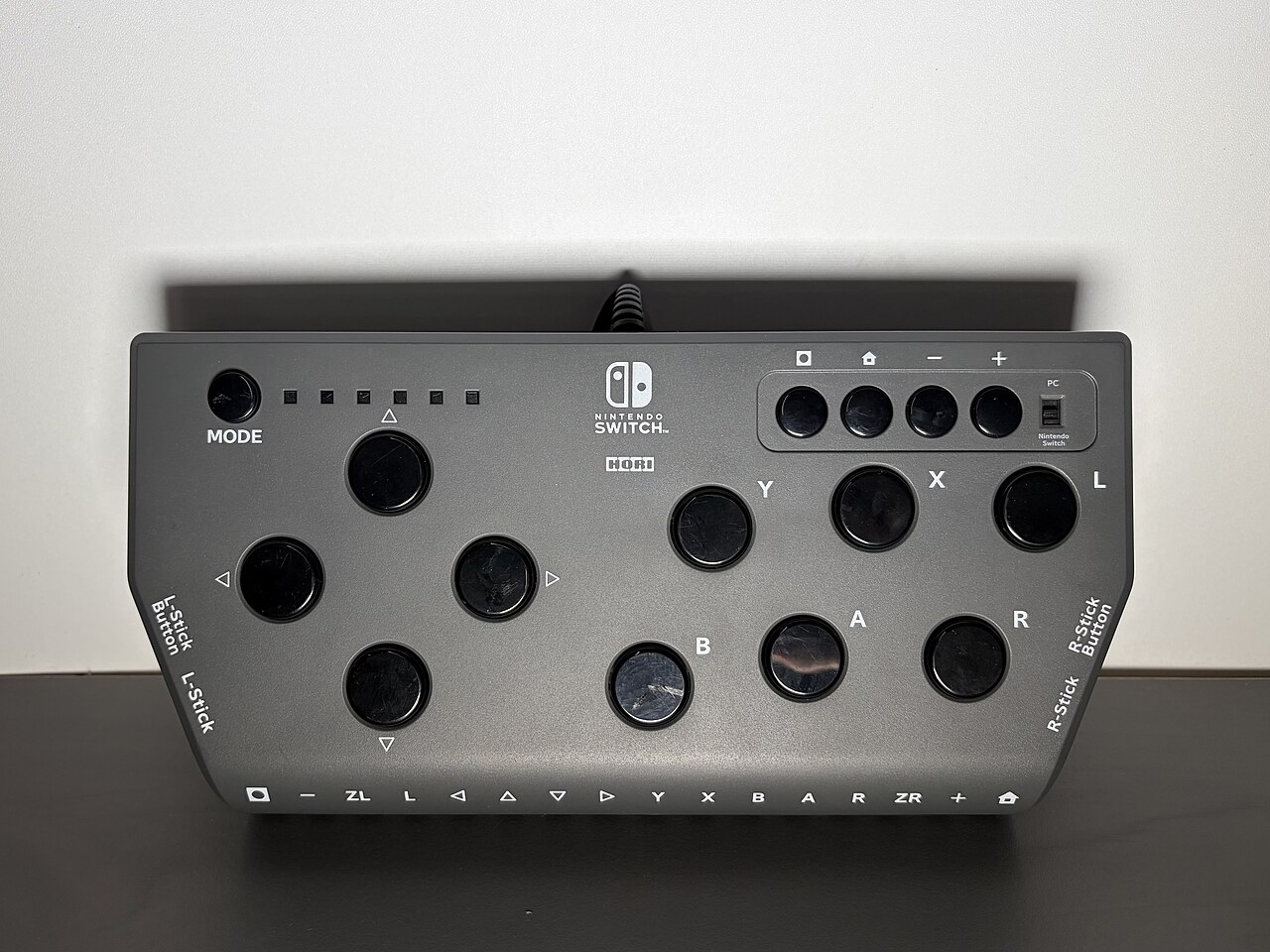
Variants of game controllers include keyboards, mice, gamepads, and joysticks, as well as special-purpose devices like steering wheels for driving games and dance pads for dancing games. Some controllers are designed to excel at one type of game.
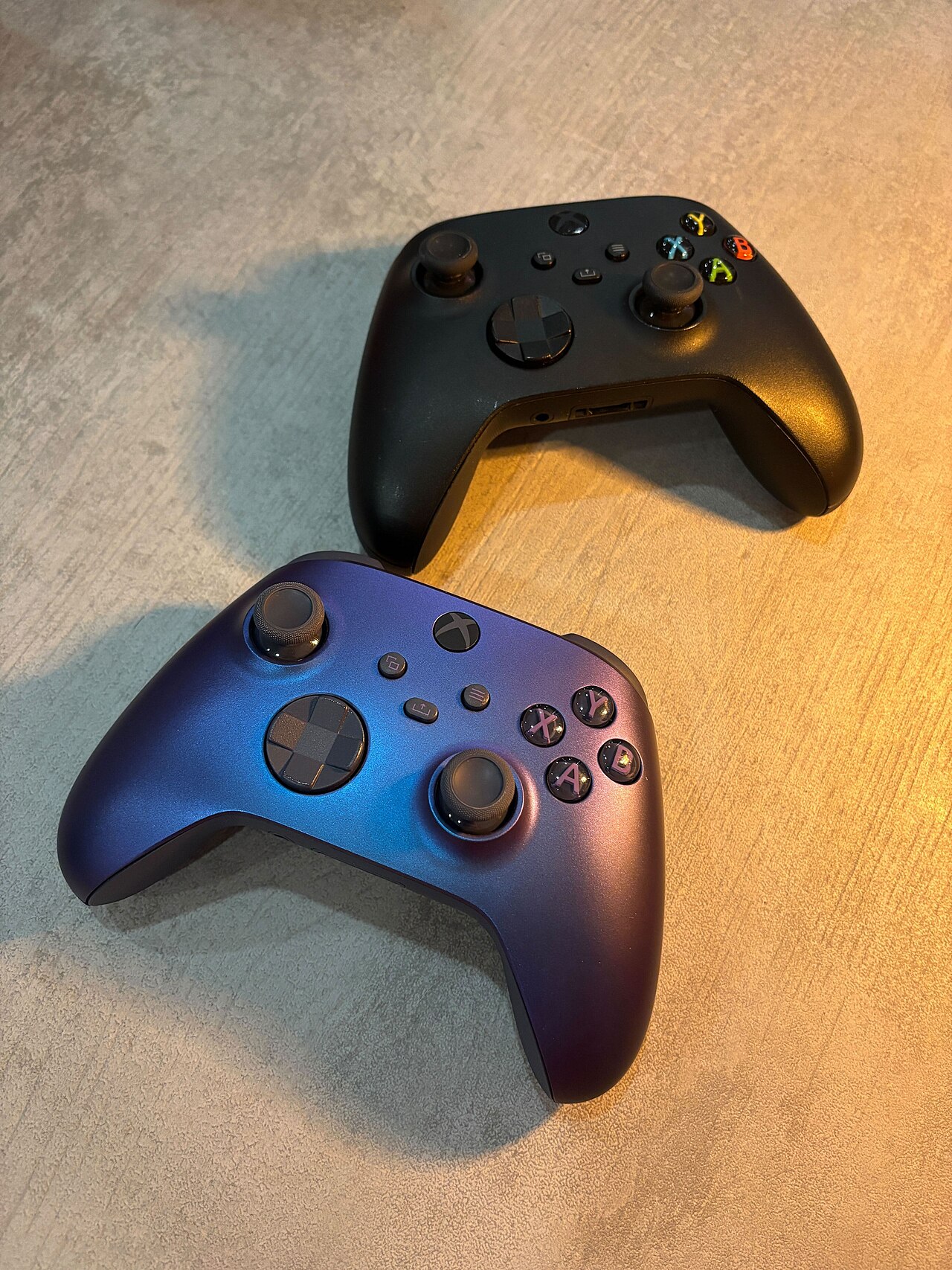
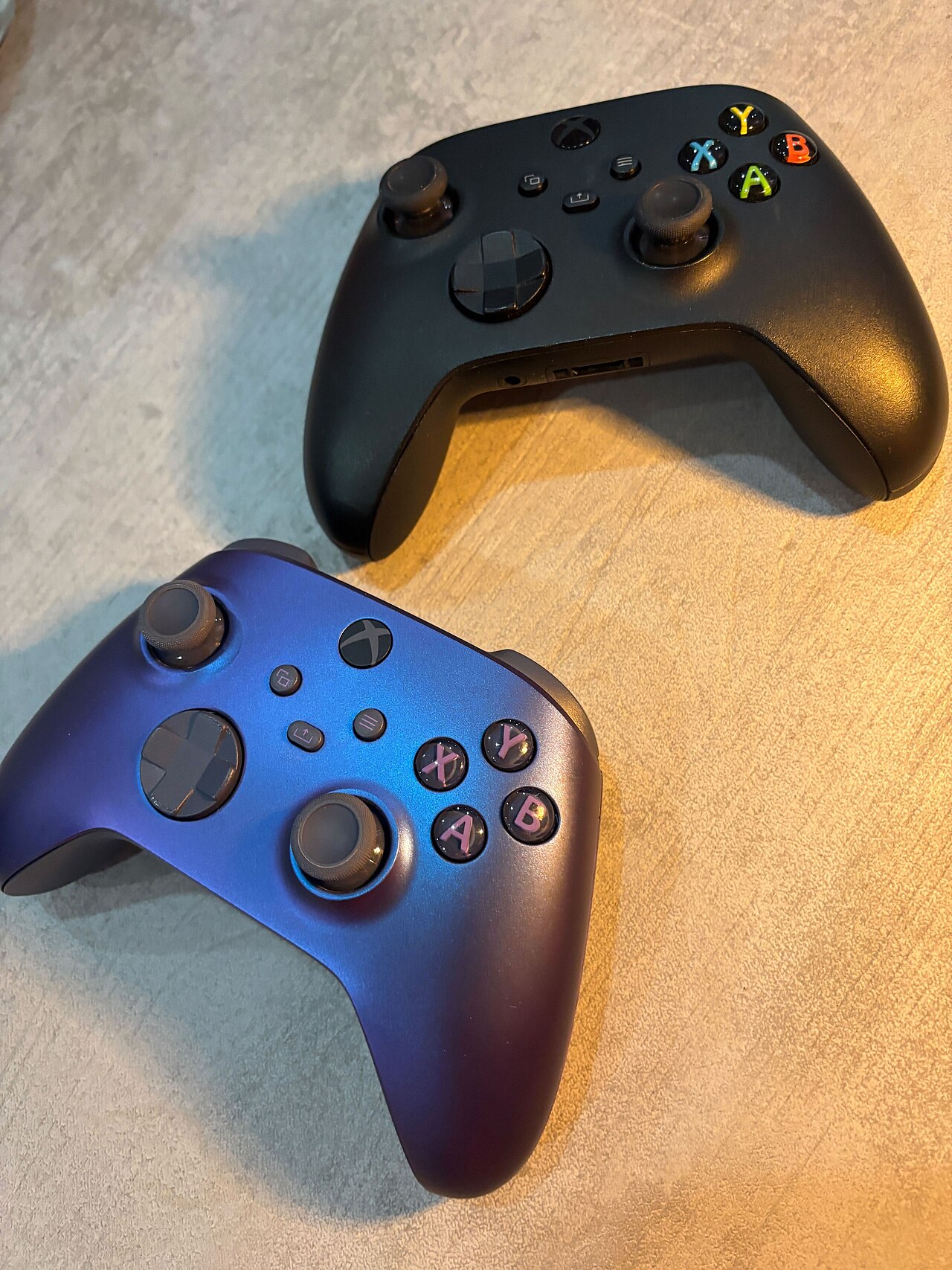
A gamepad, also called a joypad, is held in both hands, with thumbs and fingers providing input. It features action buttons and one or more omnidirectional control sticks or buttons. Action buttons are usually handled by the right hand, while directional input is managed by the left. Gamepads are the main input method for most modern consoles, and their ease of use has led them to spread to personal computers, where many games and emulators support them as an alternative to keyboard and mouse. Most modern controllers are variations of a standard gamepad, often adding shoulder buttons along the edges, centrally placed start, select, and mode buttons, and an internal motor for haptic fee
- first_known_controller
- Cathode-ray tube amusement device overlays and switches (1947), with early analog joysticks like that used in Spacewar! (1962)
Lore & Background
One of the earliest video game controllers was the cathode-ray tube amusement device from 1947, which used overlays and switches. Later, *Tennis for Two* (1958) used two separate controllers, each with a knob and a button. Controllers have since evolved to include directional pads, multiple buttons, analog sticks, joysticks, motion detection, touch screens and a plethora of other features. Notably, analog controllers predate paddle controllers—the 1962 game *Spacewar!* used an analog joystick. Game controllers have been designed and improved over the years to be as user friendly as possible. The Microsoft Xbox controller, with its shoulder triggers that mimic actual triggers such as those found on guns, has become popular for shooting games. Before the seventh generation of video game consoles, plugging in a controller into one of a
Reader's Guide
Game controllers have been central to the evolution of video gaming, transforming from simple dials and buttons to complex devices incorporating motion detection, touch screens, and haptic feedback. They serve as the primary interface between the player and the game, with designs tailored to specific genres—such as steering wheels for driving games, light guns for shooting games, and dance pads for dancing games. The gamepad, held in both hands, became the standard input for most modern consoles, spreading to personal computers due to its ease of use. The shift from wired to wireless controllers during the seventh generation of consoles eliminated the need for controller ports, relying instead on battery power. Specialized controllers like joysticks for flight simulators, yokes for aircraft simulation, and throttle quadrants for realistic throttle control further expanded the range of gaming experiences. The legacy of game controllers lies in their continuous adaptation to enhance user comfort and immersion, with modern examples becoming smaller and more compact to fit comfortably in the user's hand.
Did You Know?
- One of the first video game controllers was a simple dial and single button, used to control the game Tennis for Two.
- The Microsoft Xbox controller, with its shoulder triggers that mimic actual triggers such as those found on guns, has become popular for shooting games.
- Paddle controllers were the first analog controllers and lost popularity when 'paddle and ball' type games fell out of favor.
- The Namco Jogcon paddle for the PlayStation game R4: Ridge Racer Type 4 was designed to fit in the player's hand, with a wheel roughly the diameter of a soda can.
Design Philosophy & the Road to the M-Shape
The Nintendo 64 controller, model NUS-005, was the product of a deliberate push to break away from conventional gamepad layouts. Nintendo's R&D3 team was tasked with exploring fresh ideas, and the process involved sculpting clay prototypes and running extensive test-group sessions both before and during the design phase. The final form—an "M"-shaped body housing ten buttons, a D-pad, a central control stick, and a rear accessory port—was locked in alongside the movement mechanics Shigeru Miyamoto was developing for Super Mario 64. Miyamoto himself tested the pad during the game's production, though the controller was not built around that title; rather, the two influenced each other, particularly in how character movement felt. Lance Barr, head designer at Nintendo of America, explained that research showed most games rely on just a handful of buttons for core actions like jumping, shooting, or braking. That insight drove the decision to make the A and B buttons the largest and most accessible on the face of the pad, ensuring the highest-traffic inputs sat under the player's most natural thumb positions.
The Control Stick: A Digital Leap
Before the N64 pad, joysticks had appeared in gaming for years—the Atari 5200, Sega's arcade cabinets, the Saturn's Mission Stick in 1995, and Sony's PlayStation Analog Joystick in 1996 all featured them. The only prior console accessory to put a thumb-operated stick on a standard pad was Dempa's XE-1 AP for the Mega Drive, released in 1989. Nintendo's 1996 controller made the thumbstick a built-in, central element, and it launched roughly simultaneously with Sega's 3D Pad for the Saturn. Functionally, the stick offered 360-degree input for mobility and camera work, far exceeding the eight-direction limit of a traditional D-pad. Mechanically, however, it was not truly analog. It worked like a ball mouse: a chopper wheel interrupted a light beam read by a photodiode, producing a digital signal whose precision made it feel equivalent to a genuine analog stick. Because it tracked only relative movement, the system assumed the stick sat at center on power-up. If the player noticed drift, recalibration was as simple as pressing L, R, and Start together, or restarting the console with the stick properly centered.
Three Grips, One Compromise
The N64 controller was engineered to be held in three distinct ways, each optimizing a different genre. Gripping the two outer handles gave access to the D-pad, right-hand face buttons, and both shoulder triggers—a layout mirroring the Super NES pad and suited to 2D titles. Shifting to the center and right grip unlocked the control stick, right face buttons, R shoulder, and rear Z-trigger, the configuration intended for 3D action games. A third option, center and left grip, combined the D-pad, L shoulder, stick, and Z-trigger, a setup first-person shooters like GoldenEye 007 exploited. In a handful of titles such as Mortal Kombat Trilogy, the stick and D-pad could be swapped in function, and very few games—Tetrisphere, Mischief Makers, Kirby 64—relied on the D-pad alone. Some players held one controller in each hand, thumbs on the sticks and index fingers on the Z-trigger, for dual-analog play. The design's central controversy was that no single hand position let a player reach every input at once; the D-pad, L shoulder, stick, and Z-trigger could not all be used simultaneously without shifting grip.
Shaping the Modern Gamepad
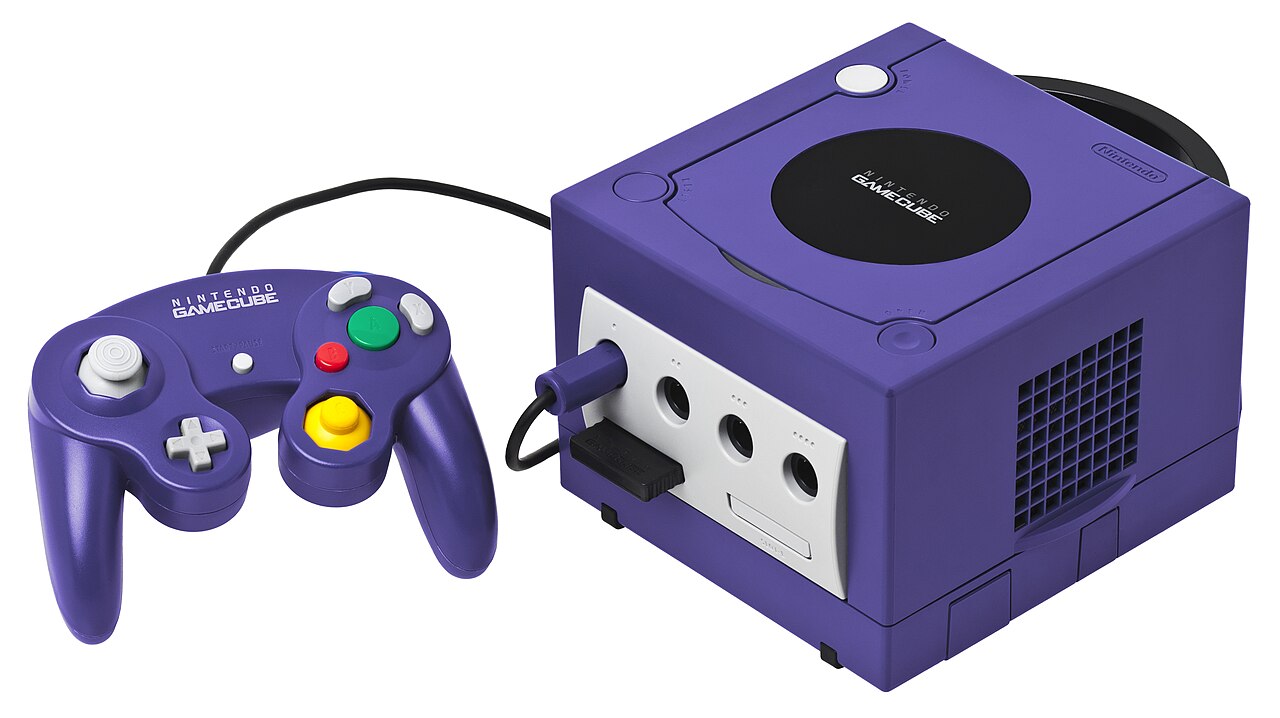
The N64 pad's four C-buttons on the top were originally conceived as camera controls for three-dimensional game worlds. Because the face of the controller carried only three standard buttons, the C-buttons could also be reassigned to other functions. In The Legend of Zelda: Ocarina of Time, three of them mapped to secondary items, the top C-button summoned Navi for assistance, and the Z-trigger locked the camera behind the player while targeting enemies. Beyond that single title, the controller's influence rippled through the entire industry. When Sony shipped the Dual Analog and DualShock pads for the PlayStation, it kept the two-handled ergonomic philosophy but placed the analog sticks below and inside the D-pad and face buttons, letting players switch between digital and analog input without releasing the pad. Nintendo followed a similar path with the GameCube controller, though it swapped the positions of the stick and D-pad. That arrangement—left thumb on the primary movement stick, right thumb on face buttons—became the dominant gamepad layout, cementing the left analog stick as the universal standard for 3D movement across every major console platform.
Gallery
Frequently Asked Questions
What is a game controller in gaming design?
A game controller is an input or input/output device that translates a player's physical actions into commands sent to a video game or entertainment system. It ranges from simple peripherals like keyboards and mice to specialized gear such as steering wheels and light guns.
When did the first game controller appear?
The earliest known controllers were overlays and switches attached to cathode-ray tube amusement devices in 1947. By 1962, analog joysticks like the one used in Spacewar! had established a recognizable form of game input.
What types of devices count as game controllers?
The classification covers keyboards, mice, gamepads, and joysticks, as well as purpose-built peripherals like steering wheels for driving titles and light guns for shooting games. Any device that converts a player's motion or press into in-game commands falls under this category.
Can a game controller do more than just send inputs?
Yes—some controllers also receive data from the system and produce feedback such as vibration or sound, making them true input/output devices. This two-way communication adds haptic and auditory cues that purely input-only devices lack.
What's the difference between a standard controller and a third-party one?
A standard controller is the one bundled with a home console at purchase, while third-party controllers are sold separately by the console maker or by outside manufacturers. Functionally they serve the same role, but they differ in origin, distribution, and sometimes in feature sets.
More in Gaming Mechanics & Design 1-17
Spotted an error? Know more?
This is a living reference — every entry is fact-audited, and reader corrections feed straight into our audit queue. Suggest an edit · See this site's audit record