DualShock
Sony's iconic gamepad with dual vibration motors and analog sticks.
Last updated

Evan-Amos · Public domain
The DualShock is a line of gamepads developed by Sony Interactive Entertainment for the PlayStation family of video game consoles. It is named for its vibration-feedback and analog controls, and is the best-selling gamepad of all time by units sold, excluding bundled controllers.
Lore & Background
Introduced in late 1997, the DualShock Analog Controller (SCPH-1200) provides vibration feedback based on game activity and input through two analog sticks. Its name derives from its dual vibration motors, housed within the handles, with the left motor being larger and more powerful than the right to allow varying levels of vibration. Unlike the Nintendo 64's Rumble Pak, which has one battery-powered motor, the DualShock has two motors and all corded varieties are powered directly by the PlayStation. The rumble feature is similar to that of the Japanese version of the Dual Analog Controller released a few months earlier, which was absent on all Dual Analog controllers released outside Japan.
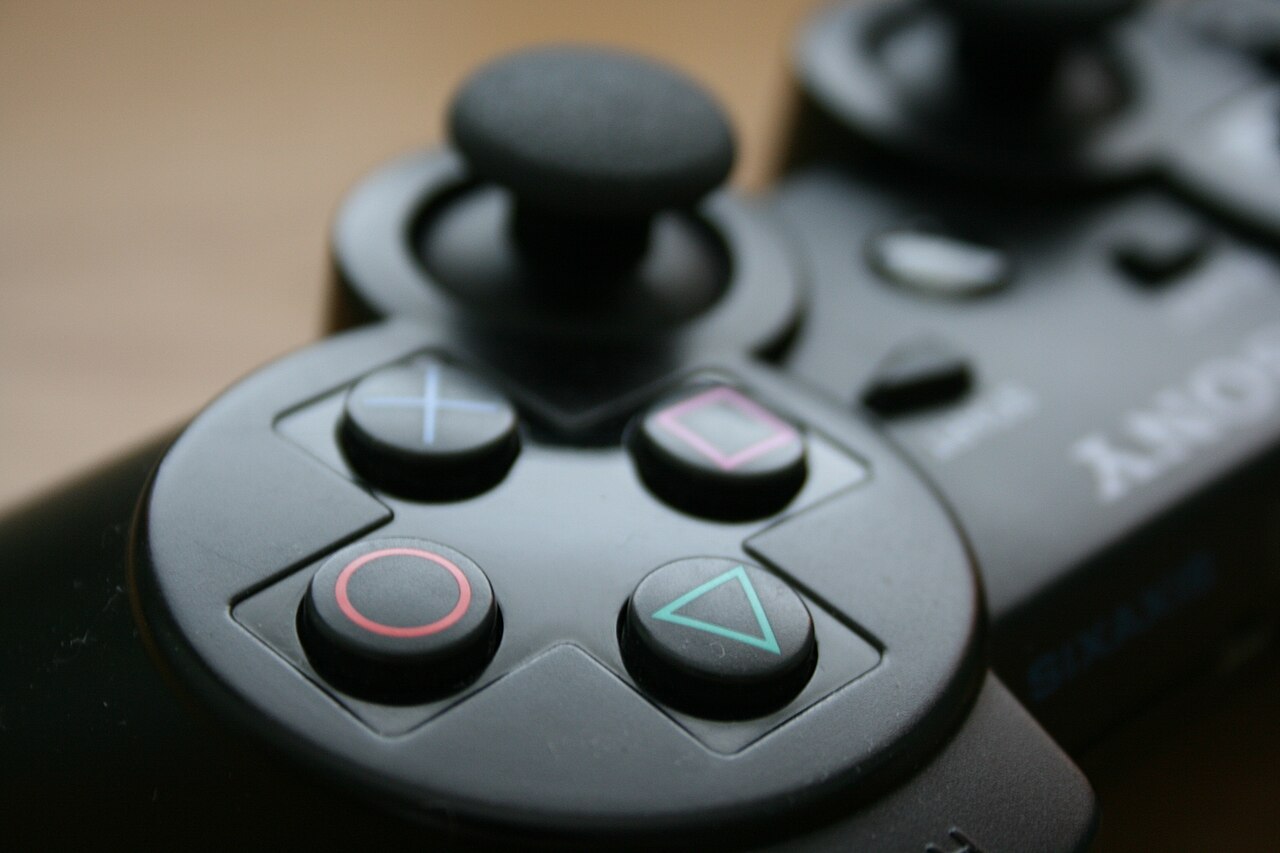
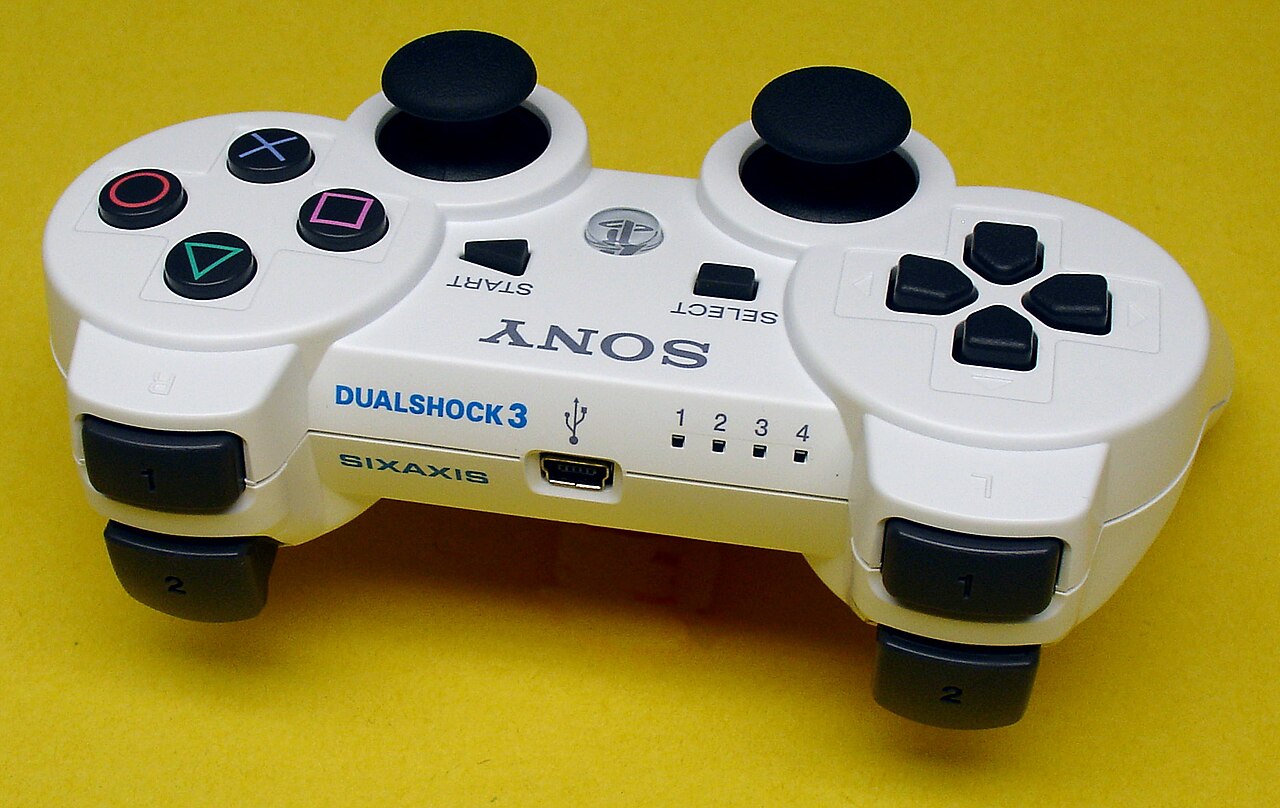
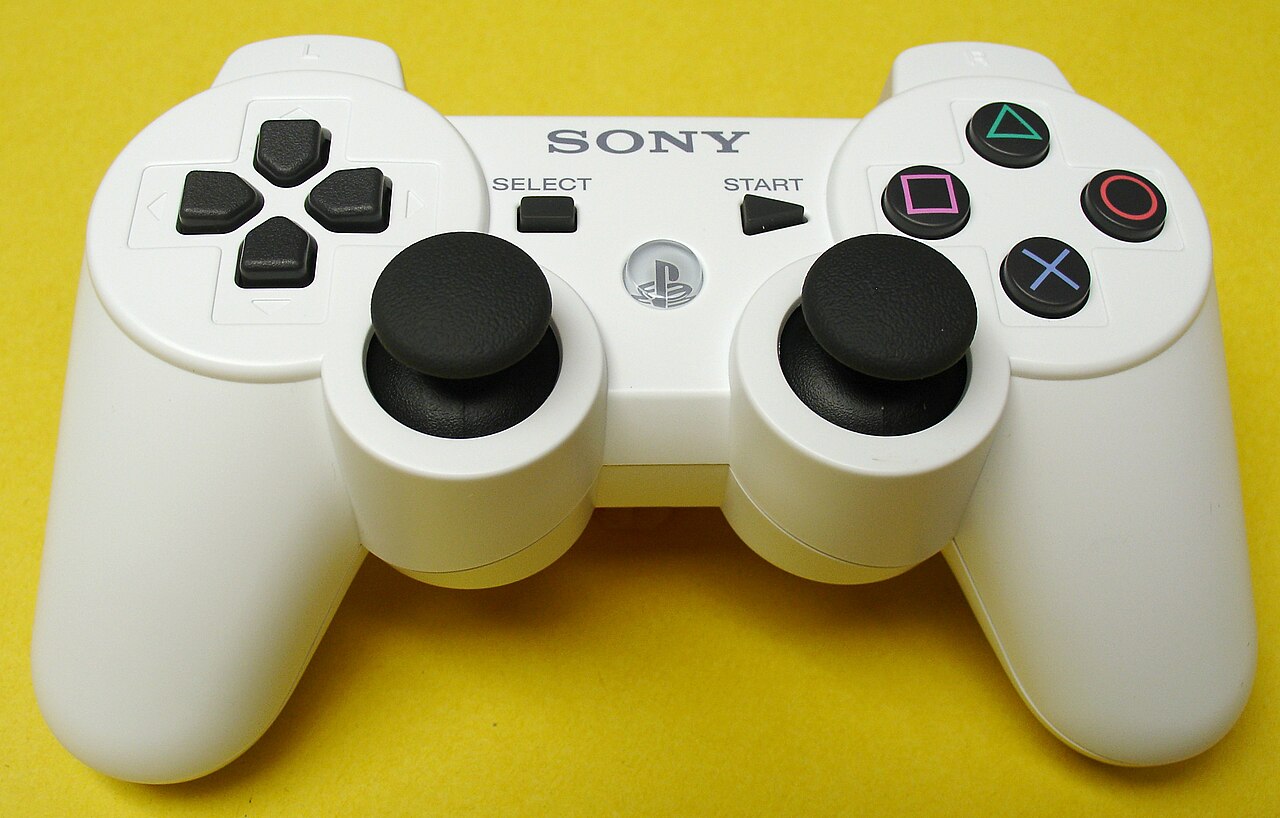
The DualShock includes a standard set of controls first introduced in the original PlayStation controller: a directional pad, Start and Select buttons, four face buttons (green triangle, red circle, blue cross, pink square), and four shoulder buttons. It has two analog sticks with 8-bit precision and a dedicated 'Analog' button to switch between analog and digital modes, indicated by a red light.
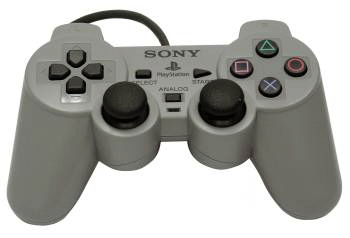
The analog sticks feature textured rubber grips with convex domed caps, unlike the smooth plastic concave grooves of the Dual Analog controller. The DualShock also has slightly larger L2/R2 buttons and a recessed Analog button to prevent accidental switching. The controller is widely supported; shortly after launch most new games included support for vibration and dual analog sticks, and Ape Escape was the first game to explicitly require Dual Analog/DualShock-type controllers.
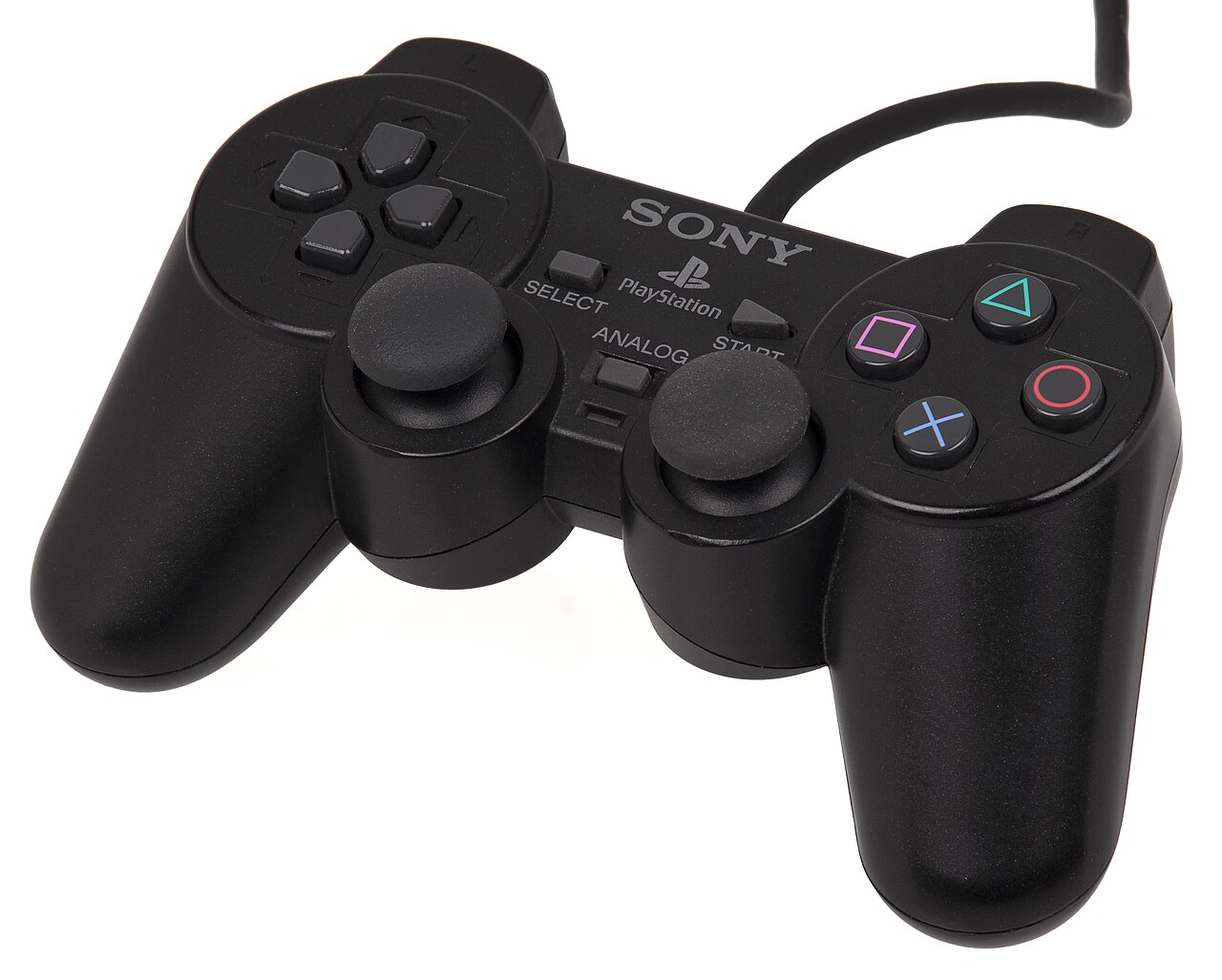
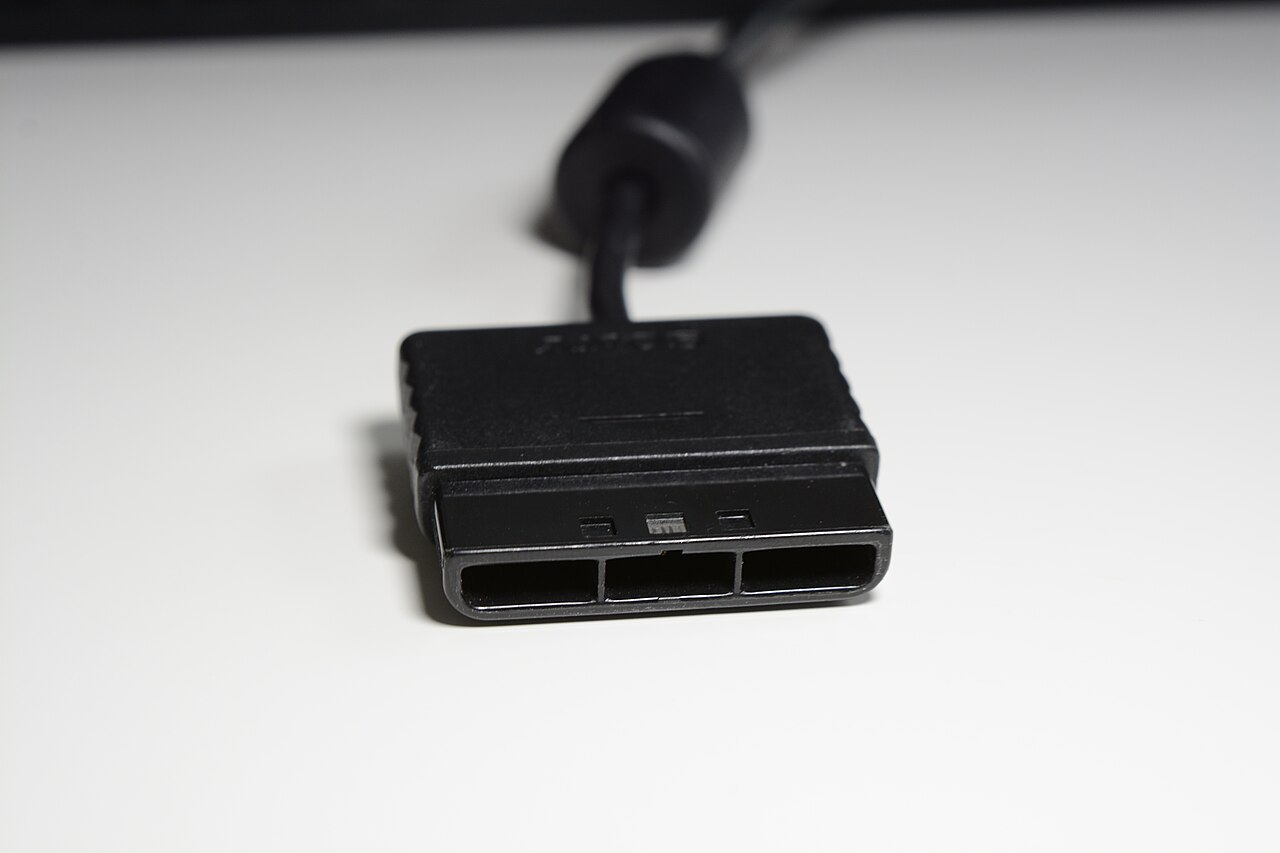
In 2000, the PS one was released with a slightly redesigned DualShock Controller (SCPH-110), with a 'PSone' word mark, purple hue on buttons and sticks, a semicircle-shaped connector, and multiple color options; the standard color was white. The PlayStation 2 is backward compatible with the DualShock, though certain PS2 games using the DualShock 2's analog buttons are not compatible.
Origins & Design Philosophy
The DualShock arrived in November 1997 as a secondary peripheral for the original PlayStation, and its very name telegraphed what set it apart: two vibration motors nestled inside the handles. The left motor was intentionally larger and more powerful than the right, giving developers a way to craft layered, stereo-like rumble effects.
This represented a clear leap beyond Nintendo's Rumble Pak for the N64, which relied on a single battery-powered motor, whereas the DualShock drew all its power directly from the console through its cord. Beyond the haptics, the controller featured two analog sticks with 8-bit precision, textured rubber grips with convex domed caps—a deliberate departure from the smooth, concave-tipped sticks of the earlier Dual Analog—and a dedicated Analog button that let players toggle between analog and digital modes. A small red indicator light confirmed which mode was active, and the button itself was slightly recessed to guard against accidental switching mid-gameplay.
Market Impact & Industry Adoption
Within months of its late-1997 debut, the DualShock was embraced by the developer community with remarkable speed. Titles like Waku Waku Puyo Puyo Dungeon, Crash Bandicoot: Warped, Spyro the Dragon, and Tekken 3 shipped with full support for both the dual analog sticks and the vibration feedback. Capcom went so far as to re-release Resident Evil: Director's Cut and Resident Evil 2 with DualShock compatibility added to those newer editions. Games such as Gran Turismo and the PlayStation port of Quake II exploited the two separate motors to deliver stereo vibration effects that made in-game events feel spatially distinct.
By 1998, Sony made the decisive move of bundling the DualShock as the standard controller in every region, effectively phasing out the original digital-only pad and the Dual Analog. In 1999, Ape Escape became the first title to explicitly demand a DualShock-type controller, as its core gameplay required both analog sticks simultaneously. The controller ultimately became the best-selling gamepad of all time by units sold, excluding bundled controllers.
Evolution Across Console Generations
The DualShock line evolved steadily alongside Sony's hardware. In 2000, the PSone—a redesigned original PlayStation—shipped with a slightly updated controller that swapped the PlayStation word mark for PSone, added a purple hue to the buttons and sticks to match the console's palette, featured a semicircle-shaped connector, and came in multiple body colors with white as the standard. The PlayStation 2's launch brought the DualShock 2, which looked nearly identical on the outside but was meaningfully different under the hood.
It was lighter, its analog sticks were stiffer, and—most notably—nearly every button became pressure-sensitive, capable of reading 256 levels of analog input. Cosmetic updates included a blue DualShock 2 logo on top, a more square-shaped connector, and a black cable and body replacing the original's grey. The PS2's backward compatibility meant the first-generation DualShock still worked, though games leveraging the DualShock 2's analog buttons, such as The Bouncer, would not.
Cultural & Brand Legacy
Few pieces of hardware have become as inseparable from a brand as the DualShock is to PlayStation. The controller's face buttons—a green triangle, a red circle, a blue cross, and a pink square—replaced letters or numbers with simple geometric shapes, and those shapes became a deeply recognized trademark woven into the PlayStation identity.
The line's naming convention itself, rooted in the dual vibration motors, signaled a design philosophy that prioritized tactile feedback and analog precision over the digital-only inputs of the early 1990s. From the original 1997 controller through the PSone variant, the DualShock 2 with its 256-level pressure sensitivity, and onward to the PlayStation 5's DualSense, the lineage represents a continuous thread of controller innovation spanning decades. The fact that the DualShock holds the record as the best-selling gamepad of all time by units sold, excluding bundled controllers, underscores just how central this peripheral became to the way millions of players interacted with their consoles.
Reader's Guide
The DualShock's significance lies in its establishment of the dual-analog-stick, vibration-feedback gamepad as the standard for PlayStation consoles, a design that has persisted through multiple generations. It was initially marketed as a secondary peripheral for the first PlayStation in November 1997, but the console's bundle was later updated to include the DualShock, phasing out the original PlayStation controller and the Dual Analog Controller. Its name, derived from its two vibration motors, set it apart from competitors like the Nintendo 64's single-motor Rumble Pak. The controller's face buttons—using simple geometric shapes (triangle, circle, cross, square)—became a trademark heavily incorporated into the PlayStation brand.
The DualShock's legacy includes its forward compatibility with the PlayStation 2 and its influence on subsequent controllers: the DualShock 2, DualShock 3, and DualSense. The DualShock 2 retained the same external design with minor changes and added pressure-sensitive buttons, while the DualShock 3 reintroduced vibration to the PlayStation 3 after the Sixaxis controller omitted it. The DualShock line is the best-selling gamepad of all time by units sold, excluding bundled controllers, underscoring its widespread adoption and enduring impact on gaming hardware.
Frequently Asked Questions
When did the original DualShock first appear?
Sony launched the first DualShock in November 1997, identified by the model number SCPH-1200, as the primary controller for the original PlayStation.
Why is it called 'DualShock'?
The name highlights its two vibration-feedback motors that produce rumble effects during gameplay, paired with the analog stick layout that defined the controller's feel.
How heavy is the DualShock 3 and what battery does it use?
The DualShock 3 tips the scale at 192 grams and runs on a 570 mAh rechargeable battery to power its wireless connection.
More in Game Controllers and Accessories
Sources
Compiled from Wikipedia and the sources listed below. Text from Wikipedia is available under CC BY-SA 4.0; this entry is adapted from it.
- Wikipedia: DualShock (CC BY-SA 4.0).
Spotted an error? Know more?
Reader corrections go straight into our review queue. Suggest an edit · How this site is sourced