GameCube controller
Nintendo's standard controller for the GameCube, launched in 2001.
Last updated

Alphathon · CC BY-SA 3.0
The standard GameCube controller includes a built-in rumble motor for haptic feedback, unlike the Nintendo 64 controller which required an external Rumble Pak add-on.[1][2] The primary analog stick sits on the left with the D-pad below it, while four face buttons are on the right side with a large green button in the center.[1] The GameCube controller includes six digital buttons, two analog sticks placed in a staggered arrangement, a D-pad, and two triggers that function as both analog and digital inputs.[1][2]
Making and release
Shigeru Miyamoto designed the GameCube controller over at least three years, aiming to accommodate people of any age, hand size, or gaming experience.[3][2] The controller went through at least four or five radically different versions during development, with new ideas added and old ones discarded monthly.[4] Miyamoto’s first redesign focused on the four rhombus-positioned face buttons, a layout he had established with the SNES controller.[4] Nintendo debated whether to keep the D-pad as games moved to 3D, ultimately placing it below the primary analog stick.[5]
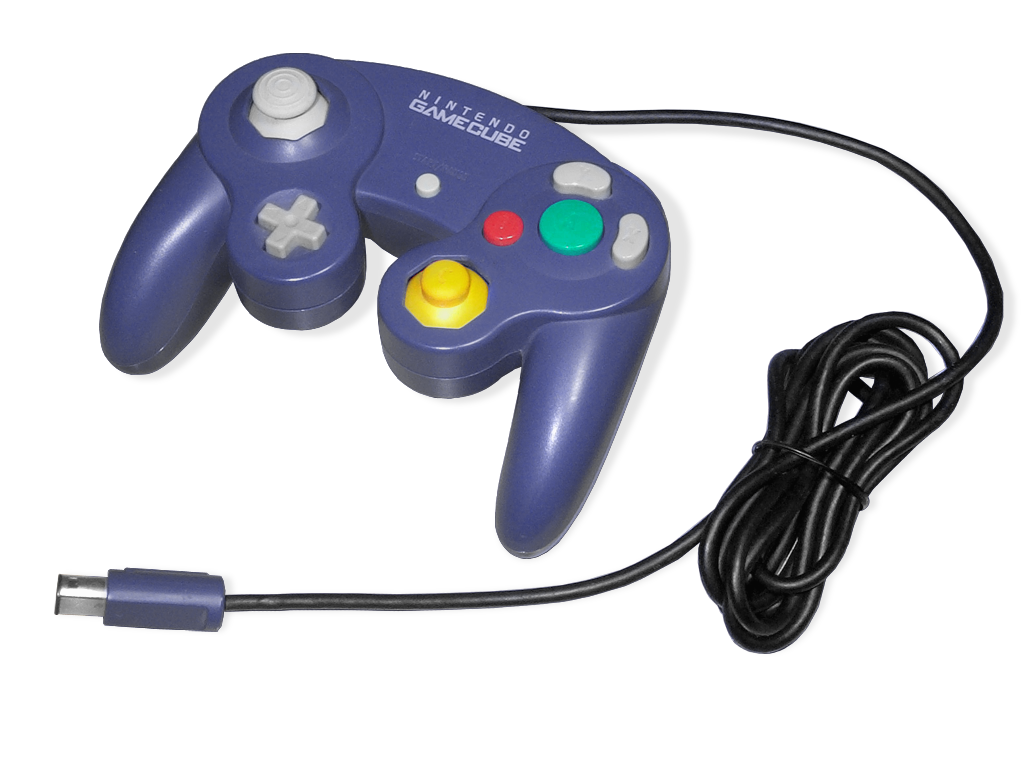
The second analog stick replaced the four yellow camera buttons of the N64 controller.[2][5] Standard colors included Indigo, Jet Black, Platinum, Spice, Indigo/Clear, Emerald Blue, and White, with the latter two only available in Japan.[6][7] A white controller re-release in Japan in April 2008 featured a 3-meter cable instead of the standard 2-meter cable and lacked metal braces inside the L and R triggers.[8][9] Nintendo of America kept manufacturing and selling Platinum GameCube controllers in North America until roughly the start of 2012.[10]
What the cited sources add
A Nintendo World News FAQ noted that, according to sources, the controller’s design was still being tweaked even after its Spaceworld 2000 reveal, with Miyamoto stating that earlier version was just a mock-up.[2] The same source reported that the Z trigger was purportedly a last-minute addition, originally positioned above the R shoulder button before that plan was abandoned.[2] The Samurai Nintendo website lists limited-edition console models, such as the Symphonic Green model for Tales of Symphonia and the Hanshin Tigers model for a baseball championship.[7][11] The Verge reported that the Nintendo Switch’s 4.0 firmware update added support for the GameCube controller USB adapter, allowing use with most Switch games.[12]
A Kotaku article described PDP’s officially licensed “Wired Fight Pad” for Wii U, which uses the GameCube layout but adds dual shoulder buttons and a home button to work like a Classic Controller Pro.[13]
References
- Wikipedia, "GameCube controller" (CC BY-SA 4.0), which cites: Satterfield, "What's inside the GameCube?", ZDNet, November 16, 2001 (original not read by us) en.wikipedia.org
- "FAQS: GameCube FAQ - Controller", Nintendo World News, June 22, 2001. facts only, no text reused. nintendoworldreport.com
- Wikipedia, "GameCube controller" (CC BY-SA 4.0), which cites: Rogers, "The Pressure To Create The Perfect Controller", Dromble, September 29, 2013; "FAQS: GameCube FAQ - Controller", Nintendo World News, June 22, 2001; Rogers, "The Pressure To Create The Perfect Controller", Dromble, September 29, 2013; Plunkett, "Let's Rank Nintendo's Controllers, Best To Worst", Kotaku, February 11, 2013 (we also read that source) en.wikipedia.org
- Wikipedia, "GameCube controller" (CC BY-SA 4.0), which cites: Rogers, "The Pressure To Create The Perfect Controller", Dromble, September 29, 2013 (original not read by us) en.wikipedia.org
- Wikipedia, "GameCube controller" (CC BY-SA 4.0), which cites: Rogers, "The Pressure To Create The Perfect Controller", Dromble, September 29, 2013; "FAQS: GameCube FAQ - Controller", Nintendo World News, June 22, 2001; "The Big Gamecube Interview: Part 1", IGN, October 19, 2000 (we also read that source) en.wikipedia.org
- Wikipedia, "GameCube controller" (CC BY-SA 4.0), which cites: "Samurai Nintendo : GameCube models & special editions", samurainintendo.com; Nintendo; Nintendo (we also read that source) en.wikipedia.org
- "Samurai Nintendo : GameCube models & special editions", samurainintendo.com. facts only, no text reused. samurainintendo.com
- Wikipedia, "GameCube controller" (CC BY-SA 4.0), which cites: "Nintendo to Re-launch GameCube Controller", IGN, April 9, 2008 (original not read by us) en.wikipedia.org
- Wikipedia, "GameCube controller" (CC BY-SA 4.0), which cites: "Amazon.com: Official Nintendo Classic Gamecube / Wii Controller: Video Games", Amazon; "Buy Game Cube Controller (White) (Gamecube & Nintendo Wii) at Play-Asia.com", Play-Asia (original not read by us) en.wikipedia.org
- Wikipedia, "GameCube controller" (CC BY-SA 4.0), which cites: "Nintendo: Online Store - Product Detail - Gamecube Controller - Platinum (GCN)", Nintendo (original not read by us) en.wikipedia.org
- "Samurai Nintendo : GameCube bundles & packs", samurainintendo.com. facts only, no text reused. samurainintendo.com
- Byford, "The Nintendo Switch now supports GameCube controllers", The Verge, October 24, 2017. facts only, no text reused. theverge.com
- "The New Wii U GameCube Controllers Are Super Hot", Kotaku, June 10, 2014. facts only, no text reused. kotaku.com
Each numbered sentence above was checked against the source it cites before publication. Sentences citing Wikipedia adapt text from the English Wikipedia article GameCube controller (contributors), used under CC BY-SA 4.0; this entry is available under the same licence. Other sources were used for facts only; no text or images are copied from them.
More in Game Controllers and Accessories
Sources
Compiled from Wikipedia and the sources listed below. Text from Wikipedia is available under CC BY-SA 4.0; this entry is adapted from it.
- Wikipedia: GameCube controller (CC BY-SA 4.0).
Spotted an error? Know more?
Reader corrections go straight into our review queue. Suggest an edit · How this site is sourced