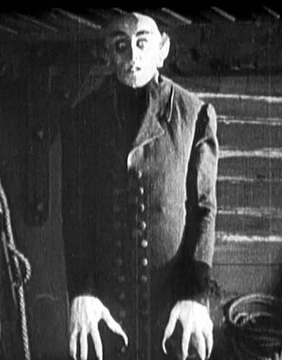
Le Golem
A 1936 French-language Czechoslovak monster film.

Le Golem is a 1936 Czechoslovak monster film directed by Julien Duvivier in French. It is a separate adaptation of the Golem legend, not directly connected to Paul Wegener's 1920 film The Golem: How He Came into the World. The film is based on a play by Jiří Voskovec and Jan Werich, though Duvivier wrote his own screenplay after rejecting theirs, which led to a lawsuit filed by the playwrights that was settled out of court. The film is notable for its atmospheric direction and its place in early horror cinema.
Quick Facts
- Director
- Julien Duvivier
- Producer
- Charles Philip
- Story
- Jiří Voskovec (uncredited) / Jan Werich (uncredited)
- Writer
- André-Paul Antoine / Julien Duvivier
- Starring
- Harry Baur / Roger Karl / Ferdinand Hart
- Music
- Josef Kumok
- Cinematography
- Jan Stallich / Václav Vích
- Editing
- Jiří Slavíček
- Studio
- A-B
- Distributor
- A-B / Les Artistes Associés
- Released
- 14 February 1936
- Runtime
- 95 minutes
Facts from the source article.
Lore & Background
The film is set in a Prague ghetto under the oppressive rule of Holy Roman Emperor Rudolf II. When the emperor's mistress, Countess Strada, is rescued by De Trignac during a food riot, she later charms him into stealing the Golem, a clay statue held in an attic by Rabbi Jacob. The Golem is brought to life when Rachel carves the Hebrew word 'emet' (truth) on its forehead after lions roar near its cell. The creature wreaks havoc in the palace, killing several advisors, before Rabbi Jacob erases the first letter to spell 'dead,' causing the Golem to disintegrate as Rudolf's benevolent brother Mathias approaches Prague.
Reader's Guide
Le Golem holds significance as a 1930s monster film that bridges German Expressionist cinema (as a sequel to Wegener's 1920 film) and later horror traditions. Its production at Barrandov Studios in Prague and the legal dispute over the screenplay highlight the tensions between original playwrights and the director. The film's reception, including a mildly positive review by Graham Greene, noted its surreal quality and Harry Baur's performance. Its legacy includes inspiring the Daimajin character from Daiei Film and being one of the first horror films released for home movie markets in the late 1940s, predating Castle Films' monster movies by over a decade.
Did You Know?
- Director Julien Duvivier was sued by playwrights Jiří Voskovec and Jan Werich for using parts of their script without permission, but the lawsuit was settled out of court.
- In the late 1940s, Sterling Films released a ten-minute condensed home movie edition in the US under the title The Man Of Stone, though it was not the first horror film on the home movie market.
- The fictional character Daimajin, created by Daiei Film, has no confirmed direct inspiration from this specific French-Czechoslovak film.
More in French horror films 1-24
Spotted an error? Know more?
Reader corrections go straight into our review queue. Suggest an edit · How this site is sourced