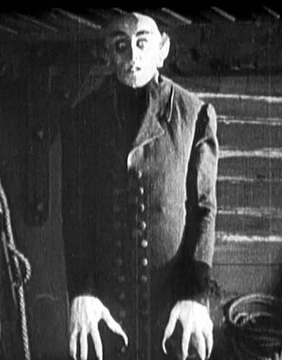
Daughter of Dracula
A 1972 erotic horror film directed by Jesús Franco.

Daughter of Dracula is a 1972 erotic horror film written and directed by Jesús Franco. The story takes place in a coastal Spanish town in the present day, where the Karlstein family lives under a curse from Count Dracula, who lies in a coffin in their basement. As murders begin to occur around town, a local journalist named Charlie investigates, eventually tracing his leads to the Karlstein home.
The film was one of many projects Franco churned out in the early 1970s, a period when his output was especially rapid: he completed six films in 1971, eight in 1972, and eleven in 1973. *Daughter of Dracula* was made early in 1972, mostly shot in Spain and Portugal, right after Franco finished *Dracula, Prisoner of Frankenstein* (1972). It was a co-production between Portugal, France, and Spain, but only saw a theatrical release in France among those three countries.
Retrospective opinions from Franco biographer Stephen Thrower and Budd Wilkins of *Slant Magazine* noted that the film contains only brief flashes of the stronger qualities found in Franco’s better work. In contrast, Douglas Rednour of *Library Journal* wrote that the film could serve as a fine introduction to what he called “the cheap, transgressive, and hypnotically delirious cinema” of Franco.
Quick Facts
- Director
- Jesús Franco
- Starring
- Britt Nichols / Anne Libert / Alberto Dalbés / Howard Vernon
- Studio
- Produções Cinematográficas / Comptoir Français du Film Production / Cooperativa Fénix Films
- Distributor
- Comptoir Français du Film Production (Paris)
- Released
- 14 December 1972 · France
- Country
- Portugal / France / Spain
Facts from the source article.
Lore & Background
Daughter of Dracula was shot in early 1972, predominantly in Portugal and Spain, shortly after the completion of Dracula, Prisoner of Frankenstein (1972). The film was an international co-production between Portugal, France, and Spain, produced by Interfilme Produções Cinematográficas with uncredited funding from Comptoir Français du Film Production and Cooperativa Fénix Films. It was only released theatrically in France of its three production countries.
The plot follows Luisa Karlstein, who inherits a key to the basement of a chapel from her dying mother, the Countess. There she finds Count Dracula emerging from a coffin. Meanwhile, a journalist named Charlie investigates a series of murders in the town, eventually leading him to the Karlstein home. The film ends with Charlie driving a stake into Dracula's forehead while a superintendent sets fire to Luisa's coffin.
Retrospective reviews from Franco biographer Stephen Thrower and Budd Wilkins of Slant Magazine found the film had only brief moments of the better qualities of Franco's films. Douglas Rednour of Library Journal alternatively wrote that the film would be a fine introduction to what he described as 'the cheap, transgressive, and hypnotically delirious cinema' of Franco.
Reader's Guide
Daughter of Dracula is significant as one of several lesbian vampire-themed films Franco made in the early 1970s, following Vampyros Lesbos (1971) and preceding Female Vampire (1975). It represents Franco's accelerated production period, during which he completed six films in 1971, eight in 1972, and eleven in 1973. The film's legacy is mixed: critics like Stephen Thrower consider it the weakest of Franco's three gothic films from that era, citing conventionality and incoherence, while others like Douglas Rednour see it as a valid entry point into Franco's distinctive, delirious cinema. The film was shot at locations including Monserrate Palace and Palácio dos Condes de Castro Guimarães in Cascais, Portugal, and in Sintra, Portugal, and Murcia, Spain. It was released on Blu-ray by Kino Lorber on October 4, 2016.
Did You Know?
- The film was shot after Franco had completed Dracula, Prisoner of Frankenstein (1972) in early 1972.
- It was only released theatrically in France, not in Spain or Portugal.
- Actress Anne Libert described working with Franco as 'amazing' and noted that in Portugal, there were no film unions, leading to shooting day and night.
- The film's composer is Daniel White, with additional music by Jesús Franco and Ezequiel Caldas. The claim that René Sylviano is credited on French prints is likely inaccurate.
The Judas Revelation
The film's most distinctive narrative element is its theological backstory for the vampire. Rather than presenting Dracula as a mere monster, the screenplay reveals him to be Judas Iscariot, the Apostle who sold out Jesus Christ to the Sanhedrin for thirty pieces of silver. After the crucifixion, Judas hanged himself in remorse, but God cursed him with eternal existence as the world's first vampire. His animosity toward Christ stems from the belief that Jesus, who knew the betrayal would happen, deliberately let it unfold rather than preventing it. This theological framework transforms the vampire's motivation from simple predation into a cosmic act of spite against God. Dracula's immortality is portrayed as a conscious choice—he refuses the redemption that would end his eternal life. His ultimate goal is to overrun the world with vampires as an insult to Christ. This Judas backstory gives the character a philosophical depth beyond typical horror villains.
Mary Heller's Dual Inheritance
Mary Heller occupies a unique position in the narrative as a woman caught between two heritages. She is the biological daughter of Abraham Van Helsing, the 19th-century vampire hunter who has survived over a century by harvesting Dracula's blood through leeches. Yet she was conceived after Van Helsing's prolongation began, meaning her bloodline carries a latent connection to the vampire himself. Her mother fled with her, terrified of the vampirism taking root in the child, and Van Helsing secretly tracked their movements while grieving his wife's death. Mary's resentment toward her father, whom she blames for her mother's mental decline, adds emotional complexity. In the climax, Dracula offers to transform her into a born equal rather than a sired thrall, but Mary exercises her free will—feigning a bite on Simon before turning on the vampire's brides and stabbing Dracula. Her final act of looping a crucifix cable around his neck and dragging him into the sun demonstrates that her agency, not her blood, defines her.
From Scream to Dracula
The film's genesis was remarkably informal. While Patrick Lussier was finishing post-production work on Scream 3, producer Bob Weinstein approached him with the idea of a modernized Dracula. When Lussier asked what the story would be about, Weinstein's answer was simply that he did not know. Joel Soisson, who had previously written under Lussier for The Prophecy 3: The Ascent, was brought in to develop the material. The pair drafted a screenplay by January 2000, though it envisioned a smaller-scale story than Weinstein had hoped for. Soisson's initial pitch included a vampire-hunting priest character, which was ultimately shelved and recycled for the sequel. Principal photography took place in New Orleans and Toronto during the summer of 2000, but the post-production process was rushed, with reshoots and editing crammed into the fall before the studio's December deadline. The film hit theaters on December 22, 2000, and became a box-office disappointment, earning $47.1 million against a $54 million budget while drawing largely negative critical reception.
The Unfinished Legacy
Despite its theatrical failure, Dracula 2000 spawned a brief sequel franchise. Two direct-to-video follow-ups were produced: Ascension in 2003 and Legacy in 2005. Both were co-written by Lussier and Soisson, who had developed the original screenplay together. The pair went on to create a plot for a fourth installment and even discussed the possibility of a theatrical release for it, signaling their continued investment in the story. However, that fourth film was never greenlit or produced, leaving the series in an unresolved state. The original film's cast included Gerard Butler in the title role alongside Christopher Plummer, Jonny Lee Miller, Justine Waddell, Omar Epps, Jeri Ryan, and Jennifer Esposito. The narrative's conclusion—Mary returning to the UK to watch over Dracula's remains while Simon stands by her side, her eyes briefly flickering with an eerie glow—suggests the story could have continued, but the franchise's momentum dissolved after the direct-to-video entries failed to sustain audience interest.
More in French horror films 1-24
Spotted an error? Know more?
Reader corrections go straight into our review queue. Suggest an edit · How this site is sourced