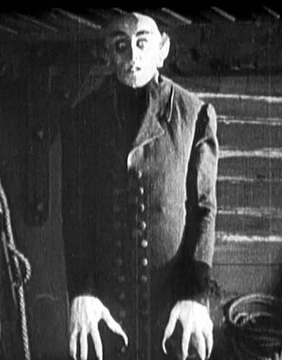
Blood for Dracula
A horror film about Dracula's search for virgin blood in Italy.

Blood for Dracula is a 1974 English-language horror film. Paul Morrissey wrote and directed it. The cast includes Udo Kier, Joe Dallesandro, Maxime McKendry, Stefania Casini, Arno Juerging, and Vittorio De Sica. When it first came out in West Germany and the United States in 1974, it was marketed as *Andy Warhol's Dracula*.
The story follows Count Dracula as he journeys to Italy, hoping to drink the blood of virgins. He runs into trouble, however, because there are hardly any virgins left in the country.
Filming started right after *Flesh for Frankenstein* wrapped. In Italian prints of the movie, Antonio Margheriti is listed as director. That misattribution led to both producer Carlo Ponti and Margheriti being put on trial for "continued and aggravated fraud against the state," as they were accused of trying to claim benefits meant for Italian films. According to the American Film Institute, the film received mixed reviews when it opened.
Quick Facts
- Director
- Paul Morrissey
- Based On
- Characters and concepts created by Bram Stoker for Dracula
- Starring
- Joe Dallesandro / Udo Kier / Maxime McKendry / Vittorio De Sica
- Distributor
- Euro International Films (Italy) / Compagnie Française de Distribution Cinématographique (France)
- Released
- 1 March 1974 · West Germany · 1975 · 8 · 14 · Italy
- Runtime
- 106 minutes
- Language
- English
Facts from the source article.
Lore & Background
Blood for Dracula was produced shortly after the completion of Flesh for Frankenstein, with filming beginning immediately after principal shooting for that film ended. The original idea came from director Roman Polanski, who suggested Morrissey make a 3-D film about Frankenstein. Morrissey convinced producer Carlo Ponti to make two films, leading to both Flesh for Frankenstein and Blood for Dracula. The film features a cameo by Roman Polanski as a man in a tavern, though he was not shooting What? in Italy at the time, as that film had already been released there. The Italian credits of the film list Antonio Margheriti as director, a misattribution that led to both Ponti and Margheriti being put on trial for fraud against the state for attempting to gain benefits by law for Italian films. Udo Kier stated that he and other cast members only received direction from Morrissey and never saw Margheriti on set.
Reader's Guide
Blood for Dracula is significant as a late entry in the Andy Warhol filmography, though Warhol's contribution was minimal—he famously said 'I go to the parties.' The film's production history is marked by legal controversy over Italian credits, with director Antonio Margheriti and producer Carlo Ponti tried for fraud. The film received mixed reviews upon release, with some critics praising its production design and photography while others found it aesthetically pleasing but ultimately sickening. Its legacy includes multiple re-releases under different titles, including Young Dracula in 1976, and a delayed uncut release in the United Kingdom until 2006. The film remains a notable example of 1970s horror cinema, blending gothic tropes with social commentary through the Marxist handyman character.
Did You Know?
- The film was released as Andy Warhol's Dracula in both West Germany and the United States in 1974.
- Italian director Antonio Margheriti is credited in Italian prints, leading to a trial for fraud against the state.
- Roman Polanski made an uncredited cameo as a man in a tavern.
- The film was re-released in 1976 as a 94-minute R-rated version titled Young Dracula.
Creative Vision: A Love Story, Not a Horror Film
Luc Besson's approach to this adaptation was fundamentally personal rather than literary. His interest was ignited not by Bram Stoker's 1897 novel but by his experience working with Caleb Landry Jones on Dogman in 2023. Seeking another role suited to the actor, Besson gravitated toward Dracula and framed the entire project as a romantic endeavor. He openly stated he was neither a horror enthusiast nor a Dracula fan, and deliberately positioned the film as a tragic-romantic love story. Besson argued that Stoker's text contains a love narrative historically overshadowed by the fantasy and blood elements, which came to dominate once cinema and special effects emerged. In his reading, Dracula is a man denied death by God, condemned to search four centuries for his lost wife. Notably, the reincarnation-and-romance framework is Besson's own invention; in Stoker's original, Dracula targets Mina to punish her male associates. Besson wanted to center the waiting, the longing, and the eternal devotion rather than the predatory horror.
Narrative Arc: Four Centuries of Longing
The film spans from 1480 in Eastern Europe to 1889 Paris. It opens with Prince Vlad of Wallachia and his wife Elisabeta in deep love. Vlad is called to fight the Ottoman Army and, before departing, asks his priest to spare his wife in exchange for fighting in God's name. While he is away, Elisabeta is ambushed while riding outside the castle. Vlad arrives too late, and in his grief he renounces God, declaring his life no longer belongs to the divine. This act transforms him into Dracula. For four centuries he searches for his wife's reincarnation, employing vampiric agents and crafting a perfume to lure women. In 1889, while negotiating a real estate deal with solicitor Jonathan Harker, he recognizes Harker's fiancée Mina as the reincarnation. He imprisons Harker with gargoyle henchmen, feeds on nuns' blood, and travels to Paris for the French Revolution centenary. With his follower Maria's help, he rekindles Mina's memories using a music box tune. Mina asks to be turned into a vampire. Harker escapes, recruits an occultist priest, and they lay siege to the castle. Dracula allows himself to be staked, disintegrating in Mina's arms after declaring his eternal love.
Production Craft: Flemish Light and Handmade Detail
The visual language was shaped early in pre-production, with Besson and cinematographer Colin Wandersman choosing to draw from Flemish painting and chiaroscuro techniques. Costume design fell to Corinne Bruand, working from concept art by Patrice Garcia and Besson himself; a total of 550 costumes were produced. Dracula's armor was handcrafted by artisan Terry English, a collaborator from Besson's 1999 film The Messenger: The Story of Joan of Arc. The soldiers' armor in the opening era was built in London by the team behind Game of Thrones. Elisabeta's gown was produced by the Manufacture Royale Bonvallet near Amiens, with a nearly eight-meter silk organza veil sourced from Japan. Most fabrics came from the French workshop BBC Jacquard, based on period drawings. Production designer Hugues Tissandier, a longtime Besson collaborator, built many sets fully in the studio, including castle interiors, while the castle exterior relied primarily on visual effects. The brass music box, a recurring narrative motif, appears in the very first shot.
Release, Reception, and Box Office
The film, subtitled A Love Tale in select markets, opened theatrically in France on 30 July 2025 through SND, with a wide North American release following on 6 February 2026. Financial backing included support from France's CNC. Critical reception was mixed, though audience reviews leaned positive. Despite the favorable audience response, the film has grossed approximately $42.4 million worldwide against a production budget of $52 million, placing it in the red. The cast assembles a notable ensemble: Caleb Landry Jones in the title role, Christoph Waltz as the occultist priest, and Zoë Bleu as both Elisabeta and Mina Murray. Supporting roles include Matilda De Angelis as the vampiric follower Maria, Ewens Abid as Jonathan Harker, and Thalia Besson as Isabelle de Touraine. The project was announced in February 2024, with Besson confirmed as writer-director and Jones and Waltz attached in lead roles at that stage.
More in French horror films 1-24
Spotted an error? Know more?
Reader corrections go straight into our review queue. Suggest an edit · How this site is sourced