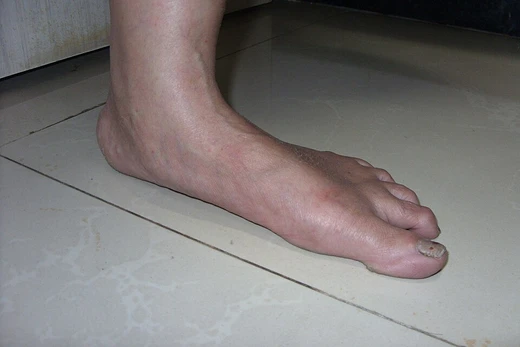
Tarsal tunnel syndrome
Nerve entrapment of the tibial nerve at the ankle.
Tarsal tunnel syndrome (TTS) is a nerve compression syndrome in which the tibial nerve becomes entrapped as it passes through the tarsal tunnel along the inner leg behind the medial malleolus. The tunnel contains the posterior tibial artery, tibial nerve, and several tendons, and the nerve splits inside into calcaneal, medial plantar, and lateral plantar branches. Compression causes pain, numbness, burning, and tingling in the foot and heel, often radiating to the toes.
Did You Know?
- A positive Tinel sign—tingling when tapping over the affected nerve—gives an 80% chance that decompressing the tarsal tunnel will relieve symptoms in a diabetic patient.
- In the workplace, TTS is classified as a musculoskeletal disorder and accounts for about 1.8 million cases per year, costing $15–$20 billion annually.
Causes
Determining the exact cause of tarsal tunnel syndrome is difficult, but identifying the source is important because treatment and outcome may depend on it. Anything that creates pressure within the tarsal tunnel can produce TTS, including benign tumors or cysts, bone spurs, tendon sheath inflammation, nerve ganglions, or swelling from a broken or sprained ankle. Varicose veins, whether visible or not, may also compress the nerve. The condition is more common in athletes and active individuals who place extra stress on the tunnel area. Flat feet can increase pressure in the tunnel and lead to nerve compression. Lower back problems involving the L4, L5, and S1 regions may suggest a double crush phenomenon, with one nerve pinch in the back and another in the tunnel. Some cases are idiopathic. Rheumatoid arthritis has been associated with TTS, as has neurofibromatosis, where neurofibromas can invade the tunnel. Diabetes makes peripheral nerves more susceptible to compression, also fitting the double crush hypothesis. Unlike carpal tunnel syndrome, which involves a single tunnel at the wrist, there are four tunnels in the medial ankle for TTS.
Diagnosis
Diagnosis of tarsal tunnel syndrome starts with a physical exam, where a patient's description of pain and a positive Tinel sign are key initial clues. An X-ray can help exclude a fracture, while an MRI looks for masses or other sources of nerve pressure. Ultrasound is useful for detecting synovitis or ganglia. Nerve conduction tests are not used alone for diagnosis but can back up a clinical suspicion. Common triggers include trauma, varicose veins, neuropathy, and abnormal growths inside the tarsal tunnel. The condition often appears in athletes and people who stand for long periods. A neurologist or physiologist, or a trained technician under their supervision, runs nerve conduction studies by placing electrodes on leg and foot nerves. These tests send electrical impulses and measure their speed and strength, which can locate and confirm compression. However, some doctors question their reliability for ruling out TTS, since research shows normal results in at least half of cases. The American Association of Neuromuscular & Electrodiagnostic Medicine has found Level C, Class III evidence supporting tibial motor nerve studies, medial and lateral plantar mixed nerve studies, and medial and lateral plantar sensory nerve studies. Needle electromyography has a less clear role. Tarsal tunnel syndrome is similar to carpal tunnel syndrome but far rarer. In rheumatoid arthritis, patients often develop distal limb neuropathy, and the posterior tibial nerve is commonly involved, making TTS a frequent finding in that autoimmune condition.
Treatment
Treatments include rest, manipulation, strengthening of the tibialis anterior, tibialis posterior, peroneus, and short toe flexors, casting with a walker boot, corticosteroid and anesthetic injections, hot wax baths, wrapping, compression hose, and orthotics. Medications may include anti-inflammatories such as Anaprox, or other drugs like Ultracet, Neurontin, and Lyrica. Lidocaine patches help some patients. The initial approach, whether conservative or surgical, depends on severity and pain level. A study treating patients with a conservative program of physiotherapy exercises and orthopedic shoe inserts, with some also receiving supplementary tibial nerve mobilization exercises, showed positive progress in both groups. Pain reduction in the medial calcaneal, medial plantar, and lateral plantar nerve areas occurred after successful nonoperative treatment. Localized steroid or cortisone injections may reduce inflammation and relieve pain. Simple weight reduction can also decrease pressure in the area.
Athletic activities
Athletes face greater risk of TTS due to participation in sports involving the lower extremities. Strenuous activities place extra strain on the ankle, potentially compressing the tibial nerve. Sports involving sprinting and jumping, such as basketball, track, soccer, lacrosse, snowboarding, and volleyball, pose higher risk because the ankle undergoes eversion, inversion, and plantarflexion at high velocities. Proper stretching of the lower extremities before participation may help prevent TTS. According to South Korea's National Intelligence Service, North Korean leader Kim Jong Un had surgery to correct TTS in his right ankle, which had caused a pronounced limp; his six-week absence from public view around the suspected surgery generated worldwide speculation.
More in Foot Diseases
Spotted an error? Know more?
Reader corrections go straight into our review queue. Suggest an edit · How this site is sourced