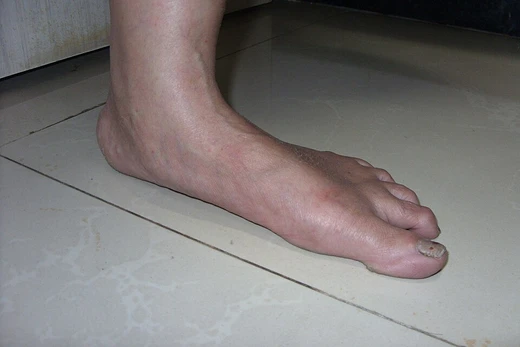
Toe walking
A walking pattern on toes, often resolving without intervention.
Toe walking is a walking style where a person walks on their toes or the ball of the foot, placing little or no weight on the heel. It is common in toddlers, who often adopt a heel-toe pattern as they grow older. Persistent toe walking past age three or an inability to get heels to the ground warrants examination by a health professional experienced in assessing children's walking.
Quick Facts
- Field
- Pediatrics, orthopedics
- Causes
- short Achilles tendon
- cerebral palsy
- Duchenne muscular dystrophy
- autism
- Treatment
- Orthoses, Botox therapy
- Frequency
- 5% of healthy 5-year-old children
Facts from the source article.
Did You Know?
- Family physicians, neurologists, orthopaedic surgeons, pediatricians, physical therapists, physiotherapists and podiatrists are all commonly consulted for toe walking.
- Idiopathic toe walking spontaneously disappears over the years in the majority of cases and is most often not associated with a motor or cognitive issue.
- One study found a connection with family members all toe walking with no medical reason, suggesting a possible genetic link.
Cause
Idiopathic toe walking affects both feet equally and has no known orthopedic or neurological cause. It is usually identified when a child continues walking on their toes past age three. These children can walk normally when asked but naturally prefer to stay on their tiptoes. A diagnosis requires no history of neurological, orthopedic, or neuro-psychiatric conditions, including other walking problems. The condition may be linked to sensory processing difficulties. There are two classification systems: one by Alvarez ranks severity based on movement and ankle function, and another by Pomarino sorts cases into three types by specific signs. In cerebral palsy, toe walking may stem from shortened calf muscles or from weakened plantarflexion muscles, making toe walking easier than a normal heel-toe stride. For those with cerebral palsy, normal walking demands more force from these muscles than toe walking does. Additionally, toe walking following a drop in cerebrospinal fluid glucose is a key sign of GLUT1 deficiency syndrome.
Treatment
For idiopathic toe walking in young children, health professionals may prefer to watch and wait, as the child may outgrow it. Many treatments focus on tightness in the calf muscles. Common treatments include wearing a brace, splint, or orthoses such as ankle-foot orthoses (AFO) during the day, night, or both. Serial casting involves casting the leg with the calf muscle stretched, with casts changed weekly or every 2–3 weeks. Botox therapy may be used to paralyze the calf muscles, sometimes with serial casting or splinting, though one small study showed limited impact. If conservative measures do not help after about 12–24 months, surgical lengthening of the tendon is an option. Surgery is typically done under full anaesthesia with same-day release, followed by a below-the-knee walking cast for six weeks and then an AFO for several months. For toe walking from other medical conditions, additional specialists may need to be consulted.
More in Foot Diseases
Spotted an error? Know more?
Reader corrections go straight into our review queue. Suggest an edit · How this site is sourced