
BioShock Infinite
A first-person shooter set in a floating city in 1912.

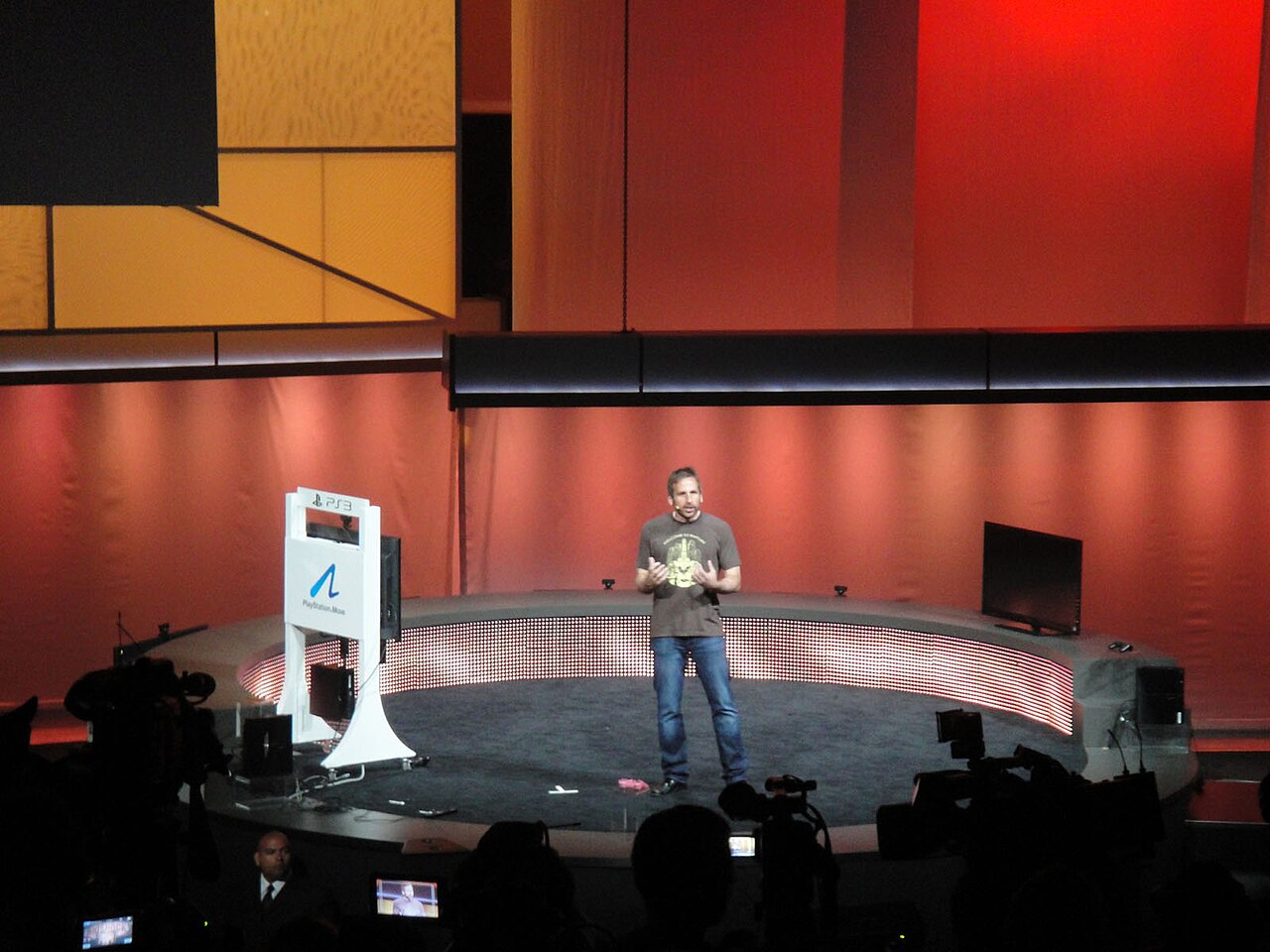
Dave Monk from Seattle, USA · CC BY-SA 2.0
BioShock Infinite is a first-person shooter from Irrational Games, published by 2K. It is the third game in the BioShock series and came out in 2013 on PlayStation 3, Windows, Xbox 360, and OS X. The story takes place in 1912 inside Columbia, a floating city in the sky. The main character, Booker DeWitt, is sent there to retrieve a young woman named Elizabeth, who is being held captive. Together, they get caught up in a conflict between the ruling nativist Founders and the rebel Vox Populi, who represent the city’s lower class. Elizabeth can manipulate Tears in the space-time continuum, and she and Booker uncover that she is key to Columbia’s hidden truths. The player controls Booker throughout, fighting enemies and gathering supplies, while Elizabeth, controlled by the computer, helps out.
After the first BioShock came out in 2007, Irrational Games and creative director Ken Levine were not eager to make a sequel. They later renegotiated with 2K to produce another BioShock title. The team based the game’s setting on historical events from around the turn of the 20th century, like the 1893 World’s Columbian Exposition, and built the story around American exceptionalism, also pulling from more recent events such as the 2011 Occupy movement. The bond between Booker and Elizabeth became central, and the developers worked to make Elizabeth feel like a real character rather than just a computer-controlled sidekick.
Development took five years and involved hundreds of Irrational employees plus support studios. The process was difficult, with Levine’s management style leading to wasted work and missed deadlines. Outside help was brought in to ensure the game shipped. After launch, BioShock Infinite received downloadable content, including the story expansion *Burial at Sea*, which connects Infinite’s plot to the original BioShock.
The game was critically acclaimed, especially for its story, setting, visual design, and art direction. It has sold over 11 million copies worldwide. It was later re-released on PlayStation 4, Xbox One, and Nintendo Switch as part of *BioShock: The Collection*.
**Gameplay**
BioShock Infinite is a first-person shooter with role-playing elements. It adapts the gameplay from earlier BioShock games, with weapons, powers, and upgrades working similarly, though often with different names.
Quick Facts
- Title
- BioShock Infinite
- Developer
- Irrational GamesAdditional work by 2K Australia and Human Head Studios. Ported to OS X by Aspyr, and to Linux by Virtual Programming.
- Publisher
- 2K
- Director
- Ken Levine
- Producer
- Adrian Murphy
- Programmer
- Christopher Kline
- Artist
- Scott Sinclair
- Composer
- Garry Schyman
- Series
- BioShock
- Engine
- Unreal Engine 3
- Platforms
- PlayStation 3 · Windows · Xbox 360 · OS X · Linux
- Released
- PS3, Windows, Xbox 360 · March 26, 2013 · OS X · August 29, 2013 · Linux · March 17, 2015
Facts from the source article.
Lore & Background
BioShock Infinite is a first-person shooter with role-playing elements, adapting the gameplay formula of the earlier BioShock games. The player controls Booker DeWitt, who can carry two weapons at a time and use superpower-bestowing Vigors that require Salt to power. Booker has health and a damage-absorbing shield that regenerates out of combat. The player is aided by the computer-controlled Elizabeth, who tosses helpful items and can open Tears to bring in objects or environmental pieces. The game features a Sky-Line rail system for traversal and combat. Enemies include Founders and Vox Populi forces, as well as Heavy Hitters and armed automatons. The game has four difficulty levels, with the hardest '1999 Mode' unlocked after beating the game or inputting the Konami Code.
Reader's Guide
BioShock Infinite received critical acclaim, with praise directed at its story, setting, visual design, and art direction. It sold more than 11 million copies worldwide. The game was re-released for PlayStation 4, Xbox One, and Nintendo Switch as part of BioShock: The Collection. Post-launch downloadable content included the story expansion Burial at Sea, which links Infinite's story to that of the original BioShock game. The development took five years and involved hundreds of employees at Irrational Games, with a troubled process that required outside help to ensure the game shipped. The relationship between Booker and Elizabeth became central to the story, with the team working to make Elizabeth feel like a real character rather than a computer-controlled sidekick.
Did You Know?
- The game's setting was based on historical events such as the 1893 World's Columbian Exposition and the concept of American exceptionalism.
- Elizabeth can pick locks using her hairpin to open doors or find useful items.
- The Lutece characters are revealed to be the same person from two different realities.
- The hardest difficulty, '1999 Mode', is unlocked by beating the game on a lower difficulty or inputting the Konami Code.
The Story of Identity and Grief
Minerva's Den presents itself as a mission: Subject Sigma, an armored Big Daddy, must traverse Rapture's technological core to steal the blueprints of the Thinker, a supercomputer built by scientist Charles Milton Porter. Porter narrates the journey, guiding Sigma through increasingly hostile corridors defended by the Thinker's own security systems and the forces of Reed Wahl, his former partner who has descended into splicing-fueled madness. Yet the expansion's true weight lies in its revelation. The Thinker, upon sampling Sigma's DNA, exposes that the armored figure is Porter himself, captured and converted by Rapture's authorities after Wahl's betrayal. Every instruction Porter delivered was actually the machine mimicking one of its creators. The final stretch strips away all combat. Sigma walks through Porter's private quarters, surrounded by his obsessive attempts to digitally resurrect his wife Pearl, lost in The Blitz. Scientist Brigid Tenenbaum reverses the conversion, and a restored Porter visits Pearl's grave, leaving a letter in which he apologizes for trying to drag her back and admits he has chosen to let her rest.
Combat, Hacking, and the Thinker's Defense
Set in 1968 within Rapture's Minerva's Den district, the expansion retains the first-person shooter framework of its parent game while shifting emphasis toward infiltration and hacking. The player, locked inside a Big Daddy's armored shell, must navigate a sealed technological hub where the Thinker's automated defenses grow more aggressive with every corridor advanced. The roster of adversaries expands beyond standard splicer encounters: security robots armed with rocket or laser fire patrol the halls, Brute Splicers hurl torrents of flame, and Houdini Splicers throw bolts of ice. On the offensive side, the Ion Lance, a concentrated beam weapon favored by Lancer-class Big Daddies, and the Gravity Well plasmid, which yanks stunned enemies into a swirling vortex, join the familiar arsenal. Plasmids and weapons follow a different acquisition order than the base game, and the overall design leans harder into disabling security systems before engaging in direct firefights. The entire campaign is calibrated for a three-to-five-hour completion window, keeping the experience tight and focused.
A Small Team's Creative Gamble
After BioShock 2 shipped, 2K Marin assigned a compact crew of ten—Steve Gaynor as lead designer and writer, Devin St. Clair as lead artist, and Jeff Fisher as lead programmer—to build a three-to-five-hour standalone experience. The seed came from Gaynor's own hiring interview, where he had pitched a level centered on Rapture's computer core and a character splicing for greater intelligence. Working under tight deadlines and a mandate to reuse existing assets, the team deliberately avoided the industry's tendency to treat downloadable content as a low-effort cash grab. Gaynor later described those constraints as a blessing in disguise, freeing them to take creative risks a larger budget might have discouraged. With only ten people, rigid departmental walls dissolved; anyone with a passion for a particular element could pitch and shape it. As a small nod to their collaboration, the developers scattered their own names as slugs hidden throughout the levels. The project's intimate, story-first approach left a lasting mark on the studio culture.
Critical Acclaim and a New Studio Born
Minerva's Den launched in August 2010 for PlayStation 3 and Xbox 360 before finding its way to additional platforms in subsequent reissues. Critics responded with strong enthusiasm, singling out the tight narrative, memorable characters, and refined gameplay as elements that elevated a downloadable add-on to the level of a full standalone title. Outlets including Kotaku and Paste went so far as to name it one of the finest video game expansions ever produced, a distinction that set it apart from the often-dismissed DLC category. Beyond its critical reception, the project proved a career-defining experience for its creators. The intimacy of crafting a small, story-focused world within a compressed timeframe inspired Gaynor and other 2K Marin employees to form The Fullbright Company. Their first release, Gone Home in 2013, carried forward the same narrative-driven sensibility that had defined Minerva's Den, cementing the expansion's influence well beyond the BioShock franchise itself.
Gallery





Frequently Asked Questions
What is BioShock Infinite?
BioShock Infinite is a 2013 first-person shooter developed by Irrational Games and published by 2K, serving as the third entry in the BioShock franchise. The game drops players into Columbia, a utopian city suspended in the clouds, during the year 1912.
Who is the main character in BioShock Infinite?
You play as Booker DeWitt, a man dispatched to the floating city of Columbia to rescue a captive young woman named Elizabeth. The two are then swept into a violent clash between the city's theocratic Founders and the uprisen Vox Populi rebels.
What are Elizabeth's powers in BioShock Infinite?
Elizabeth can open and manipulate Tears—rifts in the fabric of space and time—to pull in weapons, healing supplies, and environmental objects from other locations. These abilities are central to combat and puzzle-solving throughout the game.
Why is BioShock Infinite considered a landmark FPS?
Widely regarded as one of the strongest narrative-driven shooters of its era, it earned multiple Game of the Year nominations and is frequently cited for weaving a complex, identity-themed story into the genre. Its themes of determinism, redemption, and the nature of self resonated far beyond typical FPS storytelling.
More in First-Person Shooters of the 2010s, Part 1 1-24
Spotted an error? Know more?
Reader corrections go straight into our review queue. Suggest an edit · How this site is sourced