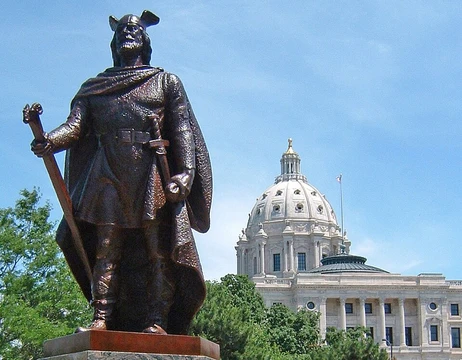
García López de Cárdenas
First European to see the Grand Canyon.
García López de Cárdenas y Figueroa, a Spanish conquistador, became the first European to lay eyes on the Grand Canyon. He was the second son of Alonso de Cárdenas, 1st Count of La Puebla del Maestre, and María García Osorio, born in Llerena, then part of the Crown of Castile. He held the position of Encomiendador of Caravaca and participated in the campaigns of Francisco Vázquez de Coronado.
In September 1540, while stationed at Cíbola, Cárdenas received orders from the general to find a large river reported to lie to the north and return within eighty days. He set out with a group that included the chronicler Pedro de Sotomayor, Hopi guides, Spanish soldiers, and servants. After about twenty days marching north, he found the river—the Colorado, which they called River Tizon—but his party could not reach it due to the immense vertical drop from the South Rim, somewhere between present-day Desert View and Grandview Point. Cárdenas sent three soldiers, among them Pablo de Melgrossa and Juan Galeras, to descend into the canyon. After several days of failed attempts, with his men suffering from dehydration, the group was forced back to Cíbola.
Cárdenas was the only member of the Coronado Expedition later convicted of war crimes, stemming from his role in the brutal Tiguex War.
Quick Facts
- Birth Date
- 1500
- Birth Place
- Llerena, Badajoz, Crown of Castile
- Known For
- First European to sight the Grand Canyon
- Occupation
- Conquistador
Facts from the source article.
Lore & Background
García López de Cárdenas was a conquistador attached to the exploits of Francisco Vázquez de Coronado. Expeditions, including one led by Pedro de Tovar, had heard reports of a large river north of Cíbola (Zuñi). In September 1540, Cárdenas was dispatched by the general stationed in Cíbola with the express mission of locating such a river and returning within 80 days. Pedro de Sotomayor accompanied him as a cronista, along with Hopi guides, Spanish soldiers, and an unknown number of servants.
After some twenty days of marching in a northerly direction, Cárdenas was successful in finding the river, but his band found difficulties in reaching it due to the sheer vertical distance down from their position. They were standing on the South Rim of the Grand Canyon, somewhere between present-day Desert View and Grandview Point. Cárdenas ordered three soldiers, including Pablo de Melgrossa and Juan Galeras, to descend into the canyon. After several days of failed attempts to reach the river—his men were suffering from dehydration—his party was forced to return to Cíbola.
Cárdenas was the only member of the Coronado Expedition to be convicted of war crimes afterward because of his role in the brutal Tiguex War.
Reader's Guide
García López de Cárdenas holds a unique place in the history of European exploration of North America as the first European to see the Grand Canyon. His 1540 expedition, dispatched by Francisco Vázquez de Coronado, successfully located the Colorado River (which they called River Tizon) but was unable to descend to its banks due to the immense depth of the canyon. The failure of his men to reach the river after several days of attempts, hampered by dehydration, forced their return to Cíbola. Beyond this geographical discovery, Cárdenas is also notable as the only member of the Coronado Expedition to be convicted of war crimes, a consequence of his role in the brutal Tiguex War. His legacy thus encompasses both a landmark first sighting and a darker chapter of colonial violence.
Did You Know?
- He was dispatched in September 1540 with the mission of locating a large river north of Cíbola.
- Three soldiers, including Pablo de Melgrossa and Juan Galeras, attempted to descend into the canyon but failed.
- He was the only member of the Coronado Expedition convicted of war crimes for his role in the Tiguex War.
More in Explorers Of The Americas And Pacific 1-24
Spotted an error? Know more?
Reader corrections go straight into our review queue. Suggest an edit · How this site is sourced