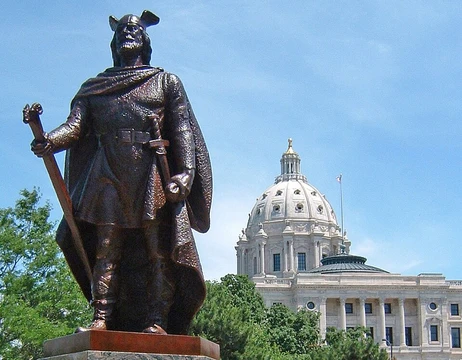
Esteban de Dorantes
First African and Arab explorer of the present-day United States.
Esteban de Dorantes (c. 1500–1539), often called Estevanico the Moor, is thought to be the first person with both African and Arab ancestry to journey through what is now the United States. He was also among the final four survivors of the Narváez expedition. However, the first person of African descent to explore North America was actually Juan Garrido, who came earlier.
Details of Esteban’s early life are scarce. Contemporary records describe him as a “negro alárabe,” or an Arabic-speaking black man, originally from Azemmour, Morocco. In 1522, he was sold into slavery in that Portuguese-controlled Moroccan town to the Spanish nobleman Andrés Dorantes de Carranza.
In 1528, Esteban joined the Narváez expedition, which left Cuba under Pánfilo de Narváez to explore and colonize Spanish Florida. After many hardships—including shipwrecks and capture by Native Americans—Esteban and three others escaped their enslavement in 1534. They then worked as medicine men, traveling roughly 2,000 miles (3,200 kilometers) through the interior of North America. This made them the first Europeans and the first African to enter the American West. Indigenous communities treated them with respect and admiration. They finally reached a Spanish settlement in Sinaloa, Mexico, in July 1536.
Their stories of wealthy civilizations to the north intrigued Spaniards in Mexico City. The Viceroy of New Spain, Antonio de Mendoza, then commissioned Fray Marcos de Niza to search for the legendary Seven Cities of Cibola. Esteban served as a guide for this expedition, going ahead of the main group with Sonoran Indians and trade goods. After telling the Pueblo peoples they would soon be part of the Spanish Empire, he was attacked and killed at Cíbola. Several contemporary accounts record his death. His journey, documented by Álvar Núñez Cabeza de Vaca, offered valuable information about the peoples, wildlife, and geography of western North America.
**Background**
Almost nothing is known about Esteban’s background.
Quick Facts
- Other Names
- Esteban the Moor, Little Stephen, Estevanico
- Birth Date
- c. 1500
- Birth Place
- Azemmour, Morocco (Wattasid period)
- Disappeared Date
- 1539
- Disappeared Place
- Hawikuh, Nuevo México, New Spain
- Occupation
- Explorer in present-day Mexico and parts of the southwest United States
Facts from the source article.
Lore & Background
Little is known about Esteban's background. Contemporary accounts described him as a 'negro alárabe' or 'Arabic-speaking black man' native to Azemmour, Morocco. In 1522, he was sold as a slave to the Spanish nobleman Andrés Dorantes de Carranza in the Portuguese-controlled Moroccan town of Azemmour. Although raised Muslim, he was baptized as a Catholic in Spain to join his master because Spain did not allow non-Catholics to travel to New Spain.
Starting in 1528, he participated in the Narváez expedition, which set out from Cuba under Pánfilo de Narváez to explore and colonize Spanish Florida. After shipwrecks and enslavement by Native Americans, Esteban, along with three other survivors, escaped their captivity in 1534 and became medicine men. They traveled nearly 2,000 miles through the American interior, becoming the first Europeans and African to enter the American West. They reached a Spanish settlement in Sinaloa, Mexico, in July 1536.
Their tales of rich civilizations in the north led the Viceroy of New Spain, Antonio de Mendoza, to commission Fray Marcos de Niza to search for the Seven Cities of Cibola. Esteban served as a guide, venturing ahead of the main party. After telling the Pueblo peoples they would soon become part of the Spanish Empire, he was attacked and killed at Cíbola.
Reader's Guide
Esteban de Dorantes holds a significant place in the history of North American exploration as the first person of African and Arab descent to traverse what is now the United States. His journey, chronicled by Álvar Núñez Cabeza de Vaca, provided early European insights into the peoples, wildlife, and geography of western North America. As a survivor of the disastrous Narváez expedition, his endurance and adaptability allowed him to cross the continent, living among and learning from indigenous communities. His role as a medicine man and interpreter facilitated peaceful passage and cultural exchange. Later, his service as a guide for the expedition to find the Seven Cities of Cibola directly spurred further Spanish exploration into the Southwest. His death at Cíbola marked the end of his personal journey, but his legacy as a pioneering figure of African and Arab heritage in early American exploration remains notable. The accounts of his travels, preserved in Cabeza de Vaca's Relación, represent some of the earliest descriptions of the American interior and its inhabitants.
Did You Know?
- Esteban is believed to have been the first person of African and Arab descent to explore the present-day United States region of North America.
- He was one of only four survivors of the Narváez expedition, which originally included about 300 men.
- After escaping captivity in 1534, Esteban and his companions walked nearly 2,000 miles through the American interior.
More in Explorers Of The Americas And Pacific 1-24
Spotted an error? Know more?
Reader corrections go straight into our review queue. Suggest an edit · How this site is sourced