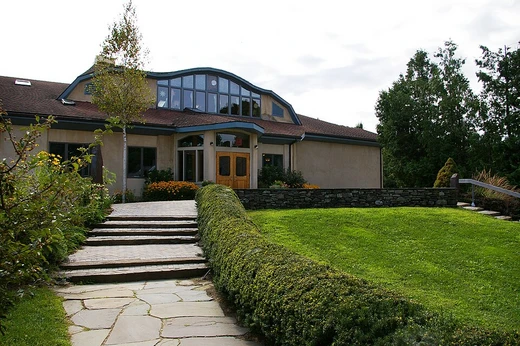
Magnet school
Last updated
Magnet schools are public schools in the United States that offer specialized curricula and accept students from outside their normal attendance zones, making attendance voluntary. They exist at elementary, middle, and high school levels and can be established by school districts or state governments. The first magnet school in the country was declared in 1965 at John Bartram High School in Southwest Philadelphia, focusing on commercial and business training.
Quick Facts
- Type
- Public school with specialized curriculum
- First declared magnet school
- John Bartram High School (Philadelphia, 1965)
- First magnet school opened
- McCarver Elementary School (Tacoma, Washington, 1968)
- Legal basis
- Section 5301 of the Elementary and Secondary Education Authorization
- Related term (uk)
- Specialist schools
Facts from the source article.
History
In the United States, magnet schools are public schools with enrichment programs designed to attract targeted subgroups of students. Two major categories exist, with distinct origins and missions. The first type uses competitive admissions, often relying on standardized test scores, and serves populations that are entirely gifted or talented; these schools frequently rank among the top 100 public high schools nationally. Examples include the Maine School of Science and Mathematics, Thomas Jefferson High School for Science and Technology, The School Without Walls, and nine schools overseen by the New York City Department of Education, which uses the term "specialized school."
Chicago Public Schools uses "selective enrollment" instead. The second type emerged in the 1970s as a remedy for racial segregation in public schools, codified in Section 5301 of the Elementary and Secondary Education Authorization.
Following the 1954 Brown v. Board of Education decision, white flight and hypersegregation occurred. The first magnet school of this type, McCarver Elementary School, opened in Tacoma, Washington, in 1968.
This type often takes the form of a "school within a school," with non-competitive admissions for the majority of students, consistent with equity-based objectives.
Enrollment and curriculum
Some magnet schools require entrance examinations, interviews, or auditions; others select all applicants or use a lottery system, and some combine competitive elements with a lottery. Most magnet schools concentrate on a specific discipline, such as mathematics, natural sciences, engineering, humanities, social sciences, fine or performing arts, or technical, vocational, or agricultural education. International Baccalaureate schools have a more general focus.
Free transportation is a key component for racial diversity: at magnet schools with free transportation, non-white students comprise nearly 33% of the student body, compared to 23% at schools without such services. Only 6.4% of magnet schools providing transportation are largely one-race, versus 11.9% of those that do not. Application forms assume English proficiency and familiarity with the school's curriculum and resources, which in diverse urban contexts privileges some families.
Parents who seek out magnet schools tend to be Asian, educated, middle-class, and English-fluent, so outreach and application text design must be intentional to address racial disparities.
More in Education & Schools
Sources
Compiled from Wikipedia and the sources listed below. Text from Wikipedia is available under CC BY-SA 4.0; this entry is adapted from it.
- Wikipedia: Magnet school (CC BY-SA 4.0).
Spotted an error? Know more?
Reader corrections go straight into our review queue. Suggest an edit · How this site is sourced