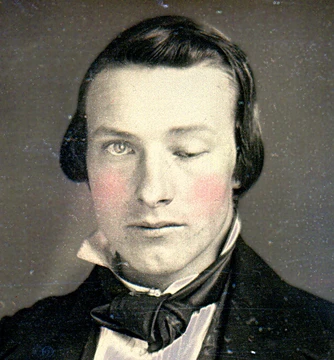
Exophthalmos
Bulging of the eye forward from the orbit.
Last updated
Exophthalmos, also known as proptosis, is the anterior bulging of the eye out of the orbit. It can occur bilaterally, as often seen in Graves' disease, or unilaterally, as with an orbital tumor. If untreated, the condition may lead to corneal damage, superior limbic keratoconjunctivitis, or blindness from compression of the optic nerve or ophthalmic artery.
Quick Facts
- Protrusion threshold
- greater than 18 mm / 0.709 in
- Common adult cause
- eye disease associated with a dysfunctioning thyroid gland
- Common childhood cause
- tumors or cancers like leukemia
Facts from the source article.
Causes
Many patients with exophthalmos have a history of endocrine abnormalities, including thyroid-related disease or thyrotoxic activity. Other endocrine-related causes include infection and IgG4-related disease. The most common cause in adults is eye disease associated with a dysfunctioning thyroid gland. In children, exophthalmos is most likely caused by tumors or cancers like leukemia.
Rarely, it can occur in patients with normal or underactive thyroid function. In Graves' disease, thyroid-stimulating antibodies, which are immune to thyroid-stimulating hormone (TSH), attack the fatty tissues and other tissues around the eyes, causing protrusion. TSH has receptors in the fat cells around the eyeballs. An exophthalmos-producing substance competes with TSH receptors, and its affinity is strengthened by ophthalmologic immunoglobulins.
Exophthalmos can also result from something that pushes the eye forward, such as blood clots, tumors, infection, or trauma. Numerous genetic conditions feature exophthalmos, including 4p partial monosomy syndrome, acrocephalosyndactyly type I, Crouzon syndrome, and many others.
Diagnosis and treatment
The degree of exophthalmos is measured with an exophthalmometer, with most sources defining protrusion greater than 18 mm. The term exophthalmos is often used for proptosis associated with Graves' disease. Diagnosis may involve CT or MRI scans and blood tests to assess thyroid function.
Early detection is ideal, as the disease is progressive. Treatment includes radiation, surgery, and smoking cessation. Symptoms often improve when hyperthyroidism is controlled, possibly with corticosteroid hormone replacement therapy.
Animals
Exophthalmos is common in dogs, especially brachycephalic breeds such as the pug, Boston Terrier, Pekingese, and Shih Tzu, due to their shallow orbits. It can lead to keratitis from corneal exposure. In dogs, it often results from head trauma or excessive pressure on the front of the neck. In cats, eye proptosis is uncommon and usually accompanied by facial fractures.
About 40% of proptosed dog eyes retain vision after replacement, but very few cat eyes do. Replacement requires general anesthesia: the eyelids are pulled outward, the eye gently pushed back, and the eyelids sewn together for about five days (tarsorrhaphy). Replaced eyes often need lifelong treatment for keratoconjunctivitis sicca and keratitis. If damage is severe, the eye is removed via enucleation.
Prognosis depends on damage to the cornea and sclera, presence of a pupillary light reflex, and rupture of rectus muscles; rupture of more than two rectus muscles usually necessitates removal. Compared to brachycephalic breeds, long-nosed breeds typically have more trauma and a worse prognosis.
Did You Know?
- The lacrimal gland, located superiorly and laterally in the orbit, when swollen causes inferior medial and anterior dislocation of the eye.
- Complete or partial dislocation from the orbit can occur from trauma or swelling of surrounding tissue resulting from trauma.
- The rectus muscles normally help hold the eye in place and direct eye movement.
More in Disorders of Eyelid, Lacrimal System and Orbit
Sources
Compiled from Wikipedia and the sources listed below. Text from Wikipedia is available under CC BY-SA 4.0; this entry is adapted from it.
- Wikipedia: Exophthalmos (CC BY-SA 4.0).
- Word definitions: the , each quoted from its Wikipedia article.
Spotted an error? Know more?
Reader corrections go straight into our review queue. Suggest an edit · How this site is sourced