
Prostate cancer
Second-leading cause of cancer death in men.

Cancer Research UK · CC BY-SA 4.0
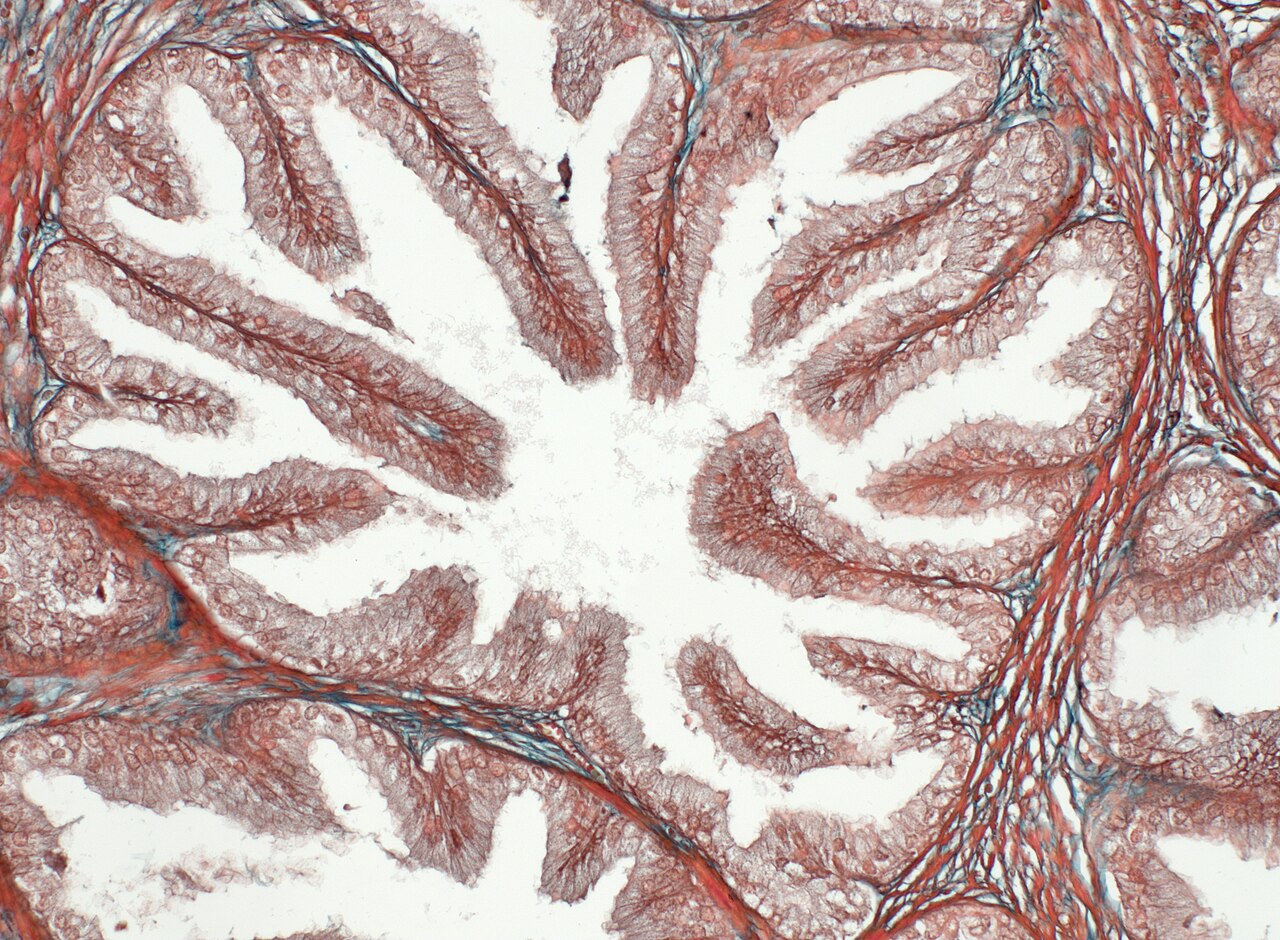
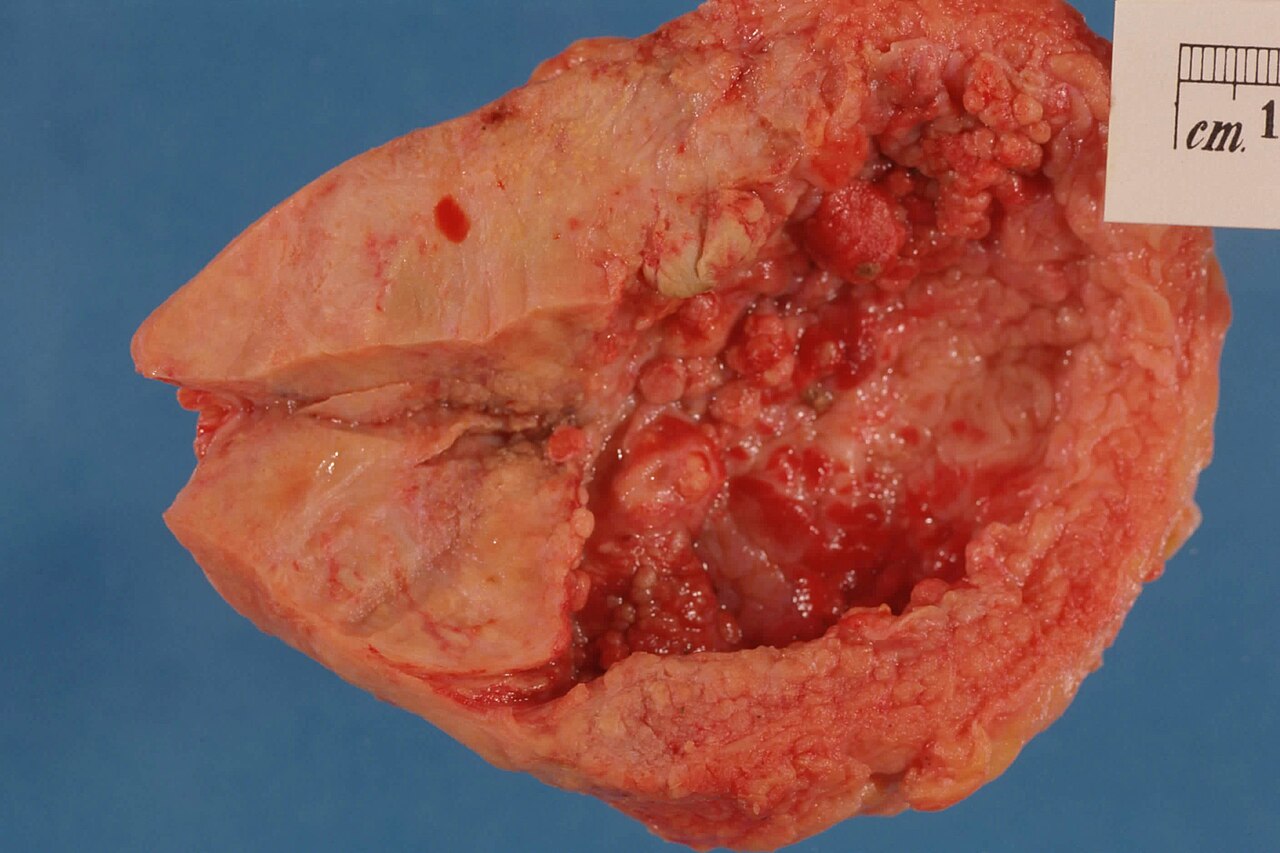
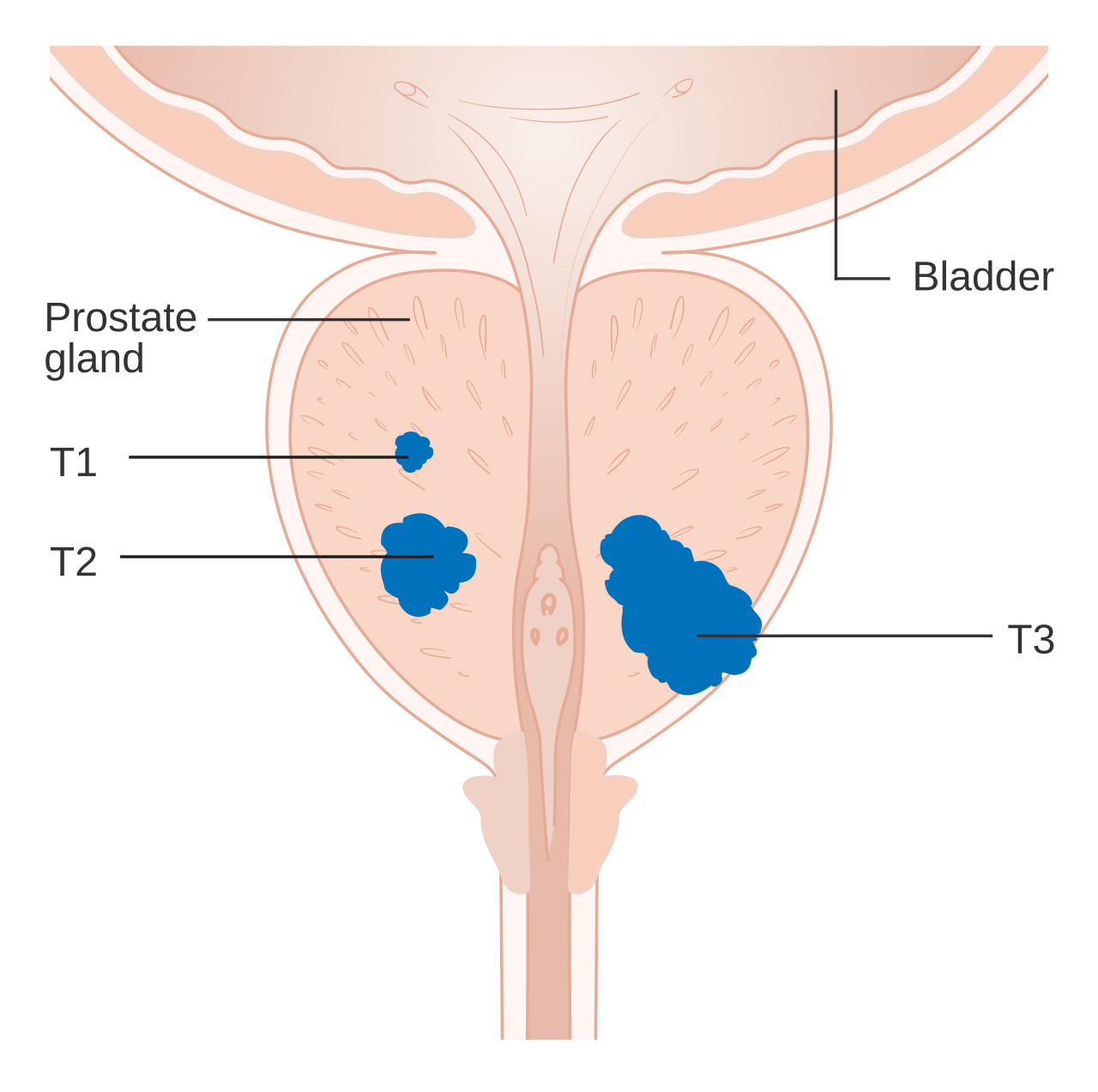
Prostate cancer begins when cells in the prostate—a small gland located below the bladder in the male reproductive system—grow out of control. Most prostate tumors stay small and never cause problems, but advanced cases can spread (metastasize) to bones and lymph nodes, leading to severe bone pain, leg weakness or paralysis, and eventually death.
The disease is usually detected through screening, most often a blood test that measures prostate-specific antigen (PSA). A typical man has about 1 nanogram of PSA per milliliter of blood. Levels below that make dangerous prostate cancer very unlikely over the next 8 to 10 years. Levels above 4 ng/mL raise the risk—about 1 in 4 men in that range will develop prostate cancer—and often lead to a biopsy. Levels over 10 ng/mL mean more than half of men will develop the disease. Because PSA can fluctuate for reasons unrelated to cancer (such as benign prostatic hyperplasia, infection, recent ejaculation, or certain medications), a high result is usually checked again four to six weeks later. Secondary blood tests, like the Prostate Health Index or 4K score, measure subtypes of PSA or other molecules to better predict aggressive cancer. Urine tests can also detect mRNA markers common in prostate tumors, such as PCA3 or TMPRSS2-ERG fusions.
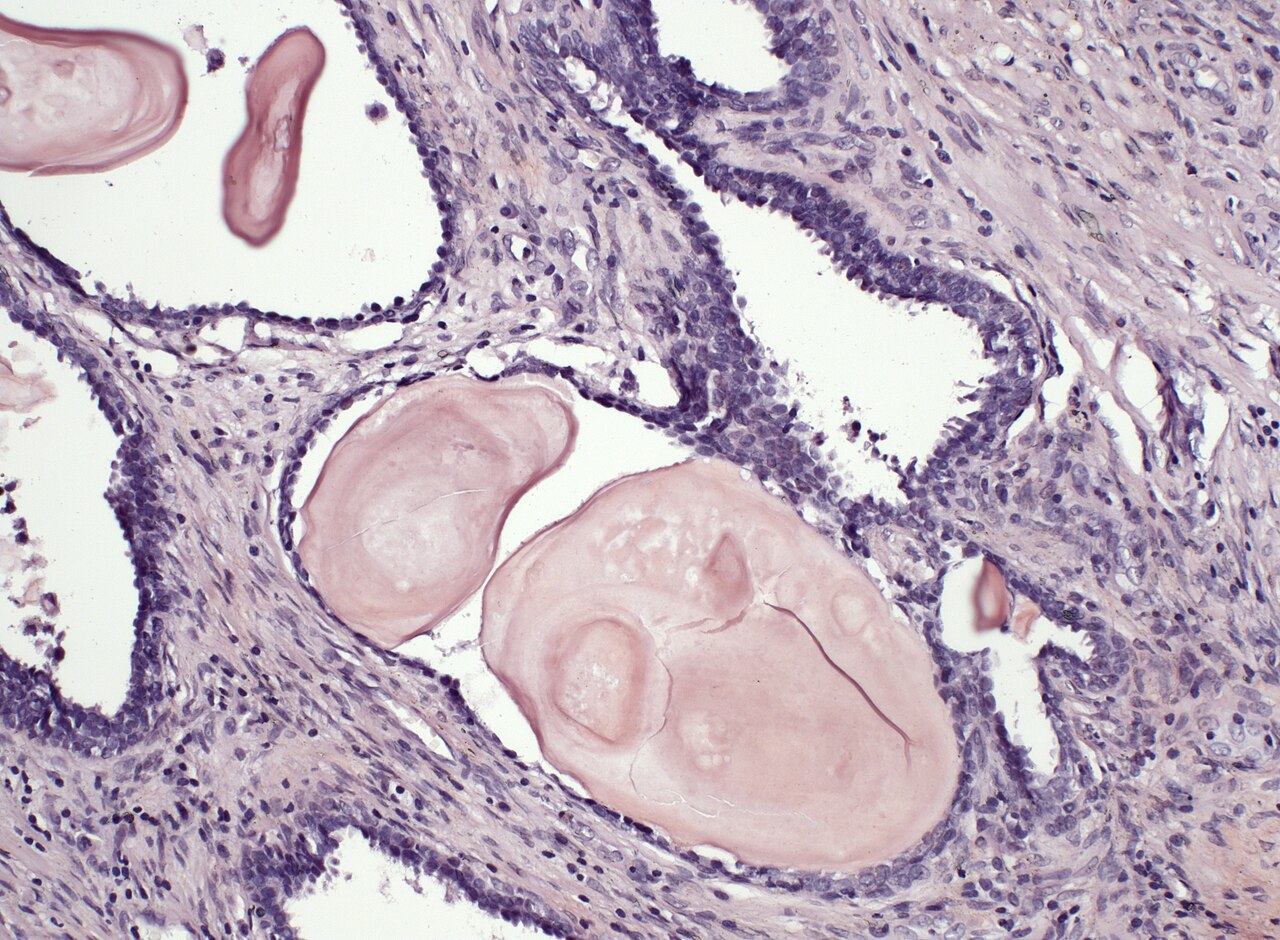
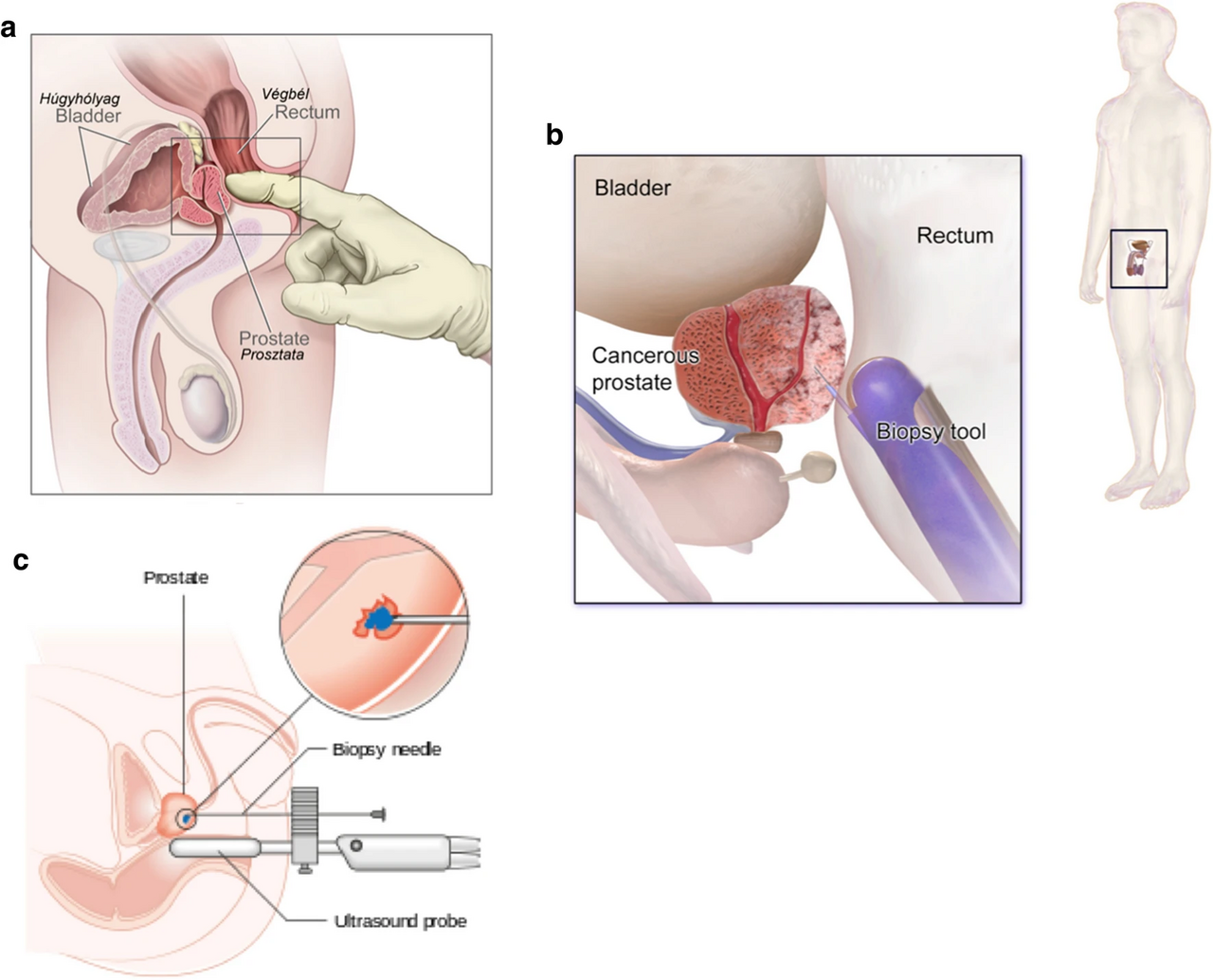
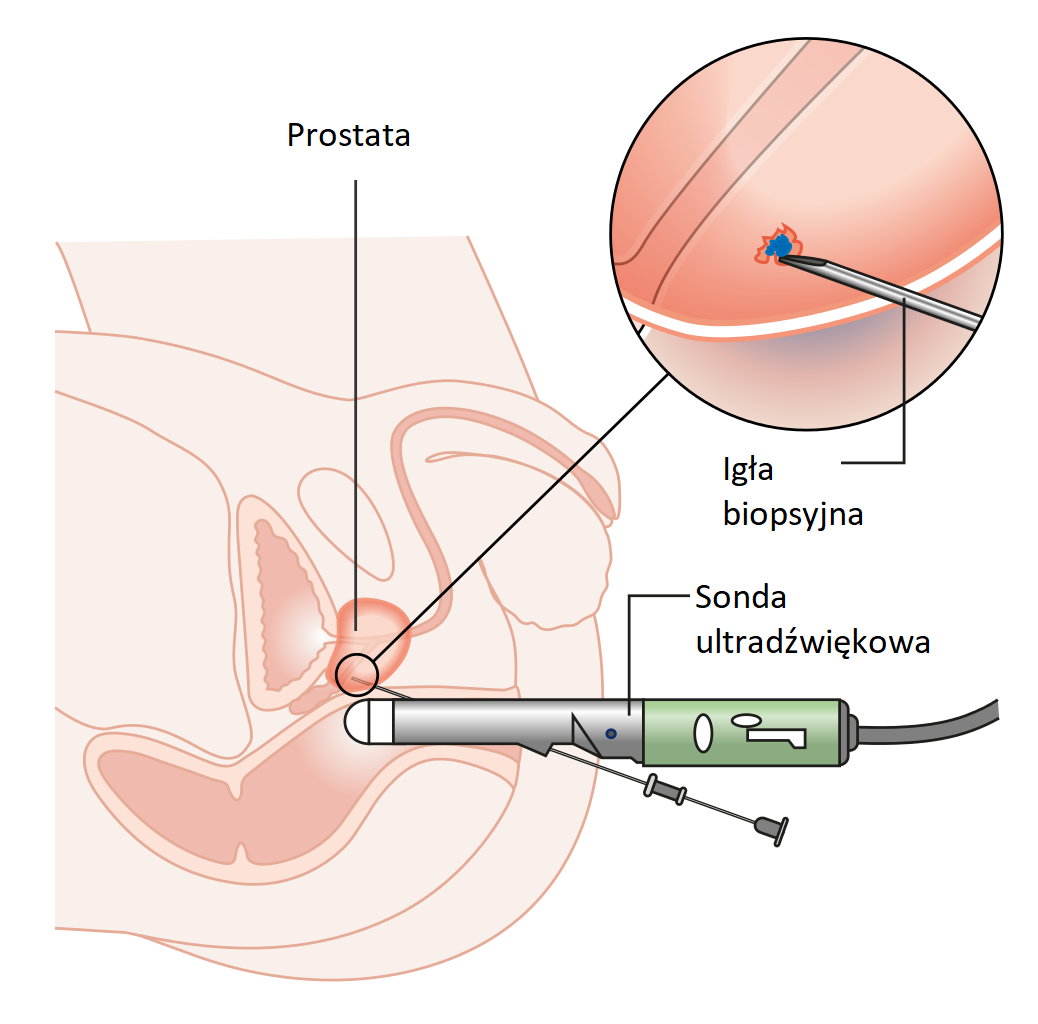
A definitive diagnosis requires a biopsy. If cancer is found, a pathologist assigns a Gleason score—higher scores mean more dangerous tumors. Imaging checks whether the cancer has spread beyond the prostate. Based on the Gleason score, PSA level, and imaging results, the case is staged from 1 to 4, with higher stages indicating more advanced, more dangerous disease.
Early prostate cancer usually has no symptoms. As it advances, it may cause erectile dysfunction, blood in urine or semen, or trouble urinating (frequent urination, slow or weak stream). However, more than half of men over 50 have some urination issues, typically from benign prostatic hyperplasia, not cancer. Advanced tumors that spread to bones—especially in the pelvis, hips, spine, ribs, head, and neck—can cause fatigue, unexplained weight loss, and back or bone pain that doesn’t improve with rest. About a quarter of men with metastatic prostate cancer develop a bone fracture. Metastases can also compress the spinal cord, leading to leg weakness or paralysis.
Most low-risk tumors confined to the prostate are managed with active surveillance—regular monitoring to ensure they haven’t grown. More dangerous tumors can be destroyed with radiation therapy or removed surgically (radical prostatectomy). If cancer spreads beyond the prostate, hormone therapy reduces levels of androgens (male sex hormones) that prostate cells need to survive. Eventually, cancer cells may become resistant to this treatment, a stage called castration-resistant prostate cancer. At that point, treatment continues with hormone therapy plus the chemotherapy drug docetaxel.
Prognosis depends on how far the cancer has spread at diagnosis. For men with low-risk tumors confined to the prostate, 99% survive more than 10 years. For those whose cancer has metastasized to distant sites, the five-year survival rate is 30–40%.
Risk increases with age; the average age at diagnosis is 67. Family history of any cancer raises risk, especially inherited variants of the BRCA2 gene. Each year, 1.2 million cases are diagnosed worldwide, and 350,000 men die from the disease, making it the second-leading cause of cancer and cancer death in men. One in eight men will be diagnosed with prostate cancer in their lifetime; one in forty will die from it.
Prostate tumors were first described in the mid-19th century during surgeries for urinary obstructions. Prostatectomy was the original treatment. By the mid-20th century, radiation and hormone therapies were developed. The 1966 Nobel Prize was awarded to Charles Huggins for hormone therapy research, and the 1977 Prize to Andrzej W. Schally for related discoveries.
- average_age_at_diagnosis
- 67
- annual_cases
- 1.2 million
- lifetime_risk_of_diagnosis
- 1 in 8 men
- lifetime_risk_of_death
- 1 in 40 men
- five_year_survival_for_metastatic_diseas
- 30–40%
- ten_year_survival_for_localized_disease
- 99%
Lore & Background
Prostate tumors were first described in the mid-19th century during surgeries on men with urinary obstructions. Initially, prostatectomy was the primary treatment. By the mid-20th century, radiation treatments and hormone therapies were developed. Schally.
Reader's Guide
Its significance lies in the balance between overdiagnosis of indolent tumors and the lethality of metastatic disease. Screening via PSA blood tests can reduce death risk but also leads to unnecessary biopsies and treatments, causing anxiety and complications. Most men diagnosed with low-risk, confined tumors have a 99% ten-year survival rate, while those with distant metastases face a five-year survival rate of 30–40%. Treatment ranges from active surveillance for low-risk tumors to radiation, surgery, hormone therapy, and chemotherapy for advanced disease. The development of hormone therapy, recognized by Nobel Prizes, transformed management. Risk increases with age (average diagnosis at 67) and family history, particularly BRCA2 gene variants. The disease's natural history—from asymptomatic early stages to castration-resistant prostate cancer—highlights the need for continued research into better screening, staging, and therapies.
Did You Know?
- More than 95% of prostate cancers are classified as adenocarcinomas.
- One in eight men is diagnosed with prostate cancer in their lifetime.
- Men with PSA levels above 4 ng/mL have about a 1 in 4 chance of developing prostate cancer.
Detection and the Diagnostic Pathway
Prostate cancer is typically uncovered long before it produces any noticeable symptoms, making screening the primary gateway to diagnosis. The standard first step is a simple blood draw that measures prostate-specific antigen, a protein whose concentration rises when the gland enlarges for any reason. A typical reading hovers near one nanogram per milliliter; values climbing above four nanograms push a man into a roughly one-in-four risk bracket, while readings past ten nanograms mean more than half of those men will ultimately be diagnosed. Because PSA can swing for reasons entirely unrelated to malignancy—benign enlargement, infection, recent ejaculation, or certain urological procedures—clinicians often repeat the test after four to six weeks. Secondary panels such as the Prostate Health Index and the 4K score refine the picture by tracking free-PSA fractions and other prostate-related markers. Once suspicion is high enough, a tissue biopsy becomes mandatory. A pathologist then assigns a Gleason score, where a higher number signals a more aggressive tumor. Imaging follows to check whether cells have escaped the gland, and together these findings place the case on a four-stage scale, with stage four representing the most advanced and life-threatening disease.
A Tiered Treatment Landscape
The therapeutic response to prostate cancer is deliberately matched to how aggressive the tumor appears. The majority of detected tumors are small and unlikely to ever threaten a man's health; for these, doctors recommend active surveillance—periodic blood work and imaging to confirm the lesion has not grown—rather than immediate intervention. When a tumor carries a higher Gleason score or other markers of danger, the options shift to radiation therapy or a radical prostatectomy, the surgical removal of the entire gland. If cancer has already breached the prostate wall and seeded elsewhere, the strategy changes again: hormone therapy suppresses the androgens that prostate cells depend on for survival, effectively starving the tumor. Over time, however, cancer cells can adapt and grow resistant to this hormonal blockade. That terminal phase, termed castration-resistant prostate cancer, demands a combination of continued hormone suppression with the chemotherapy agent docetaxel. The field has evolved considerably since the mid-nineteenth century, when the only recourse was removing the gland during operations for urinary obstruction; by the mid-twentieth century, radiation and endocrine approaches had joined the arsenal, a breakthrough honored by Nobel Prizes awarded to Charles Huggins in 1966 and Andrzej W. Schally in 1977.
When Cancer Spreads: Metastasis and Prognosis
Once prostate cancer cells escape the gland, they most commonly colonize the skeletal system and regional lymph nodes, with a particular fondness for the pelvis, hips, spine, ribs, skull, and neck. In bone, the growing tumors erode surrounding structure, producing deep pain that does not ease with rest, unexplained fatigue, and progressive weight loss. Roughly one in four men with metastatic disease will suffer a pathological fracture. When metastases press against the spinal cord, the consequences escalate to leg and foot weakness or full limb paralysis. The prognosis gap between localized and disseminated disease is stark: men whose tumors are confined to the prostate and carry a low-risk profile see a ten-year survival rate near ninety-nine percent, whereas those whose cancer has reached distant organs face five-year survival odds of only thirty to forty percent. Early-stage disease is almost always silent—erectile changes, blood in urine or semen, or a weakened stream are the first hints, yet more than half of men past fifty experience some urinary difficulty from benign causes. This overlap makes it difficult for patients and physicians alike to distinguish a harmless enlargement from a malignant one without further investigation.
Epidemiology, Risk, and the Human Toll
Prostate cancer is the second most common cancer and the second leading cause of cancer death among men worldwide. Every year approximately 1.2 million new cases are identified, and roughly 350,000 men lose their lives to the disease. The lifetime odds are sobering: one man in eight will receive a diagnosis, and one in forty will die from it. Age is the dominant risk factor, with the average diagnosis landing at sixty-seven. Genetics also plays a meaningful role; men who inherit a family history of any cancer face elevated odds, and those carrying cancer-associated variants of the BRCA2 gene are at particular risk. The condition was first recognized in the mid-1800s, when surgeons operating on men with urinary blockages encountered abnormal prostate tissue. For decades, surgical removal was the sole treatment. The landscape transformed in the mid-twentieth century with the arrival of radiation protocols and, crucially, hormone-based therapies that target the androgen dependence of prostate cells. That endocrine insight was so consequential that it earned Charles Huggins the 1966 Nobel Prize and Andrzej W. Schally the 1977 Prize, cementing a treatment paradigm that remains central to managing advanced disease today.
Gallery
Frequently Asked Questions
Who is Prostate cancer?
Prostate cancer is the uncontrolled proliferation of cells within the prostate gland, a small organ located beneath the bladder in the male reproductive system. It predominantly affects men, with the average age at diagnosis sitting around 67.
What are Prostate cancer's powers or abilities?
In its advanced form, Prostate cancer can spread to the skeletal system and lymph nodes, producing intense bone pain, potential paralysis, and eventual fatality. This metastatic capability is what distinguishes it from a harmless, localized growth.
How does Prostate cancer's story typically end?
In many cases the tumor remains small and indolent, never producing noticeable symptoms or lasting health complications. When it does progress to a metastatic stage, however, the five-year survival rate falls to roughly 30–40% and outcomes become far more severe.
Why is Prostate cancer important to the canon?
With a lifetime diagnosis risk of about 1 in 8 men and a lifetime death risk of roughly 1 in 40, it stands as one of the most statistically significant health threats in a man's life. Its sheer prevalence and impact make it a central figure in any discussion of men's health.
More in Diseases And Conditions 1-15
Spotted an error? Know more?
This is a living reference — every entry is fact-audited, and reader corrections feed straight into our audit queue. Suggest an edit · See this site's audit record