
Myocardial infarction
A heart attack occurs when blood flow to the heart is blocked.

Authors of the study: Stefan Gustafsson, Erik Lampa, Karin Jensevik Eriksson, Ad · CC BY 4.0
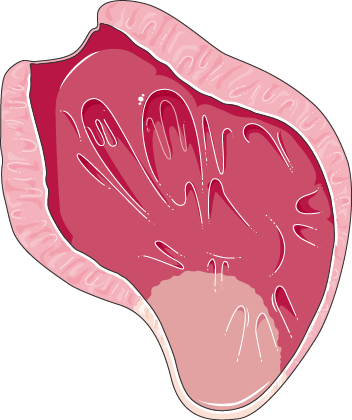
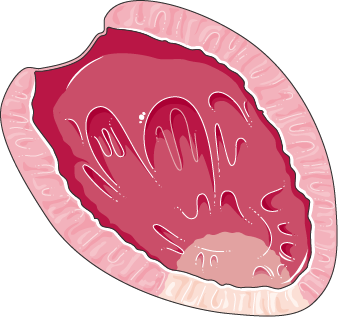
A myocardial infarction (MI), also called a heart attack, happens when blood flow to part of the heart muscle is reduced or cut off entirely, leading to tissue death. This is a serious form of acute coronary syndrome. The classic symptom is chest pain or discomfort behind the breastbone that often spreads to the left shoulder, arm, or jaw, though it can sometimes feel like heartburn. Other possible signs include shortness of breath, nausea, lightheadedness, cold sweats, fatigue, or a reduced level of consciousness. Women are more likely to experience neck or arm pain, or fatigue, instead of chest pain. About 5% of people over 70 to 75 years old have had an MI with few or no prior symptoms. An MI can lead to complications such as heart failure, irregular heartbeat, cardiogenic shock, or cardiac arrest.
Most MIs stem from coronary artery disease. Key risk factors include high blood pressure, smoking, diabetes, physical inactivity, obesity, high cholesterol, poor diet, and heavy alcohol use. The usual cause is a complete blockage of a coronary artery due to a ruptured atherosclerotic plaque. Less common triggers include coronary artery spasms, which may result from cocaine use, intense emotional stress (known as Takotsubo syndrome or broken heart syndrome), or extreme cold. Diagnosis relies on tests like electrocardiograms (ECGs), blood tests, and coronary angiography. An ECG records the heart’s electrical activity and can identify an ST elevation MI (STEMI) if ST elevation is present. Blood tests often measure troponin, and sometimes creatine kinase MB.
Treatment must be given quickly. For a suspected MI, aspirin is an appropriate immediate step. Nitroglycerin or opioids can ease chest pain but do not improve overall outcomes. Supplemental oxygen is used only if oxygen levels are low or the person is short of breath. For a STEMI, the goal is to restore blood flow, either through percutaneous coronary intervention (PCI), which opens and often stents the artery, or thrombolysis, which uses medication to dissolve the blockage. For a non-ST elevation MI (NSTEMI), heparin is often given, with PCI added for those at high risk. In people with blockages in multiple coronary arteries and diabetes, coronary artery bypass surgery (CABG) may be preferred over angioplasty. After an MI, lifestyle changes and long-term use of aspirin, beta blockers, and statins are typically advised.
Globally, about 15.9 million MIs occurred in 2015, with over 3 million being STEMIs and over 4 million being NSTEMIs. STEMIs are about twice as common in men as in women. In the United States, roughly one million MIs happen each year. In developed countries, the risk of death after a STEMI is about 10%. Between 1990 and 2010, MI rates for a given age decreased worldwide. In 2011, an MI was among the five most expensive conditions for inpatient hospital stays in the US, costing about $11.5 billion for 612,000 stays.
The term myocardial infarction refers to tissue death (infarction) of part of the heart muscle (myocardium) due to ischemia, or lack of oxygen. It is a type of acute coronary syndrome, distinct from unstable angina, which does not involve cell death. Cell death can be detected by blood tests measuring cardiac troponin. Based on ECG results, an MI is classified as STEMI or NSTEMI. Another classification uses occlusion MI (OMI) or non-occlusion MI (NOMI), depending on ECG evidence of coronary artery blockage. Early research suggests this OMI/NOMI system may improve outcomes by not limiting the diagnosis of acute coronary occlusion to current STEMI criteria, which have poor sensitivity. The phrase “heart attack” is often used loosely for MI, but an MI is different from cardiac arrest, where the heart stops pumping, though an MI can cause it. It is also distinct from heart failure, which involves impaired pumping, though an MI can lead to heart failure.
Chest pain, which may or may not spread, is the most typical symptom. It is often described as tightness, pressure, or squeezing, and most commonly radiates to the left arm, but can also go to the jaw, neck, right arm, back, or upper abdomen. Pain radiating to the right arm and shoulder has the highest likelihood ratio for an acute MI. Chest pain similar to a prior heart attack is also suggestive. MI pain is usually diffuse, does not change with position, and lasts over 20 minutes. It may feel like pressure, tightness, a knife-like sensation, tearing, or burning. Some people experience a sense of impending doom instead of typical pain, or no pain at all. Levine’s sign, where a person clenches a fist over the chest, is a classic gesture.
- field
- Cardiology
- known_for
- Heart attack; ST elevation MI (STEMI) and non-ST elevation MI (NSTEMI); leading cause of death globally
- symptoms
- Retrosternal chest pain radiating to left shoulder, arm, or jaw; shortness of breath; nausea; cold sweat; fatigue
- risk_factors
- High blood pressure, smoking, diabetes, lack of exercise, obesity, high cholesterol, poor diet, excessive alcohol
- treatment
- Aspirin, nitroglycerin, PCI, thrombolysis, heparin, CABG, lifestyle changes, beta blockers, statins
Lore & Background
Myocardial infarction occurs most commonly due to coronary artery disease, with the underlying mechanism being the complete blockage of a coronary artery caused by rupture of an atherosclerotic plaque. Less common causes include coronary artery spasms from cocaine, significant emotional stress (Takotsubo syndrome), or extreme cold. The most common symptom is retrosternal chest pain that may radiate to the left shoulder, arm, or jaw, and can feel like heartburn. Women more often present without chest pain, instead having neck pain, arm pain, or fatigue. Among those over 70–75 years old, about 5% have had an MI with little or no history of symptoms.
Reader's Guide
Myocardial infarction is a critical medical emergency requiring time-sensitive treatment. Diagnosis is aided by electrocardiograms (ECGs), which can confirm ST elevation MI (STEMI) if ST elevation is present, and blood tests such as troponin. Treatment for STEMI focuses on restoring blood flow via percutaneous coronary intervention (PCI) or thrombolysis. Non-ST elevation MI (NSTEMI) is often managed with heparin and PCI in high-risk cases. Long-term management includes lifestyle modifications, aspirin, beta blockers, and statins. Worldwide, about 15.9 million MIs occurred in 2015, with STEMIs occurring about twice as often in men as women. In the developed world, the risk of death after a STEMI is about 10%.
Did You Know?
- Silent myocardial infarctions, which occur without any symptoms, represent between 22 and 64% of all infarctions.
- Women more often present without chest pain and instead have neck pain, arm pain, or feel tired.
- An MI may cause heart failure, an irregular heartbeat, cardiogenic shock, or cardiac arrest.
- STEMIs occur about twice as often in men as women.
The Silent Mechanism Behind the Event
A myocardial infarction is, at its core, a catastrophic failure of oxygen delivery to the heart muscle. When a coronary artery becomes occluded, the downstream tissue is starved of the oxygen it needs to survive, and within minutes that muscle begins to die. In the vast majority of cases, the culprit is atherosclerotic disease: a hardened plaque within the arterial wall ruptures, triggering a complete blockage that cuts off blood flow. This distinguishes a true infarction from unstable angina, where blood flow is compromised but no permanent cell death occurs. Less frequently, the artery simply spasms shut, a reaction that can be provoked by cocaine use, intense emotional stress (the phenomenon popularly called Takotsubo or broken heart syndrome), or even exposure to extreme cold. The consequences of that tissue death cascade rapidly. The damaged muscle can no longer contract effectively, setting the stage for heart failure, dangerous arrhythmias, cardiogenic shock, or outright cardiac arrest. Unlike cardiac arrest, where the heart stops beating altogether, an infarction is the upstream event that may ultimately precipitate that final, fatal rhythm.
A Spectrum of Warning Signs
The classic textbook description of a heart attack centers on a deep, crushing pressure behind the breastbone that radiates into the left arm, jaw, or neck. In reality, the presentation is far more variable. The pain may feel like a burning, a tearing sensation, or even an overwhelming sense of impending doom rather than discrete discomfort. It typically persists beyond twenty minutes and does not shift with body position. Some patients describe it as indistinguishable from heartburn. Beyond the chest, the body may respond with cold sweats, nausea, dizziness, and a general sense of fatigue. Women, in particular, are more likely to present without the hallmark chest pain, instead reporting neck discomfort, arm aches, unusual tiredness, or unexplained nausea. Among adults over seventy, roughly five percent experience an infarction with virtually no warning symptoms at all. Because of this variability, clinicians rely on a combination of tools: an electrocardiogram to detect characteristic ST-segment elevation, blood tests measuring troponin levels to confirm actual muscle cell death, and coronary angiography to visualize the blocked vessel directly.
The Race Against Time in Treatment
Every minute of delayed reperfusion means more heart muscle dies, which is why managing a suspected infarction is treated as a true emergency. The first intervention a bystander or paramedic can offer is aspirin, which helps prevent the clot from growing. Nitroglycerin and opioid analgesics may ease the chest pain, though neither has been shown to improve long-term survival. For patients with low oxygen saturation or significant breathing difficulty, supplemental oxygen is added. The definitive step depends on the ECG findings. In a ST-elevation infarction, the goal is to reopen the blocked artery as quickly as possible, either through percutaneous coronary intervention—mechanically pushing the vessel open and placing a stent—or through thrombolysis, where clot-dissolving drugs are administered intravenously. Non-ST-elevation cases are often managed with heparin, reserving interventional procedures for those at higher risk. When multiple coronary arteries are diseased and the patient also has diabetes, surgeons may recommend bypass grafting rather than angioplasty. After survival, the long-term regimen typically includes daily aspirin, a beta blocker, and a statin, paired with meaningful lifestyle changes.
A Global and Economic Weight
The sheer scale of myocardial infarction is staggering. In 2015 alone, an estimated 15.9 million events occurred worldwide, with more than three million classified as ST-elevation infarctions and over four million as non-ST-elevation events. The condition does not affect all groups equally: ST-elevation infarctions occur roughly twice as often in men as in women, and the United States alone sees approximately one million infarctions every year. In developed nations, the mortality risk following an ST-elevation event hovers around ten percent, a figure that underscores how much has been achieved in acute care while still highlighting the lethality of the condition. Encouragingly, age-adjusted rates of infarction declined globally between 1990 and 2010, reflecting progress in prevention and treatment. Yet the economic toll remains enormous. In 2011, myocardial infarction ranked among the five most costly inpatient conditions in the United States, accounting for roughly $11.5 billion across 612,000 hospital stays—a reminder that the burden extends far beyond the individual patient to the healthcare systems that must absorb it.
Gallery
Frequently Asked Questions
Who is Myocardial infarction?
It is a cardiac emergency in which a coronary artery becomes obstructed, starving a region of the heart muscle of oxygen until that tissue dies. In cardiology it is classified as a form of acute coronary syndrome.
What are Myocardial infarction's powers/role?
Its signature 'attack' is crushing retrosternal chest pain that can radiate into the left arm, shoulder, or jaw, often paired with breathlessness, nausea, cold sweats, and fatigue. The two principal variants—STEMI and NSTEMI—are distinguished by whether the ECG shows full ST-segment elevation, reflecting full-thickness versus partial-thickness muscle injury.
How does Myocardial infarction's story end?
The acute 'villain arc' is countered with aspirin, nitroglycerin, heparin, and either percutaneous coronary intervention or thrombolytic therapy to re-open the blocked vessel, sometimes followed by CABG surgery. Long-term resolution relies on beta-blockers, statins, and sustained lifestyle changes to prevent a sequel.
Why is Myocardial infarction important?
It stands as the single leading cause of death worldwide, making it the most consequential adversary in the cardiology field. Its web of risk factors—hypertension, smoking, diabetes, obesity, poor diet, high cholesterol, physical inactivity, and heavy alcohol use—touches a vast share of the global population.
What are Myocardial infarction's known aliases?
The most widely used nickname in everyday language is simply 'heart attack.' In clinical shorthand it also goes by MI, STEMI, or NSTEMI depending on the ECG findings and severity of the event.
More in Diseases And Conditions 1-15
Spotted an error? Know more?
This is a living reference — every entry is fact-audited, and reader corrections feed straight into our audit queue. Suggest an edit · See this site's audit record