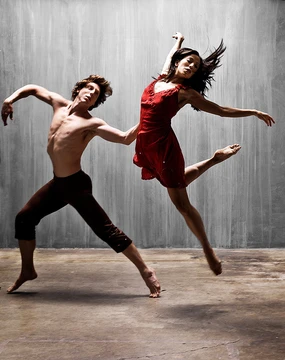
Viennese waltz
Oldest current ballroom dance, rotary and fast-paced.

The Viennese waltz, the oldest of the current ballroom dances, emerged in the second half of the 18th century from the German dance and the Ländler in Austria. It was the first ballroom dance performed in the closed hold, or "waltz" position. The dance initially differed significantly from its modern form; early dancers did not embrace closely but held their long gowns high to avoid dragging, bringing their bodies close together under one cover. This closeness attracted moral criticism, including a pamphlet titled "Proof that Waltzing is the Main Source of Weakness of the Body and Mind of our Generation" published in 1797. Despite such disparagement, the dance became immensely popular in Vienna, leading to the opening of large dance halls like the Zum Sperl in 1807 and the Apollo in 1808. It spread to England before 1812 as the German waltz and became a huge hit. Its popularity was cemented through the Congress of Vienna and the famous compositions of Josef Lanner, Johann Strauss I, and Johann Strauss II. The Viennese waltz is a rotary dance, with dancers constantly turning either to the leader's right (natural) or left (reverse), interspersed with non-rotating change steps. It is danced at a fast tempo of approximately 180 beats per minute, distinguishing it from the slower English or slow waltz. In modern ballroom dance, two versions are recognized: International Style and American Style. The Waltz Series, a New York membership society, is devoted to preserving the pre-World War I tradition of the Viennese waltz.
- field
- Ballroom dance
- nationality
- Austrian
- styles
- International Style and American Style
Lore & Background
The Viennese waltz emerged in the second half of the 18th century from the German dance and the Ländler in Austria. Initially, the waltz was significantly different from its form today. Couples did not dance in the closed position; the hold was at times semi-closed or side by side, with arms intertwined and circling movements under raised arms. Feet were turned out, and the rise of foot was much more pronounced. The waltz marked a major change in dance form, as all previous European social dances were communal sequence dances, while the waltz made couples independent of each other and turned towards each other. Today the Viennese waltz is a ballroom and partner dance part of the International Standard division. Two versions are recognized: International Style and American Style. The Waltz Series is a New York membership society devoted to preserving the pre-World War I tradition of Viennese waltz.
Reader's Guide
The Viennese waltz is historically significant as the original form of the waltz and the first ballroom dance performed in closed hold. It emerged in the second half of the 18th century from the German dance and the Ländler in Austria. Early performances required dancers to lift their long gowns to prevent them from dragging, bringing their bodies close together under one cover, which attracted moral criticism; one pamphlet from 1797 claimed waltzing was the main source of weakness of body and mind. Despite this, it became extremely popular in Vienna, leading to the opening of large dance halls like the Zum Sperl in 1807 and the Apollo in 1808 to accommodate thousands of dancers. It spread to England before 1812 as the German waltz and gained further ground through the Congress of Vienna and compositions by Josef Lanner, Johann Strauss I, and Johann Strauss II. The dance originally differed from its modern form: couples did not always dance in closed position, often using semi-closed or side-by-side holds with intertwined arms, and the feet were turned out with a more pronounced rise. The waltz marked a fundamental shift in social dancing, moving from communal sequence dances, where all dancers followed a preset pattern, to independent couple dancing. This change was so profound that Lord Byron wrote a letter decrying the dance’s anti-social nature. Today, the Viennese waltz is a rotary dance with constant turning in natural or reverse directions, interspersed with change steps. It is part of the International Standard division of ballroom dance, with International and American styles recognized. Organizations like the Waltz Series in New York preserve its pre-World War I tradition.
Did You Know?
- In Germany, Austria, Scandinavia, and France, the words Walzer, vals, and valse still refer to the original Viennese waltz, not the slow waltz.
Frequently Asked Questions
What is the Viennese waltz?
The Viennese waltz is an Austrian ballroom dance that grew out of the Ländler and German dance traditions in the late 1700s. It is the oldest dance still on the modern ballroom syllabus and was the first performed in the closed partner hold.
How is the Viennese waltz different from a standard waltz?
The main distinction is speed: the Viennese waltz is danced at roughly 58 to 60 measures per minute, producing a continuous rotary flow, while the standard waltz is noticeably slower with more separated steps. That faster tempo gives the Viennese version its signature spinning, linked-turn quality.
Who made the Viennese waltz famous?
The dance broke into wider European social life around the Congress of Vienna in the early 1800s, and composers Josef Lanner, Johann Strauss I, and Johann Strauss II wrote the music that cemented its reputation. Without their waltz scores, the dance likely would not have spread well beyond Austrian ballrooms.
Why is the Viennese waltz important in ballroom history?
It holds two firsts: it is the oldest dance still competed in today, and it was the first ballroom dance danced in the closed 'waltz' position. Its continuous rotary character also set a movement template that shaped how later ballroom dances developed their framing and flow.
More in Dance 1-24
Spotted an error? Know more?
This is a living reference — every entry is fact-audited, and reader corrections feed straight into our audit queue. Suggest an edit · See this site's audit record