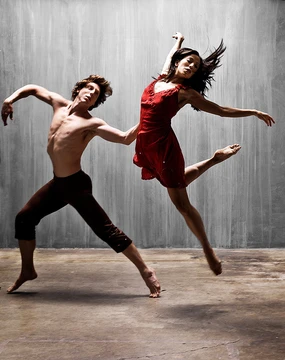
Bolero (Spanish dance)
Spanish dance in 3/4 time from the late 18th century.

The bolero is a Spanish dance in triple meter that enjoyed widespread popularity during the late 1700s and early 1800s. It evolved from the seguidilla between 1750 and 1772, and by the 1780s it had become a fixture in Madrid, La Mancha, Andalusia, and Murcia. Dancers performed it either alone or with a partner, at a moderately slow pace, to the sound of guitar and castanets; its lyrics followed the seguidilla form.
Sebastián Cerezo is remembered as one of the earliest and finest performers of the genre. According to Zamácola y Ocerín, Cerezo’s deliberate, slow style marked the decisive shift from seguidilla to bolero—the name itself coming from *voleo* (related to *vuelo*, meaning “flight”). Around 1800, the Murcian dancer Requejo championed this original slow approach in reaction to the faster versions that had gained ground over the years. By the mid-19th century the dance had fallen out of common use, but it survived in an academic tradition called the *escuela bolera*, which later shaped modern flamenco. One flamenco style, the *seguidillas boleras*, derives directly from it. In the 20th century, flamenco’s rise nearly erased the *escuela bolera*, though it still exists in Seville. The dance’s legacy also appears in works by classical composers, most famously Maurice Ravel’s *Boléro*, which takes its name from the dance.
During its peak, the bolero was a staple of Spanish ballrooms and was performed abroad by Spanish troupes alongside dances like the cachucha. Many classical composers later wrote pieces inspired by it. Frédéric Chopin composed his *Boléro* for solo piano (Op. 19) in 1834, though its rhythms recall the polonaise; he was a close friend of Pauline Viardot, daughter of the Spanish tenor Manuel García, who had brought the bolero to Paris. Clara Schumann wrote “Caprice à la Boléro” as the second movement of her *4 Pièces caractéristiques* for piano (Op. 5, 1834–1836). Giuseppe Verdi included a bolero, “Mercé, dilette amiche,” in his 1855 opera *I vespri siciliani*. Charles-Auguste de Bériot composed a bolero in his *Scène de ballet* (Op. 100) from the 1840s, a well-known piece for violin and piano or orchestra. Julián Arcas wrote several bolero works for guitar, influencing both the form and classical guitar technique. Louis James Alfred Lefébure-Wély produced his *Boléro de Concert* for organ in 1865. Hervé wrote a bolero for his 1868 operetta *Chilpéric*, later immortalized in a painting by Toulouse-Lautrec. Léo Delibes included a bolero in the second tableau of *Coppélia* (1870). Camille Saint-Saëns composed *El desdichado*, a bolero for two voices and orchestra, in 1871. Moritz Moszkowski wrote a bolero as the final piece in his first set of *Spanish Dances* (Op. 12, 1876). César Cui’s 1881 *Bolero* was written for solo soprano with orchestra or piano, published with Russian, Italian, and French texts. Friedrich Baumfelder published *Premier Boléro* for piano (Op. 317) in 1883. Joe Morley wrote a banjo bolero titled “El contrabandista” around 1920, following an earlier bolero in 3/4 time for banjo by Alfred Cammeyer. Maurice Ravel’s *Boléro* (originally titled *Fandango*) was commissioned as a ballet score by Ida Rubinstein in 1928 but is now usually performed as a concert piece; it later inspired works such as Fumio Hayasaka’s theme for the 1950 film *Rashomon*. Richard Aaker Trythall composed a bolero for four percussionists in 1979, based on the traditional Spanish bolero’s rhythm and structure, imagining the players as four dancers intertwining solos, duets, and trios with ensemble passages. John Serry Sr. wrote his *African Bolero* for accordion and flute in 1950. Keith Emerson created *Abaddon’s Bolero* for orchestra and synthesizer in 1972. Zbigniew Preisner’s score for *Three Colors: Red* (1994) uses the bolero rhythm in several cues. Ryuichi Sakamoto composed *Blu* for piano and orchestra in 2014, which begins with a dreamy piano melody before a four-minute bolero section. Barry Gray wrote *Zero-X*, an incidental cue for the 1966 film *Thunderbirds Are Go*, using a bolero rhythm. Some art-music boleros are actually based on the habanera, a Cuban adaptation of the French contredanse often heard in French opera and Spanish zarzuela.
- Origin
- Seguidilla
- Period
- Late 18th to early 19th centuries
- Time signature
- 3/4
- Tempo
- Moderately slow
- Accompaniment
- Guitar and castanets
- Key regions
- Madrid, La Mancha, Andalusia, Murcia
Lore & Background
Sebastián Cerezo was credited as one of the earliest and best dancers of the genre. According to Zamácola y Ocerín, Cerezo danced slowly and his particular way of dancing marked the definitive transition from seguidilla to bolero (from voleo, cf. vuelo, 'flight'). The social dance persisted in some regions into the 20th century, and the dance survived in an academic tradition known as the escuela bolera, which influenced the development of modern flamenco dancing. One of the palos (styles) of flamenco is derived directly from the dance, the seguidillas boleras. In the 20th century, flamenco's popularity contributed to a decline of the escuela bolera, but the escuela bolera still survives, notably in Seville.
Reader's Guide
The bolero's significance lies in its role as a bridge between the seguidilla and modern flamenco, and its enduring influence on classical music. During its heyday, it became a popular dance in ballrooms across Spain and was performed by Spanish troupes abroad. The dance's legacy lives on in the works of many classical composers such as Maurice Ravel, whose most famous piece, Boléro, is named after the dance. Other composers who wrote pieces inspired by the genre include Frédéric Chopin, Clara Schumann, Giuseppe Verdi, Charles-Auguste de Bériot, Julián Arcas, Louis James Alfred Lefébure-Wély, Hervé, Léo Delibes, Camille Saint-Saëns, Moritz Moszkowski, César Cui, Friedrich Baumfelder, Joe Morley, Richard Aaker Trythall, John Serry Sr., Keith Emerson, Zbigniew Preisner, Ryuichi Sakamoto, and Barry Gray. Some art music boleros are actually based on the habanera, a Cuban adaptation of the French contredanse.
Did You Know?
- Bolero originated from the seguidilla in the 1780s.
- Sebastián Cerezo was credited as one of the earliest and best dancers of the genre.
- The social dance persisted in some regions into the 20th century, and the escuela bolera continues to exist.
- Maurice Ravel's most famous piece, Boléro, is named after the dance.
Origins and Character
By the 1780s it had captured the enthusiasm of dancers across Madrid, La Mancha, Andalusia, and Murcia, establishing itself as one of the era's most beloved social dances. The form is defined by its 3/4 meter and a moderately slow tempo, typically performed either as a solo or with a partner. Musically, it was accompanied by guitar and castanets, while its vocal component drew on the lyrical structure of the seguidilla. The dance occupied a prominent place in ballrooms throughout Spain during its heyday, and Spanish troupes carried it abroad alongside other popular forms such as the cachucha, introducing foreign audiences to its graceful, measured rhythms. This combination of accessible tempo, intimate instrumentation, and lyrical poetry made bolero a defining cultural expression of late eighteenth- and early nineteenth-century Spanish society.
Pioneers and Stylistic Identity
The identity of bolero as a dance was shaped by specific individuals who defined its aesthetic. Sebastián Cerezo is credited as one of the earliest and finest practitioners of the genre. According to the account of Zamácola y Ocerín, Cerezo danced with a notably slow quality, and his particular approach marked the definitive transition from the older seguidilla to what would be recognized as bolero. The very name is thought to derive from "voleo" (related to "vuelo," meaning flight), reflecting this quality of measured, gliding movement. Requejo's advocacy helped preserve what the genre's earliest practitioners considered its essential character. Together, Cerezo and Requejo represent two generations of dancers who insisted that bolero's soul lay in restraint and deliberation rather than speed, a principle that would echo through the dance's later academic tradition.
A Legacy in Classical Music
The bolero's influence on Western classical music spans over a century and multiple national traditions. Clara Schumann, Giuseppe Verdi, Charles-Auguste de Bériot, and Julián Arcas each contributed bolero works in the 1830s through 1850s, with Arcas particularly shaping both the form and guitar technique in classical contexts. Later composers including Lefébure-Wély, Delibes, Saint-Saëns, Moszkowski, and Cui continued the tradition into the 1880s. Even into the 1970s and beyond, composers like Richard Aaker Trythall, Keith Emerson, and Ryuichi Sakamoto drew on the bolero rhythm, while film scores by Zbigniew Preisner and Barry Gray wove its pulse into cinematic soundtracks. Notably, some pieces labeled as bolero in art music are actually based on the habanera, a Cuban adaptation of the French contredanse.
Decline, Survival, and the Flamenco Connection
By the mid-nineteenth century, bolero as a living social dance had fallen out of fashion in Spain. Yet the form refused to vanish entirely. It persisted within an academic tradition known as the escuela bolera, a structured school of dance that preserved the genre's technical vocabulary and aesthetic principles. This academic lineage proved consequential: the escuela bolera directly influenced the development of modern flamenco, and one of flamenco's recognized palos, the seguidillas boleras, is derived straight from the bolero tradition. Ironically, the very success of flamenco in the twentieth century threatened to erase the older form. As flamenco's popularity surged, the escuela bolera was driven to the brink of extinction, surviving today primarily in Seville. The bolero's cultural footprint, however, extends far beyond the dance floor. Its name and rhythmic identity live on in the works of composers from Chopin to Ravel to Sakamoto, ensuring that even audiences who have never seen a castanet performance remain familiar with the pulse and poetry of a dance that once defined Spanish social life.
Frequently Asked Questions
What is Bolero (Spanish dance)?
Bolero is a traditional Spanish dance set in 3/4 time that flourished from the late 1700s into the early 1800s. It could be performed either as a solo or as a partner dance at a moderately slow pace.
Where did Bolero (Spanish dance) originate?
The dance evolved out of the seguidilla style during the 1780s. Its vocal lines also followed the seguidilla lyrical form, showing a direct lineage between the two traditions.
What instruments typically accompany Bolero (Spanish dance)?
Guitar and castanets form the standard instrumental backing for this dance. Together they supply the rhythmic drive and harmonic support for the moderately slow 3/4 beat.
In which regions was Bolero (Spanish dance) most popular?
The form enjoyed its greatest popularity across Madrid, La Mancha, Andalusia, and Murcia. These areas served as the cultural heartland where the dance thrived during its peak period in the late 18th and early 19th centuries.
What tempo and time signature define Bolero (Spanish dance)?
The dance is written in 3/4 time and performed at a moderately slow tempo. This gives it a flowing, measured quality that sets it apart from faster Spanish dance styles of the same era.
More in Dance 1-24
Spotted an error? Know more?
This is a living reference — every entry is fact-audited, and reader corrections feed straight into our audit queue. Suggest an edit · See this site's audit record