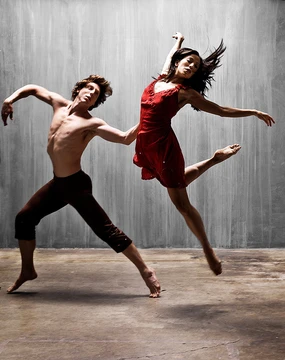
Tap dance
American percussive dance blending African and Irish traditions.

Tap dance (or tap) is a form of dance in which dancers use the sounds of tap shoes striking the floor as percussion, often accompanied by music or performed a cappella. It is an American art form that evolved alongside jazz music, originating from the fusion of Black American and Irish dance traditions, such as the juba dance and Irish step dances, beginning in the mid-17th century and becoming popular in the mid-19th century. The dance developed from the blending of Central African, West African, and Western European step dance traditions, including the djouba, the Irish jig, and the Welsh clog, brought to North America by immigrants. This fusion produced a form called "jigging," adopted by both Black and white minstrel show dancers in the 1800s. As minstrel shows waned, tap moved to the Vaudeville stage, where a "two-colored rule" often forced Black performers into duets, such as the famous "Buck and Bubbles" act, which featured a "Class Act" style with tuxedos, distinguishing it from earlier minstrel clowning. Bill "Bojangles" Robinson, a protégé of Alice Whitman, began his career in a duo but later achieved rare solo success, becoming a world-famous celebrity and starring in films like those with Shirley Temple. The Nicholas Brothers, Fayard and Harold, later wowed audiences with acrobatic tap, notably in a six-minute continuous performance in "Stormy Weather" that included dancing up and down a staircase with leapfrogs and splits. In the 1930s, tap mixed with Lindy Hop, incorporating moves like flying swing outs. Tap declined in the mid-1950s with the rise of rock and roll and jazz dance, which evolved separately from tap. The 1979 PBS documentary "No Maps on My Taps" helped spark a revival, further boosted by the film "Happy Feet." National Tap Dance Day, celebrated on May 25 (Bill Robinson's birthday), was signed into law in 1989. Modern innovators include Savion Glover, Michelle Dorrance, and Mark Yonally, who developed the "tap opera" format in the early 2000s. Segregation in the 1930s–1940s created two styles: Broadway tap, emphasizing dance in musical theater, and rhythm tap, focusing on musicality and jazz tradition.
- field
- Dance
- nationality
- American
- known_for
- Percussive footwork using metal-tapped shoes; fusion of African and European dance traditions
- major_versions
- Rhythm (jazz) tap and Broadway tap
Lore & Background
Tap dance is a form of dance where performers use the metal taps on the heels and toes of their shoes to strike the floor, creating percussive sounds. This sound can serve as its own music, allowing tap to be performed without any other musical accompaniment. The defining characteristic of the dance is this fusion of movement and rhythm, making the dancer both a performer and a musician. Tap dance is an American art form that emerged alongside jazz music, originating from the combination of Black American and Irish dance traditions, specifically the juba dance and Irish step dances. The blending of African rhythms and performance styles with European footwork techniques began in the mid-17th century but only gained popularity in the mid-19th century. There are two major versions: Broadway tap, which emphasizes dance and is common in musical theater, and rhythm (jazz) tap, which focuses on musicality and is considered part of the jazz tradition. The dance evolved from the fusion of Central African djouba, Irish jig, and Welsh clog brought by immigrants to North America between the 17th and 19th centuries. This fusion developed into a form called "jigging," adopted by minstrel show dancers in the 1800s before moving to Vaudeville. During Vaudeville, a "two-colored rule" prevented black performers from dancing solo, leading to many duets like "Buck and Bubbles." Bill "Bojangles" Robinson, a protégé of Alice Whitman, became a rare black solo dancer and a world-famous celebrity, later appearing in films with Shirley Temple. The Nicholas Brothers later incorporated acrobatic feats into their classy style. In the 1930s, tap mixed with Lindy Hop, and by the mid-1950s, its popularity declined as rock and roll and new jazz dance emerged. Modern innovations include the "tap opera," a long-form performance telling a complete story.
Reader's Guide
Tap dance's significance lies in its role as a distinctly American art form that emerged from the blending of African and European dance traditions, reflecting the cultural fusion of the United States. It evolved alongside jazz music and contributed to the development of jazz dance. Tap's two major branches—Broadway tap, focused on theatrical performance, and rhythm tap, emphasizing musicality and improvisation—demonstrate its versatility. The art form faced challenges from segregation, which created separate styles for black and white dancers and limited black performers' opportunities. Despite this, figures like Bill Robinson and the Nicholas Brothers achieved fame. Tap's revival in the late 20th century, spurred by documentaries and films, ensured its continued relevance. Modern innovations include the 'tap opera' format developed by Mark Yonally. Tap remains a living tradition, with practitioners such as Savion Glover and Gregory Hines bringing it to new audiences.
Did You Know?
- Tap dance can be performed with no musical accompaniment; the sound of the taps is its own music.
- The 'two-colored rule' in Vaudeville forbade black people from performing solo, leading to many duet acts.
- Bill 'Bojangles' Robinson's birthday, May 25, was chosen for National Tap Dance Day.
- The Nicholas Brothers' performance in 'Stormy Weather' was a six-minute take with no retakes.
Frequently Asked Questions
Who is Tap dance?
Tap dance is an American percussive art form in which performers create rhythm by striking the floor with metal-tipped shoes. It grew out of a blend of African and Irish dance traditions and became widely recognized in the mid-1800s.
What are Tap dance's powers/role?
Its core 'ability' is turning footwork into live percussion, letting a single dancer function as both melody and rhythm section. It can be performed over a musical accompaniment or completely solo, a cappella.
How does Tap dance's story end?
Tap dance never really 'ends'—it keeps evolving, but its two most recognized modern branches are rhythm (jazz) tap and the theatrical style seen on Broadway. Both remain active performance traditions today.
Why is Tap dance important?
It stands as one of the few major dance forms born directly from the collision of African and European cultural traditions on American soil. Its tight partnership with jazz music made it a cornerstone of twentieth-century American performance culture.
What are Tap dance's major versions?
The two principal styles fans discuss are rhythm tap, which leans heavily into jazz and improvisation, and Broadway tap, which is more choreographed and narrative-driven for stage productions.
More in Dance 1-24
Spotted an error? Know more?
This is a living reference — every entry is fact-audited, and reader corrections feed straight into our audit queue. Suggest an edit · See this site's audit record