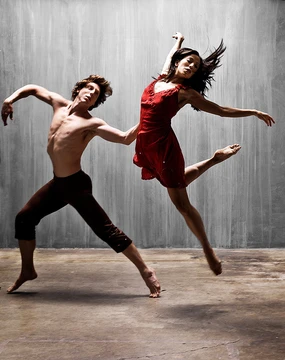
Flamenco
An Andalusian art form rooted in gitano and folk traditions.

Flamenco is a multifaceted art form rooted in the folk music of southern Spain, particularly shaped within the gitano (Romani) communities of Andalusia, and also historically present in Extremadura and Murcia. The term broadly covers both traditional and contemporary musical styles from this region. While flamenco is deeply tied to the Romani gitanos, who were key to its origins and professionalization, its style is distinctly Andalusian, and its artists have long included both gitano and non-gitano Spaniards.
Though often categorized as folk, popular, or oral tradition, flamenco is recognized as a sophisticated musical system. Its forms weave together song, guitar, dance, compás (rhythmic cycle), modal and tonal harmony, falsetas (melodic phrases), handclaps, footwork, melodic ornamentation, and improvisation. The identity of a specific palo (style) can hinge on several features at once—rhythmic cycle, mode, chord progression, stanza structure, geographic origin, and performance conventions. This musical complexity, along with the rise of concert flamenco guitar and formal conservatory study, has drawn not only popular audiences but also listeners and performers trained in classical music.
The earliest known record of flamenco music appears in a 1774 book, *Las Cartas Marruecas* by José Cadalso. Its development over the last two centuries is well documented through theatrical sainetes and tonadillas, songbooks, sheet music, studies of dances and toques, newspapers, and visual art. On 16 November 2010, UNESCO declared flamenco a Masterpiece of the Oral and Intangible Heritage of Humanity.
Historically, the word "flamenco" was used to identify Spain’s Romani people. English traveler George Borrow, touring Spain in the 1830s, noted that gitanos were also called "Flemish" (flamenco in Spanish) due to a mistaken equivalence between German and Flemish. A year before Borrow’s account, flamencologist Cristina Cruces-Roldán found evidence of a gitano party in Madrid already labeled flamenco. This link between gitano and flamenco is echoed by scholars Manuel Fernández y González, Demófilo, and Irving Brown, who wrote in 1938 that "flamenco is simply another term for gitano, with special connotations."
The term’s origins lie in social prejudice: Spaniards viewed Roma as ruffians and troublemakers, associating them with 18th-century German colonists of the Sierra Morena who formed bohemian, lawless urban groups seen as idle. Other theories are less accepted. Felipe Pedrell and Carlos Alemendros proposed that "flamenco" (meaning Flemish) became synonymous with *cantador* (professional singer) due to Flemish singers brought by King Carlos I in 1516. Blas Infante’s Arabist hypothesis, in *Orígenes de lo flamenco*, suggests a phonetic deformation of Arabic *fellah-mengu* (runaway laborer) or *Felah-Mengus* (wandering peasant), but this is not widely supported.
The first use of "flamenco" for the music genre appears in an 1847 newspaper article in *El Espectador*, where it was called a "gitano genre." In flamenco’s early years, the term was flexible, covering a musical style, a certain aesthetic, manners, and a way of life perceived as gitano. By the 1860s–70s, it wasn’t a strict genre but a way of performing music in a gitano-Andalusian style.
Cultural origins include influences from the Indian subcontinent, the original home of the Romani people. North Indian scales were introduced to Andalusia through Romani migrations, along with bells and a rich repertoire of songs and dances. Upon arriving in Andalusia in the 15th century, these migrants encountered the Arab-Andalusian music culture—a hybrid of Spanish traditions dating to the 8th-century establishment of Al-Andalus, which absorbed elements from the Arabian Peninsula, North Africa, and Sephardic music. Instruments like wooden castanets and tambourines, still used in flamenco and Spanish folklore, are believed to originate from this Al-Andalus period. This centuries-long cultural mixing formed the roots of flamenco song and dance.
The genre is thought to have emerged at the end of the 18th century in cities and agrarian towns of Baja Andalusia, with Jerez de la Frontera providing the first written evidence. However, data from that time is scarce, and the expressions then were closer to the bolero school than to flamenco. Flamenco arose as a modern art form from the convergence of urban subaltern groups, gitano communities, and journeymen in Andalusia, who formed a marginalized artistic working class. From the start, it was marked by the gitano brand, and Andalusia was the origin and cradle of the early flamenco *cantaores* and of the three or...
- field
- Music, dance, and song
- origin
- Southern Spain (Andalusia, Extremadura, Murcia)
- known_for
- Complex musical system combining song, guitar, dance, and improvisation
Lore & Background
Flamenco is an art form rooted in the folkloric music traditions of southern Spain, particularly shaped within the gitano subculture of Andalusia, with historical presence also in Extremadura and Murcia. Its defining characteristics combine song, guitar, dance, rhythmic cycles (compás), modal and tonal harmony, melodic ornamentation (falsetas), handclaps, footwork, and improvisatory variation. Each musical style, or palo, is distinguished by a specific rhythmic cycle, mode, chord progression, stanzaic form, geographic origin, and performance convention. This complexity, along with the development of concert flamenco guitar and formal conservatory study, has attracted both popular audiences and classical-music performers. The oldest known record of flamenco music dates to 1774. The art form has evolved continuously over two centuries, documented through theatre, song books, dances, and graphic art. In 2010, UNESCO declared it a Masterpiece of the Oral and Intangible Heritage of Humanity. Historically, the term "flamenco" was used to identify the Romani people (gitanos) of Spain, with early 19th-century accounts noting this equivalency. The first use of the term to refer to the music genre appeared in an 1847 newspaper article, where it was described as a "gitano genre." At that time, flamenco was not a strict genre but a way of performing music in a gitano-Andalusian style, encompassing a particular aesthetic and way of life.
Reader's Guide
Flamenco's significance lies in its evolution from a marginalized gitano-Andalusian expression to a globally recognized art form. Its musical sophistication, including modal and tonal harmony, improvisation, and formal conservatory study, has attracted both popular audiences and classical-music performers. The genre faced criticism from the Generation of '98, particularly Eugenio Noel, who saw flamenco and bullfighting as hindrances to Spain's development. Its legacy includes a continuous evolution of rhythm, poetic stanzas, and performance conventions, documented through theatre, song books, and graphic arts.
Frequently Asked Questions
What is Flamenco?
Flamenco is a multi-disciplinary art form from southern Spain that weaves together song, guitar, dance, handclaps, footwork, and improvisation. It grew out of the gitano subculture in Andalusia and also has roots in Extremadura and Murcia.
What elements make up a Flamenco performance?
A full expression of the art combines cante (song), toque (guitar), baile (dance), compás (rhythmic cycle), modal and tonal harmony, palmas (handclaps), and improvisatory variation. It is recognized both as a living folk tradition and as a highly structured musical system.
Why is Flamenco considered more than just a dance style?
Fans and scholars emphasize that Flamenco is a complete musical and performative ecosystem, not a single genre of movement. Its interplay of improvisation, rhythmic compás, vocal expression, and guitar technique makes it a complex system that resists being reduced to any one component.
More in Dance 1-24
Spotted an error? Know more?
This is a living reference — every entry is fact-audited, and reader corrections feed straight into our audit queue. Suggest an edit · See this site's audit record