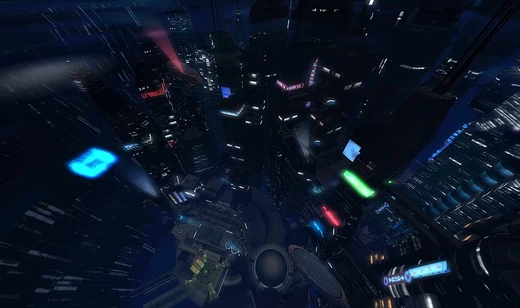
Blade Runner 2049
A sequel to Blade Runner, released in 2017.

Blade Runner 2049 is a 2017 American science fiction film directed by Denis Villeneuve, serving as a sequel to the 1982 film Blade Runner. The film stars Ryan Gosling as K, a blade runner who uncovers a secret that threatens to destabilize society, and features Harrison Ford reprising his role as Rick Deckard.
Quick Facts
- Director
- Denis Villeneuve
- Producer
- Andrew A. Kosove / Broderick Johnson / Bud Yorkin / Cynthia Sikes Yorkin
- Screenplay
- Hampton Fancher / Michael Green
- Story
- Hampton Fancher
- Based On
- Characters from Do Androids Dream of Electric Sheep? · Philip K. Dick
- Starring
- Ryan Gosling / Harrison Ford / Ana de Armas / Sylvia Hoeks / Robin Wright / Mackenzie Davis / Carla Juri / Lennie James / Dave Bautista / Jared Leto
- Cinematography
- Roger A. Deakins
- Editing
- Joe Walker
- Music
- Benjamin Wallfisch / Hans Zimmer
- Studio
- Alcon Entertainment / Columbia Pictures / Scott Free Productions / Bud Yorkin Productions / Torridon Films / 16:14 Entertainment
- Distributor
- Warner Bros. Pictures (United States and Canada) / Sony Pictures Releasing International (International)
- Released
- 3 October 2017 · Dolby Theatre · 2017 · 10 · 6 · United States
Facts from the source article.
Lore & Background
Ideas for a Blade Runner sequel were first proposed in the 1990s, but licensing issues stalled their development. Andrew Kosove and Broderick Johnson obtained the film rights from Bud Yorkin. Ridley Scott stepped down as the film's initial director and worked as an executive producer, while Villeneuve was later appointed to direct. The film was financed through a partnership between Alcon Entertainment and Sony Pictures, as well as a Hungarian government-funded tax rebate. Principal photography took place mostly at two soundstages in Budapest over four months from July to November 2016.
The film premiered at the Dolby Theatre in Los Angeles, California on October 3, 2017, and was released in the United States on October 6. It received acclaim from critics, who praised multiple aspects including cast performances, directing, cinematography, and faithfulness to the previous film. However, it was a box office disappointment, grossing $276.6 million worldwide against a production budget of $150–185 million and failing to reach its estimated break-even point of $400 million.
Among its numerous accolades, Blade Runner 2049 received Academy Awards for Best Cinematography and Best Visual Effects out of five nominations, and eight British Academy Film Awards nominations, winning for Best Cinematography and Best Special Visual Effects. A sequel television series, Blade Runner 2099, is in development at Amazon MGM Studios, with Scott set to return as executive producer.
Reader's Guide
Blade Runner 2049 is significant as a long-awaited sequel to the influential 1982 film Blade Runner, expanding its dystopian world and exploring themes of memory, identity, and what it means to be human. The film was critically acclaimed for its visual style, performances, and respectful continuation of the original story, though it underperformed commercially. Its technical achievements were recognized with Academy Awards for Best Cinematography and Best Visual Effects. The film's legacy includes influencing discussions about artificial intelligence and replicant rights, and it has spurred development of a television sequel series, Blade Runner 2099. The film's production overcame decades of licensing hurdles and involved a complex financing structure, including a Hungarian tax rebate. Its cast included both returning actors from the original and new performers, with digital techniques used to recreate the likeness of Sean Young's character Rachael.
A Decade-Long Road to Production
Ideas for a Blade Runner sequel surfaced as early as the 1990s, but licensing complications kept the project frozen for years. The path forward finally opened when Andrew Kosove and Broderick Johnson secured the film rights from Bud Yorkin. Ridley Scott initially attached himself as director but ultimately stepped back into an executive producer role, clearing the way for Denis Villeneuve to helm the project. Hampton Fancher, who also originated the story, co-wrote the screenplay with Michael Green. Financing came through a partnership between Alcon Entertainment and Sony Pictures, supplemented by a Hungarian government tax rebate. Principal photography ran for roughly four months, from July through November 2016, concentrated at two soundstages in Budapest. Distribution was split geographically: Warner Bros., which had handled the 1982 original, released the sequel in North America on behalf of Alcon, while Sony managed international markets.
The Identity at the Heart of the Story
The film's narrative engine is a single, world-shattering discovery: a Nexus-7 replicant died giving birth, proving that bioengineered humans can reproduce biologically. K, a Nexus-9 blade runner for the Los Angeles Police Department, stumbles upon the remains buried on a farm and is thrust into a search that unravels his own sense of self. A wooden toy horse, a date carved into a tree, and a childhood memory of an orphanage all point toward the possibility that K was born rather than manufactured. His holographic AI companion Joi, his superior Lt. Joshi, the Wallace Corporation's CEO Niander Wallace, and the Replicant Freedom Movement all orbit this central question. The story culminates in a revelation that K's treasured memory actually belongs to Dr. Ana Stelline, who is the daughter of the deceased replicant, Rachael. K's final act—handing the toy horse to Deckard before dying on the steps of Stelline's facility—reframes his entire identity in one gesture.
Acclaim Meets the Box Office
Critics responded to Blade Runner 2049 with broad enthusiasm, singling out the cast's performances, Villeneuve's direction, the cinematography, and the film's respectful continuity with the 1982 original. The awards circuit reflected this approval: the picture earned five Academy Award nominations and took home statuettes for Best Cinematography and Best Visual Effects. At the BAFTAs, it collected eight nominations and won for Best Cinematography and Best Special Visual Effects. Yet the commercial picture told a different story. Against a production budget estimated between $150 and $185 million, the film grossed $276.6 million worldwide, falling well short of the roughly $400 million needed to break even. The premiere at the Dolby Theatre in Los Angeles on October 3, 2017, and the U.S. theatrical release on October 6 marked a high-profile launch that nonetheless could not overcome the gap between critical prestige and audience turnout.
Echoes and What Comes Next
Blade Runner 2049 carries the weight of a 35-year-old predecessor, and its cast choices underscore that lineage. Harrison Ford returns as Rick Deckard, and Edward James Olmos reprises Gaff, while archival footage, audio, and stills of Sean Young are woven into the film to represent both her original character Rachael and a duplicate created by Wallace. Ryan Gosling anchors the new generation as K, joined by Ana de Armas, Sylvia Hoeks, Robin Wright, Mackenzie Davis, Dave Bautista, and Jared Leto in supporting roles. The film's legacy extends beyond the screen: a sequel television series titled Blade Runner 2099 is currently in development at Amazon MGM Studios, with Ridley Scott set to return in an executive producer capacity. This continuation signals that the world Villeneuve and Fancher built in 2049 is intended to keep expanding, carrying the franchise's questions about identity, memory, and what it means to be human into new narrative territory.
Frequently Asked Questions
What is Blade Runner 2049?
It is a 2017 American science fiction film that serves as the sequel to the 1982 classic Blade Runner. Denis Villeneuve directed the project, with Hampton Fancher and Michael Green writing the screenplay.
Who plays the lead in Blade Runner 2049?
Ryan Gosling stars as K, a LAPD blade runner who stumbles onto a secret that could shatter the fragile coexistence between humans and replicants. Harrison Ford also reprises his role as the long-retired blade runner Rick Deckard.
What is K's role and conflict in Blade Runner 2049?
K is tasked with hunting down rogue replicants but becomes entangled in a buried truth about a replicant's natural birth, a discovery that threatens to collapse the social order of a dystopian Los Angeles. His pursuit of the truth forces him to confront whether his own identity is genuine or manufactured.
How does Blade Runner 2049 end?
K ultimately accepts that he is not the miraculous child he once believed himself to be and dies in the snow while holding Deckard's hand. Deckard, for his part, leaves his hidden refuge to go to his daughter, choosing to defy the system that created her.
Why is Blade Runner 2049 considered significant in cinema?
The film is celebrated for its sweeping visual design and for pushing the philosophical questions of its predecessor—about memory, identity, and what makes a life meaningful—into new territory. It received multiple Academy Award nominations, including for cinematography and visual effects, and is often cited as a defining sci-fi work of the 2010s.
More in Cyberpunk films 1-24
Spotted an error? Know more?
Reader corrections go straight into our review queue. Suggest an edit · How this site is sourced