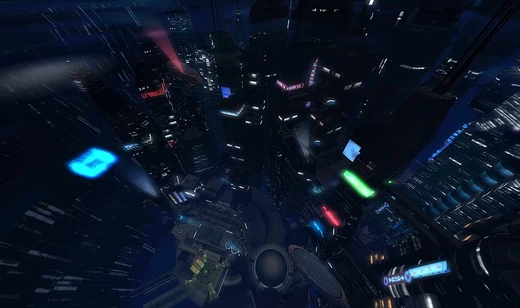
Akira (unproduced film)
A live-action adaptation of the Akira manga that never reached production.

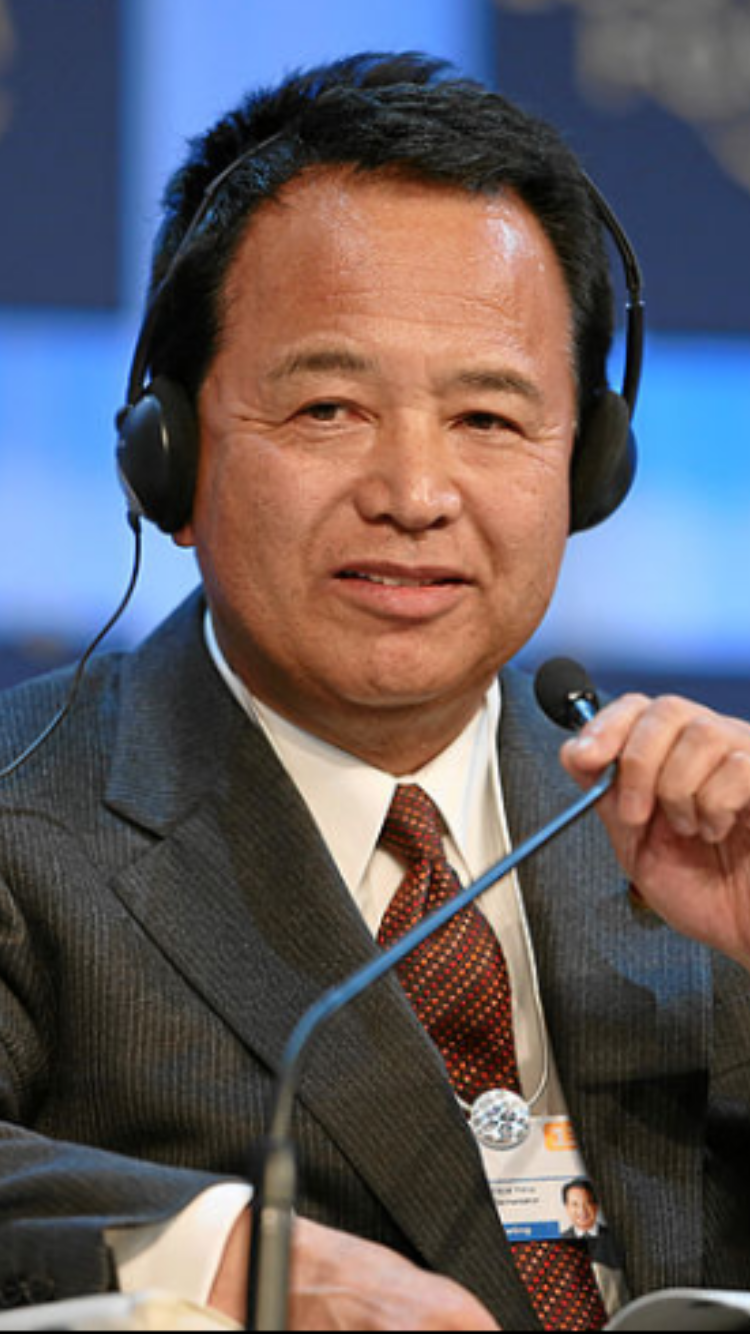
World Economic Forum from Cologny. · CC BY-SA 4.0
A live-action cyberpunk action film adaptation of Katsuhiro Otomo’s 1982–90 manga *Akira* was never completed, despite decades of attempts. The project spent years stuck in development hell, with multiple directors and writers attached and later dropped, and never advanced beyond pre-production. Warner Bros. controlled the live-action rights from 2002 until the rights reportedly reverted to Kodansha in June 2025, though no confirmed public record of this reversion exists.
The story follows a secret military project that transforms a biker gang member into a destructive psychic, threatening Neo-Tokyo. Only two teenagers and a group of psychics can stop him.
In the 1990s, after the 1988 anime film, Sony Pictures acquired the manga rights for a live-action version, but nothing came of it. Warner Bros. secured the rights in 2002 with a seven-figure deal. Over more than two decades, at least five directors and ten writers were involved, costing tens of millions of dollars across various attempts.
A 2017 IGN analysis identified two main obstacles. First, fears of whitewashing or racebending—casting Western actors instead of Japanese ones—surfaced whenever such actors were considered. Second, the story is difficult to relocate outside Japan because of its deep ties to Japan’s role in World War II, including the atomic bombings and Unit 731. Attempts to Westernize it for American audiences, such as relocating the setting to the United States, required fundamental story changes and drew heavy criticism. (Note: There is no widely known, confirmed report of any official draft replacing the atomic bombings with the September 11 attacks.)
In April 2002, Stephen Norrington was set to direct, with James Robinson writing and Dan Lin producing. Their plan moved the setting to Chicago and made Kaneda and Tetsuo brothers. After Norrington and Robinson’s film *The League of Extraordinary Gentlemen* underperformed, the project stalled.
Director Ruairí Robinson was hired in 2008, with Gary Whitta as screenwriter. They planned two films, each covering three volumes of the manga, with the first due by 2009. Whitta was told by Otomo not to fear changes and to create an original interpretation. His script set the story in New York: after Akira destroys Manhattan, the U.S.
- Based on
- Manga by Katsuhiro Otomo (1982–90)
- Rights held by
- Warner Bros. (2002–2025; reportedly reverted to Kodansha in June 2025, though no confirmed public record exists)
- Directors attached
- Stephen Norrington, Ruairí Robinson, Hughes brothers, Jaume Collet-Serra, Taika Waititi
- Writers attached
- James Robinson, Gary Whitta, Mark Fergus, Hawk Ostby, Steve Kloves, Albert Torres, Dante Harper, Marco Ramirez, Michael Golamco, Charles Yu
- Status
- Cancelled; rights reportedly reverted to Kodansha in June 2025 (unconfirmed)
- Key production issue
- Whitewashing concerns and difficulty relocating story outside Japan
Lore & Background
In the 1990s, Sony Pictures obtained the rights to the Akira manga series with the intent of creating a live-action adaptation, but that project never came to fruition. In 2002, Warner Bros. acquired the rights in a seven-figure deal. Over more than two decades, at least five different directors and ten different writers were attached, spending tens of millions of dollars across various attempts. The project consistently faced trouble moving beyond pre-production.
A 2017 IGN analysis identified two primary obstacles: whitewashing concerns and the difficulty of relocating the story outside Japan. Attempts to Westernize the setting—such as moving it to New York or Chicago—required fundamental story changes and drew criticism. However, there is no widely known, confirmed report of any official draft replacing the atomic bombings with the September 11 attacks.
Reader's Guide
The unproduced live-action Akira film represents one of the most protracted development hells in Hollywood history, spanning over two decades and involving numerous high-profile directors and writers. Its significance lies in how it illustrates the challenges of adapting culturally specific Japanese source material for a global audience, particularly regarding race and historical context. The project's repeated failures to move beyond pre-production—despite tens of millions of dollars spent—highlight the difficulty of balancing fidelity to the original with commercial viability. The eventual reversion of rights to Kodansha in 2025 ended Warner Bros.' long stewardship, but the bidding process for new producers and talent was expected to begin. The film's legacy is one of unrealized potential, serving as a cautionary tale about the complexities of cross-cultural adaptation in the film industry.
Did You Know?
- Warner Bros. held the rights to a live-action Akira from 2002 through 2025, spending an eight-digit figure on attempts.
- At least five different directors and ten different writers were attached to the project over more than two decades.
- Taika Waititi planned to adapt the original six-volume manga rather than directly remaking the 1988 anime film.
- The project was criticized for whitewashing in casting calls, including renaming Tetsuo to 'Travis' in some drafts.
A Dystopian Saga in Neo-Tokyo
The 1988 animated feature transports audiences to the year 2019, where the sprawling metropolis of Neo-Tokyo has been rebuilt in the aftermath of a catastrophic event that obliterated the original Tokyo on July 16, 1988. This new city is riddled with corruption, anti-government unrest, terrorism, and gang warfare, creating fertile ground for the film's central conflict. At its heart is Shōtarō Kaneda, the fiery leader of a vigilante bōsōzoku motorcycle gang called the Capsules. When his closest friend, Tetsuo Shima, accidentally strikes a young esper who had escaped a government laboratory, Tetsuo awakens terrifying telekinetic powers that mirror those of the legendary figure Akira. What begins as a personal tragedy spirals into a city-wide catastrophe as Tetsuo's abilities grow uncontrollable, drawing in a resistance cell, a military coup, and ultimately a singularity that threatens to unmake Neo-Tokyo entirely. The narrative weaves together themes of friendship, governmental overreach, psychic power, and the cyclical nature of destruction and rebirth across its sprawling runtime.
Adaptation Choices and Musical Identity
Katsuhiro Otomo, the manga's creator, had no original plans to bring his serialized work to the screen, yet he became deeply intrigued when the adaptation opportunity was presented to him. Working alongside screenwriter Izo Hashimoto, Otomo restructured the narrative significantly; while character designs and the visual world were carried over from the original manga, the film's plot diverges sharply, omitting large portions of the latter half of the series—which in fact continued in print for two more years after the movie's release. The film was produced by Ryōhei Suzuki and Shunzō Katō. One of its most distinctive creative choices lies in its score: composer Shōji Yamashiro, performing with the ensemble Geinoh Yamashirogumi, built the soundtrack around traditional Indonesian gamelan percussion and the austere vocal traditions of Japanese noh theatre. This fusion gave the film a sonic palette unlike anything else in animation at the time, lending its cyberpunk imagery an almost ritualistic, ancient quality that contrasted with the high-tech setting.
Theatrical Debut and Home-Video Phenomenon
Akira premiered in Japanese theaters on July 16, 1988, distributed by Toho, and crossed into the American market the following year under the banner of Streamline Pictures. Rather than achieving a single blockbuster theatrical run, the film built its audience gradually through a combination of limited theatrical showings and, crucially, the explosion of VHS home video in the late 1980s and early 1990s. This dual-release strategy allowed the movie to develop a devoted international cult following, with viewers in the United States, Europe, and beyond discovering it in living rooms and video rental stores. The commercial payoff was substantial: the film ultimately generated more than eighty million dollars in worldwide home-video sales, a remarkable figure for a Japanese animated feature at that point in history. For Western audiences encountering anime for the first time, the experience of watching Akira on a VHS tape became a rite of passage, cementing the film's status as a gateway title for an entire generation of fans.
A Landmark in Animation and Global Pop Culture
Widely regarded as a landmark achievement in the history of Japanese animation, Akira is routinely cited by scholars and creators as a pivotal work in the evolution of anime as a medium, in the broader development of adult-oriented animation, and in the codification of Japanese cyberpunk as a recognizable genre. Its influence radiated far beyond the animation world: the film's visual language, narrative ambition, and thematic depth left an imprint on subsequent works across comics, live-action film, television, music, and video games. On a cultural level, the movie played a formative role in introducing Japanese popular culture to Western audiences at scale, helping to pave the way for the global expansion of anime fandom that would accelerate in the 1990s and beyond. For many viewers, Akira was not merely one film among many but the singular work that made the entire medium feel possible, urgent, and artistically serious. Its legacy endures as a touchstone against which new animated works are measured.
Gallery


Frequently Asked Questions
What is Akira (unproduced film)?
It refers to a live-action cyberpunk action film adaptation of Katsuhiro Otomo's 1982–1990 manga that was announced but never finished. Despite decades of development work, the project never moved past pre-production and was ultimately cancelled.
Who were the directors and writers attached to Akira (unproduced film)?
A long roster of creative talent cycled through the project over the years, including directors Stephen Norrington, Ruairí Robinson, the Hughes brothers, Jaume Collet-Serra, and Taika Waititi. Writers such as James Robinson, Gary Whitta, Steve Kloves, and several others also came and went without a final script ever being locked.
What is the plot of Akira (unproduced film)?
The story centers on a covert military program that accidentally turns a member of a motorcycle gang into a massively destructive psychic, putting the city of Neo-Tokyo in jeopardy. This premise mirrors the source manga's core narrative about uncontrolled psychic power and government overreach.
Why was Akira (unproduced film) never made?
The project suffered from prolonged development hell, with repeated changes to its directorial and writing teams preventing any sustained forward momentum. It never advanced beyond the pre-production stage before being shelved entirely.
Who holds the rights to Akira (unproduced film)?
Warner Bros. controlled the live-action adaptation rights from 2002 through 2025. As of June 2025, the rights are reported to have reverted to Kodansha, though no confirmed public documentation of that transfer has been made available.
More in Cyberpunk films 1-24
Spotted an error? Know more?
Reader corrections go straight into our review queue. Suggest an edit · How this site is sourced