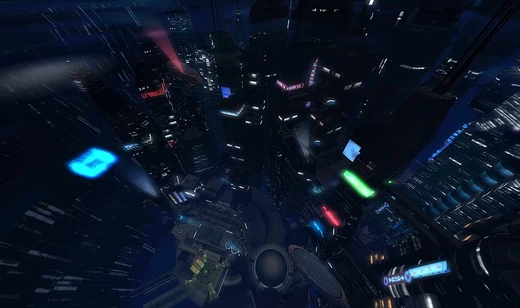
Alita: Battle Angel
A cyborg awakens without memory and seeks her destiny.

Dian Li · CC BY-SA 4.0
Alita: Battle Angel is a 2019 American cyberpunk action film directed by Robert Rodriguez, produced by James Cameron and Jon Landau, and written by Cameron and Laeta Kalogridis. Based on Yukito Kishiro's manga series Gunnm and a re-adaptation of the 1993 original video animation, the film uses motion-capture and CGI animation to follow Alita, a cyborg who awakens without memory and seeks her destiny. It grossed $405 million, making it Rodriguez's highest-grossing film, and has since gained a cult following.
Quick Facts
- Director
- Robert Rodriguez
- Screenplay
- James Cameron / Laeta Kalogridis
- Based On
- Gunnm · Yukito Kishiro
- Producer
- James Cameron / Jon Landau
- Starring
- Rosa Salazar / Christoph Waltz / Jennifer Connelly / Mahershala Ali / Ed Skrein / Jackie Earle Haley / Keean Johnson
- Cinematography
- Bill Pope
- Editing
- Stephen E. Rivkin / Ian Silverstein
- Music
- Tom Holkenborg
- Studio
- 20th Century Fox / Lightstorm Entertainment / Troublemaker Studios
- Distributor
- 20th Century Fox
- Released
- 31 January 2019 · Odeon Leicester Square, London · 2019 · 2 · 14 · United States
- Runtime
- 122 minutes
Facts from the source article.
Lore & Background
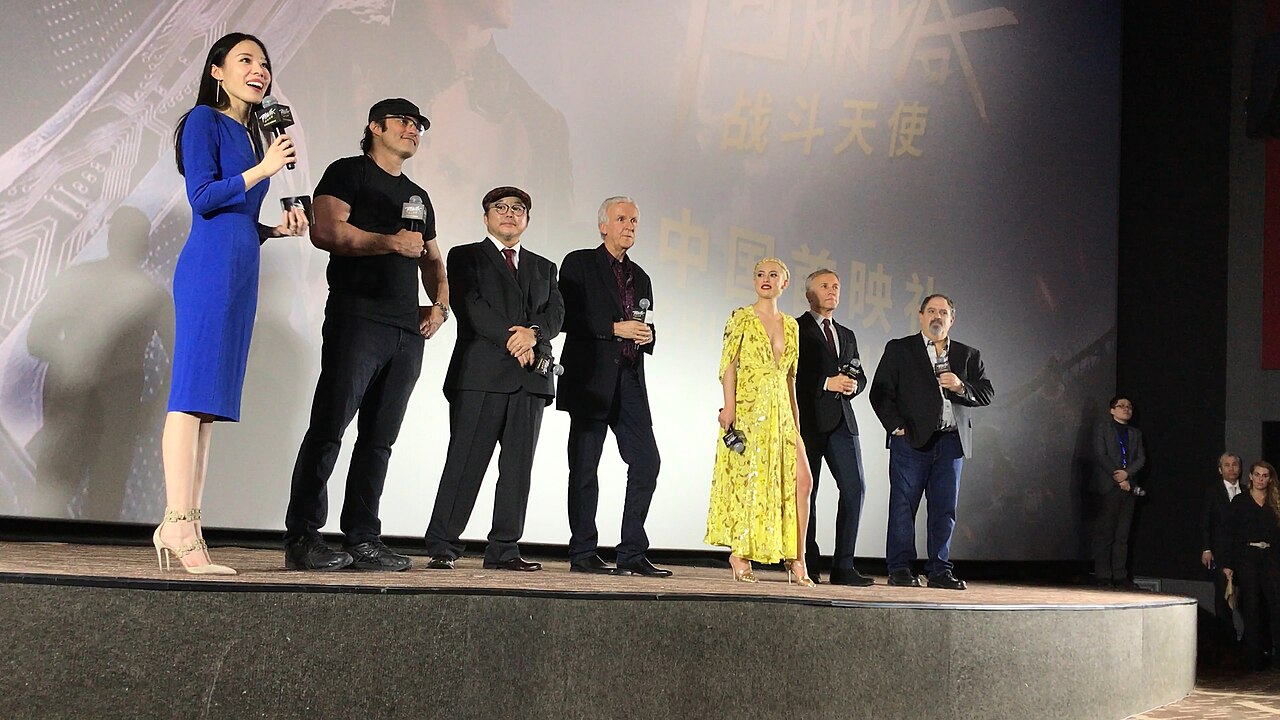
Announced in 2003, production was repeatedly delayed due to James Cameron's work on Avatar (2009) and its sequels. After years of development hell, Robert Rodriguez was announced as director in April 2016, with Rosa Salazar cast as the lead the following month. Principal photography began in October 2016 in Austin, Texas, mostly at Rodriguez's Troublemaker Studios, and lasted until February 2017. The film had its world premiere at the Odeon Leicester Square in London on January 31, 2019, and was released in the United States on February 14, by 20th Century Fox.
Reader's Guide
Alita: Battle Angel represents a significant milestone in cyberpunk cinema and motion-capture technology, blending live-action with CGI to create a fully realized cyborg protagonist. The film's long development—spanning from 2003 to 2019—reflects the challenges of adapting a beloved manga for a global audience. Despite mixed critical reviews, it became Robert Rodriguez's highest-grossing film and developed a dedicated cult following in the years after release. Its financial and cultural impact has kept a sequel in development, underscoring its lasting appeal. The film also highlights the collaborative efforts of major Hollywood figures like James Cameron and Robert Rodriguez, bridging epic sci-fi and gritty action.
Did You Know?
- The domain name 'battleangelalita.com' was registered to James Cameron by 20th Century Fox around June 2000.
- Guillermo del Toro originally brought the Battle Angel Alita manga to James Cameron's attention.
- The film's title was rearranged from 'Battle Angel Alita' to 'Alita: Battle Angel' to allow for sequel titles like 'Alita: Fallen Angel'.
- Edward Norton appears in an uncredited cameo as Nova.
Origins & the Biblical Undercurrent
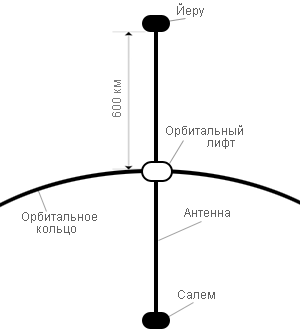
The character at the heart of Battle Angel Alita did not begin under that name. In an unpublished comic called Rainmaker, Yukito Kishiro created a female cyborg police officer named Gally. Shueisha editors took a liking to her and commissioned a new, long-running series built around her as the protagonist. When the manga launched in Business Jump in 1990, the character was renamed Alita for the English-language market, while Japanese readers continued to call her Gally. The world-building carries a deliberate Biblical resonance: the floating city Zalem derives from the Hebrew word for "peace," the facility atop it is named Jeru (after Jerusalem), and the city's main computer bears the name Melchizedek, described as "the king of Salem" and "priest to the Most High God." Early North American translations shifted Zalem to Tiphares (after Tiferet) and Jeru to Ketheres (after Keter), though more recent editions have restored the original names. This layered naming reflects Kishiro's interest in weaving sacred-geometric and scriptural motifs into a cyberpunk framework.
A Dystopian World Mapped to America
The story unfolds in the 26th century, specifically between ES 577 (AD 2533) and ES 590 (AD 2546) in the original series, using a calendar era called "Era Sputnik" whose epoch is AD 1957. The setting is the former United States: a map printed in the eighth volume places Scrapyard and Zalem near Kansas City, Missouri; the Necropolis in Colorado Springs, Colorado; radio station KAOS in Dallas, Texas; and Figure's coastal hometown in Alhambra, California. Desty Nova's Granite Inn is built from the NORAD Cheyenne Mountain Complex. The world operates as a vertical hierarchy: Zalem, the floating city above, exploits the ground-dwellers of Scrapyard, which has grown around a massive scrap heap raining down from the sky. Ground residents survive through cybernetic modification, bounty hunting as Hunter-Warriors, and the violent spectacle of Motorball. Massive tubes connect the two cities, but contact remains minimal—limited to robots, exiled Zalemites, and the occasional agent sent below.
Adaptations Across Three Decades
Battle Angel Alita's journey from page to screen spans more than twenty-five years. The manga ran in Shueisha's Business Jump from 1990 to 1995, collected in nine tankōbon volumes. The first two volumes were adapted in 1993 into a two-part anime OVA titled Battle Angel, released in North America by ADV Films and in the UK and Australia by Manga Entertainment, which also handled the English dubbing. A far larger leap came on February 14, 2019, when 20th Century Fox released the live-action film Alita: Battle Angel. The manga's narrative life has continued well beyond its original run: Last Order serialized from 2000 to 2014, Mars Chronicle ran from 2014 to 2025, and Panzer Kunst Chronicle has been ongoing since 2026. In August 2010, Kishiro moved from Shueisha to Kodansha, which acquired the license rights and produced a six-volume special edition. Each adaptation and continuation has broadened the audience while preserving the core story of an amnesiac cyborg fighting to reclaim her identity.
A Cast in Constant Motion
Alita is the single character who never leaves the story. She is a young cyborg with amnesia, defined by her instinctive recall of Panzer Kunst—the legendary martial art that becomes her path to becoming a Hunter-Warrior and later a Motorball star. Early in the narrative, Daisuke Ido, a cybernetics doctor who finds her suspended head and chest in a garbage dump, anchors the story. He names her Alita after his recently deceased cat. As the plot deepens, focus shifts to Desty Nova, an eccentric nanotechnology scientist exiled from Zalem, who orchestrates many of Alita's adversaries. Remarkably, Nova does not make a physical appearance until more than two years into the serialized story, despite being alluded to from the start. His son Kaos, a frail radio DJ with psychometric abilities, broadcasts from the wastelands outside Scrapyard and becomes another crucial figure. The cast is deliberately fluid: characters enter, dominate an arc, and vanish, keeping the narrative restless and forward-moving.
Gallery



Frequently Asked Questions
Who directed Alita: Battle Angel and who was behind the production?
Robert Rodriguez helmed the 2019 film, while James Cameron and Jon Landau produced it. Cameron also co-wrote the screenplay with Laeta Kalogridis.
What source material is Alita: Battle Angel based on?
The movie is an adaptation of Yukito Kishiro's manga series Gunnm and serves as a re-imagining of the 1993 original video animation. It was reworked into a live-action-plus-motion-capture format for the big screen.
What is the basic premise of Alita: Battle Angel?
A cyborg woman is found in a scrapyard with no recollection of who she is and slowly discovers her extraordinary combat skills. As she explores the ground-level district beneath the floating city of Zalem, she pieces together her lost past and her true purpose.
Who portrays Alita in the 2019 film?
Rosa Salazar performs the role of Alita through motion-capture, with the character rendered entirely in CGI. Her facial expressions and body movements drive the digital cyborg's on-screen presence.
How successful was Alita: Battle Angel and why is it notable?
The picture earned approximately $405 million worldwide, making it the highest-grossing entry in Rodriguez's filmography. It has since cultivated a devoted cult audience among cyberpunk and manga fans who appreciate its blend of action and world-building.
More in Cyberpunk films 1-24
Spotted an error? Know more?
Reader corrections go straight into our review queue. Suggest an edit · How this site is sourced