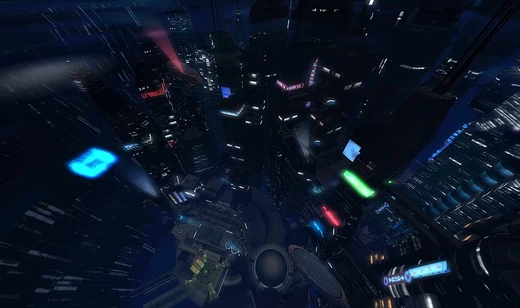
2036: Nexus Dawn
A prequel short film set 13 years before Blade Runner 2049.

20th Century Fox · Public domain
2036: Nexus Dawn is a 2017 American short film that serves as a prequel to *Blade Runner 2049*. It is one of three such shorts, the others being *Blade Runner Black Out 2022* and *2048: Nowhere to Run*. Released on August 30, 2017, about five weeks before the feature film, it stars Jared Leto as Niander Wallace and Benedict Wong. The screenplay was written by Hampton Fancher and Michael Green, who also wrote *Blade Runner 2049*, and it was directed by Luke Scott, whose father Ridley Scott directed the original *Blade Runner* and served as executive producer on the sequel. In Chinese and Taiwanese markets, the film is known as *2036: Clone Era*.
Set in Los Angeles in 2036—13 years before *Blade Runner 2049*—the story follows Wallace as he meets with lawmakers to seek approval for a new line of replicants. During the hearing, Wallace argues that Earth’s collapsing ecosystem requires cheap replicant labor to sustain humanity, and claims his new models pose no threat. To demonstrate, he orders his Nexus-9 assistant to cut himself and then choose between Wallace’s life and his own; the replicant slits its own throat, shocking the lawmakers. Wallace then asks again whether they will authorize production.
The Chinese version includes a text prologue explaining that replicant production was banned after “The Blackout” in 2022, leading to Tyrell Corporation’s bankruptcy. It notes that Earth’s ecosystem has been near collapse since the mid-2020s, and that blind CEO Niander Wallace acquired Tyrell and began developing new replicants as slaves to rebuild the environment. This prologue also appears before the Chinese release of *2048: Nowhere to Run*.
The cast includes Jared Leto as Niander Wallace, Benedict Wong as a lawmaker, Ned Dennehy as Lawmaker No. 2, Ade Sapara as Lawmaker No. 3, Ania Marson as Lawmaker No. 4, and Set Sjöstrand as the Nexus-9 replicant.
On August 29, 2017, it was announced that Denis Villeneuve had selected three filmmakers to direct short films exploring events between *Blade Runner* and *Blade Runner 2049*. The first, *2036: Nexus Dawn*, directed by Luke Scott, shows Wallace presenting a Nexus-9 replicant to lawmakers in an effort to lift the replicant prohibition. Benedict Wong appears as one of the lawmakers.
Quick Facts
- Director
- Luke Scott
- Screenplay
- Hampton Fancher / Michael Green
- Starring
- Jared Leto / Benedict Wong
- Music
- Blitz · Berlin
- Studio
- Alcon Entertainment / Columbia Pictures / Thunderbird Entertainment / Scott Free Productions
- Distributor
- Warner Bros. Pictures (North America) / Sony Pictures Releasing International (International)
- Released
- 30 August 2017
- Runtime
- 6 minutes
- Country
- United States
- Language
- English
Facts from the source article.
Lore & Background
The film takes place in Los Angeles in 2036, 13 years before the events of Blade Runner 2049. Here, Wallace meets with lawmakers and attempts to convince them to allow his new line of replicants to enter production. Niander Wallace is called to a hearing about his desire to manufacture a new generation of replicants. Wallace is warned that what he is doing is illegal and not open to debate, which Wallace questions saying they are debating it.
Reader's Guide
2036: Nexus Dawn serves as a narrative bridge between the original Blade Runner and its sequel, Blade Runner 2049. It introduces the character Niander Wallace, a blind CEO of the Wallace Corporation, who acquired the Tyrell Corporation after the Blackout of 2022. The short film depicts Wallace's attempt to overturn a prohibition on replicant production by demonstrating the obedience of a Nexus-9 replicant, who cuts his own throat to prove his loyalty. The Chinese version includes a text-based prologue explaining that replicant production had been banned after the Blackout, leading to the bankruptcy of the Tyrell Corporation, and that Earth's ecosystem has been on the brink of collapse since the mid-2020s. The short was directed by Luke Scott, whose father Ridley Scott directed the original Blade Runner and is executive producer on the sequel.
Did You Know?
- The short film was released on August 30, 2017, approximately five weeks before the release of Blade Runner 2049.
- It is one of three prequel shorts, alongside Blade Runner Black Out 2022 and 2048: Nowhere to Run.
- The Chinese version features a text-based prologue explaining the ban on replicant production after the Blackout of 2022.
Production & Creative Lineage
The short film sits within a family of three prequel shorts that Denis Villeneuve commissioned to bridge the narrative gap between the original Blade Runner and its 2049 sequel. Luke Scott was chosen to helm this particular entry, a selection that carries notable weight given his father Ridley Scott directed the 1982 original and serves as executive producer on the follow-up feature. The screenplay was penned by Hampton Fancher and Michael Green, the same duo responsible for the Blade Runner 2049 script, ensuring tonal and thematic continuity across both projects. The announcement of these three shorts came on August 29, 2017, with 2036: Nexus Dawn positioned as the first in the collection. The other two prequels, Blade Runner Black Out 2022 and 2048: Nowhere to Run, round out the trilogy of bridge narratives. This layered creative pedigree—spanning two generations of the Scott family and a shared writing team—gives the short a distinct standing within the franchise.
Plot & Narrative Structure
Set in Los Angeles during 2036, thirteen years before the events of the feature sequel, the short centers on a single high-stakes hearing. Niander Wallace, the blind CEO of the Wallace Corporation, appears before a panel of lawmakers to petition for the lifting of a ban on replicant manufacturing. His argument is pragmatic and urgent: Earth's ecosystem has been deteriorating since the mid-2020s, and he contends that affordable replicant labor is the only viable means of sustaining the human species. When the lawmakers dismiss his claims and insist the matter is settled law, Wallace escalates. He commands his newly developed Nexus-9 replicant assistant to deliberately cut himself and then choose between preserving Wallace's life or its own. The replicant severs its own throat, leaving the panel stunned. Wallace seizes the moment to reiterate his request for production authorization. In Chinese and Taiwanese markets, the film is preceded by a text-based prologue that contextualizes the post-Blackout world, the collapse of the Tyrell Corporation, and Wallace's acquisition of that company to develop the new replicant line.
Cast & Character Portrayal
Jared Leto delivers the sole lead performance as Niander Wallace, the visually impaired corporate figure who drives the short's central conflict. His portrayal anchors a scene built almost entirely around persuasion and moral provocation. Benedict Wong appears as one of the lawmakers on the panel, while Ned Dennehy, Ade Sapara, and Ania Marson fill the remaining three lawmaker roles, creating a quartet of skeptical authorities. Set Sjöstrand plays the Nexus-9 replicant, the newly developed artificial being whose self-sacrifice serves as the film's climactic and most emotionally charged moment. The ensemble is deliberately small, keeping the focus tight on the confrontation between Wallace and the legislative body. The replicant's act of cutting its own throat—choosing self-annihilation over harming its creator—functions as the narrative's turning point, transforming the lawmakers' resistance into shock and, implicitly, reconsideration. The casting choices, particularly Leto's physical presence as a blind character, lend the short a grounded, theatrical intensity that complements the franchise's broader cinematic scope.
Release, Titles & Reception
The short premiered on August 30, 2017, arriving roughly five weeks ahead of Blade Runner 2049's theatrical debut, serving as a narrative warm-up for audiences. Its announcement came just a day earlier, on August 29, when Villeneuve revealed the trio of prequel shorts and their respective directors. In Chinese and Taiwanese territories, the film carries multiple alternative titles—2036: Clone Era, 2036: Chain Dawn, and 2036: Copy of the Times—while it is also colloquially referred to as Blade Runner 2036. The Chinese release includes the additional text prologue that does not appear in the standard cut. Reception of the short was generally positive, with particular praise directed at the decision to place Luke Scott behind the camera, a choice that acknowledged Ridley Scott's son within the franchise's creative hierarchy. The film is cataloged on IMDb and available for viewing on YouTube, and it is listed alongside other artificial intelligence-themed works and Philip K. Dick adaptations in reference materials. Its official website further extends its digital footprint.
Gallery
Frequently Asked Questions
What is 2036: Nexus Dawn?
It is a 2017 American short film that serves as a prequel to Blade Runner 2049, set in Los Angeles in the year 2036. It is one of three companion shorts made for the sequel, the others being Blade Runner Black Out 2022 and 2048: Nowhere to Run.
Who directed and wrote 2036: Nexus Dawn?
Luke Scott directed the short, while Hampton Fancher and Michael Green penned the screenplay—the same writing team behind Blade Runner 2049 itself. Ridley Scott, Luke's father, served as executive producer on the project.
Who stars in 2036: Nexus Dawn?
Jared Leto plays Niander Wallace, the head of the Wallace Corporation, and Benedict Wong also appears in the cast. Supporting roles are filled by Ned Dennehy, Ade Sapara, Ania Marson, and Set Sjöstrand.
How does 2036: Nexus Dawn connect to Blade Runner 2049?
The short is set thirteen years before the events of the 2049 feature, offering a look at the Wallace Corporation's operations before the main story kicks off. It dropped roughly five weeks ahead of the theatrical release of Blade Runner 2049 to build audience anticipation.
When was 2036: Nexus Dawn released?
The short premiered on August 30, 2017, arriving about five weeks before Blade Runner 2049 hit theaters. It was distributed as a standalone prequel piece alongside the other two companion shorts.
More in Cyberpunk films 1-24
Spotted an error? Know more?
Reader corrections go straight into our review queue. Suggest an edit · How this site is sourced