
Patagonia
The southern frontier of South America, shared by Argentina and Chile.
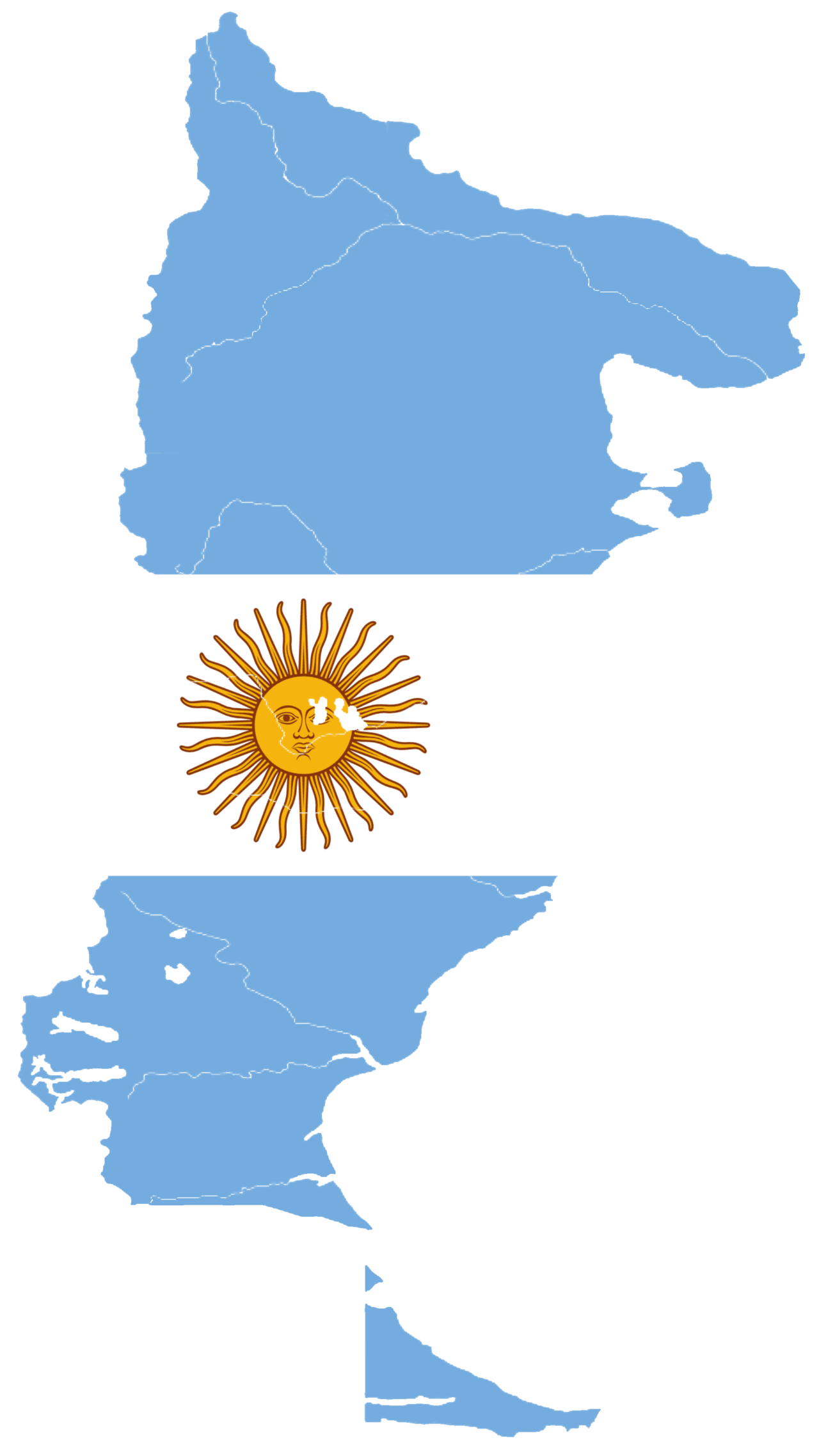
Patagonia is a region in South America, divided between Argentina and Chile. It covers an area of 1,043,076 km² and has a population of 1,999,540. The demonym for inhabitants is Patagonian. The northern limit of the region is not precisely defined; the Colorado and Barrancas rivers, running from the Andes to the Atlantic, are commonly considered the northern boundary of Argentine Patagonia. On this basis, it includes the Argentine provinces of Neuquén, Río Negro, Chubut, Santa Cruz, and the Patagones Partido in southern Buenos Aires Province. Most geographers and historians locate the northern limit of Chilean Patagonia at the Huincul Fault in the Araucanía Region, extending across the Los Lagos, Aysén, and Magallanes regions. The Tierra del Fuego archipelago is sometimes considered part of Patagonia.
The name Patagonia originates from the word *patagón*, used by Ferdinand Magellan in 1520 to describe the native tribes, whom his expedition believed to be giants. These people, now thought to be the Tehuelche, were taller than Europeans of the time. A 2011 study proposed that the name may derive from the ancient Greek region of Paphlagonia, home of a character in a 1512 chivalric romance. When Spanish explorers arrived, Patagonia was inhabited by several indigenous groups. In a small northwestern portion, some communities practiced limited agriculture, while most peoples lived as hunter-gatherers—traveling on foot in the eastern plains and using dugout canoes and *dalcas* in the western fjords. During the colonial period, northeastern groups adopted a horseback-based nomadic lifestyle after the reintroduction of the horse. Spanish expeditions established settlements, primarily to prevent rival European powers from gaining a foothold. After independence, Chile and Argentina colonized their Patagonian claims throughout the 19th and early 20th centuries, leading to a severe decline in indigenous populations due to disruption by settlers from Argentina, the Chiloé Archipelago, mainland Chile, and Europe. Indigenous resistance was crushed by military campaigns. Today, Argentine Patagonia’s economy relies on sheep farming and oil and gas extraction, while Chilean Patagonia focuses on fishing, salmon aquaculture, and tourism.
- area_definition
- Includes Argentine provinces of Neuquén, Río Negro, Chubut, Santa Cruz, and Patagones Partido; Chilean regions of Aysén and Magallanes, plus the southern portion of Los Lagos (e.g., Palena province).
- indigenous_groups
- Tehuelche, Mapuche, Huilliche, Cuncos (a subgroup of the Huilliche), among others
Quick Facts
- Settlement Type
- Region
- Subdivision Type1
- Continent
- Subdivision Name1
- South America
- Subdivision Type2
- Country
- Subdivision Name2
- Argentina / Chile
- Subdivision Type3
- Provinces of Argentina
- Subdivision Name3
- Neuquén / Río Negro / Chubut / Santa Cruz / Tierra del Fuego
- Subdivision Type4
- Regions of Chile
- Subdivision Name4
- Los Lagos / Palena / Aysén / Magallanes
- Area Total Km2
- 1043076
- Population Total
- 1999540
- Population Density Km2
- auto
Facts from the source article.
Lore & Background
The name Patagonia comes from the word patagón, used by Magellan in 1520 to describe native tribes he thought were giants, now believed to be the Tehuelche. An alternative hypothesis suggests the name derives from the ancient Greek region of Paphlagonia. Before Spanish arrival, Patagonia was inhabited by several indigenous groups, mostly hunter-gatherers, with limited agriculture in northwestern parts. During the colonial period, northeastern groups adopted a horseback-based nomadic lifestyle. After independence, Chile and Argentina colonized the region, leading to a decline in indigenous populations. The contemporary economy of Argentine Patagonia is based on sheep farming, oil, and natural gas; Chilean Patagonia's economy is dominated by fishing, salmon aquaculture, and tourism.
Reader's Guide
Patagonia is divided into Argentine Patagonia (eastern) and Chilean Patagonia (western). Argentine Patagonia includes the provinces of Neuquén, Río Negro, Chubut, Santa Cruz, and Tierra del Fuego, plus the Patagones Partido of Buenos Aires Province. Chilean Patagonia includes the regions of Los Lagos (southern part, including Palena), Aysén, and Magallanes. The northern limit is not precisely defined; the Colorado and Barrancas rivers are commonly considered the northern limit of Argentine Patagonia, and the Huincul Fault in Araucanía Region for Chilean Patagonia. The archipelago of Tierra del Fuego is sometimes considered part of Patagonia.
Did You Know?
- The name Patagonia may come from the Greek region Paphlagonia, according to a 2011 report.
- The word 'Chubut' comes from the Tehuelche word 'chupat', meaning transparency.
- Welsh settlers in Patagonia call the Chubut River 'Camwy'.
- Many Patagonians do not consider themselves Latinos and proudly call themselves Patagonians.
A Landscape Shaped by Ice, Wind, and Water
Patagonia stretches across the southern reaches of South America, straddling the borders of Argentina and Chile. The region encompasses the southern stretch of the Andes, where the western side is characterized by glacial lakes, deep fjords, and temperate rainforests, while the eastern side gives way to vast deserts, flat tablelands, and open steppes. Its boundaries are defined by two oceans—the Pacific to the west and the Atlantic to the east—and a series of southern waterways including the Strait of Magellan, the Beagle Channel, and the Drake Passage. The northern edge remains somewhat ambiguous: in Argentina, the Colorado and Barrancas rivers are commonly cited as the dividing line, encompassing provinces from Neuquén down through Santa Cruz. In Chile, geographers typically place the northern boundary at the Huincul Fault in the Araucanía Region, with the territory extending southward through Los Lagos, Aysén, and Magallanes. The Tierra del Fuego archipelago is sometimes included within Patagonia's borders as well.
Indigenous Life and the Colonial Upheaval
Before European contact, Patagonia was home to diverse indigenous communities. In a small area of northwestern Patagonia, some groups practiced limited agriculture, but across most of the territory, peoples subsisted as hunter-gatherers—traversing the eastern plains on foot and navigating the western fjords and channels in dugout canoes and dalcas. The reintroduction of the horse during the colonial era transformed northeastern groups into horseback nomads. Spanish explorers launched multiple expeditions and founded settlements, though the Crown's primary motivation was strategic: blocking rival European powers from establishing a foothold. After independence, both Argentina and Chile pushed to colonize their respective Patagonian claims throughout the 1800s and early 1900s. This wave of settlement by immigrants from Argentina, the Chiloé Archipelago, mainland Chile, and Europe caused a severe decline in indigenous populations. Resistance to colonization was ultimately suppressed through military campaigns conducted by both nations.
Names, Languages, and a Proud Identity
The name Patagonia traces back to 1520, when Magellan's expedition labeled the native inhabitants patagones, believing them to be giants—people now identified as the Tehuelche, who were notably taller than Europeans of that era. A 2011 philological report proposed an alternative origin, linking the term to Paphlagonia, an ancient Greek region in modern Turkey, possibly connected to the chivalric romance Primaleon printed in 1512. In Chubut Province, the word chupat—meaning transparency, a reference to the clarity of the river—gave rise to the province's name and its Welsh pronunciation Camwy, a legacy of Wales's Project Hiraeth. Culturally, many Patagonians reject the label Latino, preferring to identify proudly as Patagonians. This identity transcends the 1881 Boundary Treaty that split the region between Chile and Argentina. Mapuche communities, Welsh settlers, and residents of remote outposts like Laurie Island and Antarctic settlements all claim Patagonian as a patriotic, inclusive demonym rooted in shared language, culture, and place.
Two Economies, One Region
The economic character of Patagonia differs sharply between its two national halves. In Argentine Patagonia, the economy is anchored in sheep farming and the extraction of oil and natural gas, activities that have shaped the landscape and livelihoods of the eastern provinces for generations. Chilean Patagonia, by contrast, leans heavily on the sea and its visitors: commercial fishing, salmon aquaculture, and tourism form the backbone of regional income. This divergence mirrors the region's geography—the vast eastern steppes and tablelands suited to pastoral and extractive industries, versus the fjord-lined western coast and its rich marine ecosystems. The population of both Argentine and Chilean Patagonia has been tracked through successive censuses, revealing the demographic realities of a region where enormous land areas support relatively sparse communities. The economic specialization of each side—sheep and hydrocarbons in the east, fish and visitors in the west—continues to define how Patagonia engages with the wider world while remaining one of the most geographically dramatic and sparsely populated regions on Earth.
Gallery
Frequently Asked Questions
What is Patagonia?
Patagonia is a vast geographical region in the far south of South America, stretching across the southern portions of both Argentina and Chile. It encompasses diverse landscapes ranging from Andean lakes and fjords in the west to open steppes and deserts in the east.
Which provinces and regions make up Patagonia?
On the Argentine side, it includes Neuquén, Río Negro, Chubut, Santa Cruz, and the Patagones Partido. On the Chilean side, it covers the Aysén and Magallanes regions along with the southern part of Los Lagos, such as Palena province.
What indigenous groups are traditionally associated with Patagonia?
The region has long been home to the Tehuelche, Mapuche, Huilliche, and Cuncos (a subgroup of the Huilliche), among other peoples who developed distinct cultures tied to the local landscape.
What major waterways define Patagonia's boundaries?
The Pacific Ocean borders the west while the Atlantic Ocean borders the east, and the southern edge is marked by channels and straits including the Strait of Magellan, the Beagle Channel, and the Drake Passage.
What kind of landscapes can you find in Patagonia?
The western side features the southern Andes with its lakes, fjords, temperate rainforests, and glaciers, while the eastern side transitions into deserts, flat tablelands, and wide-open steppes.
More in Countries And Regions 1-24
Spotted an error? Know more?
This is a living reference — every entry is fact-audited, and reader corrections feed straight into our audit queue. Suggest an edit · See this site's audit record