
Maharashtra
Western Indian state, second-most populous, with the largest economy.

Own work based on user:Chumwa · CC BY-SA 4.0
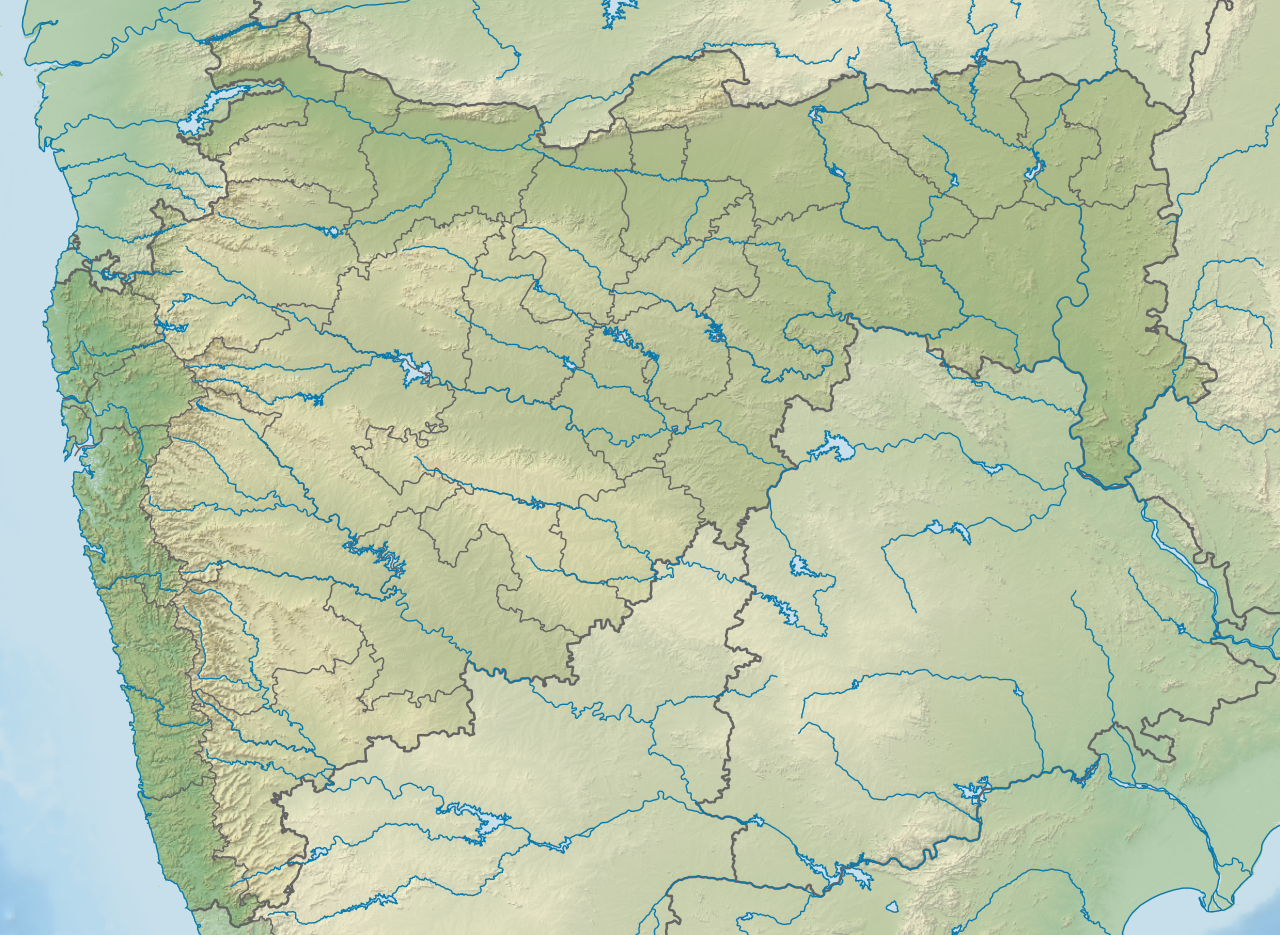
Maharashtra occupies a large part of the Deccan Plateau in western peninsular India. Its western border meets the Arabian Sea, while its other boundaries touch Karnataka and Goa to the south, Telangana to the southeast, Chhattisgarh to the east, Gujarat and Madhya Pradesh to the north, and the union territory of Dadra and Nagar Haveli and Daman and Diu to the northwest. In terms of population, it ranks second among Indian states, third among all country subdivisions in South Asia, and fourth worldwide. The area now called Maharashtra has been inhabited for thousands of years. Over the centuries, it was ruled by many dynasties, including the Asmakas, Mauryas, Satavahanas, Western Satraps, Abhiras, Vakatakas, Chalukyas, Rashtrakutas, Western Chalukyas, Seuna Yadavas, Khaljis, Tughlaqs, Bahamanis, and Mughals. By the early 1800s, the region was split between the Peshwa domains within the Maratha Confederacy and the Nizamate of Hyderabad. Soon after, the British East India Company defeated the Marathas and took control of most of present-day Maharashtra, either directly or through princely states. Following 1858, the British crown governed the area instead of the Company. During Company and British rule, the territory was divided among the Bombay Presidency, the Central Provinces, Berar, and several princely states, including Hyderabad. After India gained independence in 1947, the Bombay Presidency became Bombay State within the Indian Union. Between 1950 and 1956, Berar, the Deccan states, and the Gujarat states were merged into Bombay State. The United Maharashtra Movement pushed for a separate state for Marathi speakers, and their efforts succeeded on 1 May 1960, when Bombay State was split into the modern states of Maharashtra and Gujarat. Maharashtra is organized into 6 divisions and 36 districts. Its capital is Mumbai, which is also India’s most populous urban area, while Nagpur serves as the winter capital. The Godavari and Krishna are the two main rivers, and forests cover 16.47% of the state’s land. Maharashtra has the largest economy of any Indian state, with a gross state domestic product of ₹42.5 trillion (US$440 billion) and a per capita GSDP of ₹335,247 (US$3,500). It contributes 14% of India’s nominal GDP, the largest share of any state. The service sector makes up 69.3% of the state’s output value. Although agriculture accounts for only 12% of the state’s GDP, it employs nearly half the population. The state is highly industrialized. It contains 395 municipal councils and 29 municipal corporations as urban local bodies. Mumbai is India’s financial and commercial hub, hosting the Bombay Stock Exchange—the country’s largest and Asia’s oldest—as well as the National Stock Exchange, which is India’s second-largest and one of the world’s largest derivatives exchanges. Maharashtra has been influential in India’s social and political life and is seen as a leader in agriculture, industry, trade, transport, and education. It ranks ninth among Indian states on the human development index. Seven UNESCO World Heritage Sites are located in Maharashtra: the Ajanta Caves, Ellora Caves, Elephanta Caves, Chhatrapati Shivaji Terminus (formerly Victoria Terminus), the Victorian Gothic and Art Deco Ensembles of Mumbai, the Maratha Military Landscapes of India (shared with Tamil Nadu), and the Western Ghats—a heritage site comprising 39 individual properties, four of which are in Maharashtra. **Etymology**
Writers before independence often said that “Maharashtra” came from “the country of Mahars.” Irawati Karve also observed that Mahars lived throughout Maharashtra. The modern Marathi language developed from Maharashtri Prakrit, and the word Marhatta (later used for the Marathas) appears in Jain Maharashtrian literature. The terms Maharashtra, Maharashtrian, Marathi, and Maratha may all share a common root, but their exact origin is unclear. Some linguists believe Maratha and Maharashtra come from a combination of Mahā and Rāṣṭrikā, the name of a tribe or ruling dynasty in the Deccan. Another theory suggests the words derive from mahā (“great”) and ratha/rathi (“chariot”/“charioteer”), referring to a skilled northern fighting force that moved south into the area. In the Harivamsa, the Yadava kingdom called Anaratta is described as mostly inhabited by the Abhiras. The Anartta country and its people were called Surastra and the Saurastras, likely after the Rattas (Rastras), similar to the Rastrikas of Asoka’s rock edicts, now known as Maharastra and the Marattas. A further theory holds that the term comes from mahā (“great”) and rāṣṭra (“nation/dominion”), but this is debated by modern scholars, who see it as a later Sanskritized interpretation. **History**
Numerous Late Harappan or Chalcolithic sites from the Jorwe culture (c. 1300–700 BCE) have been found across the state. The largest known settlement of this culture is at Daimabad, which had a mud fortification and an elliptical temple with fire pits. During the Late Harappan period, a large number of people migrated from Gujarat into northern Maharashtra. The Maurya Empire ruled the region in the fourth and third centuries BCE.
Lore & Background
The region that encompasses modern Maharashtra has a history going back many millennia. Notable dynasties that ruled the region include the Mauryas, the Satavahanas, the Western Satraps, the Abhiras, the Vakatakas, the Chalukyas, the Rashtrakutas, the Western Chalukyas, the Seuna Yadavas, the Khaljis, the Tughlaqs, the Bahamanis, the Mughals, and the Maratha Empire. In the early 19th century, the region was divided among major Maratha states including the Peshwa, the Bhonsles, the Holkars, the Scindias, and the Gaekwads, as well as the Nizamate of Hyderabad. Early in the 19th century, the British East India Company defeated the Marathas and brought most of present-day Maharashtra under its control, both directly and indirectly through many princely states.
Reader's Guide
Maharashtra is one of the most industrialised states in India and the single-largest contributor to India's economy, accounting for 14% of all-India nominal GDP. The service sector dominates the state's economy, accounting for 69.3% of the value of the output. The state capital, Mumbai, is India's financial and commercial capital, hosting the Bombay Stock Exchange and the National Stock Exchange. The state has played a significant role in the country's social and political life and is widely considered a leader in agricultural and industrial production, trade and transport, and education. Maharashtra is the ninth-highest ranking among Indian states in the human development index and is home to seven UNESCO World Heritage Sites, including the Ajanta Caves, Ellora Caves, and Chhatrapati Shivaji Terminus.
Did You Know?
- The term 'Maharashtra' may derive from 'the country of Mahars', though its exact etymology is uncertain.
- The state is home to seven UNESCO World Heritage Sites, including the Ajanta Caves and Ellora Caves.
Gallery
Frequently Asked Questions
What is Maharashtra?
Maharashtra is a state on India's western peninsula that covers a large portion of the Deccan Plateau. It is the second-most-populous state in India and the fourth-most-populous subnational region in the world.
Which dynasties shaped Maharashtra's history?
The region's record stretches back many millennia and includes rule by the Satavahanas, Chalukyas, Rashtrakutas, Mughals, and most prominently the Maratha Empire. Each left a lasting imprint on the state's culture and politics.
Why is Maharashtra considered important?
It pairs the second-highest population in India with the nation's largest economy, making it a demographic and commercial powerhouse. Its long dynastic heritage also gives it deep cultural and political weight in South Asian affairs.
More in Countries And Regions 1-24
Spotted an error? Know more?
This is a living reference — every entry is fact-audited, and reader corrections feed straight into our audit queue. Suggest an edit · See this site's audit record