Steady-state model
A now-rejected cosmological model with continuous matter creation.
The steady-state model, an alternative to the Big Bang theory, posits that the universe is expanding yet its average density remains constant over time. This is achieved through the continuous creation of matter, a process that upholds the perfect cosmological principle, which asserts that the observable universe appears identical at any location and at any epoch. While a static, non-expanding universe also satisfies this principle, it fails to account for the observed expansion of space. The model was developed in a series of influential papers published in 1948 by Hermann Bondi, Thomas Gold, and Fred Hoyle, though similar ideas had been proposed earlier by figures such as William Duncan MacMillan. Notably, Albert Einstein had considered a steady-state expanding universe in a 1931 manuscript, years before these later proponents, but ultimately abandoned the concept.
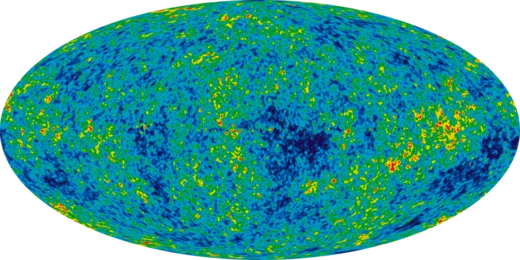
Observational evidence began to undermine the steady-state model in the 1950s and 1960s. Surveys of bright radio sources, such as quasars and radio galaxies, revealed that these objects exist only at great distances, implying they are ancient and not present in the nearby universe—a finding consistent with the Big Bang but contradictory to the steady-state prediction that such objects should be found everywhere. By 1961, statistical tests of radio-source data provided strong evidence against the model. Additionally, the thermal bremsstrahlung radiation expected from newly created matter in the steady-state scenario was calculated to exceed observed X-ray levels, indicating that thermal instability was not a viable mechanism for galaxy formation. The discovery of the cosmic microwave background radiation in 1964, which the Big Bang predicted, further challenged the model. Steady-state proponents attempted to explain this radiation as scattered starlight from ancient stars, but its remarkably uniform, black-body spectrum and lack of polarization made this explanation untenable. Consequently, the Big Bang theory became the accepted cosmological framework. A later incarnation, quasi-steady-state cosmology, was proposed in 1993 to address these shortcomings, but it has been met with criticism from mainstream cosmologists who have identified persistent flaws and discrepancies with observations.
- field
- Cosmology
- known_for
- Alternative to Big Bang theory; continuous creation of matter; perfect cosmological principle
- earlier_proponent
- William Duncan MacMillan
- status
- Rejected by most cosmologists, astrophysicists, and astronomers
Lore & Background
The steady-state model posits that the universe has no beginning and no end, requiring matter to be continually created to keep density constant as space expands. This adheres to the perfect cosmological principle, which states that the observable universe appears the same at any time and any place. While a static universe also obeys this principle, it cannot account for observations of cosmic expansion. The model was developed as an alternative to the Big Bang theory, with influential papers published by Hermann Bondi, Thomas Gold, and Fred Hoyle in 1948. Albert Einstein had earlier considered a similar steady-state expanding model in a 1931 manuscript but abandoned the idea. Observational challenges emerged in the 1950s and 1960s; bright radio sources like quasars were found only at great distances, contradicting the steady-state prediction that such objects would appear throughout the universe, including nearby. Statistical tests based on radio-source surveys by 1961 provided strong evidence against the model. The discovery of the cosmic microwave background radiation in 1964 further undermined the theory, as the steady-state model attempted to explain it as scattered starlight from ancient stars, but the radiation’s uniformity, lack of polarization, and near-perfect blackbody spectrum could not be produced by numerous dust clumps. The model is now rejected by most cosmologists, astrophysicists, and astronomers.
Reader's Guide
The steady-state model was significant as the primary rival to the Big Bang theory during the mid-20th century, forcing cosmologists to refine observational tests. Its central claim, the perfect cosmological principle, held that the universe appears identical at any time and place, requiring continuous matter creation to maintain constant density despite cosmic expansion. This contrasted with the Big Bang’s finite, evolving universe. Developed in influential papers by Bondi, Gold, and Hoyle in 1948, the model had earlier precedents, including a brief consideration by Einstein. Observational challenges mounted in the 1950s and 1960s. Counts of bright radio sources like quasars and radio galaxies showed they existed only at vast distances, implying they were ancient objects, whereas the steady-state model predicted such sources should appear nearby as well. Statistical tests by 1961 strongly contradicted the theory, though some proponents questioned the data. The discovery of the cosmic microwave background in 1964 further undermined the model; steady-state proponents attempted to explain it as scattered starlight from ancient dust, but the radiation’s uniformity, lack of polarization, and near-perfect blackbody spectrum could not be replicated by such a mechanism. By the 1970s, the Big Bang was broadly accepted. A later incarnation, quasi-steady-state cosmology, proposed localized creation events but was rebutted by mainstream cosmologists for inconsistencies with observations.
Did You Know?
- The steady-state model requires continuous creation of matter to keep the universe's density from decreasing as it expands.
- Bright radio sources such as quasars and radio galaxies were found only at large distances, contradicting the steady-state model's prediction that they would appear throughout the universe.
More in Cosmology Concepts 1-24
Spotted an error? Know more?
This is a living reference — every entry is fact-audited, and reader corrections feed straight into our audit queue. Suggest an edit · See this site's audit record