György Ligeti
Avant-garde composer known for micropolyphony and film music adaptations.
Last updated

via Wikipedia: György Ligeti · see source
György Sándor Ligeti was a Hungarian composer of contemporary classical music, born in Romania and later an Austrian citizen. He has been described as "one of the most important avant-garde composers in the latter half of the twentieth century" and "one of the most innovative and influential among progressive figures of his time." Growing up in a Hungarian Jewish family, his early musical training took place in Cluj and Budapest, where he later studied at the Franz Liszt Academy under notable teachers including Zoltán Kodály. After World War II, during which he survived a forced labor brigade and lost his brother and parents to concentration camps, he returned to the Academy as a teacher of harmony, counterpoint, and musical analysis.
Restricted by the Communist authorities in Hungary, he was cut off from Western developments until he fled to Vienna in 1956 following the Hungarian uprising. In Cologne, he worked with Karlheinz Stockhausen and Gottfried Michael Koenig in the electronic music studio, though he produced little electronic music himself, instead focusing on instrumental works with electronic-sounding textures. His breakthrough came with orchestral works like Atmosphères, which employed a technique he later called micropolyphony. After composing the opera Le Grand Macabre, he moved away from chromaticism toward polyrhythm in his later pieces.
He became an Austrian citizen in 1968, taught composition at the Hamburg Hochschule für Musik und Theater from 1973 until 1989, and counted Hans Abrahamsen, Unsuk Chin, and Michael Daugherty among his students. His music gained widespread public recognition through its use in Stanley Kubrick’s films, especially 2001: A Space Odyssey, though he never directly composed film scores. He died in Vienna in 2006.
Lore & Background
Ligeti was born in 1923 at Diciosânmartin (Dicsőszentmárton; renamed to Târnăveni in 1941) in Romania, to a Hungarian Jewish family. He was the great-grandnephew of violinist Leopold Auer and second cousin of Hungarian philosopher Ágnes Heller. In 1941 he received his initial musical training at the conservatory in Kolozsvár (Cluj), and during the summers privately with Pál Kadosa in Budapest. In 1944, his education was interrupted when he was sent to a forced labor brigade by the Horthy regime during the Holocaust.
His brother Gábor, age 16, was deported to the Mauthausen-Gusen concentration camp and his parents were sent to Auschwitz; his mother was the only person alongside Ligeti to survive in his immediate family. After World War II, he graduated in 1949 from the Franz Liszt Academy of Music, studying under Pál Kadosa, Ferenc Farkas, Zoltán Kodály and Sándor Veress. He taught harmony, counterpoint, and musical analysis there from 1950 to 1956.
In December 1956, two months after the Hungarian uprising was violently suppressed by the Soviet Army, Ligeti fled to Vienna with his ex-wife Vera Spitz. They remarried in 1957 and had a son together. A few weeks after arriving in Vienna, Ligeti left for Cologne, where he met Karlheinz Stockhausen and Gottfried Michael Koenig and worked in the Cologne Electronic Music Studio. He became an Austrian citizen in 1968.
A Childhood Interrupted by the Holocaust
Ligeti was born in 1923 in Diciosânmartin, a small Romanian town in Transylvania, to Dr. Sándor Ligeti and Dr. Ilona Somogyi. His family was Hungarian Jewish, and he was the great-grandnephew of the celebrated violinist Leopold Auer and second cousin of the philosopher Ágnes Heller. He moved to Cluj at age six and received his first musical training at the local conservatory in 1941, supplementing it with private summer lessons with Pál Kadosa in Budapest. His world shattered in 1944 when the Horthy regime conscripted him into a forced labor brigade.
His sixteen-year-old brother Gábor was deported to the Mauthausen-Gusen concentration camp, while his parents were sent to Auschwitz. Of his immediate family, only his mother survived alongside him. After the war, he returned to Budapest to complete his studies at the Franz Liszt Academy of Music, graduating in 1949 under the tutelage of Kadosa, Ferenc Farkas, Zoltán Kodály, and Sándor Veress.
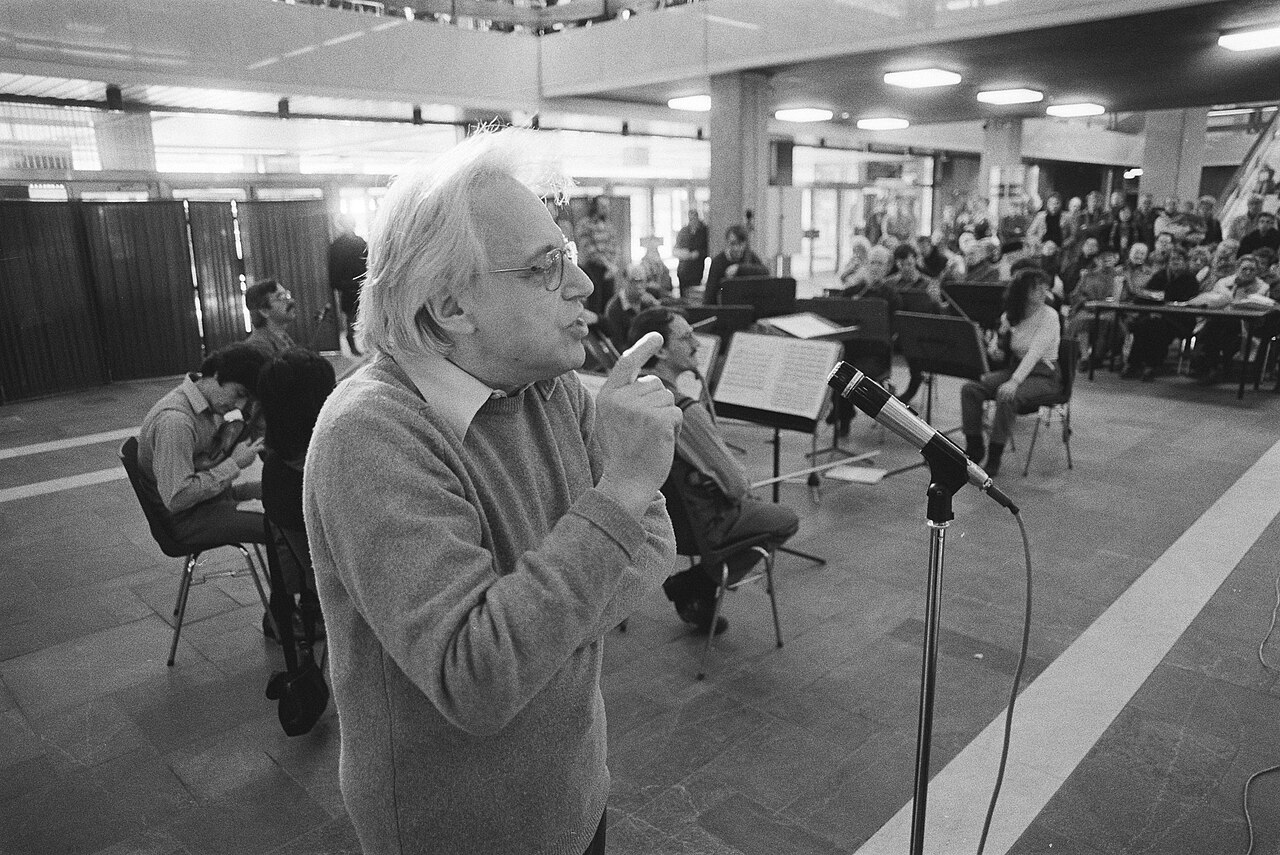
Exile, Electronic Experiments, and the Birth of Micropolyphony
In December 1956, two months after Soviet forces crushed the Hungarian uprising, Ligeti fled to Vienna with his ex-wife Vera Spitz. He left most of his earlier compositions behind in Budapest, some of which are now lost, carrying only what he deemed essential. Weeks later he traveled to Cologne, where he encountered Karlheinz Stockhausen and Gottfried Michael Koenig, both pioneering electronic music. He worked in their studio and was deeply inspired by the sounds he heard, though he produced little electronic music himself, preferring instrumental works with electronic-sounding textures.
After roughly three years, he grew disillusioned by the factional politics among the Cologne group and departed. His true breakthrough arrived with orchestral works like Atmosphères, in which he developed a technique he later named micropolyphony—dense, shimmering textures of many closely spaced voices. After composing his so-called anti-anti-opera Le Grand Macabre, he moved away from chromaticism toward polyrhythmic structures in his later output.
A Decades-Long Teaching Career Across Europe and America
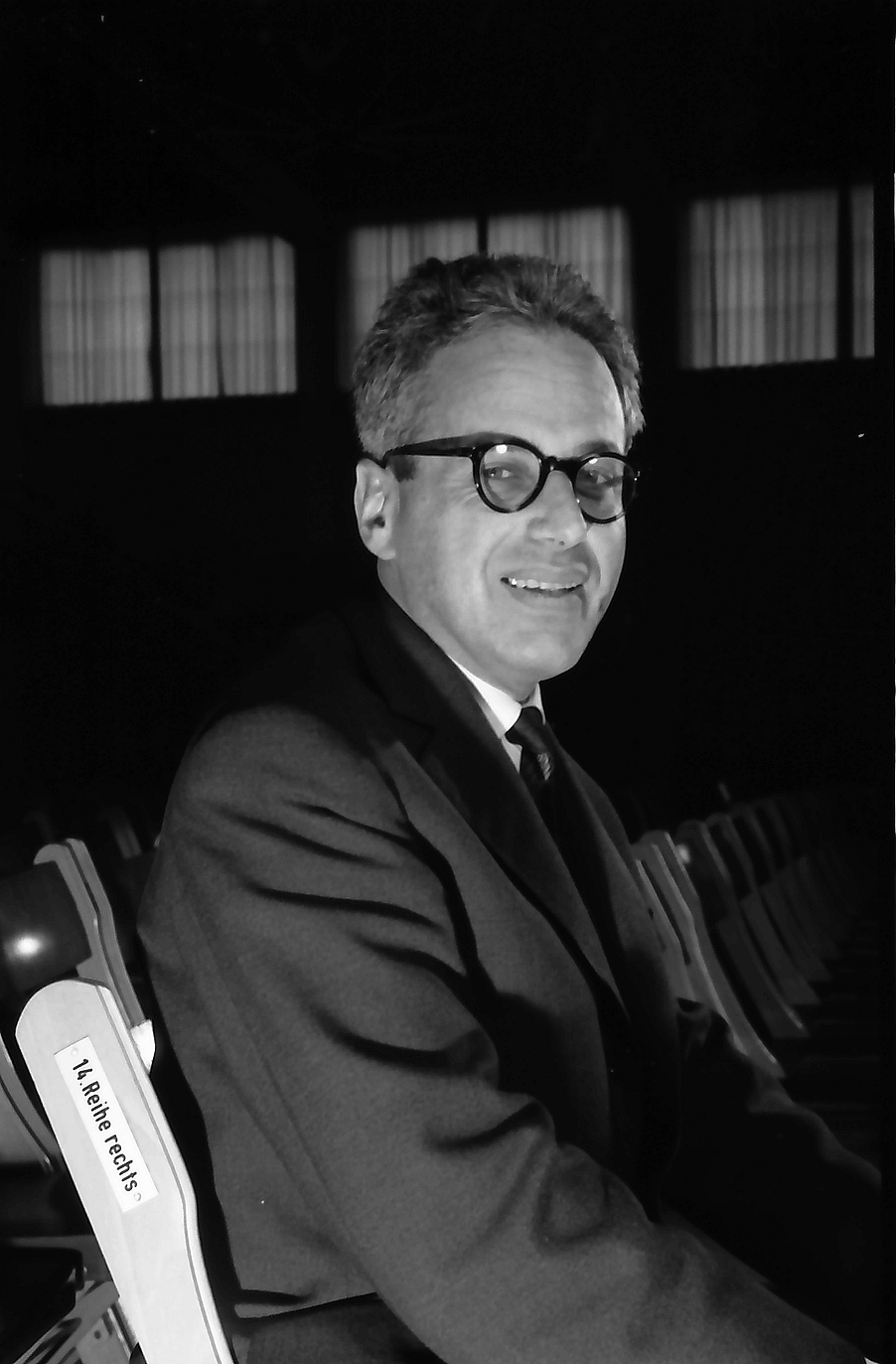
Ligeti's pedagogical life spanned multiple countries and decades. After graduating from the Franz Liszt Academy, he secured a teaching position there in 1950, instructing students in harmony, counterpoint, and musical analysis—a role he held until his 1956 departure. He later acknowledged the influence of his older colleague Lajos Bárdos, a conservative Christian conductor and musicologist, whose lectures he attended regularly and whose advice shaped his two harmony textbooks published in 1954 and 1956. After emigrating, he served as guest professor of composition in Stockholm between 1961 and 1971, then as composer-in-residence at Stanford University in 1972.
In 1973 he accepted a professorship at the Hochschule für Musik und Theater in Hamburg, where he taught until his 1989 retirement. Among his notable students were Hans Abrahamsen, Unsuk Chin, and Michael Daugherty. Throughout his Hamburg years, his wife Vera and their son Lukas remained in Vienna.
From Avant-Garde Studios to the Silver Screen
Although Ligeti never wrote a film score, his music became inseparable from cinema in the public imagination. The sound design of Stanley Kubrick's films, most famously 2001: A Space Odyssey, incorporated excerpts from his compositions, adapted for screen use. This association made him far more recognizable to general audiences than his purely concert-hall output might have achieved. Critics and musicologists have consistently ranked him among the most important avant-garde composers of the latter twentieth century and one of the most innovative progressive figures of his era.
His compositional range was remarkably broad: he drew on Renaissance music, African musical traditions, and a deep interest in literature—particularly the works of Lewis Carroll, Jorge Luis Borges, and Franz Kafka—as well as painting, architecture, and science. He was also the first composer featured in the annual Komponistenporträt of the Rheingau Musik Festival in 1990, invited by Walter Fink. He died in Vienna in 2006, fourteen years after his last return to Hungary to judge a competition in Budapest.
Reader's Guide
Restricted in his musical style by the authorities of Communist Hungary, only when he reached the West in 1956 could Ligeti fully realise his passion for avant-garde music and develop new compositional techniques. After experimenting with electronic music in Cologne, his breakthrough came with orchestral works such as Atmosphères, for which he used a technique he later dubbed micropolyphony. After writing his "anti-anti-opera" Le Grand Macabre, Ligeti shifted away from chromaticism and towards polyrhythm for his later works. In 1973 he became professor of composition at the Hochschule für Musik und Theater Hamburg, where he worked until retiring in 1989.
His students included Hans Abrahamsen, Unsuk Chin and Michael Daugherty. He died in Vienna in 2006 at the age of 83. His funeral was held at Feuerhalle Simmering, and his ashes were buried at Vienna Central Cemetery in a grave of honor. He was survived by his wife Vera and son Lukas, who is a composer and percussionist based in the United States.
Did You Know?
- Ligeti completed only two works in electronic music: Glissandi (1957) and Artikulation (1958).
Frequently Asked Questions
What is György Ligeti's nationality?
Ligeti was born in what is now Romania into a Hungarian-speaking family and identified as Hungarian early in his life. He later emigrated to Austria, where he took citizenship in 1967 and spent the remainder of his career.
How did György Ligeti influence film music?
Several of his orchestral and choral works were adapted for major film scores, most notably a movement from his Requiem in Stanley Kubrick's 2001: A Space Odyssey (1968). These adaptations exposed his dense, otherworldly textures to a global audience well beyond the concert hall.
More in Composers & Musicians
Test yourself
Three questions drawn from this entry’s sources. Pick an answer to check it.
Answers checked against the source article
Sources
Compiled from Wikipedia and the sources listed below. Text from Wikipedia is available under CC BY-SA 4.0; this entry is adapted from it.
- Wikipedia: György Ligeti (CC BY-SA 4.0).
Spotted an error? Know more?
Reader corrections go straight into our review queue. Suggest an edit · How this site is sourced