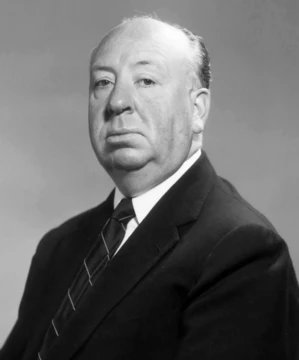
Stanley Kubrick
American filmmaker known for meticulous craft and genre-spanning films.
Last updated

via Wikipedia: Stanley Kubrick · see source
Stanley Kubrick was born in Manhattan on July 26, 1928, the first child of Jacob and Gertrude Kubrick.[1] Kubrick's professional career began as a photographer while he was still a student at William Howard Taft High School.[2]
Life and work
His IQ was above average but his attendance was poor, and he displayed an early interest in literature and Greek and Roman myths.[3] After graduating in 1945, his poor grades eliminated any hope of higher education, and he briefly attended evening classes at the City College of New York.[4][5] Kubrick met producer James B. Harris while playing chess in Washington Square, and they formed the Harris-Kubrick Pictures Corporation in 1955.[6] Kubrick spent five years developing 2001: A Space Odyssey (1968), which earned him his only personal Oscar, an Academy Award for Visual Effects.[7][8]
At age twelve, Stanley learned chess from his father Jack; the game stayed with him for life and featured in many of his movies.[3][9] A Graflex camera was given to Kubrick by his father when he turned thirteen, which sparked his interest in still photography.[9] Marvin Traub, a neighbor who also loved photography and owned a darkroom, became a friend of Kubrick's.[10] From 1941 through 1945, Kubrick was a student at William Howard Taft High School, where he joined the photography club and was selected as the official school photographer.[4][5]
A photo series he sold to Look magazine appeared in print on June 26, 1945, and by 1946 he was working there as a full-time staff photographer.[11][12] On May 28, 1948, Kubrick wed Toba Metz, his girlfriend from high school.[7] The 1953 feature Fear and Desire did poorly at the box office, though it received favorable reviews.[13]
What the cited sources add
An interview with James B. Harris states that the pair parted ways amicably over a disagreement about whether Dr. Strangelove should be a serious drama or a savage satire.[14] The same source notes that Harris believes he accelerated Kubrick's career.[14] A Forward article reports that Kubrick was agnostic but identified as Jewish, according to scholar Geoffrey Cocks.[2] The Forward article also states that Kubrick's co-producer Jan Harlan claims 2001: A Space Odyssey is Kubrick's most Jewish film.[2]
References
- Wikipedia, "Stanley Kubrick" (CC BY-SA 4.0), which cites: "The Secret Jewish History of Stanley Kubrick", Forward; Baxter 1997, p. 17 (we also read that source) en.wikipedia.org
- "The Secret Jewish History of Stanley Kubrick", Forward. facts only, no text reused. forward.com
- Wikipedia, "Stanley Kubrick" (CC BY-SA 4.0), which cites: Baxter 1997, p. 17; Baxter 1997, p. 17 (original not read by us) en.wikipedia.org
- Wikipedia, "Stanley Kubrick" (CC BY-SA 4.0), which cites: Gates, "Eydie Gorme, Voice of Sophisticated Pop, Dies at 84", The New York Times, August 12, 2013; Duncan 2003, p. 15; Zimmerman 1972, p. 31; LoBrutto 1999, p. 6 (original not read by us) en.wikipedia.org
- Wikipedia, "Stanley Kubrick" (CC BY-SA 4.0), which cites: LoBrutto 1999, p. 6 (original not read by us) en.wikipedia.org
- Wikipedia, "Stanley Kubrick" (CC BY-SA 4.0), which cites: Duncan 2003, p. 15; The Killing screen credits; Duncan 2003, p. 15 (original not read by us) en.wikipedia.org
- Wikipedia, "Stanley Kubrick" (CC BY-SA 4.0), which cites: Baxter 1997, p. 17 (original not read by us) en.wikipedia.org
- Wikipedia, "Stanley Kubrick" (CC BY-SA 4.0), which cites: Duncan 2003, p. 15; Duncan 2003, p. 15 (original not read by us) en.wikipedia.org
- Wikipedia, "Stanley Kubrick" (CC BY-SA 4.0), which cites: Bernstein, Jeremy, How about a little game? , New Yorker, November 12, 1966, republished on June 18, 2017, among a selection of stories from The New Yorker's ar; LoBrutto 1999, p. 6; Walker 1972, p. 11 (original not read by us) en.wikipedia.org
- Wikipedia, "Stanley Kubrick" (CC BY-SA 4.0), which cites: LoBrutto 1999, p. 6; Duncan 2003, p. 15 (original not read by us) en.wikipedia.org
- Wikipedia, "Stanley Kubrick" (CC BY-SA 4.0), which cites: Duncan 2003, p. 15 (original not read by us) en.wikipedia.org
- Wikipedia, "Stanley Kubrick" (CC BY-SA 4.0), which cites: LoBrutto 1999, p. 6; Duncan 2003, p. 15; Baxter 1997, p. 17 (original not read by us) en.wikipedia.org
- Wikipedia, "Stanley Kubrick" (CC BY-SA 4.0), which cites: Duncan 2003, p. 15; Baxter 1997, p. 17; ""The New Pictures," Time, June 4, 1956", June 4, 1956 (original not read by us) en.wikipedia.org
- Prime, Samuel B. (interviewing Harris, James B. ): "The Other Side of the Booth: A Profile of James B. Harris in Present Day Los Angeles," November 13, 2017, MU. facts only, no text reused. mubi.com
Each numbered sentence above was checked against the source it cites before publication. Sentences citing Wikipedia adapt text from the English Wikipedia article Stanley Kubrick (contributors), used under CC BY-SA 4.0; this entry is available under the same licence. Other sources were used for facts only; no text or images are copied from them.
Also in the Codexery
More in Auteur Film Directors
Sources
Compiled from Wikipedia and the sources listed below. Text from Wikipedia is available under CC BY-SA 4.0; this entry is adapted from it.
- Wikipedia: Stanley Kubrick (CC BY-SA 4.0).
Spotted an error? Know more?
Reader corrections go straight into our review queue. Suggest an edit · How this site is sourced