Jiangmen
Prefecture-level city in Guangdong, ancestral home to millions overseas.

Izumi2009 · CC BY 4.0
Jiangmen, also known in Cantonese as Kongmoon, is a prefecture-level city in southern China’s Guangdong Province. Its administration includes three urban districts—Pengjiang, Jianghai, and Xinhui—along with the county-level city of Heshan and the more rural Siyi region (comprising Taishan, Kaiping, and Enping). This area is the ancestral home of roughly 4 million overseas Chinese. According to the 2020 census, Jiangmen’s total population was about 4,798,090, with its urban core (Pengjiang, Jianghai, and Heshan) home to 2,657,062 people.
The name “Jiangmen” comes from the Mandarin pinyin romanization of the Chinese characters 江門. Earlier romanizations include the Wade-Giles spelling Chiang-men and the postal spelling Kongmoon, based on Cantonese pronunciation. Other historical variants are Kongmun and Kiangmoon. The city is also referred to as Pengjiang. Its rural hinterland was traditionally called the “Four Counties” (Siyi) by the Chinese diaspora, but since Heshan was added to Jiangmen’s jurisdiction, locals have begun calling it the “Five Counties” (Wuyi).
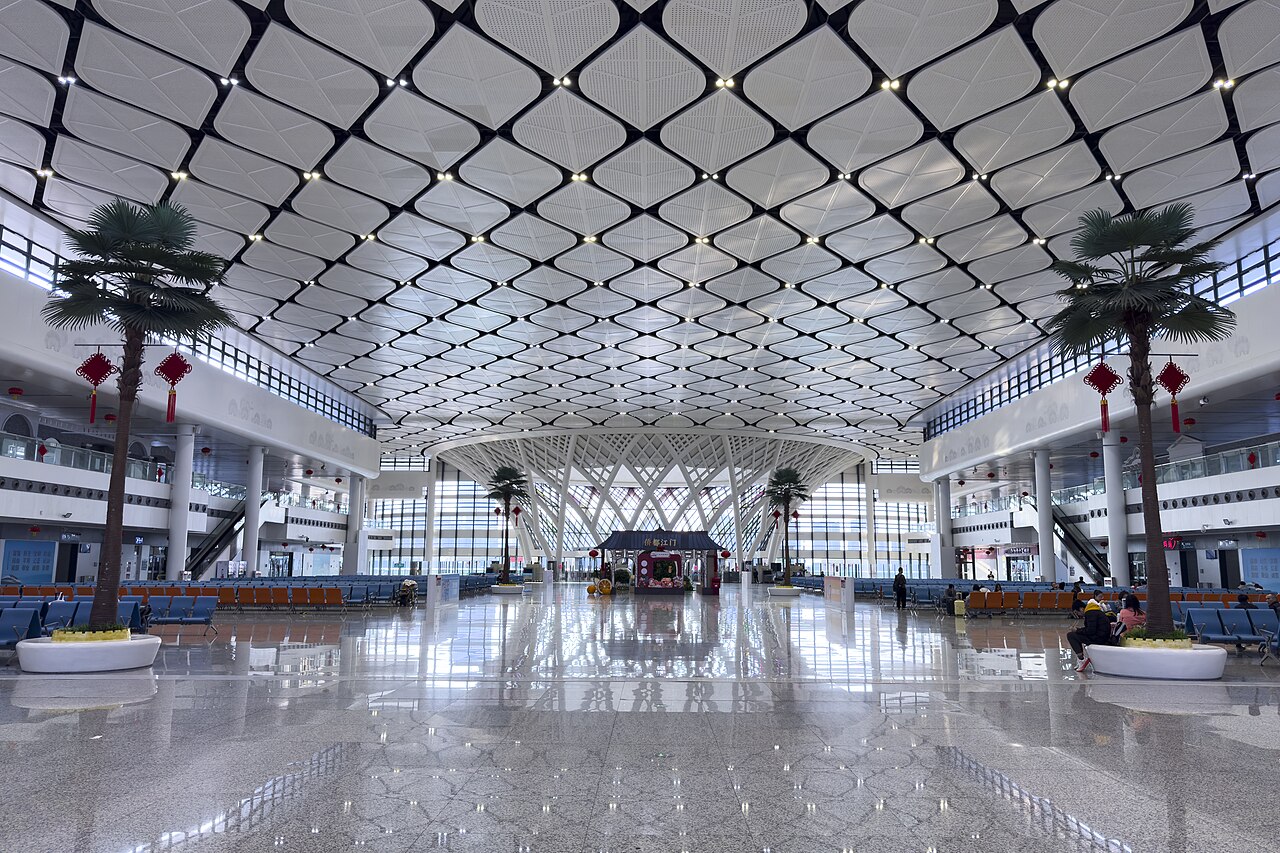
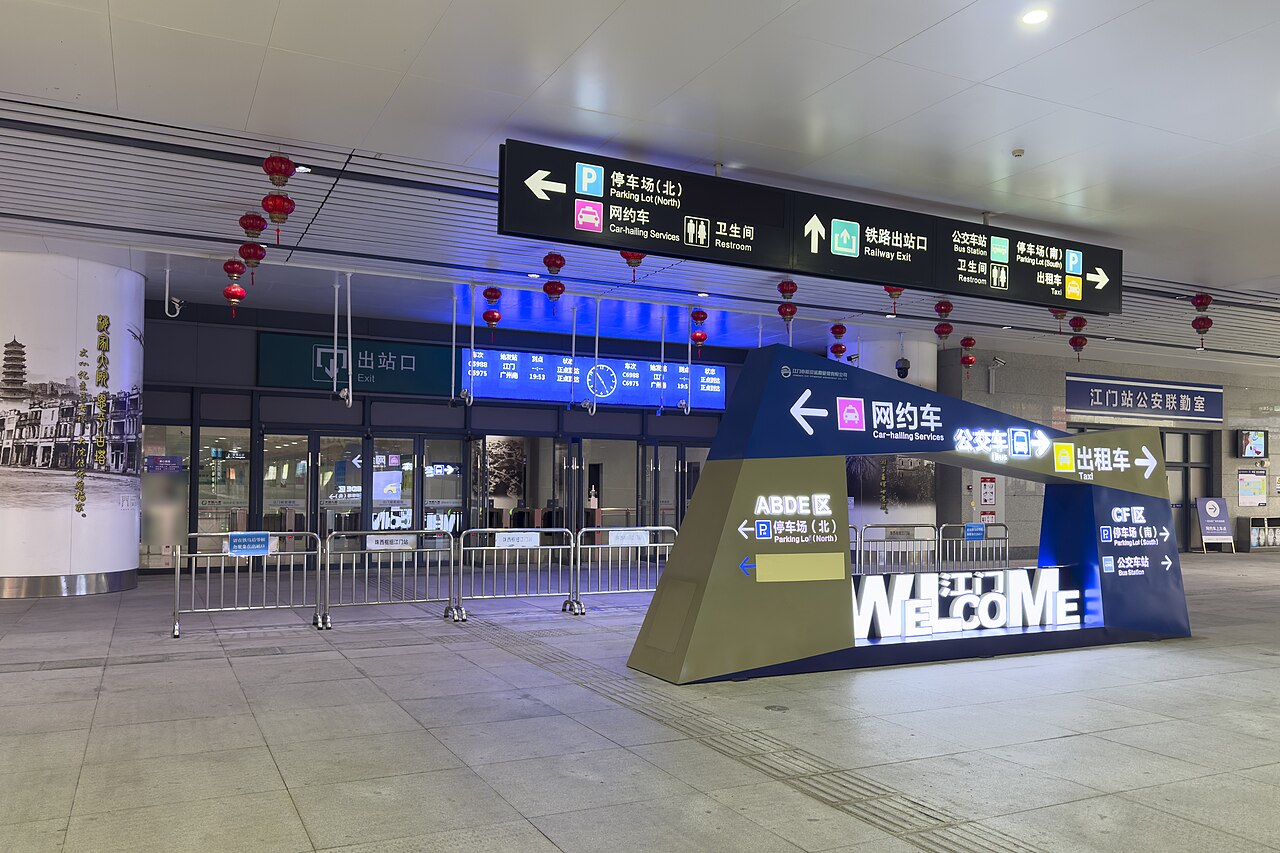
In 1902, Jiangmen was declared a treaty port, and it was forced open to Western trade in 1904. This period saw the construction of Western-style buildings along the waterfront, particularly in Chikan, many built by returning overseas Chinese merchants who used them as chambers of commerce headquarters and homes. The city government is now working on a renewal project to restore these structures. On August 6, 1925, the Guangdong provincial government placed Jiangmen under its direct administration, and a city government was established on November 26 of that year. This status was revoked in 1931, and the city came under Xinhui County’s control. Jiangmen was incorporated into the People’s Republic of China on October 23, 1949, and was officially proclaimed a city in 1951. It later became the prefectural seat for the Sze Yup region (Taishan, Kaiping, Xinhui, Enping). In mainland China, the area became known as the “Five Counties” after Heshan was added. The city was upgraded to a prefecture-level city in June 1983. In 2011, after rabies killed 42 people over three years, Jiangmen banned pet dogs in public. The city set aside a 13-acre site for rural adoption of the 30,000 dogs, but public outcry softened enforcement to warnings rather than confiscation. In 2017, the Jiangmen Hi-tech Industrial Development Zone ranked 64th among national hi-tech zones. In 2020, the Jiangmen Station of the West Pearl River Delta Transportation Center opened.
Geographically, Jiangmen sits on the lower reaches of the Xi and Tan Rivers, in the western Pearl River Delta in central southern Guangdong. It faces the South China Sea to the south and lies about 100 kilometers (62 miles) from Guangzhou and Zhuhai by highway. The city covers 9,535 square kilometers (3,681 square miles), roughly a quarter of the Pearl River Delta’s size. Its climate is subtropical with monsoonal influences, averaging 22.36°C (72.25°F) annually. Recorded extremes since 1957 range from 0.1°C (32.2°F) on January 16, 1963, to 38.4°C (101.1°F) on May 31, 2023.
Economically, Jiangmen was chosen by the Chinese state as a pilot city for a nationwide information program and by the Pacific Economic Cooperation Council as a trial city for the Regional Integration for Sustainable Economies project. The World Bank’s 2005 “Report on Investment Environment in China” ranked it sixth most conducive for investment. Development strategies focus on the three urban districts and the south, middle, and north lines, with plans for four main economic areas: the central urban district, the Yinzhou Lake economic area, and two areas along transport axes. In 2018, the city’s GDP was 290.041 billion Yuan, government revenue 24.393 billion Yuan, and retail sales 140.758 billion Yuan. By 2024, GDP had risen to 4022.96 billion Yuan. Manufacturing is key, with industries including new energy, machinery, textiles, paper, food products, electronics, and building materials, as well as high-speed rail, motorcycles, household appliances, food processing, synthetic fibers, garments, and stainless steel. Global brands with a presence include BP, Mitsubishi Heavy Industries, Hyundai, Panasonic, Veolia, Hutchison Whampoa, ABB, and Tesco, while factories in the city belong to BASF, Asia Pacific Resources International Holdings, and Lee Kum Kee Foods.
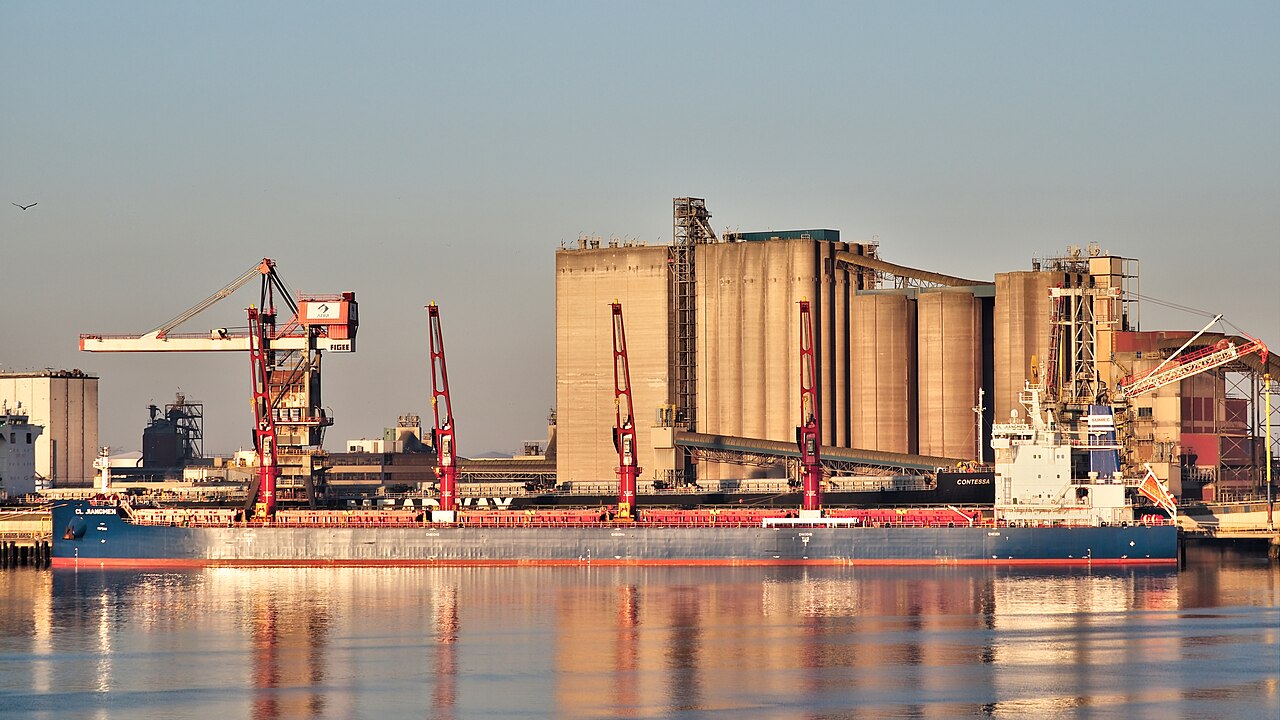
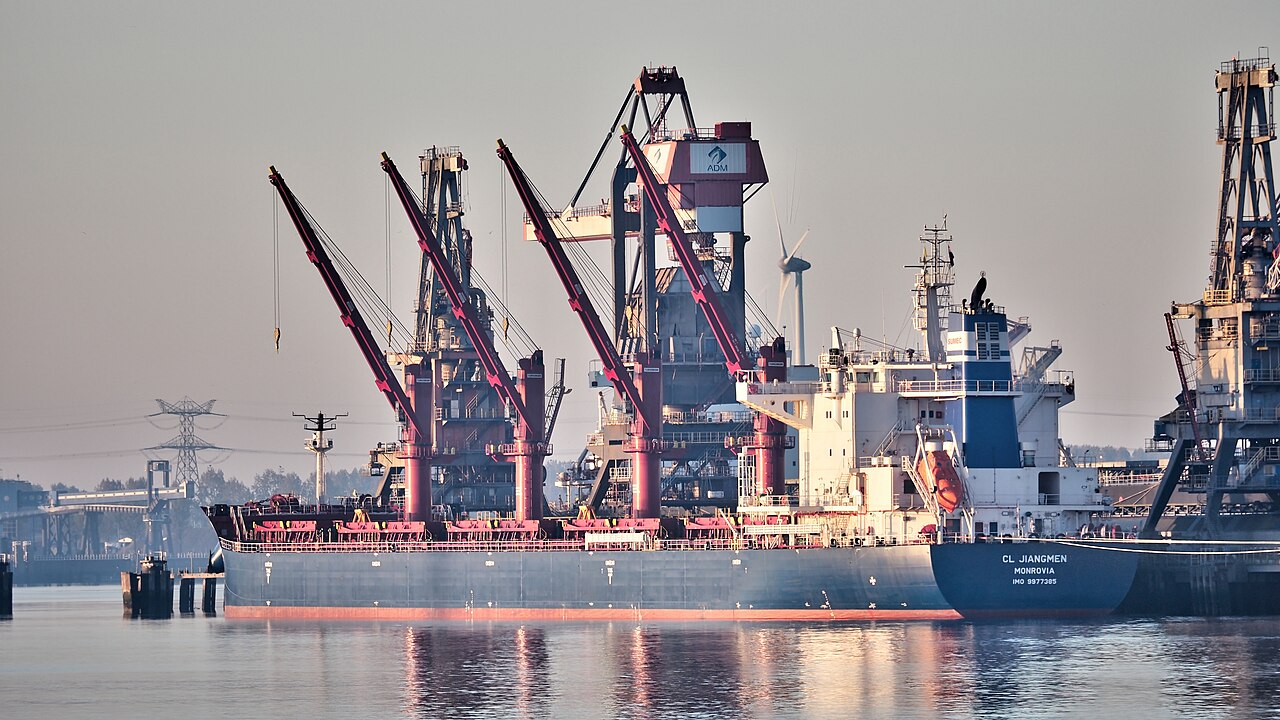
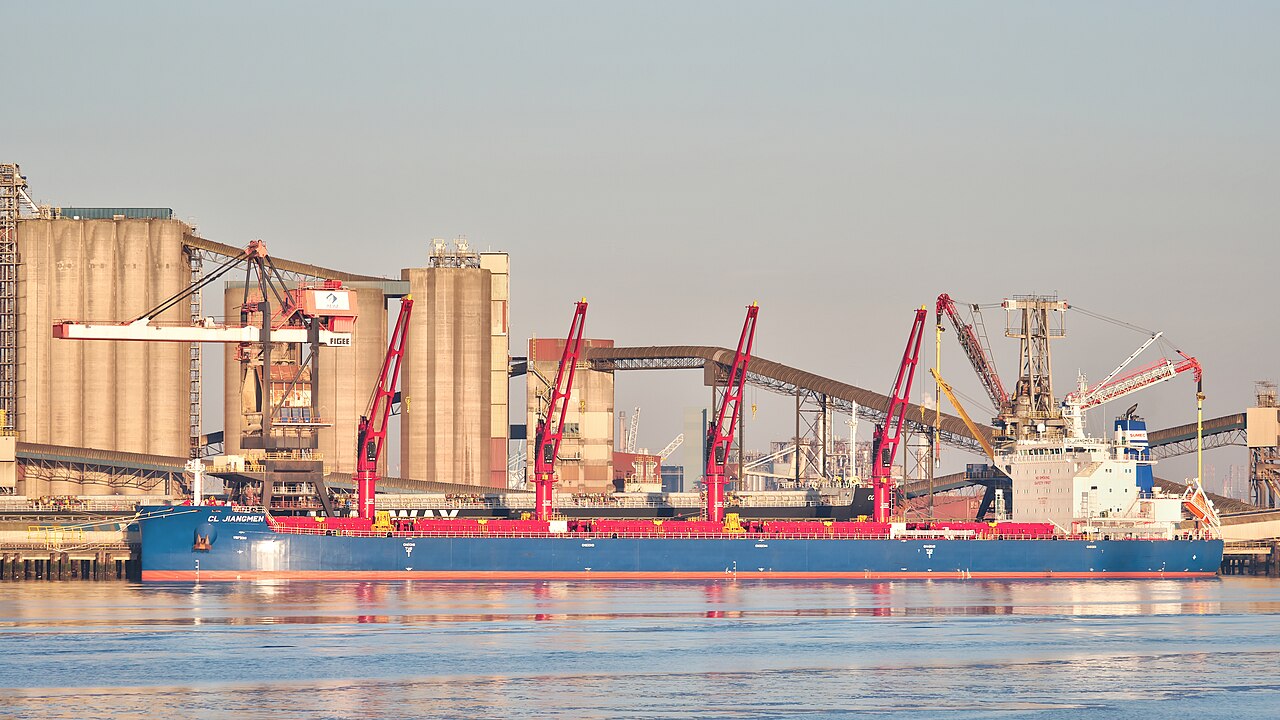
In July 2013, a proposed $6.5 billion (40 billion renminbi) uranium processing plant, which would have supplied about half of China’s enriched uranium for nuclear power, was announced. Public protests followed, and the proposal was withdrawn out of “respect for public opinion.” Jiangmen Port is the second largest river port in Guangdong, and local plans include a harbor industrial zone with heavy industries like petrochemical and machinery plants, plus an ocean-based economy.
- Climate
- Subtropical with monsoonal influences, annual average temperature approximately 22°C
Quick Facts
- Other Name
- Kongmoon; Chiangmen
- Settlement Type
- Prefecture-level city
- Mapframe-Zoom
- 7
- Mapframe-Point
- none
- Map Caption1
- Location of Jiangmen in Guangdong
- Subdivision Type
- Country
- Subdivision Name
- People's Republic of China
- Subdivision Type1
- Province
- Subdivision Name1
- Guangdong
- Seat Type
- City Seat
- Seat
- Pengjiang District
- Area Total Km2
- 9535.0
Facts from the source article.
Lore & Background
During the subsequent period of global influence, western-style buildings were constructed along the waterfront, especially in Chikan. Many were built by returned Overseas Chinese merchants, who used them as headquarters for newly-established chambers of commerce and housing. It became the prefectural seat for the Sze Yup region (Taishan, Kaiping, Xinhui, Enping). In mainland China, the area became known as the 'Five Counties' (Wuyi), which historically refers to Taishan, Kaiping, Xinhui, Enping, and Heshan. The dialect spoken in the city itself is a Siyi Yue dialect, and Taishanese is also a Siyi Yue dialect. A unique dragon dance is performed in water during the Pan Village Lantern Festival in Shuikou Town, Kaiping. The city's historical heritage includes fortified multi-story towers called diaolou, mainly in Kaiping, known as 'Gold Mountain Towers.'
Reader's Guide
Jiangmen's significance lies in its role as a major ancestral homeland for the Chinese diaspora, with about 4 million overseas Chinese tracing roots to its Siyi region. This connection has shaped its architecture, culture, and economy, as seen in the western-style buildings constructed by returned merchants and the preservation of diaolou towers. The city's cultural and historical assets, including the Kaiping diaolou and natural hotspring resorts, support tourism, while its education system includes Wuyi University and several vocational colleges.
Economic Magnitude and Technological Dominance
The Guangdong–Hong Kong–Macao Greater Bay Area stands as the most populous urban cluster on Earth, home to roughly 86 million people spread across nine Guangdong cities and two special administrative regions. Its economic output reached RMB 15 trillion—approximately US$2.1 trillion—in 2024, a figure comparable to Spain's entire national GDP. The region commands the densest concentration of Fortune 500 companies in all of China and serves as headquarters for some of the country's most consequential technology firms, including Huawei, ZTE, DJI, BYD, GAC Group, and Tencent, the parent of WeChat. Beyond these giants, a thriving ecosystem of startups, incubators, and accelerators spans agile technology, biotech, and medical innovation. The WIPO Innovation Cluster Rating of 2025 placed the region at the top of global science and technology clusters, leading many analysts to label it an emerging Silicon Valley of Asia.
Millennia of Maritime Commerce
Long before modern trade corridors, the coastal peoples of this region were already shaping global exchange. Ships built by the Nanyue Kingdom as early as 204 BCE carried cultural and commercial goods toward what is now Vietnam, and after the Han Dynasty's consolidation, those routes stretched as far as Sri Lanka. During the Three Kingdoms era, trade networks were further consolidated, and Guangzhou's port—established under the Kingdom of Wu between 222 and 280 CE—eventually became the launching point of the ancient maritime silk road by the Eastern Jin Dynasty. By the fourth century, foreign merchant communities had taken root in the city. The region's centrality only deepened over the centuries: Macao, a Portuguese colony from the mid-1550s, became one of the Far East's earliest trading ports, while Guangzhou remained the sole gateway open to foreign commerce throughout the Qing dynasty's isolation. The Opium Wars subsequently placed Hong Kong under British administration and compelled the opening of additional ports.
A Landscape Shaped by Water and Stone
The Greater Bay Area occupies southern China's coastline, encompassing roughly thirty percent of Guangdong's land mass plus the territories of Hong Kong and Macao. Its climate shifts from humid subtropical in the interior to fully tropical in the far south. The Nanling mountain ranges and a handful of dormant volcanoes on the Leizhou Peninsula punctuate the terrain, but it is the water that truly defines the region's character. Guangdong boasts a coastline stretching 4,114 kilometers, a figure inflated by the sheer multiplicity of islands, bays, and peninsulas. This archipelagic complexity arises because the Pearl River Delta is the convergence point where the East, North, and West Rivers meet the sea. The resulting tangle of bays and river channels gives cities like Guangzhou, Zhuhai, Hong Kong, and Macao distinctly islanded territorial niches, each oriented toward particular industrial functions. The region's total area of 56,000 square kilometers is comparable in size to Croatia.
Ambitious Integration and Structural Tensions
The GBA concept has evolved through several iterations of regional planning language. The term 'Pearl River Delta' dates to 1947 and described a smaller zone; in the early 2000s, scholars expanded it to the 'Greater Pearl River Delta,' framing nine lesser cities as industrial satellites around the twin cores of Guangzhou and Shenzhen. In 2003, Guangdong proposed the even broader 'Pan-PRD' construct spanning nine neighboring provinces. The current framework was formalized on 1 July 2017 with the Framework Agreement on Deepening Guangdong–Hong Kong–Macao Cooperation, signed in Hong Kong, and further codified in the Outline Development Plan adopted on 18 February 2019. That plan envisions linking all eleven jurisdictions into a single integrated economy and world-class business hub by 2035, while also anchoring the Belt and Road Initiative's 21st Century Maritime Silk Road. Yet analysts note that entrenched divisions among provincial and municipal governments, as well as among business elites, make the ambitious integration goal genuinely difficult to realize.
Gallery

Frequently Asked Questions
What is Jiangmen?
Jiangmen is a prefecture-level city in Guangdong Province, southern China, also rendered in Cantonese romanization as Kongmoon. It sits within the broader Pearl River Delta region.
What is Jiangmen's climate like?
The city experiences a subtropical climate driven by monsoonal patterns, with an annual average temperature of roughly 22 °C. This keeps conditions warm and humid for most of the year.
Why is Jiangmen significant to overseas Chinese communities?
The rural Siyi area—comprising Taishan, Kaiping, and Enping—is the ancestral homeland of approximately four million overseas Chinese. This makes Jiangmen a central cultural and genealogical anchor for diaspora families worldwide.
What administrative divisions make up Jiangmen?
The city consists of three urban districts (Pengjiang, Jianghai, and Xinhui), the county-level city of Heshan, and the more rural Siyi grouping of Taishan, Kaiping, and Enping.
Where exactly is Jiangmen located in China?
It is situated in Guangdong Province in the southern part of the country, within the Pearl River Delta. Its position places it among the more developed and densely settled regions of south China.
More in Cities Starting With J 1-18
Spotted an error? Know more?
This is a living reference — every entry is fact-audited, and reader corrections feed straight into our audit queue. Suggest an edit · See this site's audit record