Philip Astley
English equestrian regarded as father of the modern circus.

via Wikipedia: Philip Astley · see source
Philip Astley (8 January 1742 – 20 October 1814) was an English equestrian, circus owner, and inventor, widely considered the father of the modern circus. The modern circus—a combined entertainment featuring music, trained animals, acrobats, and clowns—originates from Astley's Amphitheatre, a London riding school he established after he and his wife, Patty Jones, found success with trick-riding performances in 1768.
Astley was born in Newcastle-under-Lyme, the son of a cabinetmaker. He began an apprenticeship with his father at age nine, but his ambition was to work with horses. At 17, he joined Colonel Eliott's Fifteenth Light Dragoons, eventually becoming a sergeant major. His service in the Seven Years' War introduced him to professional trainers and riders, and he himself became an exceptional rider.
Astley had a talent for trick riding and noticed that such performers drew the biggest crowds in Islington. He conceived a riding school in London where he could also stage acrobatic riding shows. On Easter Monday, 4 April 1768, he and Patty gave their first public performance in an open field at Ha'penny Hatch in Lambeth, near what is now Waterloo station. They also performed at other London locations. Astley performed his stunts in a circular arena, which he called "the Ride" or "the Circle," but he never used the word "circus" for his shows. His original ring was 65 feet (19 metres) in diameter; later he standardised it at 42 feet (13 metres), a size still used by circuses today.
In 1769, Astley leased more permanent premises at Westminster Bridge, adding covered stands for audiences while still performing in the open. He taught riding in the mornings and presented his "feats of horsemanship" in the afternoons. To keep his shows fresh, he hired acrobats, tightrope walkers, jugglers, and a clown to fill pauses between acts, creating the integrated format now known as a circus. He also added exhibitions of sabre-work and swordplay. While acrobats and clowns had performed across Europe for centuries, they had done so as independent professionals, not as part of a single, ticketed entertainment.
Astley did not invent trick-riding, which was already popular, nor the idea of a circular ring. The ring worked well because it kept riders in view and helped them balance using centrifugal force. His first competitor was Charles Hughes, a former associate, who together with pantomime author Charles Dibdin opened a rival venue called the Royal Circus and Equestrian Philharmonic Academy. Dibdin coined the term "circus."
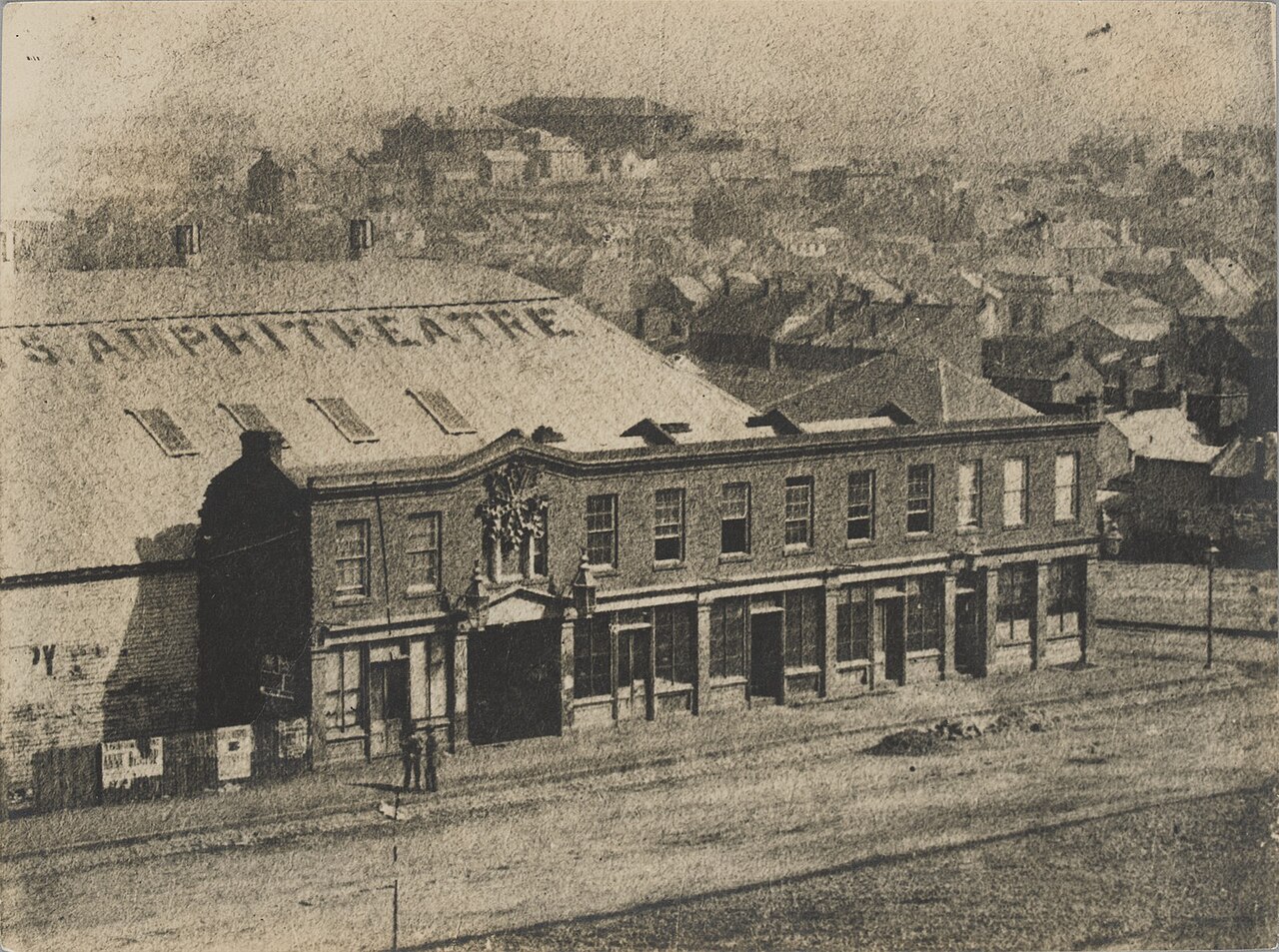
Astley's popularity led to an invitation in 1772 to perform before Louis XV at Versailles. His first Amphitheatre opened in London in 1773 but burned down on 17 September 1794. Thanks to the venture's prosperity, it was rebuilt and, after further fires, eventually became Astley's Royal Amphitheatre. In 1782, he established the first purpose-built circus in France, the Amphitheatre Anglais in Paris, and went on to create 18 other permanent circuses across Europe. During summers, he also built wooden amphitheatres abroad.
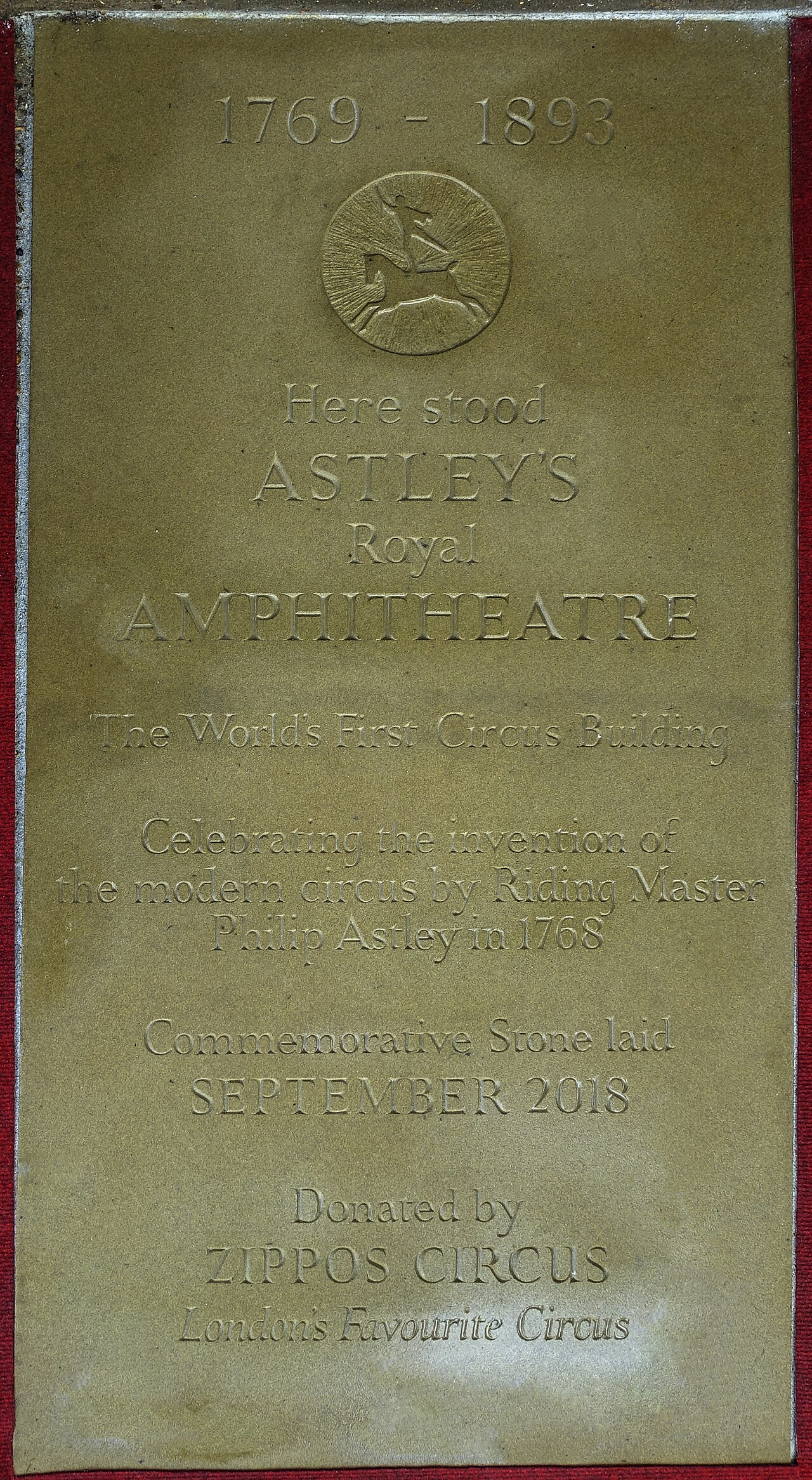
Even after his death, Astley's Royal Amphitheatre remained famous throughout the 19th century, mentioned by Charles Dickens and Jane Austen. It closed in 1893 and was demolished the following year. The garden of St Thomas's Hospital now occupies the site, with a commemorative paving stone marking the amphitheatre's former location. Nearby, Hercules Road is named after Hercules Hall, a house Astley built, said to commemorate his popular human pyramid act, La Force d'Hercule.
- born
- 8 January 1742
- died
- 20 October 1814
- field
- Equestrian, circus owner, inventor
- nationality
- English
- known_for
- Father of the modern circus; founder of Astley's Amphitheatre
Verified Timeline
Lore & Background
Philip Astley was born in Newcastle-under-Lyme, England, the son of a cabinetmaker. At age nine he apprenticed with his father, but his dream was to work with horses, so he joined Colonel Eliott's Fifteenth Light Dragoons at 17, later becoming a sergeant major. His service in the Seven Years' War brought him into contact with professional trainers and riders. Astley himself was a brilliant rider. He had a genius for trick riding and saw that trick riders received the most attention from crowds in Islington. In 1768, he performed in an open field in what is now the Waterloo area of London, behind the present site of St John's Church. He added a clown to his shows to amuse spectators between equestrian sequences, then moved to fenced premises just south of Westminster Bridge, where he opened his riding school from 1769 onwards. He taught riding in the mornings and performed 'feats of horsemanship' in the afternoons.
Reader's Guide
Philip Astley's significance lies in creating the integrated entertainment experience known as the modern circus. Although trick-riding and circular arenas existed before him, Astley combined equestrian acts with acrobats, tightrope walkers, jugglers, clowns, and dancing dogs into a single show for which an all-inclusive ticket was sold. His original ring was 65 ft in diameter, later standardized to 42 ft, a size still used by circuses worldwide. Astley never called his shows a 'circus'; that title was coined by Charles Dibdin for a rival venue. Astley's Amphitheatre became famous, mentioned in works by Charles Dickens and Jane Austen, and remained open until 1893. He established the first purpose-built circus in France in 1782 and later 18 other permanent circuses across Europe. He never used wild animals in his arena. His legacy is celebrated through dance tunes, a statue, and the Circus250 events, including a visitor centre opened in 2024.
Did You Know?
- Astley never used the word 'circus' for his own shows; that title was coined by Charles Dibdin for a rival venue, the Royal Circus, which opened on 4 November 1782.
- His original performance ring was 65 ft in diameter, later standardized to 42 ft, which remains the international standard for circus rings.
- Astley never used wild animals in his arena.
- He established 18 other permanent circuses in cities throughout Europe, plus the first purpose-built circus in France, the Amphitheatre Anglais in Paris (1782).
- Astley's Amphitheatre is mentioned in novels by Charles Dickens and Jane Austen, and in James Joyce's Finnegans Wake.
From Dragoon to Ringmaster: The Making of a Circus Pioneer
Born in Newcastle-under-Lyme in 1742 to a cabinetmaker, Philip Astley showed early ambition beyond his father's trade. After a brief apprenticeship, he enlisted in Colonel Eliott's Fifteenth Light Dragoons at seventeen, rising to sergeant major and gaining exposure to professional horsemanship during the Seven Years' War. His natural gift for acrobatic riding eventually led him to notice that trick riders drew the largest crowds in Islington, sparking the idea of a dedicated London venue. On Easter Monday, 4 April 1768, Astley and his wife Patty Jones staged their first public performance in an open field at Ha'penny Hatch in Lambeth, near today's Waterloo station, blending equestrian stunts with sabre-work and sword-play. He performed in a circular arena sixty-five feet across, which he simply called 'the Ride.' By 1770, he had added acrobats, tightrope walkers, jugglers, and a clown to bridge the gaps between acts, and by 1773 a permanent Amphitheatre stood in London. Crucially, Astley never employed wild animals in the ring; his innovation was the integrated, all-inclusive entertainment experience that defined the modern circus.
Rivalry, Competition, and the Naming of the Circus
Though Astley is universally credited as the father of the modern circus, he never actually used that word for his own enterprise. His venue was formally known as Astley's Amphitheatre of Equestrian Arts, and the circular performance space was simply 'the Ride.' The term 'circus' entered the vocabulary through his most notable rival, Charles Hughes, an equestrian who had previously worked alongside Astley. Hughes partnered with Charles Dibdin, a well-known writer of pantomimes, to open a competing venue in Lambeth, London, on 4 November 1782. Dibdin christened it the Royal Circus and Equestrian Philharmonic Academy, effectively coining the label that would come to define the entire art form. The rivalry between the two amphitheatres, located a short distance apart, pushed both men to expand their offerings. Astley responded by adding musicians, dancing dogs, tumblers, and further acrobatic acts, while Hughes and Dibdin leaned into theatrical spectacle. This competitive tension in 1780s London accelerated the evolution of what had been a simple riding school into the layered, multi-discipline entertainment experience audiences across Europe would come to expect.
From Versailles to Eighteen Cities: A Continental Empire
Astley's reputation extended far beyond London's streets. In 1772, he was invited to perform before King Louis XV at Versailles, a mark of prestige that underscored how quickly his equestrian spectacles had crossed class and national boundaries. The following year, he erected a wooden amphitheatre in Dublin, marking the first of what would become a vast continental network. By 1782, he had built the Amphitheatre Anglais in Paris, the first purpose-built circus in France, and went on to establish eighteen additional permanent venues across European cities. Throughout this expansion, he enjoyed the patronage of numerous royal houses, earning fame, envy, and considerable wealth. Back in London, his original 1773 Amphitheatre suffered a fire on 17 September 1794, but the venture's financial strength allowed it to be rebuilt, and it was reconstructed again after subsequent fires, eventually becoming Astley's Royal Amphitheatre. In 1806, using accumulated profits, he opened the Olympic Pavilion, a tent-like structure on Wych Street near the Strand, demonstrating that even in his later years he continued to seek new formats for his audiences.
The Forty-Two-Foot Legacy: What Endured After the Last Curtain
The physical and conceptual standards Astley established have outlived him by centuries. His original sixty-five-foot ring was later refined to forty-two feet, a dimension that became the international standard for circus arenas and remains in use to this day. The circular format served two practical purposes: it kept riders continuously visible to spectators and generated centrifugal force that aided performers in maintaining balance atop galloping horses. Long after Astley's death in 1814, his Royal Amphitheatre remained a cultural landmark throughout the nineteenth century, referenced by both Charles Dickens and Jane Austen. It finally closed in 1893 and was demolished the following year; the garden of St Thomas's Hospital now occupies the ground, with a commemorative paving stone marking the Amphitheatre's former position. Nearby, Hercules Road preserves the memory of Astley's residence, Hercules Hall, named for his celebrated human pyramid act, La Force d'Hercule. Perhaps most remarkably, Astley never introduced wild animals into the ring, distinguishing his integrated, all-inclusive model from the later animal-focused spectacles that would dominate the circus tradition.
Gallery
More in Circus & Performance Art 1-21
Spotted an error? Know more?
This is a living reference — every entry is fact-audited, and reader corrections feed straight into our audit queue. Suggest an edit · See this site's audit record