P. T. Barnum
Showman who promoted hoaxes and co-founded the Ringling Bros. and Barnum & Bailey Circus.

via Wikipedia: P. T. Barnum · see source
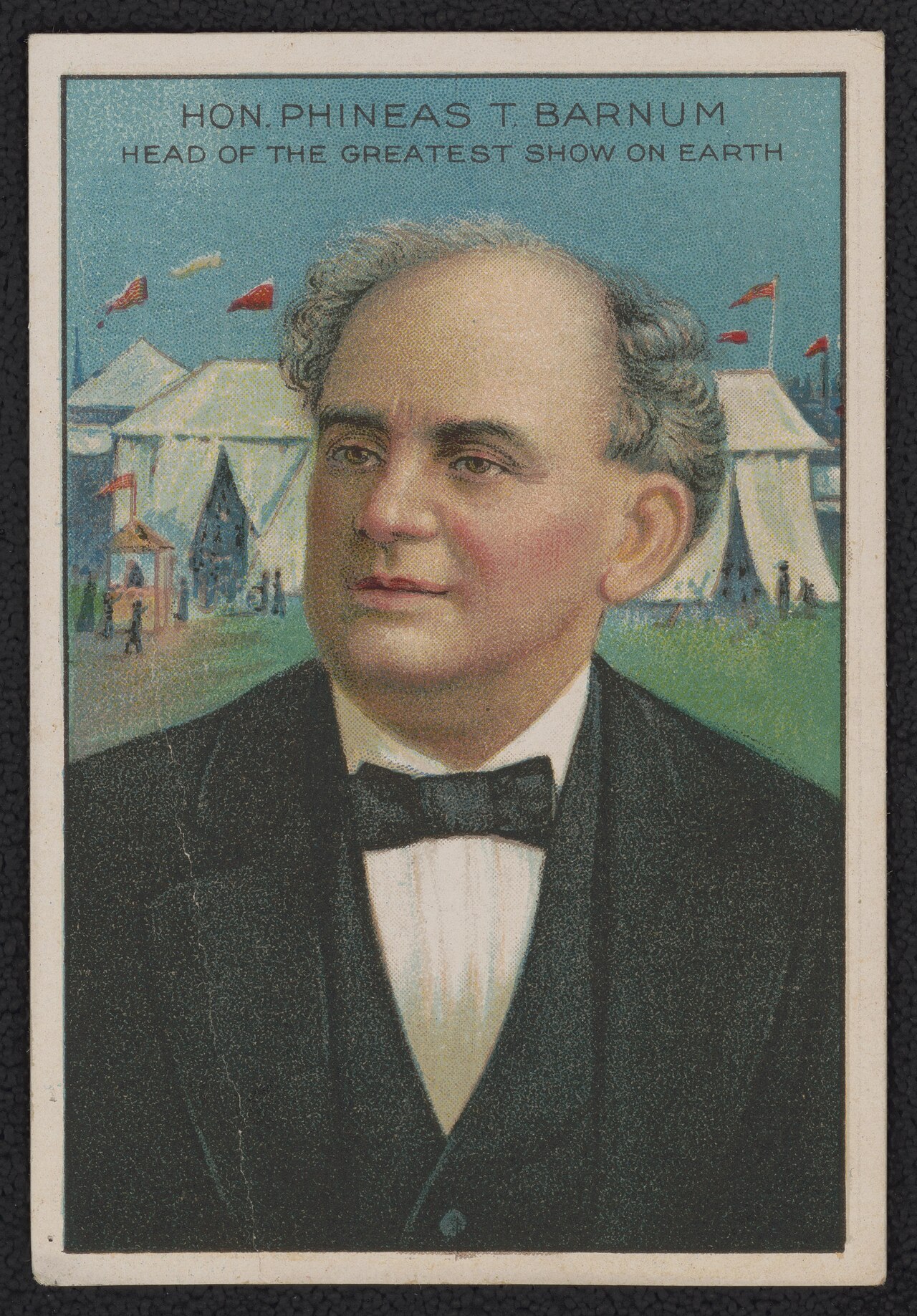
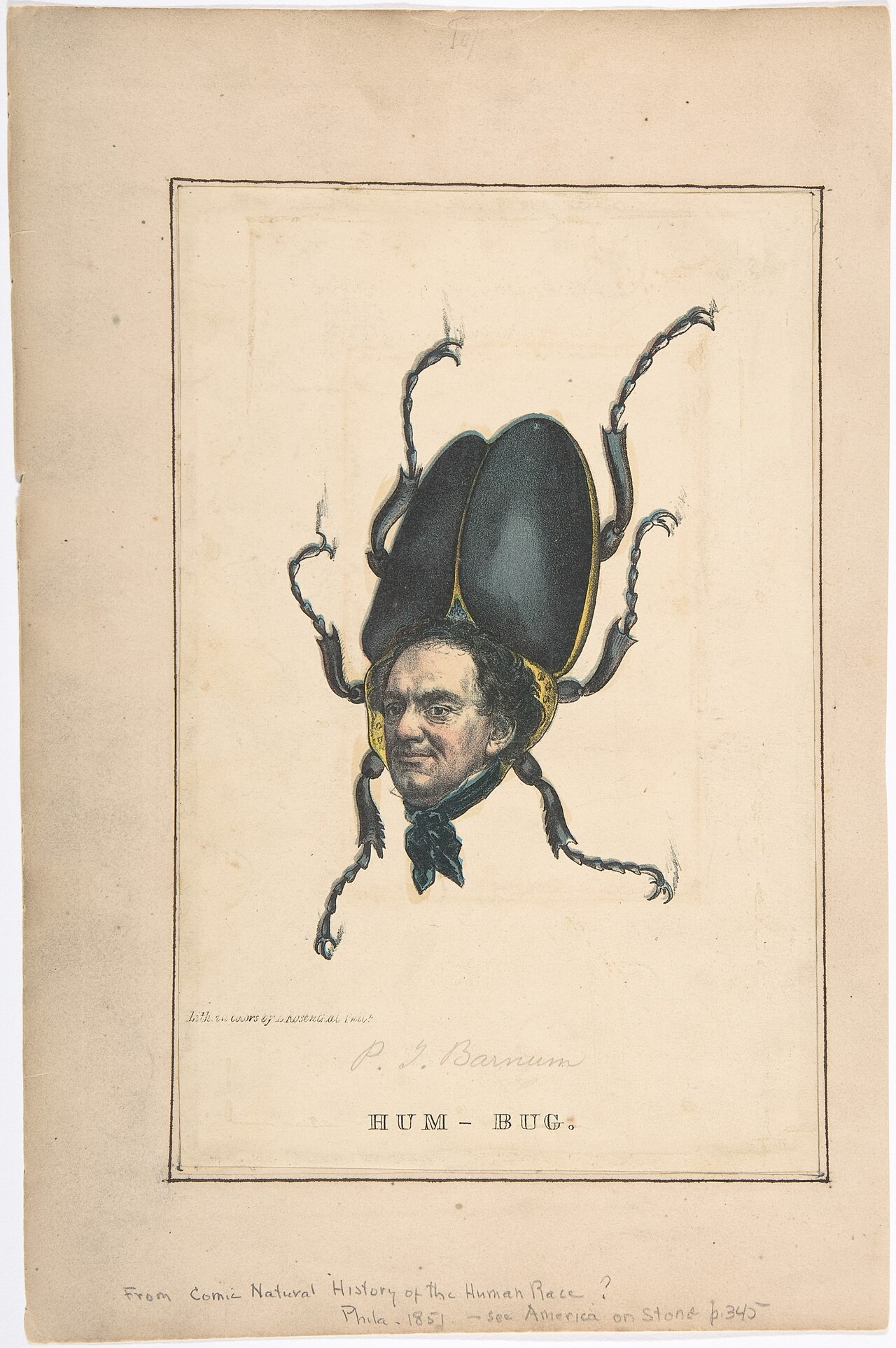
Phineas Taylor Barnum (July 5, 1810 – April 7, 1891) was an American showman, businessman, and politician best known for staging famous hoaxes and co-founding the Ringling Bros. and Barnum & Bailey Circus with James Anthony Bailey. He also wrote books, published newspapers, and gave money to charitable causes, though he insisted, "I am a showman by profession ... and all the gilding shall make nothing else of me." The saying "there's a sucker born every minute" is often pinned on him, but there is no proof he ever said it.
Barnum started running small businesses in his early twenties and launched a weekly newspaper before relocating to New York City in 1834. He moved into entertainment with a variety group called "Barnum's Grand Scientific and Musical Theater" and soon bought Scudder's American Museum, renaming it after himself. There, he showcased hoaxes and human curiosities like the Fiji mermaid and General Tom Thumb. In 1850, he arranged the American tour of Swedish opera star Jenny Lind, paying her an extraordinary $1,000 per night—worth about $38,700 in 2025—for 150 performances. Bad investments in the 1850s brought financial ruin, along with lawsuits and public embarrassment, but he got out of debt by giving lectures on temperance. His museum later added the first aquarium in the United States and expanded its wax-figure collection.
In 1865, Barnum served two terms in the Connecticut legislature as a Republican for Fairfield. He argued in favor of the Thirteenth Amendment, which ended slavery, saying, "A human soul, 'that God has created and Christ died for,' is not to be trifled with. It may tenant the body of a Chinaman, a Turk, an Arab, or a Hottentot—it is still an immortal spirit." In 1875, he was elected mayor of Bridgeport, Connecticut, where he improved the water supply, brought gas streetlights, and cracked down on liquor and prostitution. He also helped create Bridgeport Hospital in 1878 and served as its first president. Barnum didn't start his circus career until age 60, launching P. T. Barnum's Grand Traveling Museum, Menagerie, Caravan & Hippodrome in 1870—a traveling show that went by many names over the years.
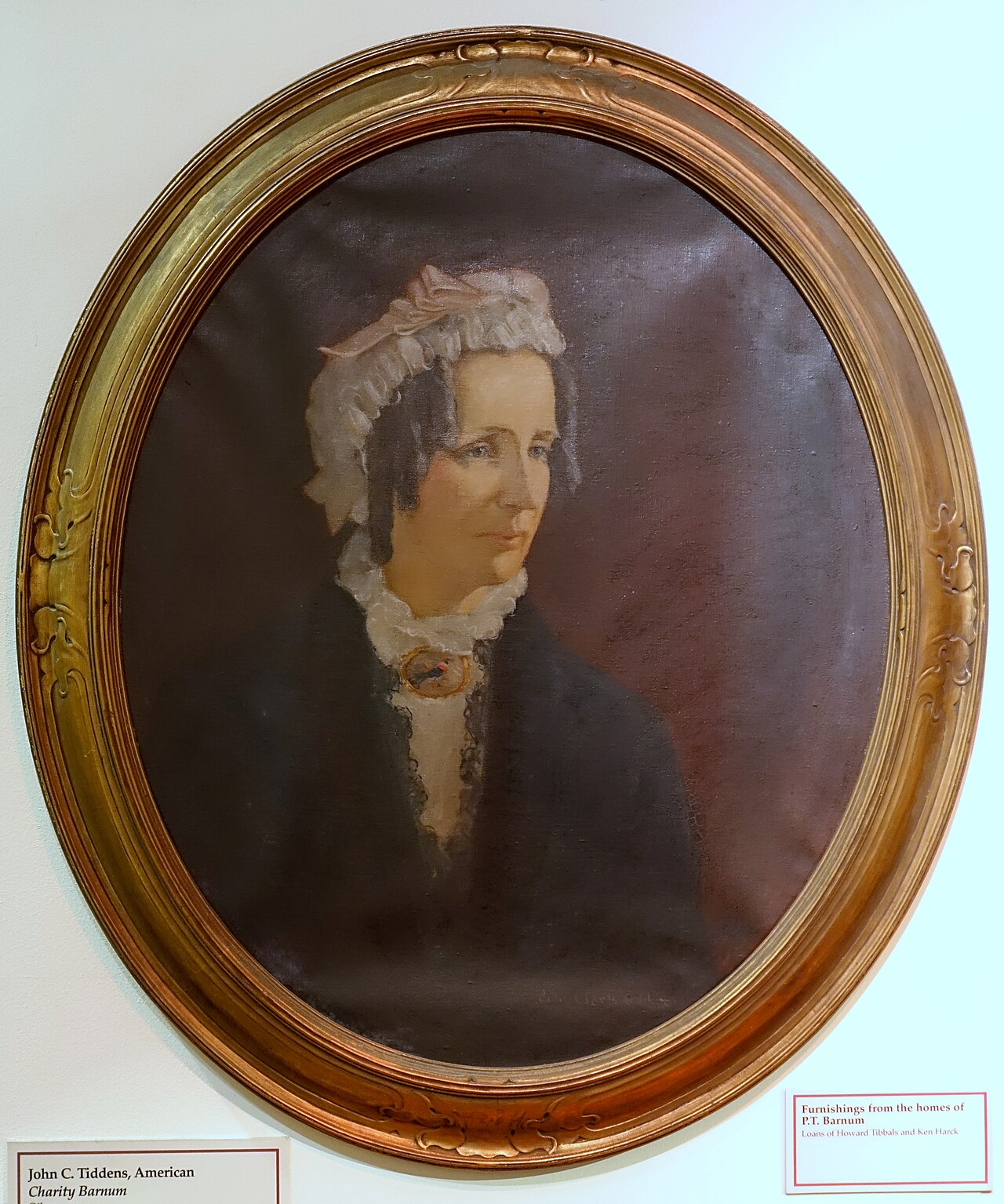
Barnum married Charity Hallett in 1829; they had four children, and she died in 1873. A few months later, in 1874, he married Nancy Fish, the daughter of a friend and forty years younger than him. They stayed married until Barnum died of a stroke at home in 1891. He was buried in Mountain Grove Cemetery in Bridgeport, a cemetery he had designed himself.
Barnum was born in Bethel, Connecticut, to Philo Barnum—an innkeeper, tailor, and storekeeper—and Philo's second wife, Irena Taylor. His maternal grandfather, Phineas Taylor, was a Whig, legislator, landowner, justice of the peace, lottery schemer, and practical joker who strongly shaped his grandson. Barnum started school at age six, despite his family's limited means. He excelled in math, which helped him avoid farm chores. At twelve, he sold cherry-rum to soldiers and helped drive cattle from Bethel to Brooklyn, New York.
He ran a general store, auctioned books, speculated in real estate, and managed a statewide lottery network. Worried about the Congregational Church's influence in Connecticut politics, he started a weekly paper, *The Herald of Freedom*, in Bethel in 1831. His editorials criticizing local church leaders led to libel suits and a two-month jail term. While locked up, he got help from Rev. L. F. W. Andrews, publisher of the *Gospel Witness* in Hartford, and they put out a joint paper called the *Herald of Freedom and Gospel Witness*. The partnership ended in October 1833, and Barnum moved the paper to Danbury, Connecticut. In November 1834, after 160 issues, he handed control to his brother-in-law, John W. Amerman, who published it for another year in Norwalk. When Amerman sold it to George Taylor, the Barnum family's involvement ended. Barnum sold his store in 1834.
He became a showman in 1835 at age 25 by buying and exhibiting Joice Heth, a blind and nearly paralyzed enslaved woman being billed as George Washington's 161-year-old former nurse. Slavery was illegal in New York, but Barnum used a loophole to lease her for a year for $1,000, borrowing $500 to close the deal. He made her work ten to twelve hours daily, and she died in February 1836 at no more than eighty. Barnum then held a live autopsy of her body in a New York saloon, charging spectators fifty cents each to see proof of her real age.
His first variety troupe, Barnum's Grand Scientific and Musical Theater, had mixed success, followed by the Panic of 1837 and three tough years. In 1841, he bought Scudder's American Museum at Broadway and Ann Street in Manhattan, renamed it Barnum's American Museum, and turned it into a major entertainment venue. It became New York City's most popular attraction.
- known_for
- Promoting celebrated hoaxes and founding the Ringling Bros. and Barnum & Bailey
Verified Timeline
Lore & Background
Barnum was born in Bethel, Connecticut, the son of innkeeper, tailor and storekeeper Philo Barnum and Philo's second wife, Irena Taylor. He began school at age six, and at 12 made money by selling cherry-rum to soldiers and assisting a cattle drive from Bethel to Brooklyn. He ran several businesses including a general store, a book-auctioning trade, real estate speculation, and a statewide lottery network. Concerned about Congregational Church interference in political affairs in Connecticut, he started a weekly newspaper in 1831 called The Herald of Freedom, which led to libel suits and a two-month imprisonment. He moved to New York City in 1834 and began his entertainment career with a variety troupe called "Barnum's Grand Scientific and Musical Theater", then purchased Scudder's American Museum in 1841, renaming it Barnum's American Museum. He used the museum to promote hoaxes and human curiosities such as the Fiji mermaid and General Tom Thumb. In 1850, he promoted the American tour of Swedish opera singer Jenny Lind, paying her $1,000 per night for 150 nights. He suffered economic reversals in the 1850s from unwise investments, as well as years of litigation and public humiliation, but he embarked on a lecture tour as a temperance speaker to emerge from debt. He served two terms in the Connecticut legislature in 1865 as a Republican for Fairfield, Connecticut, speaking before the legislature concerning the ratification of the Thirteenth Amendment. He was elected in 1875 as mayor of Bridgeport, Connecticut, where he worked to improve the water supply, bring gas lighting to streets and enforce liquor and prostitution laws. He was instrumental in the inception of Bridgeport Hospital in 1878 and was its first president. He established P. T. Barnum's Grand Traveling Museum, Menagerie, Caravan & Hippodrome in 1870, a traveling circus, menagerie and museum of "freaks" that adopted many names over the years.
Reader's Guide
Barnum's significance lies in his transformation of American entertainment through spectacle, promotion, and the blending of museum, menagerie, and circus. His American Museum became New York City's most popular attraction for 23 years, drawing 400,000 visitors per year by late 1846. He pioneered large-scale promotional techniques, such as using a lighthouse lamp that attracted attention up and down Broadway and launching hot-air balloon rides daily from the roof. His promotion of Jenny Lind's American tour set a new standard for artist compensation and publicity, paying her an unprecedented $1,000 per night for 150 nights. Despite his successes, Barnum's career included controversial practices: he exhibited a blind and almost completely paralyzed enslaved woman named Joice Heth as George Washington's 161-year-old former nurse, forcing her to work 10 to 12 hours per day until her death in February 1836 at no more than 80 years of age. He also promoted hoaxes like the Fiji mermaid, justifying them by saying, "I don't believe in duping the public, but I believe in first attracting and then pleasing them." His legacy is complex, encompassing both innovation in showmanship and exploitation of human curiosities. The circus he co-founded with James Anthony Bailey remains iconic, and his political work included advocating for the Thirteenth Amendment and improving Bridgeport's infrastructure.
Did You Know?
- Barnum was imprisoned for two months in 1831 after his editorials in The Herald of Freedom led to libel suits from local Congregational church elders.
- He paid Swedish opera singer Jenny Lind an unprecedented $1,000 per night for 150 nights for her 1850 American tour, equivalent to about $38,700 per night in 2025.
- Barnum served two terms in the Connecticut legislature in 1865 as a Republican and spoke in favor of ratifying the Thirteenth Amendment, which abolished slavery.
- He was instrumental in the inception of Bridgeport Hospital in 1878 and served as its first president.
- Barnum designed his own burial plot in Mountain Grove Cemetery, Bridgeport, where he was buried after his death from a stroke on April 7, 1891.
From General Store to Grand Spectacle
Phineas Taylor Barnum's rise was anything but a straight line. Born in 1810 in Bethel, Connecticut, to a family of minimal resources, he was schooling by six and using his sharp mathematical mind to dodge farm chores. At twelve he was already making money by selling cherry-rum to passing soldiers and was even employed to assist a cattle drive from Bethel, Connecticut to Brooklyn, New York. In his early twenties he juggled a general store, a book-auctioning trade, real-estate speculation, and a statewide lottery network. His 1831 weekly paper, The Herald of Freedom, landed him in jail for two months after his editorials against the elders of local churches provoked libel suits and prosecution. After relocating to New York in 1834, he entered entertainment in 1835 with the purchase and exhibition of a blind and almost completely paralyzed enslaved woman named Joice Heth, whom he leased for a year for $1,000. Then in 1841 he purchased Scudder's American Museum on Broadway and Ann Street, renaming it after himself. For twenty-three years the museum stood as Manhattan's most popular attraction, complete with a rooftop strolling garden, daily hot-air balloon rides, a lighthouse lamp blazing down Broadway, and a vast series of live acts and curiosities including albino performers, "giants", little people, magicians, conjoined twins, and exotic animals. At sixty he launched P. T. Barnum's Grand Traveling Museum, Menagerie, Caravan & Hippodrome in 1870, a traveling circus, menagerie and museum of "freaks" that would eventually join forces with James Anthony Bailey's operation to form the Ringling Bros. and Barnum & Bailey Circus.
The Jenny Lind Gamble and the Long Fall
Barnum's most celebrated promotional feat came in 1850, when he bankrolled the American tour of Swedish opera singer Jenny Lind. He committed to paying her an unprecedented $1,000 per night—roughly $38,700 in 2025 dollars—for 150 nights, a financial gamble that made headlines across the country. Lind demanded the fee in advance, and Barnum agreed, borrowing heavily on his mansion and his museum to raise the money. The tour began with a concert at Castle Garden on September 11, 1850, and was a major success, recouping Barnum four times his investment. Yet the same decade that brought him that triumph also delivered a cascade of misfortunes. Unwise investments in the 1850s drained his resources, and years of public litigation and humiliation followed, stripping away much of his accumulated wealth. Rather than surrender, Barnum reinvented himself once more, taking to the lecture circuit as a temperance speaker to claw his way out of debt. His museum continued to evolve during this period, adding what became America's first aquarium and expanding its wax-figure collection. Despite the popular attribution of the line "there's a sucker born every minute" to him, no documentary evidence confirms he ever coined the phrase. His own self-summary was far more candid: he was, by his own admission, a showman, and no amount of gilding would change that.
The Mayor Who Built a Hospital
Beyond the sawdust and spotlights, Barnum left a tangible civic mark on Connecticut. In 1865 he won a seat in the state legislature as a Republican representing Fairfield, serving two terms. On the floor he spoke passionately in favor of ratifying the Thirteenth Amendment to the United States Constitution, arguing: 'A human soul, "that God has created and Christ died for," is not to be trifled with. It may tenant the body of a Chinaman, a Turk, an Arab, or a Hottentot—it is still an immortal spirit.' A decade later, in 1875, voters of Bridgeport elected him mayor. During his tenure he pushed through improvements to the town's water supply, brought gas lighting to its streets, and enforced existing liquor and prostitution laws. His most enduring civic contribution came in 1878, when he helped establish Bridgeport Hospital and served as its first president. He also designed his own burial plot in Mountain Grove Cemetery, Bridgeport, where he was interred after his death. As author, publisher, and philanthropist, he wore many hats, yet he never let the world forget which one mattered most.
Two Marriages, One Long Goodbye
Barnum's personal life was shaped by love, loss, and reinvention. He wed Charity Hallett in 1829, and together they raised four children over forty-four years of marriage. Her death in 1873 left him grieving, but just a few months later, in 1874, he married Nancy Fish, the daughter of a close friend and forty years his junior. The two remained together until Barnum's death from a stroke at his home on April 7, 1891. His early years in Bethel had already hinted at a restless, entrepreneurial spirit: his maternal grandfather, Phineas Taylor—known as Uncle Phin—was a Whig, legislator, landowner, justice of the peace, lottery schemer, and practical joker whose influence on the young Phineas ran deep. Even in school, Barnum's mathematic skills strongly advanced, leading him to strategically get out of his farming chores. By his early teens he was trading cherry-rum with soldiers and herding cattle across state lines, traits that would later fuel a career of perpetual reinvention. He was buried in Mountain Grove Cemetery, Bridgeport, which he designed himself, a fitting final touch for a man who insisted on controlling every detail of his own spectacle.
Gallery
More in Circus & Performance Art 1-21
Spotted an error? Know more?
This is a living reference — every entry is fact-audited, and reader corrections feed straight into our audit queue. Suggest an edit · See this site's audit record