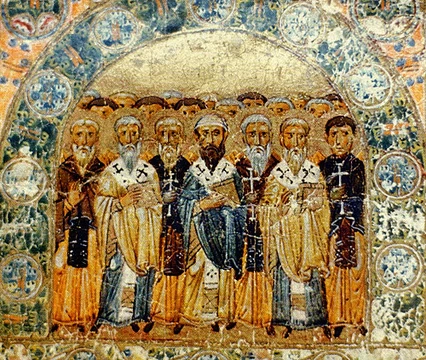
John of Ávila
Spanish priest, mystic, and Doctor of the Church.

John of Ávila was a Spanish priest, preacher, scholastic author, and religious mystic active in the 16th century. Born to a wealthy and pious family of Jewish converso descent, he initially studied law at the University of Salamanca but left without a degree. After a period of austere piety at home, he resumed his education at the University of Alcalá de Henares, studying philosophy and theology under the Dominican friar Domingo de Soto, and earned a bachelor’s degree before leaving without completing the licentiate. Following the death of both parents, he was ordained in 1526 and celebrated his first Mass in the church where they were buried. He sold the family property, gave the proceeds to the poor, and prepared for missionary work in Mexico. While awaiting departure in Seville, his devotion and skill in catechesis and preaching caught the attention of local clergy, and the Archbishop of Seville persuaded him to remain in Andalusia instead. He began writing his major work, *Audi, filia*, in 1527. His first sermon in 1529 established his reputation, and for nine years he preached throughout Andalusia, drawing large crowds. His denunciations of aristocratic behavior led to his imprisonment by the Inquisition in 1532, but he was declared innocent and released in 1533. He was later incardinated into the Diocese of Córdoba and based himself there, directing disciples and founding schools and colleges in cities including Granada, Baeza, and Montilla. He served as the first rector of the University of Baeza, established in 1538. From 1551, suffering from poor health, he encouraged many of his disciples to join the rapidly expanding Jesuits. He died in Montilla in 1569 and was buried in the Jesuit Church of the Incarnation. His surviving works include two redactions of *Audi, filia*, 82 sermons, 257 letters, and various treatises.
- field
- Priest, preacher, scholastic author, religious mystic
- nationality
- Spanish
- known_for
- Apostle of Andalusia; Doctor of the Church; author of Audi, filia
Lore & Background
John of Ávila was born in Almodóvar del Campo to Alfonso de Ávila, of Jewish converso descent, and Catalina Xixón. After an initial period studying law at the University of Salamanca, which he left without a degree, he returned home for three years of austere piety. A Franciscan friar then advised him to resume studies, leading him to the University of Alcalá de Henares, where he studied philosophy and theology under the Dominican Domingo de Soto, earning a bachelor’s degree but leaving without a licentiate. Following his ordination in 1526, he sold the family property, gave the proceeds to the poor, and planned to travel to Mexico as a missionary. While waiting in Seville, his devotion and preaching skills caught the attention of the Archbishop of Seville, who persuaded him to remain in Andalusia. He began living in a small house with another priest and disciples, and at the request of a disciple’s sister, started writing the *Audi, filia* in 1527. His first sermon in 1529 established his reputation, and for nine years he preached across Andalusia, drawing large crowds. His denunciations of aristocratic behavior led to a brief imprisonment by the Inquisition in 1532, but he was declared innocent and released in 1533. He was later incardinated into the Diocese of Córdoba, using that city as a base to preach and establish schools in Granada, Baeza, Montilla, and Zafra. He served as the first rector of the University of Baeza, founded in 1538. From 1551, poor health forced him into semi-retirement in Montilla, where he died in 1569 and was buried in the Jesuit Church of the Incarnation. His works include two redactions of the *Audi, filia*, 82 sermons, biblical commentaries, 257 letters, and treatises on reform. He corresponded with several canonized figures, including Ignatius of Loyola, John of God, and Teresa of Ávila.
Reader's Guide
John of Ávila’s significance stems from his extensive ministry as a preacher and reformer in Andalusia, where he earned the title “Apostle of Andalusia.” His sermons drew large crowds, but his sharp critiques of aristocratic wealth led to his denunciation to the Inquisition in 1531; he was imprisoned in 1532 but acquitted and released in 1533. He established schools and colleges in cities such as Granada, Baeza, Montilla, and Zafra, and served as the first rector of the University of Baeza, founded in 1538, which became a model for seminaries and Jesuit schools. His influence on the Jesuits was notable: from early 1551, as his health declined, he encouraged about thirty of his disciples to join the Society of Jesus. He corresponded with prominent figures including Ignatius of Loyola, John of God, and Teresa of Ávila, as well as archbishops Pedro Guerrero, Juan de Ribera, and Thomas of Villanova. His theology, expressed in works such as the *Audi, filia* (begun in 1527 and expanded until his death), 82 sermons, 257 letters, and biblical commentaries, is characterized as prayerful and sapiential, centered on the primacy of Christ and grace, with deep biblical knowledge. His optional memorial is observed on 10 May.
Did You Know?
- John of Ávila was of Jewish converso descent through his father.
Frequently Asked Questions
Why is John of Ávila called the 'Apostle of Andalusia'?
That title reflects the fact that he devoted the vast majority of his pastoral ministry, preaching, and spiritual guidance to the Andalusian region of Spain. His tireless travel and teaching there earned him that specific honorific.
What is John of Ávila's most well-known written work?
His principal text is 'Audi, filia' (Hear, O Daughter), a treatise on the interior spiritual life and the practice of prayer. It is still widely cited in Catholic mystical and ascetical theology.
What does it mean that John of Ávila holds the title Doctor of the Church?
It is one of the highest doctrinal honors the Catholic Church can bestow, reserved for figures whose writings are judged to carry special authority for the whole faithful. It recognizes his scholastic and mystical contributions as foundational to Catholic teaching.
More in Christian Saints & Early Church Fathers 1-24
Spotted an error? Know more?
This is a living reference — every entry is fact-audited, and reader corrections feed straight into our audit queue. Suggest an edit · See this site's audit record