
Nitrocellulose
Highly flammable compound used in explosives, photography, and lacquers.

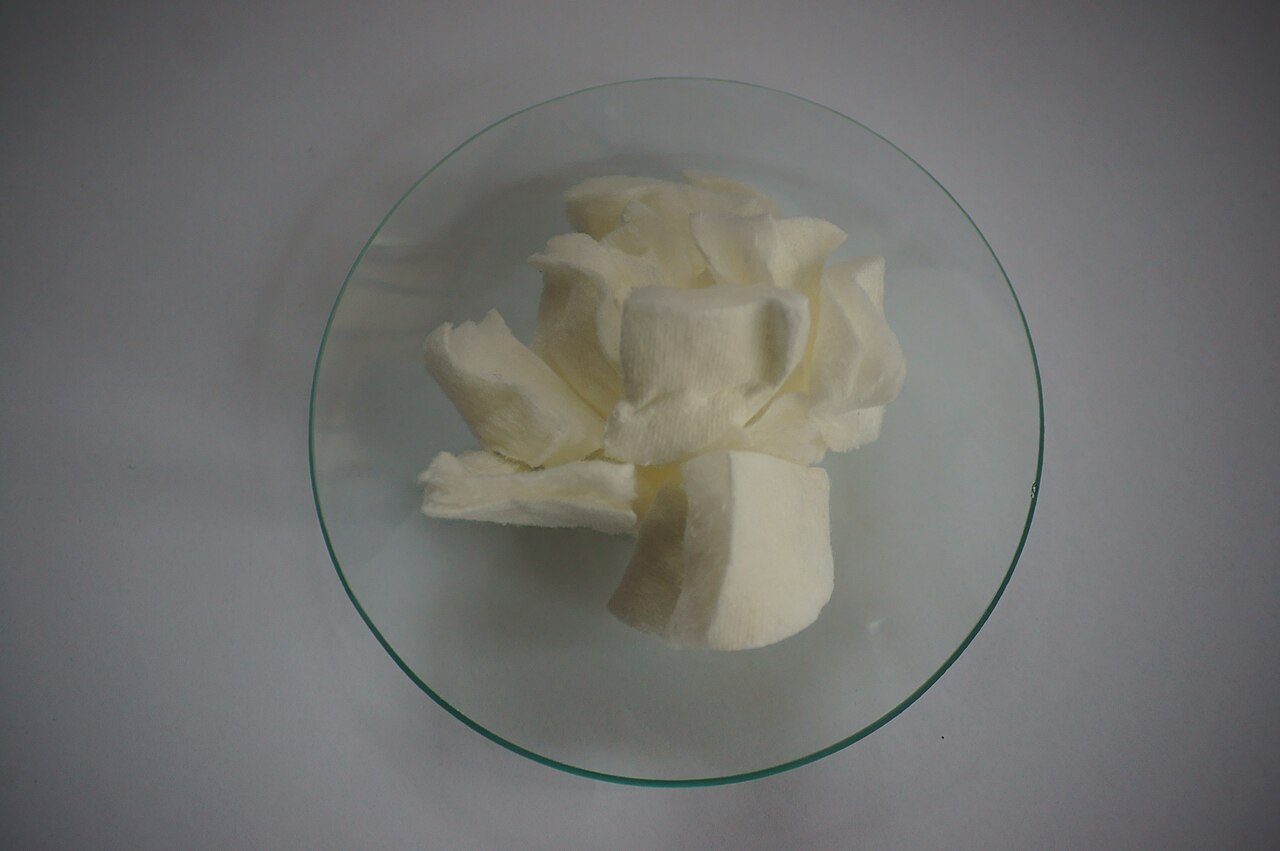
Aleksander Sobolewski · CC BY-SA 4.0
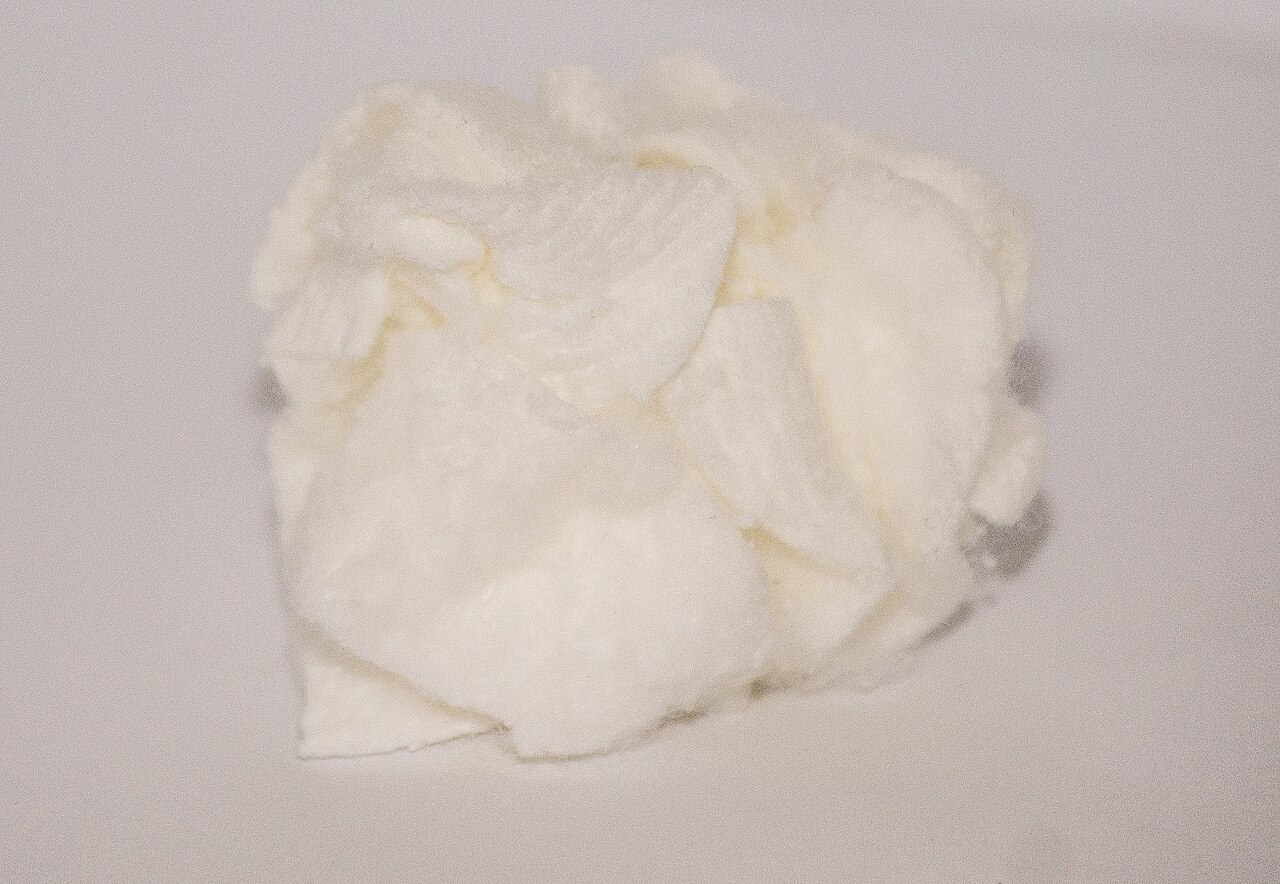
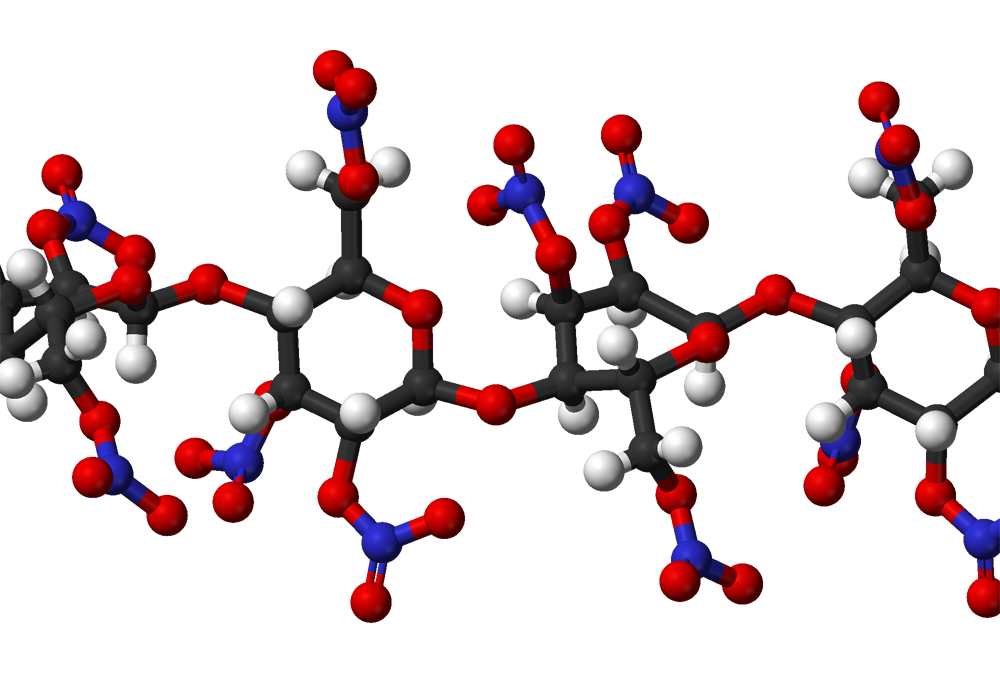
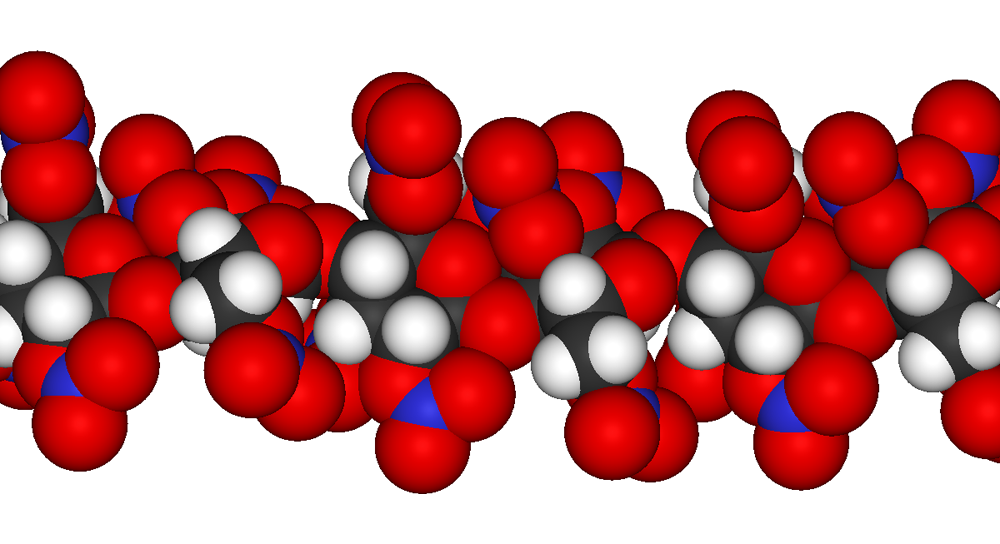
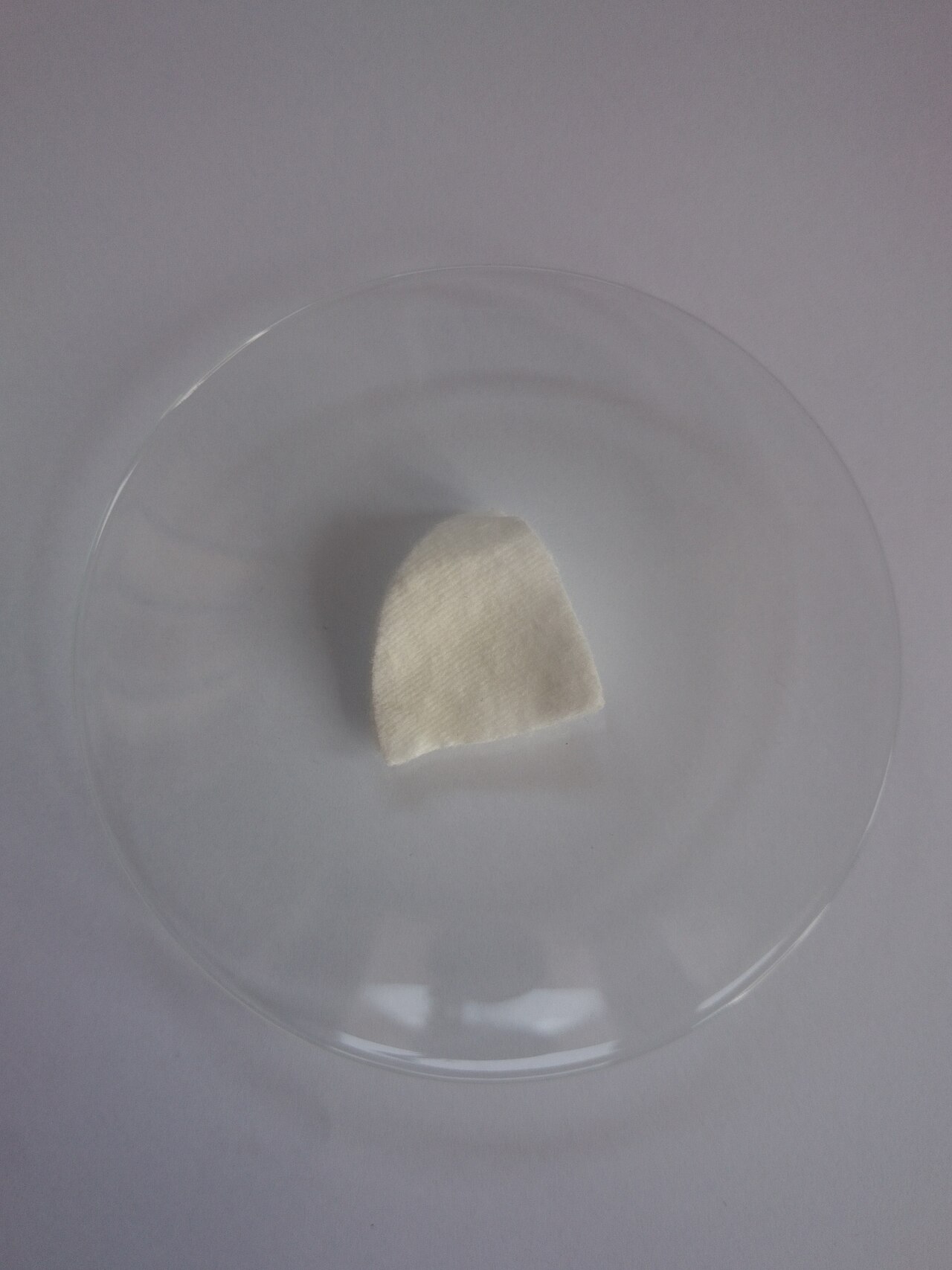
Nitrocellulose, also known as cellulose nitrate, flash paper, guncotton, and collodion, is a highly flammable compound formed by nitrating cellulose through exposure to a mixture of nitric acid and sulfuric acid. The quality of the cellulose is critical, as impurities such as hemicellulose, lignin, pentosans, and mineral salts produce inferior nitrocellulose. Chemically, it is a nitrate ester, not a nitro compound; each glucose repeat unit in the cellulose chain possesses three hydroxyl groups that can form nitrate esters, resulting in mononitrocellulose, dinitrocellulose, or trinitrocellulose. Because it has fewer hydroxyl groups than untreated cellulose, nitrocellulose does not aggregate via hydrogen bonding, making it soluble in organic solvents like acetone and esters such as ethyl acetate. Most lacquers are made from the dinitrate, while explosives primarily use the trinitrate. The chemical formation of the trinitrate yields about 85%, with losses due to complete oxidation of cellulose to oxalic acid. One of its first major uses was as guncotton, a propellant for firearms and a low-order explosive in mining. In the form of collodion, it became critical in early photographic emulsions, revolutionizing photography in the 1860s. In the 20th century, it was adapted for automobile lacquers and adhesives. Its principal uses today include lacquers and coatings, explosives, and celluloid. Nitrocellulose lacquers, which form a colorless, transparent, flexible film upon solvent evaporation, are used on furniture, musical instruments, and as a first coat in wood finishing. Nail polish contains nitrocellulose for its quick-drying, hard film. Explosive applications vary, with higher nitrate content for propellants; however, in space, it proved ineffective in near-vacuum conditions, as seen when the Philae comet lander’s 0.3-gram charges failed in 2014. Collodion is used in topical skin applications like liquid skin and wart removers. In laboratories, nitrocellulose membranes are used for particle retention, cell capture, and immobilizing nucleic acids and proteins in blotting techniques, as well as in diagnostic tests. Hobby uses include magicians’ flash paper, which burns instantly without ash, and one-time pads for cryptography. Historical development began in 1832 when Henri Braconnot discovered that nitric acid combined with starch or wood fibers produced a comb
- field
- Chemistry, Explosives, Photography, Coatings
- known_for
- Guncotton propellant, collodion photographic emulsion, nitrocellulose lacquers, flash paper
- first_major_use
- Replacement for gunpowder as propellant in firearms and as low-order explosive in mining
- key_derivatives
- Collodion, celluloid, flash paper, guncotton
Lore & Background
Nitrocellulose is a highly flammable, solid compound that appears as a white, fibrous, or paper-like material in its purified forms, such as guncotton or flash paper. It can also be a clear, flexible film when dissolved in organic solvents and dried. Its range is global, produced industrially for diverse applications from explosives to coatings. The compound is formed by nitrating cellulose with a mixture of nitric and sulfuric acids, converting the hydroxyl groups on the cellulose chain into nitrate esters; depending on the degree of nitration, it exists as mono-, di-, or trinitrocellulose, with the trinitrate used primarily in explosives and the dinitrate in lacquers. Unlike untreated cellulose, nitrocellulose does not aggregate via hydrogen bonding, making it soluble in organic solvents like acetone and ethyl acetate. Its defining characteristics include extreme flammability, rapid combustion with little residue, and the ability to form tough, transparent films. Historically, it replaced gunpowder as a propellant and explosive, and in collodion form, it revolutionized photography. In the 20th century, it became essential for automobile lacquers, adhesives, nail polish, and celluloid items like table tennis balls and guitar picks. It also serves as a membrane for laboratory filtrations and protein immobilization in diagnostic tests.
Reader's Guide
Nitrocellulose's significance spans multiple fields. As guncotton, it replaced gunpowder in firearms and mining explosives, and later became the basis for smokeless powder. In the 20th century, nitrocellulose was adapted for automobile lacquers, adhesives, and nail polish. Its explosive properties were used in spaceflight by Copenhagen Suborbitals for jettisoning rocket components, though it proved ineffective in near vacuum. Laboratory uses include membrane filters for particle retention and protein immobilization in western blots. Magicians use flash paper made of pure nitrocellulose, which burns instantly without ash.
Did You Know?
- Nitrocellulose is a nitrate ester, not a nitro compound, and its glucose repeat unit has three OH groups that can form mono-, di-, or trinitrate esters.
- The chemical equation for trinitrate formation is 3 HNO3 + C6H7(OH)3O2 → C6H7(ONO2)3O2 + 3 H2O, with yields about 85%.
- Nitrocellulose is used in nail polish because it is inexpensive, dries quickly to a hard film, and does not damage skin.
- Adolph Noé developed a method of peeling coal balls using nitrocellulose.
Gallery

Frequently Asked Questions
Who is Nitrocellulose?
Nitrocellulose (also called cellulose nitrate, guncotton, flash paper, or collodion) is a highly flammable compound produced by nitrating cellulose with a blend of nitric and sulfuric acids. It entered the story in the mid-19th century and immediately became a cornerstone of industrial chemistry.
What are Nitrocellulose's powers/role?
In the canon, Nitrocellulose acts as a firearm propellant replacing black powder, a low-order explosive for mining, the emulsion base for wet-plate photography (collodion), and the backbone of lacquers and adhesives. Its key derivatives include celluloid, flash paper, and guncotton.
How does Nitrocellulose's story end?
Nitrocellulose never truly exits the narrative—it still lives on inside everyday coatings, lacquers, and adhesives found in consumer products today. Its explosive and photographic roles have been largely handed off to safer modern successors, but the compound's chemical legacy persists.
Why is Nitrocellulose important?
Its mid-19th-century discovery simultaneously transformed firearms, mining, photography, and the birth of synthetic plastics like celluloid. It is widely regarded as a foundational material that bridged pure chemistry, heavy industry, and everyday consumer goods.
What are Nitrocellulose's aliases?
Fans and chemists alike recognize this character under several names: cellulose nitrate, guncotton, flash paper, and collodion. Each alias reflects a different preparation or application of the same nitrated-cellulose compound.
More in Chemical Substances And Materials 1-22
Spotted an error? Know more?
This is a living reference — every entry is fact-audited, and reader corrections feed straight into our audit queue. Suggest an edit · See this site's audit record