
Naphthalene
A fused-ring aromatic hydrocarbon used in mothballs and chemical synthesis.

Unknown author · CC BY-SA 4.0
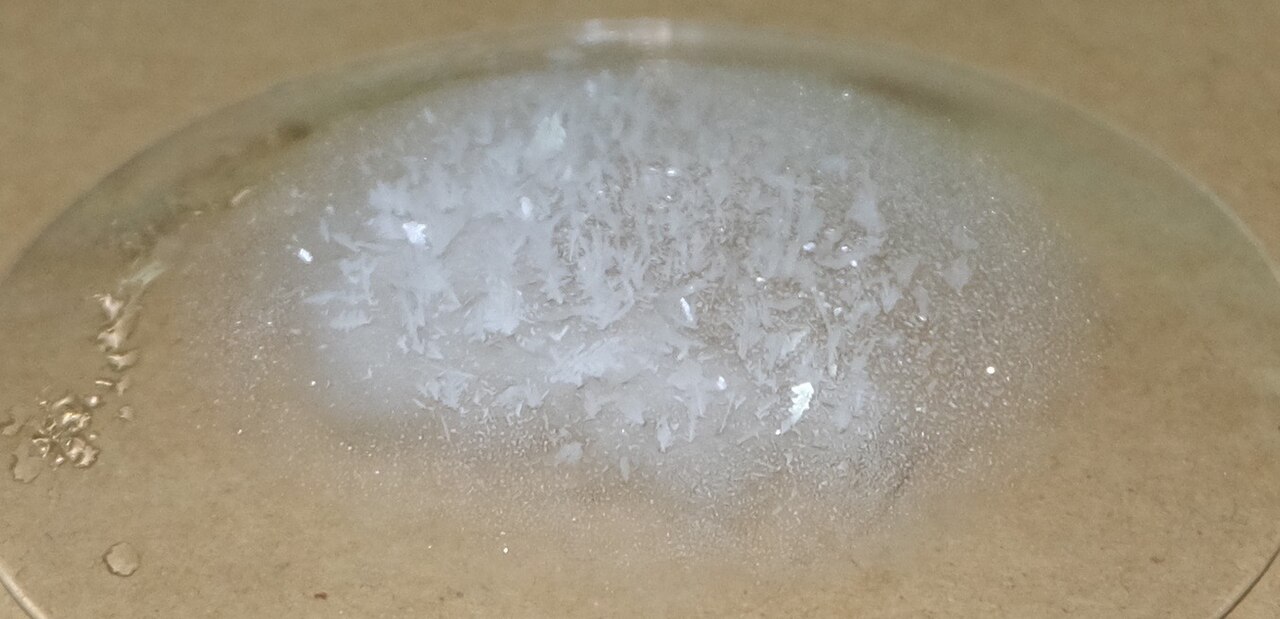
Naphthalene is an organic compound with the formula C10H8. It appears as a white crystalline solid and has a strong smell that people can notice at levels as low as 0.08 parts per million. This aromatic hydrocarbon is built from two benzene rings fused together, which makes it a straightforward and symmetrical polycyclic aromatic hydrocarbon (PAH). It is the primary component in traditional mothballs.
The discovery of naphthalene began in 1819 when Alexander Garden reported crystallizing a silvery solid from coal tar distillate that reminded him of camphor and benzoic acid. Garden is generally credited with the find. Two days after Garden submitted his paper, William Thomas Brande submitted his own, and soon after John Kidd published a longer, more detailed study of the same solid, noting it contained carbon and a little hydrogen. Both Garden and Brande’s separate discoveries appeared in print in 1820. In 1821, Kidd described many of the substance’s properties and how to produce it, and he suggested the name naphthaline because it came from a type of naphtha—a term for various volatile, flammable liquid hydrocarbon mixtures, including coal tar. Michael Faraday determined naphthalene’s chemical formula in 1826. Emil Erlenmeyer proposed its structure of two fused benzene rings in 1866, and Carl Gräbe confirmed it three years later.
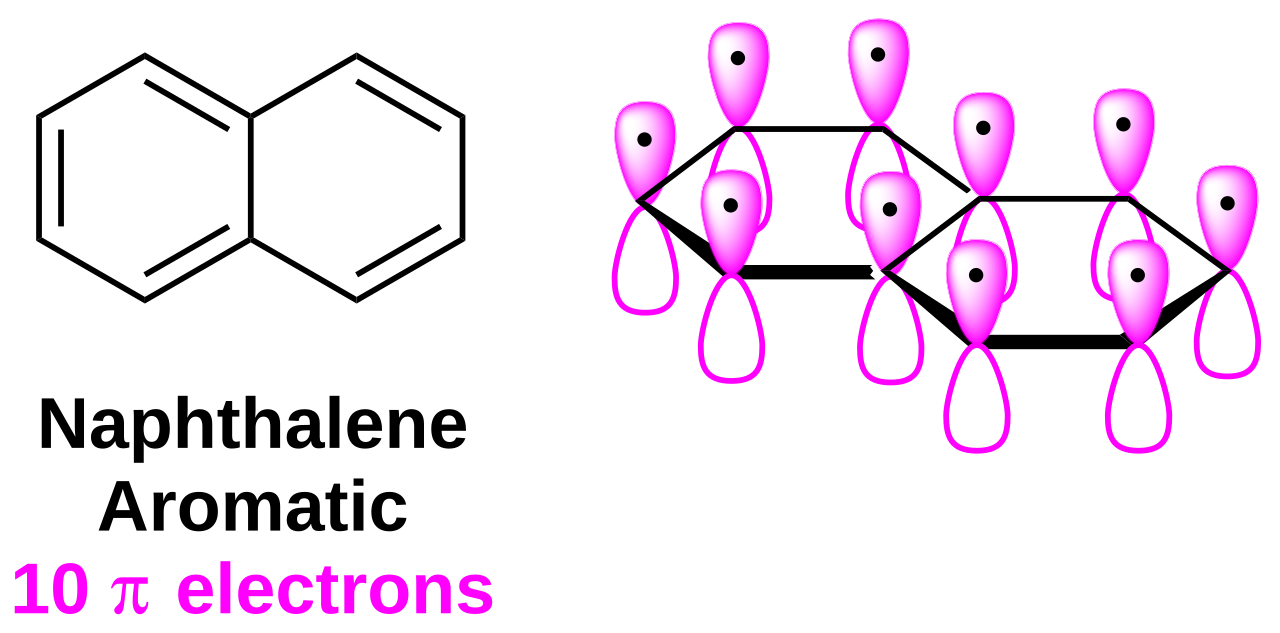
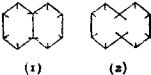
In terms of structure, a naphthalene molecule can be seen as two benzene rings that share two or more atoms. The eight carbon atoms not shared each carry one hydrogen atom. For IUPAC naming of derivatives, these eight carbons are numbered 1 through 8 around the molecule’s perimeter, starting next to a shared carbon. The shared carbons are labeled 4a (between positions 4 and 5) and 8a (between 8 and 1). The molecule is flat, like benzene, but its carbon–carbon bonds are not all the same length. Bonds C1–C2, C3–C4, C5–C6, and C7–C8 are about 1.37 Å (137 pm), while the other carbon–carbon bonds are about 1.42 Å (142 pm). This difference, confirmed by X-ray diffraction, fits the valence bond model and the theorem of cross-conjugation. That theorem describes naphthalene as an aromatic benzene unit attached to a diene but not extensively conjugated to it in the ground state, which matches two of its three resonance structures.
Due to this resonance, the molecule has bilateral symmetry across the plane of the shared carbon pair, across the plane that bisects bonds C2–C3 and C6–C7, and across the plane of the carbon atoms. This creates two sets of equivalent hydrogen atoms: the alpha positions (1, 4, 5, and 8) and the beta positions (2, 3, 6, and 7). For mono-substituted naphthalenes, two isomers are possible, depending on whether substitution occurs at an alpha or beta position. Structural isomers of naphthalene with two fused aromatic rings include azulene (a 5–7 fused ring system) and bicyclo[6.2.0]decapentaene (a fused 4–8 ring system).
Pure crystalline naphthalene is a moderate insulator at room temperature, with a resistivity of about 10¹² Ω·m. When it melts, the resistivity drops more than a thousandfold to about 4×10⁸ Ω·m. In both liquid and solid states, resistivity depends on temperature according to the equation ρ = ρ₀ × exp(E/kT), where ρ₀ (Ω·m) and E (eV) are constant parameters, k is the Boltzmann constant (8.617×10⁻⁵ eV/K), and T is absolute temperature (K). In the solid, E is 0.73 eV. Below 100 K (−280 °F; −173 °C), the solid shows semiconducting behavior.
In electrophilic aromatic substitution reactions, naphthalene reacts more readily than benzene. For instance, chlorination and bromination of naphthalene occur without a catalyst, producing 1-chloronaphthalene and 1-bromonaphthalene, respectively. While both benzene and naphthalene can be alkylated via Friedel–Crafts reactions, naphthalene can also be easily alkylated using alkenes or alcohols with sulfuric or phosphoric acid catalysts. Anhydrous aluminum chloride reacts with naphthalene to form a polymer, where one ring of each naphthalene monomer loses aromaticity and links to others at the 1 and 4 positions. Regarding regiochemistry, electrophiles attack the alpha position. This preference for alpha over beta substitution can be explained by the resonance structures of the intermediate: for alpha substitution, seven resonance structures can be drawn, four of which preserve an aromatic ring; for beta substitution, only six resonance structures exist, with just two being aromatic. Sulfonation yields naphthalene-1-sulfonic acid as the kinetic product and naphthalene-2-sulfonic acid as the thermodynamic product. The 1-isomer forms mainly at 25 °C (77 °F), while the 2-isomer forms at 160 °C (320 °F). Sulfonation to give the 1- and 2-sulfonic acids occurs readily: H₂SO₄ + C₁₀H₈ → C₁₀H₇SO₃H + H₂O. Further sulfonation produces di-, tri-, and tetrasulfonic acids.
With alkali metals, naphthalene forms dark blue-green radical anion salts, such as sodium naphthalenide (Na⁺[C₁₀H₈]⁻). These naphthalene anions are strong reducing agents. Naphthalene can be hydrogenated under high pressure with metal catalysts to give tetralin (C₁₀H₁₂), and further hydrogenation yields decalin (C₁₀H₁₈). Oxidation with O₂ in the presence of vanadium pentoxide (V₂O₅) as a catalyst produces phthalic anhydride: C₁₀H₈ + 4.5 O₂ → C₆H₄(CO)₂O + 2 CO₂ + 2 H₂O. This reaction is the basis for naphthalene’s main use. Oxidation can also be carried out using other methods.
- chemical_formula
- C10H8
- discoverers
- Alexander Garden, William Thomas Brande, John Kidd
- main_use
- Precursor to phthalic anhydride; formerly primary ingredient in mothballs
Lore & Background
Naphthalene appears as a white crystalline solid, with a strong, characteristic odor that humans can detect even at very low concentrations. Its range is not defined by geography but by its production and use; it is a common industrial chemical, historically derived from coal tar and best known as the primary ingredient in traditional mothballs. The compound is an aromatic hydrocarbon, specifically a simple and symmetrical polycyclic aromatic hydrocarbon (PAH). Its defining structural characteristic is a fused pair of benzene rings, making the molecule planar. The carbon-carbon bonds within this structure are not all equal in length; bonds at positions 1-2, 3-4, 5-6, and 7-8 are shorter than the other bonds, a difference confirmed by X-ray diffraction. This bond-length variation is consistent with the molecule’s resonance, which gives it bilateral symmetry across multiple planes. Consequently, the eight hydrogen atoms are divided into two equivalent sets: the alpha positions (1, 4, 5, and 8) and the beta positions (2, 3, 6, and 7), leading to only two possible isomers for mono-substituted naphthalenes. In its pure crystalline form, naphthalene is a moderate electrical insulator at room temperature, but its resistivity drops dramatically when melted.
Reader's Guide
Naphthalene is significant as a simple polycyclic aromatic hydrocarbon and a key industrial chemical. Its structure—two fused benzene rings—serves as a model for understanding aromaticity and resonance in organic chemistry. The molecule is planar, with carbon–carbon bonds of varying lengths (1.37 Å and 1.42 Å), consistent with the valence bond model and cross-conjugation. Naphthalene reacts more readily than benzene in electrophilic aromatic substitution, with electrophiles attacking the alpha position. Its main industrial use is as a precursor to phthalic anhydride via oxidation. Historically, it was the primary ingredient in mothballs, used as a fumigant against textile moths. Naphthalene is produced mainly from coal tar, which is about 10% naphthalene by weight. Trace amounts are produced naturally by magnolias, some deer species, and the Formosan subterranean termite.
Did You Know?
- Naphthalene's odor is detectable at concentrations as low as 0.08 ppm.
- The molecule has bilateral symmetry across three planes, giving two sets of equivalent hydrogen atoms: alpha and beta positions.
- Pure crystalline naphthalene has a resistivity of about 10^12 Ω·m at room temperature, dropping more than a thousandfold on melting.
- Naphthalene is the most abundant single component of coal tar, typically about 10% by weight.
A Contested Discovery and a Name Born from Naphtha
The story of naphthalene's identification is one of near-simultaneous claims and layered contributions. In 1819, Alexander Garden reported isolating a silvery crystalline solid from coal tar distillate, noting its resemblance to camphor and benzoic acid. Just two days after Garden filed his paper, William Thomas Brande submitted his own account of the same substance. John Kidd then produced a more thorough investigation, establishing that the material was composed of carbon with a small amount of hydrogen. Garden's and Brande's findings both appeared in print in 1820, while Kidd's detailed characterization followed in 1821. It was Kidd who coined the name "naphthaline," drawing on the older term naphtha—a catch-all for volatile, flammable liquid hydrocarbon mixtures such as coal tar. Michael Faraday pinned down the molecular formula C10H8 in 1826. The structural picture took another four decades to solidify: Emil Erlenmeyer proposed the fused double-benzene-ring arrangement in 1866, and Carl Gräbe confirmed that picture in 1869.
A Planar Molecule with Two Faces: Alpha and Beta
Naphthalene's architecture is deceptively simple yet structurally rich. Two benzene rings share a pair of carbon atoms, producing a flat, planar molecule of ten carbons and eight hydrogens. The eight peripheral carbons each bear a single hydrogen, and IUPAC convention numbers them 1 through 8 around the outer edge, while the two shared atoms are designated 4a and 8a. X-ray diffraction revealed that the carbon–carbon bonds are not uniform: the C1–C2, C3–C4, C5–C6, and C7–C8 bonds measure roughly 1.37 Å, while the remaining bonds stretch to about 1.42 Å. This alternation aligns with the cross-conjugation theorem, which pictures one ring as a fully aromatic benzene unit weakly coupled to a diene segment. The molecule enjoys bilateral symmetry across the shared-carbon axis and across the plane bisecting the C2–C3 and C6–C7 bonds, yielding two distinct sets of equivalent hydrogens: the alpha positions (1, 4, 5, 8) and the beta positions (2, 3, 6, 7). This symmetry means a single substituent can occupy only two non-equivalent sites, giving rise to alpha- and beta-substituted isomers. Other fused-ring isomers with the same formula include azulene, with its five-membered and seven-membered ring pair, and bicyclo[6.2.0]decapentaene, featuring a four-membered ring fused to an eight-membered one.
Reactivity That Favors the Alpha Position
Naphthalene is notably more reactive than benzene toward electrophilic aromatic substitution. Chlorination and bromination proceed without any Lewis-acid catalyst, yielding the 1-substituted products directly. Alkylation is equally facile; beyond standard Friedel–Crafts conditions, naphthalene accepts alkyl groups from alkenes or alcohols in the presence of sulfuric or phosphoric acid. One notable exception is anhydrous aluminium chloride, which instead triggers polymerisation in which one ring of each monomer sacrifices its aromaticity, linking neighbouring units at the 1- and 4-positions. The preference for alpha substitution over beta is rooted in resonance. The cationic intermediate formed at an alpha carbon can be drawn in seven resonance forms, four of which retain a fully aromatic ring; the beta intermediate offers only six forms, just two of them aromatic. Sulfonation illustrates the kinetic-versus-thermodynamic divide: at 25 °C the 1-sulfonic acid dominates, but at 160 °C the 2-isomer takes over. On the reduction side, alkali metals generate dark blue-green radical anion salts such as sodium naphthalenide, strong reducing agents. High-pressure hydrogenation over metal catalysts first gives tetralin and, with continued hydrogenation, decalin. The most industrially important transformation is catalytic oxidation with vanadium pentoxide, which cleaves one ring to produce phthalic anhydride—the reaction underpinning naphthalene's principal commercial use.
From Coal Tar to the Global Market
Naphthalene's journey from raw material to commodity has shifted over the decades. Between the 1960s and the 1990s, petroleum refineries extracted meaningful quantities from heavy fractions during the refining process. Today, however, the dominant source is coal tar, in which naphthalene is the single most abundant component. The exact composition of coal tar fluctuates depending on the type of coal used and the specific processing conditions, making supply somewhat variable. By 2023, the global naphthalene market had reached 2.25 million tons annually. Beyond its industrial role as a feedstock for phthalic anhydride, naphthalene is perhaps best known to the general public as the principal ingredient in traditional mothballs. Its white crystalline form and a distinctive, penetrating odor—detectable at concentrations as low as 0.08 parts per million—make it unmistakable in household settings. The compound also presents interesting electrical behavior. In its pure crystalline state at room temperature, naphthalene is a moderate insulator with resistivity around 10¹² Ω·m. Upon melting, that resistivity drops by more than a thousandfold to roughly 4 × 10⁸ Ω·m. In both phases, resistivity follows an Arrhenius-type temperature dependence, and below 100 K the solid exhibits semiconducting character.
Gallery


Frequently Asked Questions
Who is Naphthalene?
Naphthalene is a white crystalline organic compound with the molecular formula C10H8, best known to the general public as the star ingredient in classic mothballs. Structurally, it belongs to the polycyclic aromatic hydrocarbon family, built from two benzene rings stitched together edge-to-edge.
What are Naphthalene's powers/role?
In modern industry, Naphthalene's primary job is serving as a starting material for producing phthalic anhydride, a key building block in plastics and dyes. It also carries a very distinctive pungent smell that human noses can pick up at concentrations as tiny as 0.08 parts per million.
Why is Naphthalene important?
As the simplest member of the polycyclic aromatic hydrocarbon class, Naphthalene sits at the foundation of a huge family of carbon-based molecules. Its historical role in mothballs made it one of the most household-recognized chemicals, while its modern value lies in feeding large-scale production of phthalic anhydride.
More in Chemical Substances And Materials 1-22
Spotted an error? Know more?
This is a living reference — every entry is fact-audited, and reader corrections feed straight into our audit queue. Suggest an edit · See this site's audit record