
Magnesium chloride
Inorganic compound used in metal production, de-icing, and tofu making.

Jacopo Werther · CC BY-SA 4.0
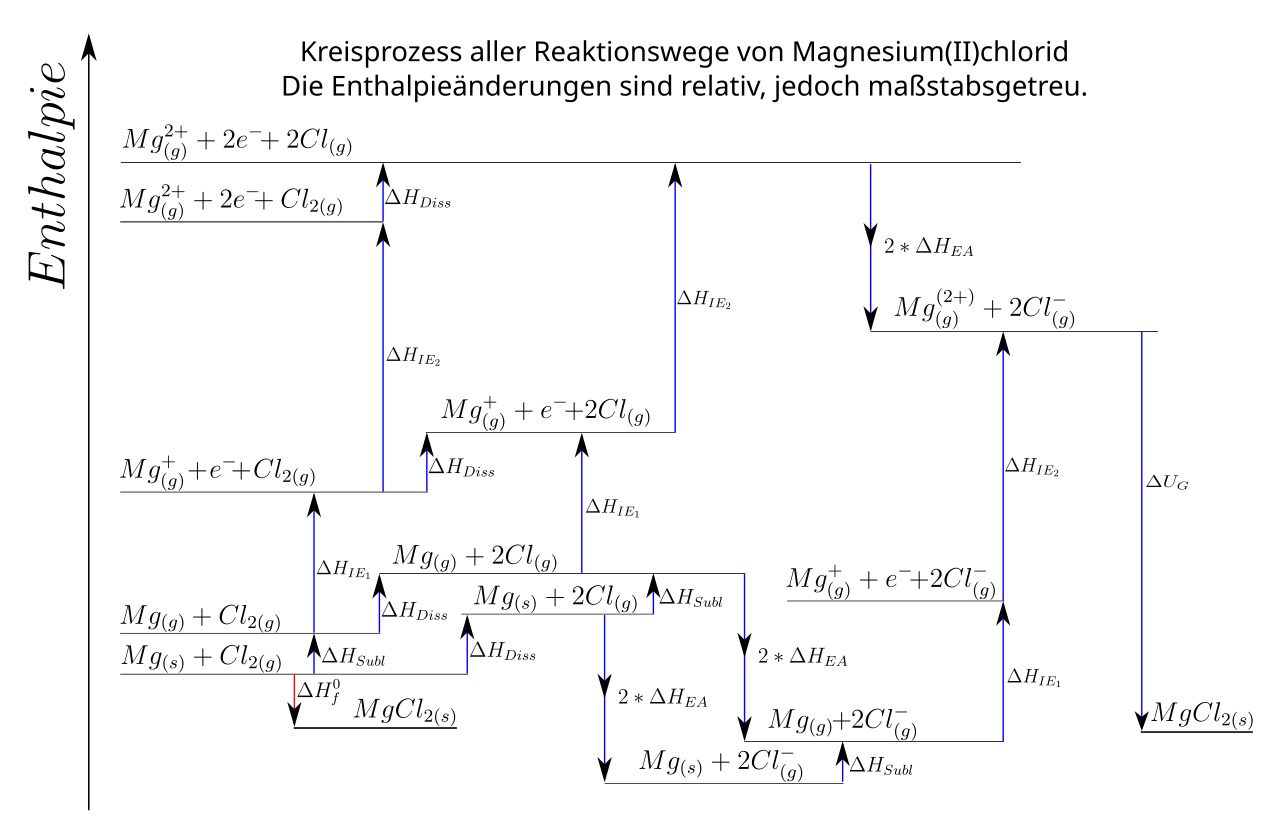
Magnesium chloride is an inorganic salt with the chemical formula MgCl₂. It naturally forms a series of hydrates, written as MgCl₂·nH₂O, where n can be any integer from 1 to 12. These hydrates are colorless or white solids that dissolve very easily in water. Both the solid compounds and their solutions occur in nature and serve many practical purposes. The anhydrous (water-free) form is the main starting material for producing magnesium metal on an industrial scale. The hydrated forms are the ones most commonly encountered.
**Production** This compound can be extracted from brine or seawater. In North and South America, it mainly comes from the brine of the Great Salt Lake. In the Jordan Valley, it is obtained from the Dead Sea. The mineral bischofite (MgCl₂·6H₂O) is extracted through solution mining from ancient seabeds, such as the Zechstein seabed in northwestern Europe. Some deposits formed from the high magnesium chloride content of the primordial ocean. Some magnesium chloride is also produced by evaporating seawater. In the Dow process, magnesium chloride is regenerated by reacting magnesium hydroxide with hydrochloric acid: Mg(OH)₂(s) + 2 HCl(aq) → MgCl₂(aq) + 2 H₂O(l). A similar reaction using magnesium carbonate can also produce it.
**Structure** MgCl₂ crystallizes in the cadmium chloride (CdCl₂) structure. When heated, it loses water in stages: the dodecahydrate (n=12) loses water at −16.4 °C, the octahydrate (n=8) at −3.4 °C, the hexahydrate (n=6) at 116.7 °C, the tetrahydrate (n=4) at 181 °C, and the dihydrate (n=2) at about 300 °C. In the hexahydrate, the magnesium ion (Mg²⁺) is octahedrally coordinated to six water molecules. The octahydrate and dodecahydrate can be crystallized from water below 298 K. X-ray crystallography confirms that these higher hydrates also contain [Mg(H₂O)₆]²⁺ ions. A decahydrate has also been crystallized.
**Preparation and General Properties** Industrially, anhydrous MgCl₂ is made by heating the complex salt hexamminemagnesium dichloride, [Mg(NH₃)₆]²⁺(Cl⁻)₂. Simply heating the hydrated forms (n=6 or 12) does not produce the anhydrous compound cleanly. Because it forms hydrates, anhydrous MgCl₂ acts as a Lewis acid, though a weak one. One derivative is tetraethylammonium tetrachloromagnesate, [N(CH₂CH₃)₄]₂[MgCl₄]. Another adduct is MgCl₂(TMEDA). In the coordination polymer MgCl₂(dioxane)₂, magnesium adopts an octahedral geometry. This Lewis acidity explains why magnesium chloride is deliquescent—it pulls moisture from the air until the solid dissolves into a liquid.
**Applications**
**Precursor to Metallic Magnesium** Anhydrous MgCl₂ is the main precursor for making magnesium metal. The reduction of Mg²⁺ to metallic Mg is done by electrolysis in a molten salt. As with aluminium, electrolysis in water is impossible because the produced magnesium would instantly react with water—or, more precisely, water’s H⁺ would be reduced to hydrogen gas before the magnesium could be reduced. Therefore, direct electrolysis of molten MgCl₂ (without water) is required, since the reduction potential for magnesium is lower than the stability range of water on a Pourbaix diagram. The reaction is: MgCl₂ → Mg + Cl₂. Metallic magnesium forms at the cathode (reduction), while chloride anions are oxidized at the anode, releasing chlorine gas. This process is carried out on a large industrial scale.
**Dust and Erosion Control** Magnesium chloride is one of several substances used to control dust, stabilize soil, and reduce wind erosion. When applied to roads and bare soil, it has both positive and negative performance effects, depending on various application factors.
**Catalysis** Ziegler-Natta catalysts, used commercially to make polyolefins, often include MgCl₂ as a catalyst support. Adding MgCl₂ supports boosts the activity of traditional catalysts and enabled the development of highly stereospecific catalysts for polypropylene production. Magnesium chloride also serves as a Lewis acid catalyst in aldol reactions.
**Ice Control** Magnesium chloride is used for de-icing highways, sidewalks, and parking lots at low temperatures. When dangerous ice builds up, road crews apply magnesium chloride to prevent ice from bonding to the pavement, making it easier for plows to clear treated roads. It is applied in three ways: anti-icing (spreading it on roads to stop snow from sticking), prewetting (spraying a liquid magnesium chloride solution onto salt as it is spread, so the salt sticks to the road), and pretreating (mixing magnesium chloride and salt together before loading them onto trucks and spreading them). Calcium chloride damages concrete about twice as fast as magnesium chloride. When used for de-icing, the amount of magnesium chloride must be controlled to avoid environmental pollution.
**Nutrition and Medicine** Magnesium chloride is used in nutraceutical and pharmaceutical products. The hexahydrate is sometimes marketed as "magnesium oil." It also acts as an electrolyte.
**Cuisine** Magnesium chloride (food additive E511) is an important coagulant for making tofu from soy milk. In Japan, it is sold as *nigari* (にがり, from the Japanese word for "bitter")—a white powder obtained from seawater after removing sodium chloride and evaporating the water. In China, it is called *lushui* (卤水). Nigari or lushui is natural magnesium chloride that is not fully refined, containing up to 5% magnesium sulfate and various minerals. The crystals originally come from lakes in China’s Qinghai province and are then processed in Japan.
**Gardening and Horticulture** Because magnesium is a mobile nutrient, magnesium chloride can be effectively used as a fertilizer or soil amendment.
- field
- Inorganic chemistry, industrial chemistry
- known_for
- Precursor to magnesium metal, de-icing agent, tofu coagulant, catalyst support
- formula
- MgCl2
- common_hydrate
- Hexahydrate (bischofite, MgCl2·6H2O)
- appearance
- Colorless or white solids
Lore & Background
Magnesium chloride can be extracted from brine or sea water. In North America and South America, it is obtained primarily from Great Salt Lake brine. In the Jordan Valley, it is obtained from the Dead Sea. The mineral bischofite (MgCl2·6H2O) is extracted by solution mining out of ancient seabeds, for example, the Zechstein seabed in northwest Europe. Some deposits result from high content of magnesium chloride in the primordial ocean. Some magnesium chloride is made from evaporation of seawater. In the Dow process, magnesium chloride is regenerated from magnesium hydroxide using hydrochloric acid. It can also be prepared from magnesium carbonate by a similar reaction. At ambient pressure, anhydrous MgCl2 adopts a layered structure often described as a distorted variant of the cadmium chloride (CdCl2) type, with a different stacking sequence. In the hexahydrate, the Mg2+ is octahedral, being coordinated to six water ligands. The octahydrate and the dodecahydrate can be crystallized from water only below about −3 °C and −16 °C, respectively. As verified by X-ray crystallography, these 'higher' hydrates also feature [Mg(H2O)6]2+ ions. A decahydrate has been reported but is not a well-established, widely recognized hydrate; the known stable hydrates are typically n=1, 2, 4, 6, 8, and 12. Anhydrous MgCl2 is produced industrially by heating the complex salt named hexamminemagnesium dichloride [Mg(NH3)6]2+(Cl−)2. The thermal dehydration of the hydrates MgCl2·nH2O (n = 6, 12) does not occur straightforwardly. As suggested by the existence of hydrates, anhydrous MgCl2 is a Lewis acid, although a weak one.
Reader's Guide
Magnesium chloride is significant primarily as the main precursor to metallic magnesium, which is produced on a large scale via electrolysis of molten anhydrous MgCl2. This process is essential for producing magnesium metal, used in alloys and lightweight materials. The compound also has widespread practical applications: it is used for low-temperature de-icing of highways, sidewalks, and parking lots, and for dust control, soil stabilization, and wind erosion mitigation. In industry, MgCl2 serves as a catalyst support in Ziegler-Natta catalysts for polyolefin production and as a Lewis acid catalyst in aldol reactions. In cuisine, it is an important coagulant for making tofu, sold as nigari in Japan and lushui in China. It is also used in nutraceutical and pharmaceutical preparations, as an electrolyte, and in gardening to correct magnesium deficiency in plants via foliar feeding. In wastewater treatment, it supplies magnesium to precipitate phosphorus as struvite. Its occurrence in nature includes being a major component of Dead Sea minerals and the mineral bischofite. The compound's deliquescence reflects its Lewis acidity, and its toxicity is generally low in healthy individuals, though overapplication in gardening can lead to chloride toxicity in plants.
Did You Know?
- Anhydrous magnesium chloride is the principal precursor to magnesium metal, produced on a large scale via electrolysis of molten salt.
- Magnesium chloride is used for low-temperature de-icing of highways, sidewalks, and parking lots.
- In Japan, magnesium chloride is sold as nigari, a white powder used as a coagulant for tofu.
- The mineral bischofite (MgCl2·6H2O) is extracted from ancient seabeds such as the Zechstein seabed in northwest Europe.
Sourcing from the Earth and Sea
Magnesium chloride is found in abundance across the planet's water bodies and geological formations, making its extraction a globally distributed endeavor. In the Americas, the primary source is the brine of the Great Salt Lake, while in the Middle East, the Dead Sea in the Jordan Valley provides another rich reservoir. In northwest Europe, the ancient Zechstein seabed yields a mineral called bischofite, which is essentially the hexahydrate form of magnesium chloride, recovered through solution mining techniques. Some geological deposits trace their origin to magnesium-rich compositions of the primordial ocean. Beyond direct extraction, the compound can be produced by evaporating seawater or through the Dow process, in which magnesium hydroxide is treated with hydrochloric acid to regenerate the chloride salt. A similar acid-based route starting from magnesium carbonate is also viable. The hydrated form is the most readily available variant in commerce, while the anhydrous version requires more specialized preparation, typically involving the thermal decomposition of a complex ammine salt.
Crystal Architecture and the Chemistry of Hydration
The solid-state behavior of magnesium chloride is dominated by its strong affinity for water molecules. The anhydrous salt crystallizes in the same structural motif as cadmium chloride, and when heated it sheds water in a stepwise fashion: the dodecahydrate releases molecules at minus 16.4 degrees Celsius, the octahydrate at minus 3.4, the hexahydrate at 116.7, the tetrahydrate at 181, and the dihydrate near 300 degrees. X-ray crystallographic studies confirm that even in the higher hydrates the magnesium ion retains an octahedral coordination sphere of six water ligands, forming the hexaaquamagnesium cation. Both octahydrate and dodecahydrate crystals can form from aqueous solution below 298 kelvin, and a decahydrate has also been isolated. The anhydrous compound is a weak Lewis acid, a property vividly demonstrated by its deliquescence: it pulls moisture from ambient air until the solid dissolves into a liquid. This Lewis acidity also allows it to form adducts such as the TMEDA complex and a coordination polymer with dioxane, as well as the tetraethylammonium tetrachloromagnesate salt.
Forging Magnesium Metal and Enabling Polymer Chemistry
The single most consequential industrial role of anhydrous magnesium chloride is serving as the feedstock for metallic magnesium production. Because the reduction potential required to liberate magnesium from its ion falls outside the stability window of liquid water, aqueous electrolysis is impossible; any magnesium produced would instantly react with the solvent, and hydrogen gas would be evolved instead. The solution is molten-salt electrolysis, in which the salt is melted and current is passed through it. At the cathode, magnesium ions gain electrons and deposit as the silvery metal, while at the anode chloride ions are oxidized, releasing chlorine gas. This operation runs at massive industrial scale. In a different but equally important domain, magnesium chloride acts as a support material in Ziegler-Natta catalysts. Its introduction dramatically boosted the activity of earlier catalyst systems and made possible the highly stereospecific catalysts now used to manufacture polypropylene. The compound also functions as a Lewis acid catalyst in aldol reactions, bridging inorganic and organic synthetic chemistry.
From Tofu to Roadways: Everyday Encounters
Few inorganic compounds touch daily life as broadly as magnesium chloride. In kitchens across East Asia, it plays an irreplaceable role as a coagulant for tofu, listed under the food-additive code E511. In Japan it is known as nigari, a term rooted in the word for bitter, and in China as lushui. The commercial product is not fully refined: it retains up to five percent magnesium sulfate along with trace minerals, and the raw crystals are harvested from lakes in Qinghai province before being reprocessed in Japan. On winter roadways, magnesium chloride serves as a de-icing agent effective at low temperatures. It can be applied as an anti-icing spread to stop snow from bonding to pavement, sprayed as a prewetting liquid onto salt to help it adhere, or blended with salt before loading onto spreaders. Compared with calcium chloride, it damages concrete at roughly half the rate, though environmental pollution from runoff still demands careful dose management. In gardens, it substitutes for Epsom salt as a foliar magnesium source, though its chlorine content requires a lower application threshold to avoid phytotoxicity.
Gallery



Frequently Asked Questions
Who is Magnesium chloride?
Magnesium chloride is an inorganic compound with the chemical formula MgCl2, appearing as colorless or white crystalline solids. It sits at the intersection of inorganic chemistry and industrial chemistry, and both its dry form and its aqueous solutions are found naturally in the environment.
What are Magnesium chloride's powers/role?
Its headline role is serving as the key starting material for large-scale magnesium metal production. It also doubles as a road de-icing agent, a coagulant in tofu preparation, and a support material for industrial catalysts.
How does Magnesium chloride's story end?
In its anhydrous state it is processed to yield pure magnesium metal, effectively transforming itself into a different element at the end of the production chain. The hydrated variants, by contrast, remain in circulation as the most accessible commercial form.
Why is Magnesium chloride important?
It is the principal precursor from which magnesium metal is manufactured on an industrial scale, making it essential to the global supply of this lightweight structural metal. Without it, the large-scale production of magnesium would lack its primary feedstock.
What is Magnesium chloride's true form?
In its most commonly encountered hydrated state it exists as the hexahydrate (MgCl2·6H2O), a mineral known as bischofite. The full family of hydrates spans one to twelve water molecules per formula unit, but the hexahydrate is the variant most readily available in commerce.
More in Chemical Substances And Materials 1-22
Spotted an error? Know more?
This is a living reference — every entry is fact-audited, and reader corrections feed straight into our audit queue. Suggest an edit · See this site's audit record