Zirconium
A corrosion-resistant transition metal used in nuclear and aerospace applications.

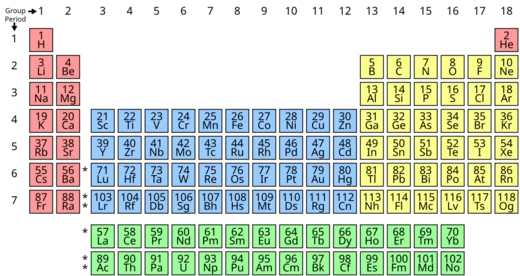
Zirconium is a chemical element with the symbol Zr and atomic number 40. It was first identified in 1789, isolated in an impure form in 1824, and produced on a large scale by 1925. In its pure state, it is a shiny, greyish-white transition metal that looks a lot like hafnium and, to a lesser degree, titanium. It stays solid at room temperature, can be drawn into wires or hammered into sheets, and resists corrosion well. Its name comes from the mineral zircon, its main source, which traces back to the Persian word *zargun*, meaning "gold-like" or "as gold." Beyond zircon, zirconium appears in over 140 other minerals, including baddeleyite and eudialyte, and most of it is produced as a byproduct when mining for titanium and tin.
Zirconium forms many inorganic compounds, like zirconium dioxide, and organometallic ones, such as zirconocene dichloride. Five isotopes occur naturally, four of which are stable. The metal and its alloys are mostly used as refractories and opacifiers; zirconium alloys coat nuclear fuel rods because they absorb few neutrons and resist corrosion strongly, and they also appear in spacecraft and turbine blades where high heat resistance is needed. Other uses include flashbulbs, biomedical items like dental implants and prosthetics, deodorant, and water purification systems.
Zirconium compounds have no known biological role, though the element is widespread in nature and shows up in tiny amounts in living things without causing harm. There is no evidence it causes cancer. The main risks are that it catches fire easily in powder form and can irritate the eyes.
**Characteristics**
Zirconium is a shiny, greyish-white, soft metal that is ductile and malleable at room temperature, though it becomes hard and brittle when less pure. As a powder, it is highly flammable, but the solid form is much less likely to ignite. It strongly resists corrosion from alkalis, acids, salt water, and other substances, but it does dissolve in hydrochloric and sulfuric acid, especially if fluorine is present. Alloys with zinc become magnetic below 35 K. Its melting point is 1855 °C (3371 °F), and its boiling point is 4409 °C (7968 °F). On the Pauling scale, its electronegativity is 1.33, making it the fourth lowest among d-block elements with known values, after hafnium, yttrium, and lutetium. At room temperature, it has a hexagonally close-packed crystal structure (α-Zr), which changes to a body-centered cubic structure (β-Zr) at 863 °C, and it stays in the β-phase until it melts.
**Isotopes**
Naturally occurring zirconium has five isotopes: ⁹⁰Zr, ⁹¹Zr, ⁹²Zr, ⁹⁴Zr, and ⁹⁶Zr. The first four are stable, while ⁹⁶Zr decays with a half-life of 2.34×10¹⁹ years through double beta emission; ⁹⁴Zr might also decay this way in theory. Among these, ⁹⁰Zr is the most common, making up 51.45% of all zirconium, and ⁹⁶Zr is the rarest at just 2.80%. Artificial radioisotopes range from ⁷⁷Zr to ¹¹⁴Zr, with 13 nuclear isomers also known. The most stable artificial isotope is ⁹³Zr, a long-lived fission product with a half-life of 1.61 million years. Radioactive isotopes with mass numbers 93 and above decay by electron emission into niobium isotopes, while those at or below 89 decay by positron emission or electron capture into yttrium isotopes.
**Occurrence**
Zirconium makes up about 130 mg/kg of the Earth’s crust and about 0.026 μg/L in seawater, ranking as the 18th most abundant element in the crust. It is never found as a native metal because it is naturally unstable in water. The main commercial source is zircon (ZrSiO₄), a silicate mineral found mostly in Australia, Brazil, India, Russia, South Africa, and the United States, plus smaller deposits elsewhere. As of 2023, Australia and South Africa lead production, together accounting for roughly half of global zircon output. Worldwide zircon resources exceed 60 million tonnes, and annual production is about 900,000 tonnes. Zirconium also appears in over 140 other minerals, including the commercially useful ores baddeleyite and eudialyte. It is relatively common in S-type stars and has been detected in the sun and in meteorites. Lunar rock samples from several Apollo missions have a higher zirconium oxide content than terrestrial rocks. EPR spectroscopy has been used to study the unusual 3+ valence state of zirconium. The EPR spectrum of Zr³⁺, first seen as a parasitic signal in iron-doped ScPO₄ crystals, was definitively identified by preparing ScPO₄ crystals doped with isotopically enriched (94.6%) ⁹¹Zr. Single crystals of LuPO₄ and YPO₄ doped with both natural and isotopically enriched zirconium have also been grown and studied.
**Production**
Zirconium is a byproduct of mining and processing titanium minerals (ilmenite and rutile) and tin. Between 2003 and 2007, the price of the mineral zircon rose steadily from $360 to $840 per tonne, while the price of unwrought zirconium metal dropped from $39,900 to $22,700 per ton. Zirconium metal is much more expensive than zircon because the reduction processes are costly. Zircon-bearing sand, collected from coastal waters, is purified using spiral concentrators to separate lighter materials, which are then returned to the water as natural beach sand components. Magnetic separation removes the titanium ores ilmenite and rutile. Most zircon is used directly in commercial applications, but a small portion goes toward metal production.
- symbol
- Zr
- atomic_number
- 40
- electronegativity
- 1.33 (Pauling scale)
Lore & Background
It is a lustrous, greyish-white, soft, ductile, and malleable metal that is solid at room temperature, though it becomes hard and brittle at lesser purities. In powder form, zirconium is highly flammable, but the solid form is much less prone to ignition. It is highly resistant to corrosion by alkalis, acids, salt water, and other agents, but dissolves in hydrochloric and sulfuric acid, especially when fluorine is present. Alloys with zinc are magnetic at less than 35 K. Naturally occurring zirconium consists of five isotopes: 90Zr, 91Zr, 92Zr, 94Zr, and 96Zr. The first four are stable, while 96Zr decays with a half-life of 2.34×10^19 years by double beta emission. The most common isotope is 90Zr, making up 51.45% of all zirconium, and the least common is 96Zr at 2.80%. Artificial radioisotopes range from 77Zr to 114Zr, with 13 nuclear isomers. The most stable artificial isotope is 93Zr, a long-lived fission product with a half-life of 1.61 million years. It is not found as a native metal due to its instability with water. The principal commercial source is zircon (ZrSiO4), found primarily in Australia, Brazil, India, Russia, South Africa, and the United States.
Reader's Guide
Zirconium is significant primarily for its use in nuclear reactors, where its alloys are used to clad nuclear fuel rods due to low neutron absorption and strong corrosion resistance. It is also used in space vehicles and turbine blades where high heat resistance is necessary. Additionally, zirconium finds applications in flashbulbs, biomedical implants such as dental prosthetics, deodorant, and water purification systems. The metal and its alloys are mainly used as a refractory and opacifier. Zirconium compounds have no known biological role, though the element is widely distributed in nature and appears in small quantities in biological systems without adverse effects. There is no indication of zirconium as a carcinogen. The main hazards are flammability in powder form and eye irritation. Most zirconium metal is produced by the Kroll process, reducing zirconium(IV) chloride with magnesium. Zirconium's unique properties, including its corrosion resistance and low neutron absorption, make it indispensable in specialized industrial and technological contexts.
Did You Know?
- Zirconium is named after the mineral zircon, which comes from the Persian word 'zargun' meaning 'gold-like' or 'as gold.'
- Zirconium has the fourth lowest electronegativity among d-block elements with known values, after hafnium, yttrium, and lutetium.
- The isotope 96Zr decays with a half-life of 2.34×10^19 years by double beta emission.
- Zirconium is a by-product of mining and processing titanium minerals ilmenite and rutile, as well as tin mining.
More in Chemical Elements 1-16
Spotted an error? Know more?
This is a living reference — every entry is fact-audited, and reader corrections feed straight into our audit queue. Suggest an edit · See this site's audit record