Strontium
Alkaline earth metal named after a Scottish village.

Stuttle2 · CC BY 4.0
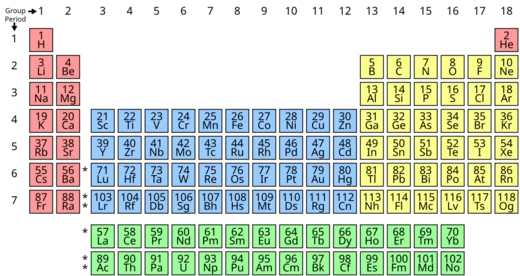
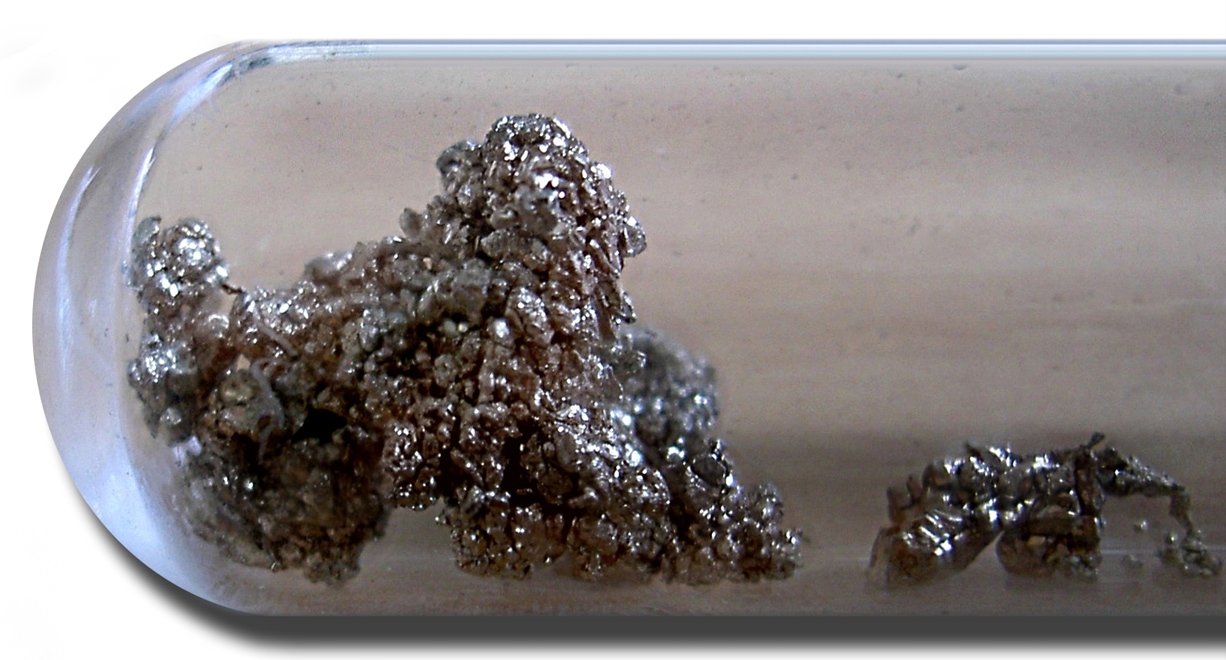
Strontium is a chemical element, represented by the symbol Sr and carrying atomic number 38. It belongs to the alkaline earth metals and is a soft, silver-white metal with a yellowish tint that is highly reactive chemically. When exposed to air, it develops a dark oxide layer. Its physical and chemical behavior closely resembles that of calcium and barium, its vertical neighbors on the periodic table. In nature, it is found primarily within the minerals celestine and strontianite, from which it is mostly extracted.
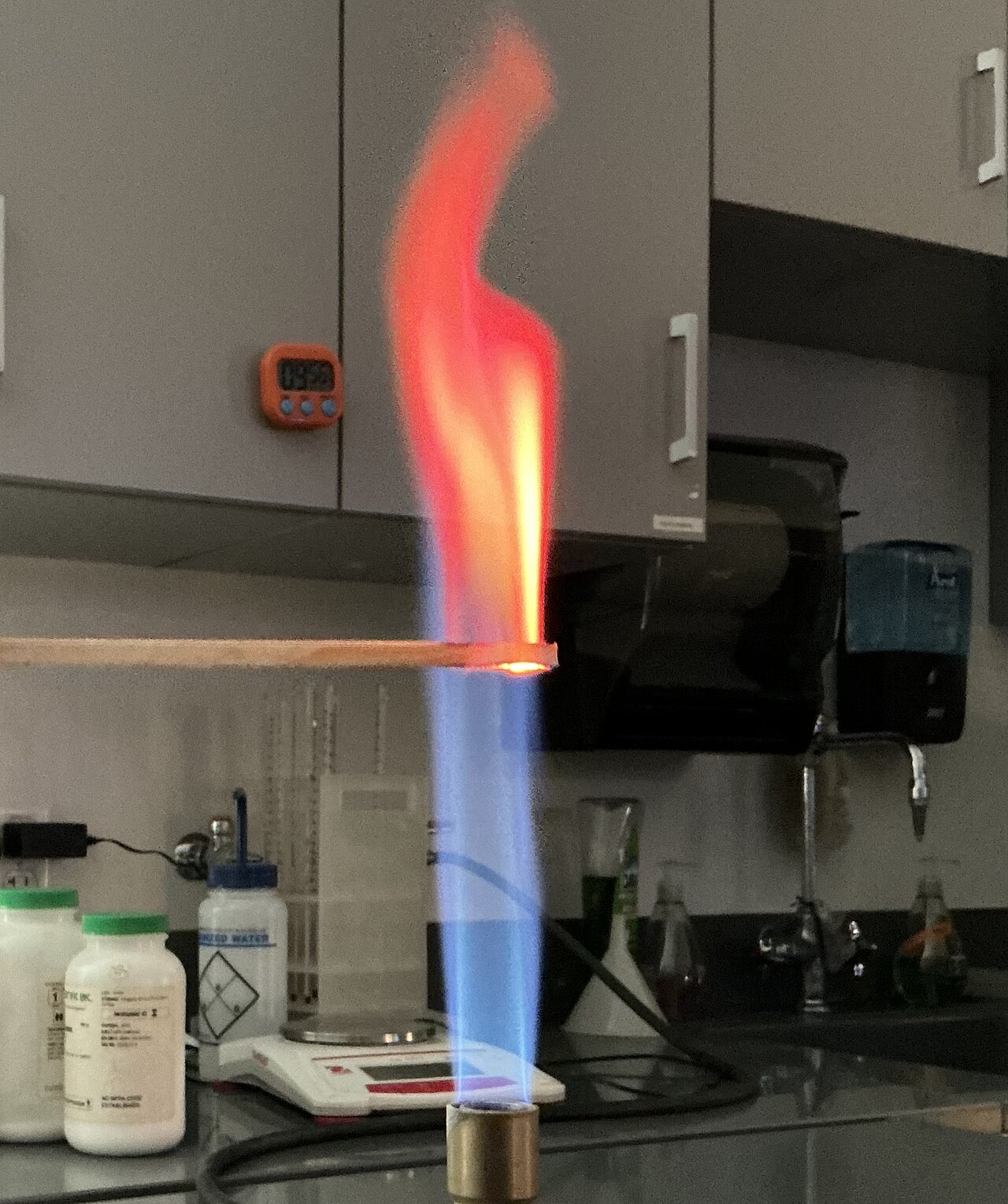
The element and the mineral strontianite both take their name from Strontian, a Scottish village. The mineral was discovered there in 1790 by Adair Crawford and William Cruickshank, and it was identified as a new element the following year due to its distinctive crimson-red flame test color. Humphry Davy first isolated strontium as a metal in 1808, using the newly developed technique of electrolysis. In the 19th century, its main use was in producing sugar from sugar beets through the strontian process. Later, during the peak of television cathode-ray tube production, up to 75% of strontium consumed in the United States went into faceplate glass. With the shift away from cathode-ray tubes to other display technologies, strontium consumption has dropped sharply.
Natural strontium, which is mostly the isotope strontium-88, is stable. However, the synthetic isotope strontium-90 is radioactive and ranks among the most hazardous components of nuclear fallout, because the body absorbs strontium similarly to calcium. At low levels, natural stable strontium poses no health risk.
**Characteristics**
Strontium is a divalent, silvery metal with a pale yellow tint. Its properties generally fall between those of calcium and barium, being softer than calcium but harder than barium. Its melting point (777 °C) and boiling point (1377 °C) are lower than calcium’s (842 °C and 1484 °C, respectively); barium continues this downward trend in melting point (727 °C) but not in boiling point (1900 °C). Its density (2.64 g/cm³) is also intermediate between calcium (1.54 g/cm³) and barium (3.594 g/cm³). Metallic strontium exists in three allotropes, with transition points at 235 °C and 540 °C.
The standard electrode potential for the Sr²⁺/Sr couple is −2.89 V, roughly midway between the Ca²⁺/Ca (−2.84 V) and Ba²⁺/Ba (−2.92 V) couples, and close to those of neighboring alkali metals. In reactivity with water, strontium sits between calcium and barium, reacting on contact to produce strontium hydroxide and hydrogen gas. When burned in air, it forms both strontium oxide and strontium nitride, but because it does not react with nitrogen below 380 °C, only the oxide forms spontaneously at room temperature. Besides the simple oxide SrO, the peroxide SrO₂ can be made by direct oxidation of strontium metal under high oxygen pressure, and there is some evidence for a yellow superoxide, Sr(O₂)₂. Strontium hydroxide, Sr(OH)₂, is a strong base, though weaker than the hydroxides of barium or the alkali metals. All four strontium dihalides are known.
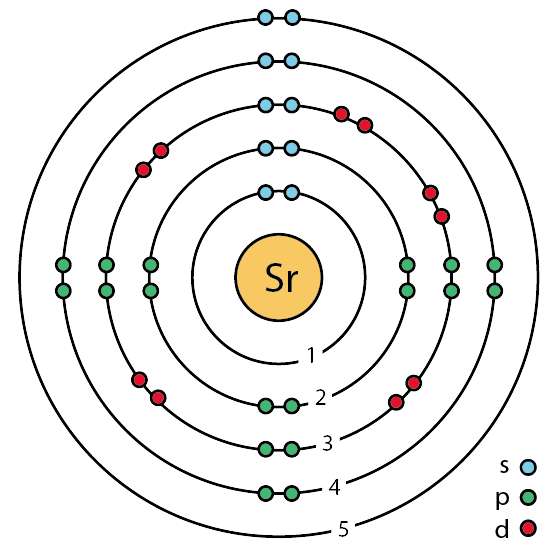
Because strontium is a heavy s-block element with a large size, it exhibits a wide range of coordination numbers, from 2, 3, or 4 up to 22 or 24 in compounds like SrCd₁₁ and SrZn₁₃. The Sr²⁺ ion is quite large, so high coordination numbers are typical. The large size of strontium and barium helps stabilize complexes with polydentate macrocyclic ligands such as crown ethers; for instance, while 18-crown-6 forms relatively weak complexes with calcium and alkali metals, its strontium and barium complexes are much stronger.
Organostrontium compounds contain one or more strontium–carbon bonds and have been reported as intermediates in Barbier-type reactions. Although strontium is in the same group as magnesium, and organomagnesium compounds are widely used, organostrontium compounds are not as common because they are harder to make and more reactive. They tend to resemble organoeuropium or organosamarium compounds, due to similar ionic radii (Sr²⁺ 118 pm; Eu²⁺ 117 pm; Sm²⁺ 122 pm). Most can only be prepared at low temperatures, and bulky ligands promote stability. For example, strontium dicyclopentadienyl, Sr(C₅H₅)₂, must be made by directly reacting strontium metal with mercurocene or cyclopentadiene itself; replacing the C₅H₅ ligand with the bulkier C₅(CH₃)₅ ligand increases the compound’s solubility, volatility, and kinetic stability.
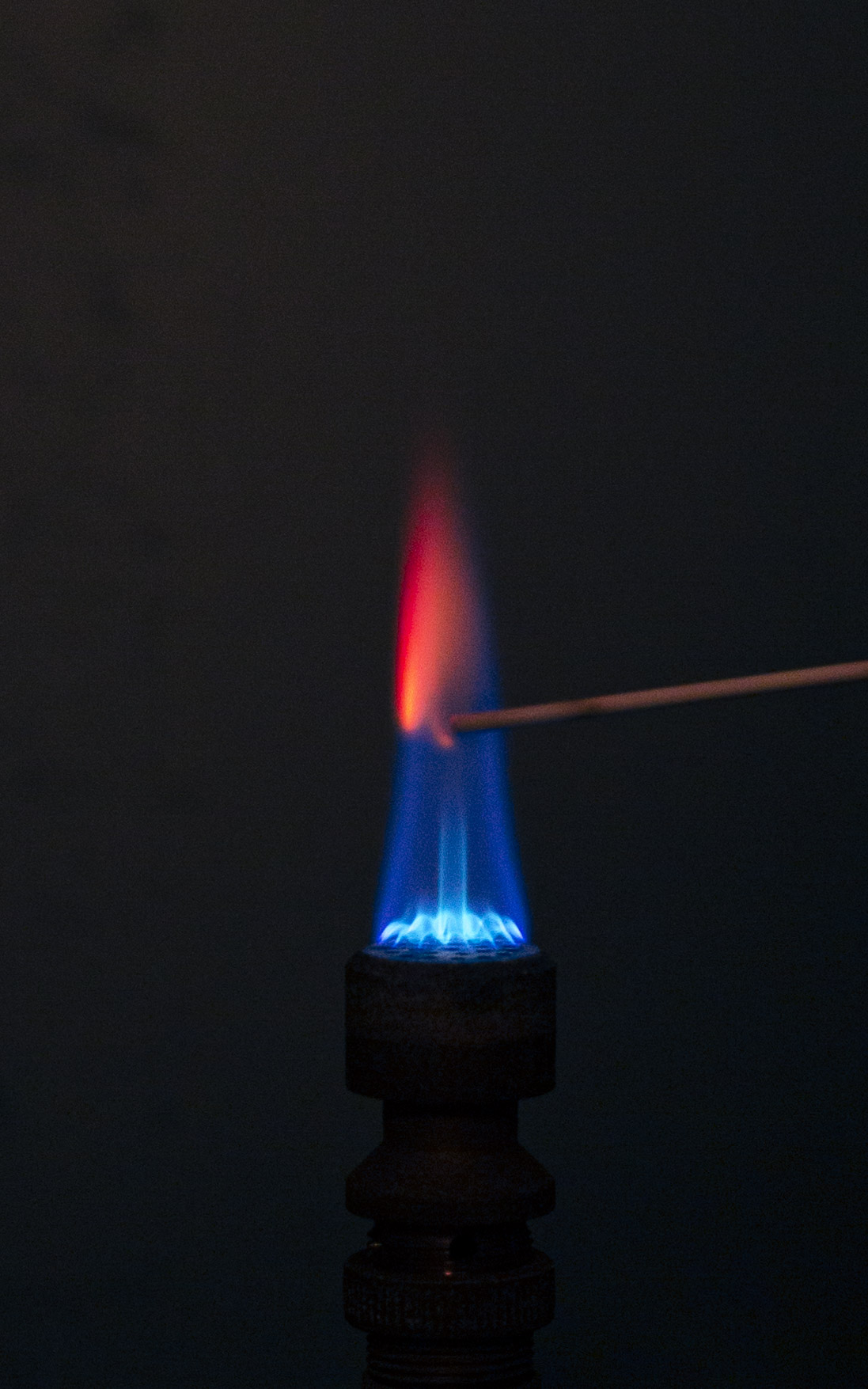
Due to its extreme reactivity with oxygen and water, strontium occurs naturally only in compounds, such as in strontianite and celestine. It is stored under a liquid hydrocarbon like mineral oil or kerosene to prevent oxidation; freshly exposed strontium metal quickly turns yellowish as the oxide forms. Finely powdered strontium metal is pyrophoric, igniting spontaneously in air at room temperature. Volatile strontium salts give a bright red color to flames and are used in pyrotechnics and flares. Like calcium, barium, alkali metals, and the divalent lanthanides europium and ytterbium, strontium metal dissolves directly in liquid ammonia, producing a dark blue solution of solvated electrons.
**Isotopes**
Natural strontium consists of four stable isotopes: ⁸⁴Sr, ⁸⁶Sr, ⁸⁷Sr, and ⁸⁸Sr. Among these, ⁸⁸Sr is the most abundant, accounting for about 82.6% of natural strontium, though this abundance varies slightly due to the production of radiogenic ⁸⁷Sr as the daughter of long-lived beta-decaying ⁸⁷Rb. This relationship is the basis for rubidium–strontium dating. Among the unstable isotopes, the primary decay mode is beta decay.
- named_after
- the mineral strontianite, named after Strontian, Scotland
Lore & Background
Crawford concluded the mineral was a new species of earth. The mineral was named strontianite by Friedrich Gabriel Sulzer and Johann Friedrich Blumenbach. He changed the name to strontium. During the 19th century, strontium was mostly used in the production of sugar from sugar beets via the strontian process. At the peak of television cathode-ray tube production, as much as 75% of strontium consumption in the United States was used for faceplate glass. With the replacement of cathode-ray tubes, consumption has dramatically declined. Natural strontium is stable, but the synthetic isotope strontium-90 is radioactive and a dangerous component of nuclear fallout, as strontium is absorbed by the body similarly to calcium.
Reader's Guide
Strontium is significant as an alkaline earth metal with properties intermediate between calcium and barium. The element's crimson-red flame test color made it identifiable, and its compounds are used in pyrotechnics and flares. Historically, strontium was important in sugar refining from sugar beets and later in cathode-ray tube glass for televisions. Its radioactive isotope strontium-90, produced in nuclear fission, is a major health concern due to its accumulation in bones and long half-life of 28.91 years, causing bone cancer and leukemia. The stable isotope strontium-87 is used in rubidium–strontium dating. Strontium's reactivity requires it to be stored under liquid hydrocarbon to prevent oxidation. Its organostrontium compounds are less common than organomagnesium compounds due to difficulty in synthesis and high reactivity.
Did You Know?
- Strontium metal reacts with both oxygen and nitrogen in air, forming a mixture of strontium oxide and strontium nitride.
- The synthetic isotope strontium-90 has a half-life of 28.91 years and is a dangerous component of nuclear fallout.
- Volatile strontium salts impart a bright red color to flames and are used in pyrotechnics and flares.
From a Scottish Village to the Periodic Table
The story of strontium begins not in a laboratory but in the earth beneath Strontian, a small village in Scotland. In 1790, chemists Adair Crawford and William Cruickshank identified an unfamiliar mineral in the area's quarries, and the following year the substance was recognized as something genuinely new when its salts produced a distinctive crimson-red glow in a flame test. Both the element and its principal mineral, strontianite, carry the village's name as a permanent tribute to that discovery. For nearly two decades the element existed only as a curiosity in solution or oxide form. It was not until 1808 that Humphry Davy, wielding the newly developed technique of electrolysis, managed to separate metallic strontium for the first time. The metal's softness, its pale silver-white color tinged with yellow, and its fierce reactivity with air and water made it a challenging substance to handle, yet its position between calcium and barium in the periodic table gave chemists a clear framework for understanding its behavior.
A Metal Caught Between Two Neighbors
Strontium sits squarely between calcium above and barium below in Group 2, and its physical and chemical profile reflects that middle ground. It is softer than calcium yet harder than barium, with a density of 2.64 g/cm³ that falls neatly between the two neighbors. Its melting point of 777 °C and boiling point of 1377 °C continue the downward melting trend from calcium while breaking the boiling-point pattern that barium would otherwise extend. Three distinct allotropes of the metal exist, shifting at 235 °C and 540 °C. Chemically, strontium's standard electrode potential of −2.89 V places it almost exactly midway between calcium and barium, and it reacts with water to yield strontium hydroxide and hydrogen gas. In air it forms an oxide layer at room temperature, but only above 380 °C does it also grab nitrogen to make a nitride. The large Sr²⁺ ion supports coordination numbers ranging from as low as two all the way up to twenty-four in compounds like SrCd₁₁, and it binds particularly strongly to macrocyclic ligands such as 18-crown-6, far more tightly than calcium does.
From Sugar Factories to Television Screens
For much of the nineteenth century, strontium's most important commercial role was surprisingly agricultural: it served as a reagent in the strontian process for extracting sugar from sugar beets. That era gave way to a very different industrial life. During the height of cathode-ray tube television manufacturing, strontium salts were incorporated into the faceplate glass, and at peak demand as much as seventy-five percent of all strontium consumed in the United States went into that single application. The gradual replacement of CRT displays by flat-panel and other technologies has since caused strontium consumption to fall sharply. Beyond these two dominant uses, volatile strontium salts have long been prized in pyrotechnics and flares because they paint flames a vivid red. Because the metal is so reactive with oxygen and moisture, it must be stored submerged in mineral oil or kerosene, and any finely powdered sample is pyrophoric, igniting spontaneously on contact with air at ordinary temperatures.
The Double Life of Strontium Isotopes
Natural strontium is a stable mixture of four isotopes—⁸⁴Sr, ⁸⁶Sr, ⁸⁷Sr, and ⁸⁸Sr—with the last dominating at roughly 82.6 percent abundance. The presence of radiogenic ⁸⁷Sr, produced over geological time as the decay daughter of long-lived ⁸⁷Rb, underpins the rubidium–strontium dating method used in geology. The synthetic isotopes tell a very different story. Strontium-89, with a half-life of about fifty days, is exploited in medicine to treat bone cancer, taking advantage of strontium's chemical kinship with calcium to home in on skeletal tissue. Strontium-90, with a half-life of nearly twenty-nine years, is far more notorious: because the body absorbs it the same way it absorbs calcium, it accumulates in bones and teeth and is regarded as one of the most hazardous components of nuclear fallout. In stark contrast, the stable isotopes found in nature pose no meaningful health risk at the low concentrations encountered in everyday environments.
Gallery

Frequently Asked Questions
Who is Strontium?
Strontium is an alkaline earth metal carrying atomic number 38 and the symbol Sr. It appears as a soft, silvery-white metal with a subtle yellowish cast and is notorious for being extremely chemically reactive.
What are Strontium's powers/role?
As a highly reactive member of the alkaline earth family, Strontium readily forms bonds and compounds with other elements. In nature it is most often locked inside the minerals celestine and strantianite, which are also its primary mining sources.
How does Strontium's story end?
In its pure metallic state, Strontium is so reactive that it tarnishes and degrades almost immediately upon contact with air or moisture. This means it is almost never encountered as a free metal and is instead stored and extracted within mineral compounds.
Why is Strontium important?
Strontium is extracted mainly from celestine and strontianite deposits and is prized for its distinctive chemical behavior within the alkaline earth group. Its reactivity and ionic properties make it useful in a range of specialized industrial and scientific applications.
Where does Strontium get its name?
The element is named after the mineral strontianite, which in turn was named for the small village of Strontian in Scotland. This makes Strontium one of the few elements whose name ultimately traces back to a Scottish settlement.
More in Chemical Elements 1-16
Spotted an error? Know more?
This is a living reference — every entry is fact-audited, and reader corrections feed straight into our audit queue. Suggest an edit · See this site's audit record