Zinc
Essential trace element and key industrial metal.

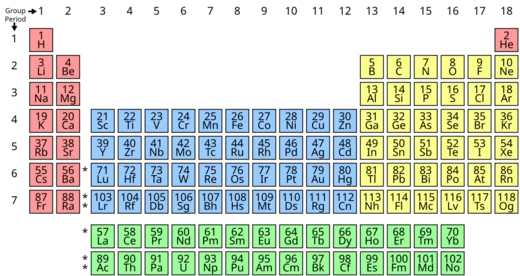
Zinc is a chemical element represented by the symbol Zn, with an atomic number of 30. At room temperature, it is a somewhat brittle metal that, once its surface oxidation is removed, displays a shiny, bluish-white color. It sits as the first element in group 12 (IIB) of the periodic table. In the Earth's crust, zinc ranks as the 24th most abundant element, occurring at an average concentration of 70 grams per ton. The element has five stable isotopes, with Zn-64 being the most common, accounting for nearly half of all zinc found. Chemically, zinc shares similarities with magnesium: both typically have a +2 oxidation state, and their ions (Zn²⁺ and Mg²⁺) are roughly the same size. The primary ore for zinc is sphalerite, also called zinc blende, which is a zinc sulfide mineral. The largest economically viable deposits are found, in descending order, in China, Peru, and Australia, among other locations. Industrially, zinc is refined through froth flotation of the ore, followed by roasting, and finally extraction via electrowinning.
Zinc is a crucial trace element for humans, animals, plants, and microorganisms, playing a vital role in both prenatal and postnatal development. In humans, it is the second most abundant trace metal, after iron, and serves as an important cofactor for many enzymes. It is unique in that it appears in every class of enzyme. Zinc is also an essential nutrient for coral growth. Many enzymes rely on a zinc atom at their reactive center, such as alcohol dehydrogenase in humans. A deficiency in zinc intake affects roughly two billion people in developing nations and is linked to numerous diseases. In children, this deficiency can cause stunted growth, delayed sexual maturation, increased susceptibility to infections, and diarrhea. Conversely, consuming too much zinc can lead to ataxia, lethargy, and copper deficiency. In marine environments, especially in polar regions, a lack of zinc can weaken primary algal communities, potentially disrupting marine food webs and impacting biodiversity.
The alloy brass, made from copper and zinc in varying proportions, was used as early as the third millennium BC in the Aegean area and in regions that now include Iraq, the United Arab Emirates, Kalmykia, Turkmenistan, and Georgia. By the second millennium BC, it was used in areas that today encompass West India, Uzbekistan, Iran, Syria, Iraq, and Israel. While the ancient Romans and Greeks knew of zinc, large-scale production of the metal did not occur until the 12th century in India. Archaeological evidence from the mines of Rajasthan shows zinc production dating back to the 6th century BC. The oldest known man-made pure zinc comes from Zawar, Rajasthan, from as early as the 9th century AD, produced using a distillation process. Alchemists would burn zinc metal in air to create what they called "philosopher's wool" or "white snow," which is zinc oxide (ZnO). The element's name likely comes from the alchemist Paracelsus, derived from the German word *Zinke* (meaning prong or tooth). German chemist Andreas Sigismund Marggraf is credited with discovering pure metallic zinc in 1746. By 1800, the work of Luigi Galvani and Alessandro Volta had revealed zinc's electrochemical properties.
The primary use for zinc is in hot-dip galvanization, a process that plates corrosion-resistant zinc onto iron. Other applications include electrical batteries, small non-structural castings, and alloys like brass. Many zinc compounds are commonly used, including zinc carbonate and zinc gluconate as dietary supplements, zinc chloride in deodorants, zinc pyrithione in anti-dandruff shampoos, and zinc sulfide in luminescent paints. Additionally, dimethylzinc and diethylzinc are employed in the chemical synthesis of organic compounds.
**Characteristics**
**Physical properties**
Zinc is a bluish-white, lustrous, diamagnetic metal, though most commercial grades have a dull finish. It is slightly less dense than iron and has a hexagonal crystal structure, a distorted form of hexagonal close packing. In this structure, each atom has six nearest neighbors (at 265.9 pm) in its own plane and six others at a greater distance of 290.6 pm. The metal is hard and brittle at most temperatures but becomes malleable between 100 and 150 °C. Above 210 °C, it becomes brittle again and can be pulverized by beating. Zinc is a fair conductor of electricity. For a metal, it has relatively low melting (419.53 °C) and boiling (907 °C) points. This melting point is the lowest among all d-block metals except for mercury and cadmium. For this reason, among others, zinc, cadmium, and mercury are often not classified as transition metals like the rest of the d-block. Many alloys contain zinc, with brass being the most famous. Other metals that form binary alloys with zinc include aluminum, antimony, bismuth, gold, iron, lead, mercury, silver, tin, magnesium, cobalt, nickel, tellurium, and sodium. While neither zinc nor zirconium is ferromagnetic, their alloy ZrZn₂ exhibits ferromagnetism below 35 K.
**Occurrence**
Zinc constitutes about 70 ppm (0.007%) of the Earth's crust by mass, making it the 24th most abundant crustal element. It also makes up 312 ppm of the Solar System, where it is the 22nd most abundant element. Typical background concentrations of zinc do not exceed 1 μg/m³ in the atmosphere, 300 mg/kg in soil, 100 mg/kg in vegetation, 20 μg/L in freshwater, and 5 μg/L in seawater. The element is usually found alongside other base metals like copper and lead in ores. Zinc is a chalcophile, meaning it is more likely to be found associated with sulfur and other heavy chalcogens than with the light chalcogen oxygen or with non-chalcogen electronegative elements like halogens. Sulfides formed as the crust solidified under the highly reducing conditions of the young Earth's atmosphere. Sphalerite, a crystalline form of zinc sulfide, is the most common ore.
- symbol
- Zn
- atomic_number
- 30
- group
- 12 (IIB)
- crustal_abundance
- 24th most abundant
- most_common_isotope
- Zn-64 (49.17% natural abundance)
Lore & Background
Zinc has been used since ancient times, with brass, an alloy of copper and zinc, used as early as the third millennium BC in the Aegean area and regions including modern Iraq, the United Arab Emirates, and Georgia. In the second millennium BC, it was used in regions including West India, Uzbekistan, Iran, Syria, Iraq, and Israel. The mines of Rajasthan show archaeological evidence of zinc production from the 6th century BC, and the oldest man-made pure zinc comes from Zawar, Rajasthan, from as early as the 9th century AD, produced by a distillation process. Alchemists burned zinc metal in air to form zinc oxide, which they called 'philosopher's wool' or 'white snow'.
Reader's Guide
Zinc's significance spans biology, industry, and history. Biologically, it is an essential trace element for all life forms, acting as an important cofactor for many enzymes and the only metal appearing in all enzyme classes. Deficiency affects about two billion people in the developing world, causing growth retardation, delayed sexual maturation, infection susceptibility, and diarrhea in children, while excess zinc can cause ataxia, lethargy, and copper deficiency. In marine biomes, particularly polar regions, zinc deficit can compromise primary algal communities and destabilize marine trophic structures. Industrially, zinc's major application is hot-dip galvanization for corrosion-resistant plating on iron. It is also used in electrical batteries, small non-structural casts, and alloys such as brass. Zinc compounds are used in dietary supplements, deodorants, anti-dandruff shampoos, and luminescent paints.
Did You Know?
- Zinc is the 24th most abundant element in Earth's crust, with an average concentration of 70 grams per ton.
- The most common zinc ore is sphalerite (zinc blende), a zinc sulfide mineral.
- Zinc is the only metal that appears in all enzyme classes.
- The oldest man-made pure zinc comes from Zawar, Rajasthan, from as early as the 9th century AD.
Frequently Asked Questions
Who is Zinc?
Zinc (Zn) is a chemical element with atomic number 30, appearing as a slightly brittle, blue-whitish metal at room temperature. It ranks as the 24th most abundant element in Earth's crust, averaging about 70 grams per ton of crustal material.
What are Zinc's powers or role?
Zinc plays a dual role: it is an essential trace element required by all living organisms and a key industrial metal. In the human body it is the second most abundant trace metal after iron, supporting both prenatal and postnatal development.
Where does Zinc sit in the periodic table?
Zinc is the first element in group 12 (IIB), making it the opening entry of that column. Its atomic number is 30, placing it in the fourth period of the table.
Why is Zinc important to living things?
Zinc is an essential trace element for humans, animals, plants, and microorganisms, without which proper growth and development cannot occur. It is the second most abundant trace metal in the human body, trailing only iron in quantity.
What is Zinc's most common isotope?
Zn-64 is the predominant naturally occurring isotope of zinc, making up roughly 49.17 percent of all zinc found in nature.
More in Chemical Elements 1-16
Spotted an error? Know more?
This is a living reference — every entry is fact-audited, and reader corrections feed straight into our audit queue. Suggest an edit · See this site's audit record