Yttrium
A silvery transition metal vital to phosphors and LEDs.

Yttrium, symbolized as Y and carrying atomic number 39, is a silvery-metallic transition metal. Its chemical behavior closely mirrors that of the lanthanides, which is why it is often grouped with the rare-earth elements. In nature, yttrium never appears as a free element; it is always found alongside lanthanide elements within rare-earth minerals. The only stable isotope present in the Earth’s crust is 89Y.
Today, yttrium’s primary use is in phosphors, particularly for LEDs. In the past, it was a key component of the red phosphors used in cathode ray tube television displays. Beyond phosphors, yttrium is employed in making electrodes, electrolytes, electronic filters, lasers, superconductors, various medical devices, and as an additive to improve the properties of other materials.
Yttrium has no known biological role, but exposure to its compounds can cause lung disease in humans.
The element’s name comes from ytterbite, a mineral first identified in 1787 by chemist Carl Axel Arrhenius. He named the mineral after Ytterby, the Swedish village where it was discovered. When a chemical in ytterbite turned out to be a new element, it was named yttrium after the mineral.
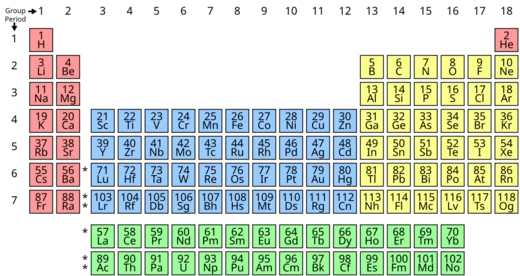
Yttrium is a soft, lustrous, silver-metallic, highly crystalline transition metal in group 3. Following periodic trends, it is less electronegative than scandium (the element above it in the group) and less electronegative than zirconium (the next element in period 5). However, because of the lanthanide contraction, it is also less electronegative than lutetium, the element below it in the group. Yttrium is the first d-block element in the fifth period.
In bulk form, pure yttrium is fairly stable in air thanks to a protective oxide film (Y₂O₃) that forms on its surface. When heated to 750 °C in water vapor, this film can grow to 10 µm thick. Finely divided yttrium, however, is very unstable in air—shavings or turnings can ignite at temperatures above 400 °C. Heating yttrium to 1000 °C in nitrogen produces yttrium nitride (YN).
Yttrium’s resemblance to the lanthanides is so strong that it is always found with them in nature and is classified as a rare-earth element. Chemically, it is more like the lanthanides than its periodic table neighbor scandium. If physical properties were plotted against atomic number, yttrium would appear to have an atomic number between 64.5 and 67.5, placing it between gadolinium and erbium. In terms of reaction order, it often falls in the same range as terbium and dysprosium. In solution, yttrium behaves like a heavy lanthanide ion because its size is so close to that of the “yttrium group” of lanthanides—a similarity explained by the lanthanide contraction. One key difference: yttrium is almost always trivalent, while about half the lanthanides can have other valences (though only four—Ce⁴⁺, Sm²⁺, Eu²⁺, and Yb²⁺—are important in aqueous solution).
As a trivalent transition metal, yttrium typically forms compounds in the +3 oxidation state by giving up all three valence electrons. A common example is yttrium(III) oxide (Y₂O₃, also called yttria), a white, six-coordinate solid. Yttrium’s fluoride, hydroxide, and oxalate are insoluble in water, while its bromide, chloride, iodide, nitrate, and sulfate are soluble. The Y³⁺ ion is colorless in solution because its d and f shells are empty. Water reacts readily with yttrium and its compounds to form Y₂O₃. Concentrated nitric and hydrofluoric acids do not attack yttrium quickly, but other strong acids do. With halogens at temperatures above about 200 °C, yttrium forms trihalides like YF₃, YCl₃, and YBr₃. Similarly, at high temperatures it forms binary compounds with carbon, phosphorus, selenium, silicon, and sulfur.
Organoyttrium chemistry deals with compounds containing carbon–yttrium bonds. Some of these compounds have yttrium in the 0 oxidation state (the +2 state has been seen in chloride melts, and +1 in oxide clusters in the gas phase). Certain trimerization reactions are catalyzed by organoyttrium compounds. These syntheses often start with YCl₃, which is made from Y₂O₃, concentrated hydrochloric acid, and ammonium chloride. Yttrium complexes were the first examples where carboranyl ligands bonded to a d0-metal center through η⁷-hapticity. Vaporizing graphite intercalation compounds like graphite–Y or graphite–Y₂O₃ produces endohedral fullerenes such as Y@C₈₂. Electron spin resonance studies show the formation of Y³⁺ and (C₈₂)³⁻ ion pairs. The carbides Y₃C, Y₂C, and YC₂ can be hydrolyzed to yield hydrocarbons.
In the Solar System, yttrium was formed by stellar nucleosynthesis—mostly through the s-process (about 72%) and the rest via the r-process (about 28%). The r-process involves rapid neutron capture by lighter elements during supernova explosions, while the s-process is a slow neutron capture in pulsating red giant stars. Yttrium isotopes are among the most common products of these processes.
- symbol
- Y
- atomic_number
- 39
- classification
- transition metal, rare-earth element
- stable_isotope
- 89Y
- discovery_mineral
- ytterbite
- namesake_village
- Ytterby, Sweden
Lore & Background
He named the mineral after the village of Ytterby, in Sweden, where it had been discovered. When one of the chemicals in ytterbite was later found to be a previously unidentified element, the element was then named yttrium after the mineral. Yttrium is a soft, silver-metallic, lustrous and highly crystalline transition metal in group 3.
Reader's Guide
Yttrium's significance lies in its unique combination of properties: it is chemically nearly identical to the heavy lanthanides, yet it is lighter and more abundant. This similarity allows it to substitute for lanthanides in many applications, particularly in phosphors for LEDs and historically in television cathode ray tubes. Its only stable isotope, 89Y, is produced primarily by the s-process in stars, and yttrium isotopes are common products of nuclear fission. Yttrium has no known biological role, but exposure to its compounds can cause lung disease in humans. The element's discovery in the late 18th century from a mineral found in Ytterby, Sweden, led to the naming of several other elements (terbium, erbium, ytterbium) from the same quarry. Today, yttrium is used in electrodes, electrolytes, electronic filters, lasers, superconductors, and various medical applications, as well as for tracing materials to enhance their properties.
Did You Know?
- Yttrium has only one stable isotope, 89Y, which is the only isotope found in the Earth's crust.
- Yttrium is almost exclusively trivalent, whereas about half the lanthanides can have valences other than three.
- Exposure to yttrium compounds can cause lung disease in humans.
Frequently Asked Questions
Who is Yttrium?
Yttrium is a silvery, metallic transition metal occupying position 39 on the periodic table. It is commonly grouped with the rare-earth elements and takes its name from the Swedish village of Ytterby, where it was first identified in the mineral ytterbite.
What are Yttrium's powers and role in the story?
Yttrium's signature ability is serving as a key ingredient in phosphor compounds, the glowing materials inside LED lights and screens. Historically it headlined red phosphors in old cathode-ray tube televisions, and today it remains essential to modern LED technology.
How does Yttrium's story end?
Yttrium exists in only one stable isotope, 89Y, so it has no radioactive decay arc to worry about. In nature, though, it never appears on its own—it is always locked in compounds alongside lanthanide partners in rare-earth ores.
Why is Yttrium important to the cast?
Without Yttrium, the phosphors that make LED displays and energy-efficient lighting work would simply not function. Its chemical similarity to the lanthanides gives it a unique bonding behavior that makes it indispensable in those glowing compounds.
Where did Yttrium come from?
Yttrium was first spotted in the mineral ytterbite, which was mined from the village of Ytterby in Sweden. That tiny Swedish locality gave the element its name, and the discovery opened the door to the broader rare-earth family.
More in Chemical Elements 1-16
Spotted an error? Know more?
This is a living reference — every entry is fact-audited, and reader corrections feed straight into our audit queue. Suggest an edit · See this site's audit record