African wolf
A distinct African canid, sacred in ancient Egypt.

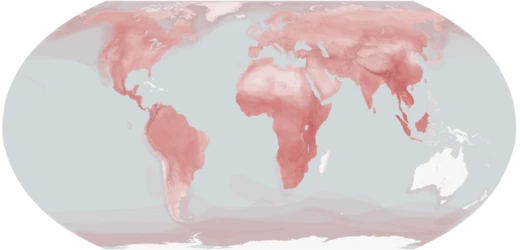
The African wolf (Canis lupaster) is a canine found across North Africa, West Africa, the Sahel, northern East Africa, and the Horn of Africa. It is classified as least concern on the IUCN Red List. This animal primarily hunts invertebrates and mammals up to the size of gazelle fawns, though it occasionally takes larger prey. It also eats carrion, human garbage, and fruit. African wolves are monogamous and territorial; their offspring stay with them to help raise younger pups.
Previously considered an African variety of the golden jackal, the African wolf was reclassified in 2015 after analyses of its mitochondrial DNA and nuclear genome showed it to be a distinct species more closely related to the gray wolf and coyote. It remains closely related enough to the golden jackal to produce hybrids, as shown by genetic tests on jackals in Israel and a 19th-century captive breeding experiment. Further research indicates it descended from a canid with a genetic mix of 72% gray wolf and 28% Ethiopian wolf.
The African wolf holds cultural significance in several African societies. In ancient Egypt, especially in Lycopolis, it was revered as a sacred god. North African folklore portrays it as untrustworthy, with its body parts used for medicine or rituals. In Senegal's Serer religion, it is highly esteemed as the first creature created by the god Roog.
**Names**
The taxon is known by many names, including African wolf, African golden wolf, golden wolf, African golden jackal, North African jackal, African jackal, gray jackal, wolf jackal, jackal wolf, Egyptian wolf, and Egyptian jackal. It also has various local and indigenous names.
**Description**
The African wolf is intermediate in size between African jackals (L. mesomelas and L. adusta) and small gray wolf subspecies. Both sexes weigh 7–15 kg (15–33 lb) and stand 40 cm (16 in) tall. Size varies greatly by region, with specimens from western and northern Africa being larger than those from East Africa. It has a relatively long snout and ears, and a short tail measuring about 20 cm (7.9 in). Fur color ranges from yellowish to silvery grey, depending on individual, season, and location, with slightly reddish limbs and black speckling on the tail and shoulders. The throat, belly, and facial markings are usually white, and the eyes are amber. Females have two to four pairs of teats. Though it resembles the golden jackal, especially in East Africa, the African wolf has a more pointed muzzle, sharper teeth, longer ears, and a skull with a more elevated forehead.
**Taxonomy**
*Early writings*
Aristotle noted wolves in Egypt that were smaller than Greek wolves. Georg Ebers described the wolf as a sacred animal in Egypt, calling it a "smaller variety" of European wolf and noting that Lykopolis, the ancient city dedicated to Anubis, means "city of the wolf." Frédéric Cuvier first recognized the African wolf as a separate species from the golden jackal in 1820, describing it as more elegant, with a more melodic voice and less strong odor. He derived its binomial name from the Arcadian Anthus family, who drew lots to become werewolves, as described by Pliny the Elder. Eduard Rüppell proposed it was the ancestor of Egyptian sighthounds and named it Wolfs-hund (wolf dog). Charles Hamilton Smith called it "thoa" or "thous dog."
A captive hybridization attempt in 1821 produced five pups, three of which died before weaning. The two survivors never played together and had opposite temperaments: one was shy like a golden jackal, the other affectionate toward humans. St. George Jackson Mivart highlighted differences between the African wolf and golden jackal, noting constant differences in coloration and ear length, as well as skull and tooth proportions. The canids in Egypt were so gray wolf-like that Hemprich and Ehrenberg gave them the binomial name Canis lupaster in 1832. Thomas Henry Huxley, noting similarities between lupaster and Indian wolf skulls, classified it as a gray wolf subspecies. However, Ernst Schwarz reclassified it as a golden jackal in 1926. In 1965, Finnish paleontologist Bjö...
- Distinct from
- Golden jackal (mitochondrial DNA divergence ~6.7%)
Lore & Background
The African wolf is intermediate in size between the African jackals and the smaller subspecies of gray wolves, with both sexes weighing and standing as described, though size varies considerably by region; specimens from Western and Northern Africa are larger than those from East Africa. It has a relatively long snout and ears, a comparatively short tail, and fur that ranges from yellowish to silvery grey, with slightly reddish limbs and black speckling on the tail and shoulders. The throat, abdomen, and facial markings are usually white, and the eyes are amber-colored. Females bear two to four pairs of teats. Though superficially similar to the golden jackal, especially in East Africa, the African wolf has a more pointed muzzle, sharper and more robust teeth, longer ears, and a skull with a more elevated forehead. It is primarily a predator of invertebrates and mammals as large as gazelle fawns, though it also takes larger animals, carcasses, human refuse, and fruit. The species is monogamous and territorial, with offspring remaining with their parents to help raise younger pups. Its range includes North Africa, West Africa, the Sahel, northern East Africa, and the Horn of Africa. It is listed as least concern on the IUCN Red List.
Reader's Guide
The African wolf's significance lies in its reclassification from a jackal to a distinct species, reshaping understanding of canid evolution in Africa. It is monogamous and territorial, with offspring assisting in raising younger pups. Its diet includes invertebrates, mammals, carcasses, human refuse, and fruit. Culturally, it was venerated as a god in ancient Egypt, particularly in Lycopolis, and in North African folklore it is viewed as untrustworthy, with body parts used for medicinal or ritualistic purposes. In Senegal's Serer religion, it is considered the first creature created by the god Roog. The species is also known under many names, including African golden wolf, Egyptian wolf, and gray jackal.
Did You Know?
- It was considered sacred in ancient Egypt, particularly in Lycopolis, where it was venerated as a god.
- In Senegal's Serer religion, it is held as the first creature created by the god Roog.
- It can hybridize with the golden jackal, as indicated by genetic tests on jackals in Israel and a 19th-century captive crossbreeding experiment.
A Long Road to Species Recognition
The African wolf's taxonomic identity has been one of the most contested in African mammalogy. Yet earlier naturalists had noticed something was off. St. George Jackson Mivart argued that while coloration differences were modest, they were remarkably constant across specimens, and that skull and tooth proportions told a clearer story of separation. Remarkably, its ancestry traces to a genetically admixed canid carrying roughly 72 percent gray wolf and 28 percent Ethiopian wolf heritage.
Body, Coat, and Geographic Variation
The African wolf occupies a middle ground in size between the smaller African jackals and the smallest gray wolf subspecies. Both sexes typically weigh between seven and fifteen kilograms, standing roughly forty centimeters at the shoulder, though Western and Northern African specimens tend to be noticeably larger than their East African cousins. The head is distinctive: a relatively long snout, elongated ears, and a comparatively elevated forehead set it apart from the golden jackal, which has a blunter muzzle and shorter ears. The tail is short, around twenty centimeters, and the teeth are sharper and more robust than those of its jackal relative. Coat coloration shifts with individual variation, season, and region, but the standard palette runs from yellowish to silvery grey, with a faint reddish tinge on the limbs and black speckling across the tail and shoulders. The throat, belly, and face markings are usually white, and the eyes carry an amber hue. Females carry two to four pairs of teats. Despite superficial resemblance to the golden jackal—especially in East Africa—these structural and dental differences mark the African wolf as a creature of its own.
Pack Life, Diet, and Range
Across a vast swath of Africa—from North and West Africa through the Sahel, northern East Africa, and the Horn of Africa—the African wolf leads a tightly structured social life. It is monogamous and fiercely territorial, and a striking feature of its family dynamics is that offspring remain with their parents to help raise the next litter of pups, creating a cooperative breeding unit. As a predator, it is primarily an invertebrate and small-mammal hunter, capable of taking prey as large as gazelle fawns, though larger animals are occasionally brought down. Its diet is opportunistic and varied, extending to animal carcasses, human refuse, and fruit. Despite this broad range and adaptive foraging strategy, the species is listed as least concern on the IUCN Red List, suggesting that its ecological flexibility and wide distribution have kept it out of immediate conservation jeopardy. The African wolf thus occupies a flexible niche, shifting between active predation and scavenging depending on what the landscape offers.
From Sacred God to Folklore Figure
The African wolf has occupied a remarkable place in human imagination for millennia. In ancient Egypt it was venerated as a god, particularly in Lycopolis—the 'city of the wolf'—dedicated to Anubis. Aristotle noted wolves in Egypt, observing they were smaller than their Greek counterparts, and Georg Ebers described the animal as a sacred 'smaller variety' of wolf. In Senegal, the Serer religion holds the African wolf in the highest regard, naming it the first creature created by the god Roog. North African folklore, by contrast, paints it as an untrustworthy animal, yet one whose body parts are valued in medicinal and ritualistic practices. The species has also left a mark on early experimental biology: in 1821, a captive crossbreeding between an African wolf and a golden jackal produced five pups, three of which died before weaning. The two survivors displayed starkly different temperaments—one shy like its jackal parent, the other affectionate toward its human keepers. Today the animal is known by a dozen or more common names, from 'Egyptian wolf' to 'wolf jackal,' a testament to how many cultures have encountered and named it.
Frequently Asked Questions
What is the African wolf (Canis lupaster)?
It is a wild canid native to a broad stretch of Africa, spanning North Africa, the Sahel, West Africa, northern East Africa, and the Horn of Africa. Taxonomically it is recognized as its own species rather than a subspecies of the gray wolf.
How is the African wolf different from the golden jackal?
Mitochondrial DNA analysis reveals roughly 6.7 % divergence between the two lineages, confirming they are separate species. In other words, the African wolf is not simply a regional form of the golden jackal but a genetically distinct African canid.
Where does the African wolf live in the wild?
Its range covers arid and semi-arid habitats from the deserts of North Africa southward through the Sahel belt and into West Africa, as well as across northern East Africa and the Horn of Africa. It is most commonly associated with dry, open landscapes rather than dense forest.
What is the African wolf's current conservation status?
The IUCN Red List places it in the Least Concern category, meaning its populations are not currently considered to be at significant risk of extinction. No major population crash or habitat loss has been documented that would elevate its threat level.
Why is the African wolf culturally significant in Africa?
In ancient Egypt it was treated as a sacred animal, and in Senegal's Serer religious tradition it continues to be held in high spiritual regard. These deep cultural associations set it apart from most other African canids, which rarely carry comparable religious weight.
More in Carnivorans 1-21
Spotted an error? Know more?
This is a living reference — every entry is fact-audited, and reader corrections feed straight into our audit queue. Suggest an edit · See this site's audit record