Tabletop role-playing game
A role-playing game format using speech, rules, and randomization.

A tabletop role-playing game (TTRPG or TRPG), sometimes called a pen-and-paper role-playing game, is a type of role-playing game where players talk through and sometimes act out what their characters do. The choices characters make are guided by their personalities, and whether those choices work or fail is decided by a fixed set of rules, often using random elements like dice. The terms "pen-and-paper" and "tabletop" mainly separate this kind of game from video game RPGs or live-action role-playing games; you don't actually need a table or paper to play. Since the COVID-19 pandemic, playing these games online through video calls has become widespread.
In most games, one person, often called the game master (GM), gets or creates a set of rules and a fictional world. Each other player takes on the role of a single character. The GM describes the world and the people in it, the players say what their characters intend to do, and the GM tells them what happens. Some results come from the game's rules, while others are decided by the GM. This basic setup started with the first published tabletop RPG, Dungeons & Dragons, though not every game follows it exactly.
Games can last anywhere from a single short session, maybe just a few hours, to a long series of sessions that might go on for years, with players and characters coming and going. Play is often broken into episodes or missions, each with a series of challenges that lead to a final puzzle or enemy. Several missions with the same characters can be linked together in a larger story arc with tougher challenges. The mood, structure, pace, and whether the game has a definite ending all depend on what the group wants.
During the first session, players usually create the characters they will play. Besides writing a character's personal history and background, they assign numbers to the character's abilities; these numbers help decide later how events turn out. Together, these notes tell the player who their character is and where they fit in the game world. In many systems, characters can improve their numbers over time.
The GM starts the game by introducing the setting and the characters. Different games have different names for the GM role, like Dungeon Master, Referee, or Storyteller. Some games, such as Polaris and Primetime Adventures, spread the GM's authority among several players in different ways. This can help make sure everyone helps create interesting situations and avoids the conflicts that can come from having a single GM.
Players describe what their characters do, and the GM says what happens as a result. Most actions are simple and succeed right away, based on common sense and the setting. For instance, if a player says their character looks around a room, the GM describes the room; if the character leaves, the GM describes what's outside. But some actions depend on the game's rules. For example, whether a character spots a hidden object or secret door might rely on their perception. Rolling dice and adding the character's relevant numbers, plus any environmental factors, often decides success. Generally, the higher a character's score in an ability, the better their chance of success. Some games don't use dice at all, instead using cards, a Jenga tower, or other random methods.
Tabletop RPG settings include challenges for the player characters to overcome, like traps, rulers to win over, or enemies to fight. Many sessions involve puzzles, negotiation, chases, and combat. Players often interact with non-player characters, other inhabitants of the game world, who are played by the GM. Most of the setting's details are kept secret, but players usually know the broad outlines of the world.
These games are often run like a radio drama: players only speak their character's part. Acting isn't always literal, and players don't always talk in character. Instead, they act by deciding and describing what their characters will do within the rules.
- field
- Role-playing games
- notable_examples
- Dungeons & Dragons, Call of Cthulhu, Pathfinder
Lore & Background
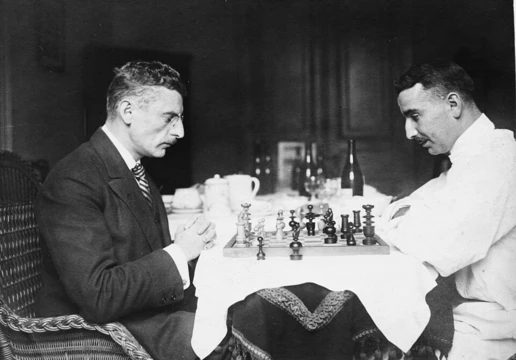
Tabletop role-playing games have origins in wargaming, which traces back to ancient strategy games like chess and Chaturanga. From the late 18th century to the 19th century, chess variants evolved into modern wargames, notably Kriegsspiel. Other early games include M. A. R. In most games, a game master (GM) prepares rules and a setting; players act out single characters. The GM describes the world and outcomes, some determined by the game system, some chosen by the GM. Games can last from a single session to years. Players create characters with numerical statistics that can increase over time. Some games distribute GM authority among players.
Reader's Guide
Tabletop role-playing games represent a significant cultural and recreational innovation, blending storytelling, improvisation, and structured rules. Emerging from wargaming traditions, they created a new form of interactive entertainment where participants collectively shape narratives. The first commercially available game, Dungeons & Dragons, established the pattern of a game master and player characters, a model that persists across most TTRPGs. The format's flexibility allows for diverse settings—from fantasy to science fiction—and varied rule systems, including diceless or card-based mechanics. The COVID-19 pandemic accelerated the adoption of online play via videoconferencing, broadening accessibility. TTRPGs have influenced video games, literature, and popular culture, and continue to evolve with distributed GM authority and episodic, mission-centric play. Their legacy lies in fostering creativity, collaboration, and community among players worldwide.
Did You Know?
- Neither pen and paper nor a table are strictly necessary for a game to count as a TTRPG.
- Online play of TTRPGs through videoconferencing has become common since the COVID-19 pandemic.
- Some games, such as Polaris and Primetime Adventures, distribute the authority of the GM to different players.
Frequently Asked Questions
What is a tabletop role-playing game?
A tabletop role-playing game is a format in which players narrate their characters' actions out loud, and a rules system—usually involving dice or other randomization—determines whether those actions succeed or fail. It is the umbrella category that includes titles like Dungeons & Dragons, Call of Cthulhu, and Pathfinder.
Do I actually need a table and paper to play a TTRPG?
No; the words "tabletop" and "pen-and-paper" are simply historical labels that set this format apart from video-game RPGs and live-action RPGs. You can play entirely through spoken description, and even online via videoconferencing, without ever touching a table or a sheet of paper.
How do TTRPGs differ from video-game RPGs or LARPs?
In a TTRPG, players describe what their characters do through spoken words (and occasionally gestures), and a rules book with randomization resolves the outcome. This contrasts with video-game RPGs, where inputs are driven by a screen, and live-action RPGs, where players physically act out their characters in a real-world space.
What are some notable examples of tabletop role-playing games?
Beyond the pioneering Dungeons & Dragons, well-known TTRPGs include Call of Cthulhu and Pathfinder. All of them share the same core structure: players narrate actions, consult a rules system, and roll dice to resolve the results.
More in Card & Tabletop Games 1-24
Spotted an error? Know more?
This is a living reference — every entry is fact-audited, and reader corrections feed straight into our audit queue. Suggest an edit · See this site's audit record