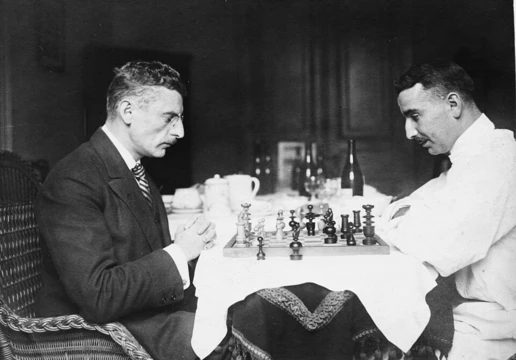
Strategy game
Games where decision-making skill determines the outcome.

A strategy game is one where the outcome hinges largely on players' voluntary and often independent decision-making abilities. Nearly all such games demand thinking in the form of decision trees and typically require a high degree of situational awareness. While strategy games are often viewed as evolving from war games, that definition is incomplete; they are defined by their reliance on strategy itself, with complexity and large-scale actions—like unit placement in the *Total War* series—being central. Culturally, a strategy game belongs to a tradition rooted in war games, contains more strategic depth than the average video game, follows certain gameplay conventions, and is recognized by a specific community. War is a dominant theme, but not the only one.
**History**
Turn-based strategy games trace back to ancient civilizations in places like Rome, Greece, Egypt, the Levant, and India. Many were widely played in their regions, but only a few remain popular today. According to Thierry Depaulis, the oldest known strategy games are the Greek game *polis* (πόλις), mentioned in literature around 450 BCE, and the roughly contemporary Chinese game *weiqi* (Go), called *yi* (弈) in Confucius’s *Analects*, compiled between about 470/50 and 280 BCE. The Royal Game of Ur, from around 2500 BCE and often called one of the oldest board games, likely had some strategic elements, though it is generally considered a luck-based race game. One of the earliest strategy games still played is mancala. Some artifacts from around 5000 BCE may be old mancala boards, leading to claims that mancala is the oldest known strategy game, but this is disputed. Another enduring game is chess, believed to have originated in India around the sixth century CE. It spread westward through trade, gaining greater social status and permanence than many other games. Chess became a game of skill and tactics, often forcing players to think two or three moves ahead just to keep up.
**Types**
**Abstract strategy** In abstract strategy games, the game has little or no connection to a thematic concept. The rules serve the game’s internal logic rather than simulating reality. A strict definition requires no random elements or hidden information, covering games like chess and Go. However, many games commonly called abstract strategy—such as backgammon, Octiles, Can't Stop, Sequence, and Mentalis—include chance. A smaller category of non-perfect abstract strategy games uses hidden information without random elements, like Stratego.
**Team strategy** Contract bridge is a highly focused team strategy game. It involves two teams of two players, with offensive and defensive skills shifting as the game progresses. Some argue that playing bridge builds skills and strategies useful in business and helps automate strategic awareness.
**Eurogames** Eurogames, or German-style board games, are a newer genre that sits between abstract strategy and simulation games. They typically have simple rules, short to medium play times, indirect player interaction, and abstract components. They emphasize strategy, downplay chance and conflict, favor economic over military themes, and usually keep all players in the game until the end.
**Simulation** Simulation games attempt to model the decisions and processes of a real-world situation. Most rules are chosen to reflect the real-world consequences of players’ actions. Abstract games and simulations are not fully separate; games exist on a continuum from nearly pure abstraction (like Abalone) to nearly pure simulation (like Diceball! or Strat-o-Matic Baseball).
**Wargame** Wargames simulate military battles, campaigns, or entire wars. Players consider situations similar to those faced by historical battle leaders. Wargames are heavy on simulation and, while all are strategy games, they can be “strategic” or “tactical” in the military sense. Their creator, H. G. Wells, noted that “much better is this amiable miniature [war] than the real thing.” Traditionally, wargames are played with miniatures on detailed terrain or on a board using cardboard counters on a hex map. Popular miniature wargames include Warhammer 40,000 and Warhammer Fantasy. Popular strategic board wargames include Risk, Axis and Allies, Diplomacy, and Paths of Glory. Advanced Squad Leader is a successful tactical-scale wargame. Comparing the *Total War* series to *Civilization*: moving troops to a specific tile in *Civilization* is a tactic because there are no short-range decisions. But in *Empire: Total War* (2009), every army encounter triggers a real-time battle where the same troop movement is treated as strategy. Throughout the game, army movement is at a macro scale.
- Classic strategy game
- Chess (originated in India, c. 6th century CE)
- Modern subgenres
- Abstract strategy, Eurogames, wargames, real-time strategy, turn-based strategy
Lore & Background
The history of turn-based strategy games traces back to ancient civilizations in regions such as Rome, Greece, Egypt, the Levant, and India. Among the oldest known examples is the Royal Game of Ur from around 2500 BCE, which, while generally considered a luck-based race game, likely incorporated some strategic elements. One of the earliest strategy games still played today is mancala; some artifacts from roughly 5000 BCE have been suggested as possible mancala boards, though this claim is disputed. Another enduring game is chess, believed to have originated in India around the sixth century CE. Chess spread westward through trade and gained lasting social status, becoming a game of skill and tactics that often requires players to think several moves ahead. Strategy games are defined by the high significance of players’ uncoerced decision-making skills in determining outcomes, typically involving internal decision-tree thinking and high situational awareness. They are seen as descendants of war games, though this connection is partial; the definition also considers complexity and game-scale actions. Types include abstract strategy games, which are loosely tied to thematic concepts and often lack random elements or hidden information (e.g., chess and Go), though some like backgammon include chance. Team strategy games, such as contract bridge, involve two teams of two players with dynamic offensive and defensive skills. Eurogames, or German-style boardgames, blend abstract and simulation elements, emphasizing strategy, indirect player interaction, and economic themes. Simulation games attempt to replicate real-world decisions and processes. Wargames simulate military battles or campaigns, often using miniatures or board counters, with examples including Risk, Axis and Allies, and Warhammer 40,000.
Reader's Guide
Strategy games encompass a broad range of types, from abstract strategy games like chess and Go—which purists define as having no random elements or hidden information—to simulation games that attempt to model real-world decisions. Eurogames, or German-style boardgames, sit between abstract and simulation, emphasizing strategy, downplaying chance and conflict, and leaning toward economic themes. Wargames simulate military battles and can be strategic or tactical in military jargon; they are played with miniatures or on boards using hex maps. Strategy video games are categorized as real-time strategy (RTS) or turn-based strategy (TBS), often relying on artificial intelligence to emulate a thinking opponent. The concept of micro and macro scale helps describe gameplay, but the definition of strategy relies on the scale of actions within each game rather than the player's experience. The legacy of strategy games lies in their deep roots in ancient cultures and their evolution into diverse modern forms that continue to challenge decision-making skills.
Did You Know?
- Chess is believed to have originated in India around the sixth century CE.
Frequently Asked Questions
What defines a strategy game in card and tabletop gaming?
A strategy game is one in which players' independent, unforced decision-making carries the greatest weight in shaping the final result. These games typically demand tree-like logical planning and sharp awareness of the current board state.
Where did chess originate, and why is it considered a classic strategy game?
Chess traces its roots to India around the 6th century CE and is often cited as the archetypal strategy game because its outcome hinges almost entirely on the players' tactical and positional choices rather than luck.
What are the main modern subgenres of strategy games?
Today the category branches into abstract strategy, Eurogames, wargames, real-time strategy, and turn-based strategy. Each subgenre emphasizes different pacing or complexity levels, but all share the core requirement that deliberate planning drives the result.
How do strategy games relate to war games?
Strategy games are often viewed as a broader descendant of war games, but the relationship is only partial. While war games focus on military simulation, strategy games can span any domain and rely primarily on layered decision-making and large-scale game actions rather than combat mechanics alone.
More in Card & Tabletop Games 1-24
Spotted an error? Know more?
This is a living reference — every entry is fact-audited, and reader corrections feed straight into our audit queue. Suggest an edit · See this site's audit record