Shell game
A gambling game almost always run as a confidence trick.

Lorc · CC BY 3.0
The shell game—also called thimblerig, three shells and a pea, or the old army game—is a gambling game where players try to track a hidden marker as it moves under several covers, typically shells or cups. In reality, it is almost always a confidence trick: the operator uses sleight of hand to secretly move the marker between covers, making it a quick, easy swindle known in con slang as a short-con. It is related to the cups and balls conjuring trick, but that version is performed purely for entertainment, with no gambling involved.
In the game, three or more identical containers—such as cups, shells, bottle caps, or matchboxes—are placed face-down. A small ball is hidden under one, and the operator shuffles them in plain view. Players bet on which container holds the ball, with the operator typically offering to double the stake if they guess correctly. If played honestly, the operator wins by shuffling in a way the player cannot follow. But in practice, the game is notorious for fraud: operators rig it by moving or hiding the ball with sleight of hand, and they use psychological tricks—like employing shills or letting a player win a few times—to convince others the game is legitimate.
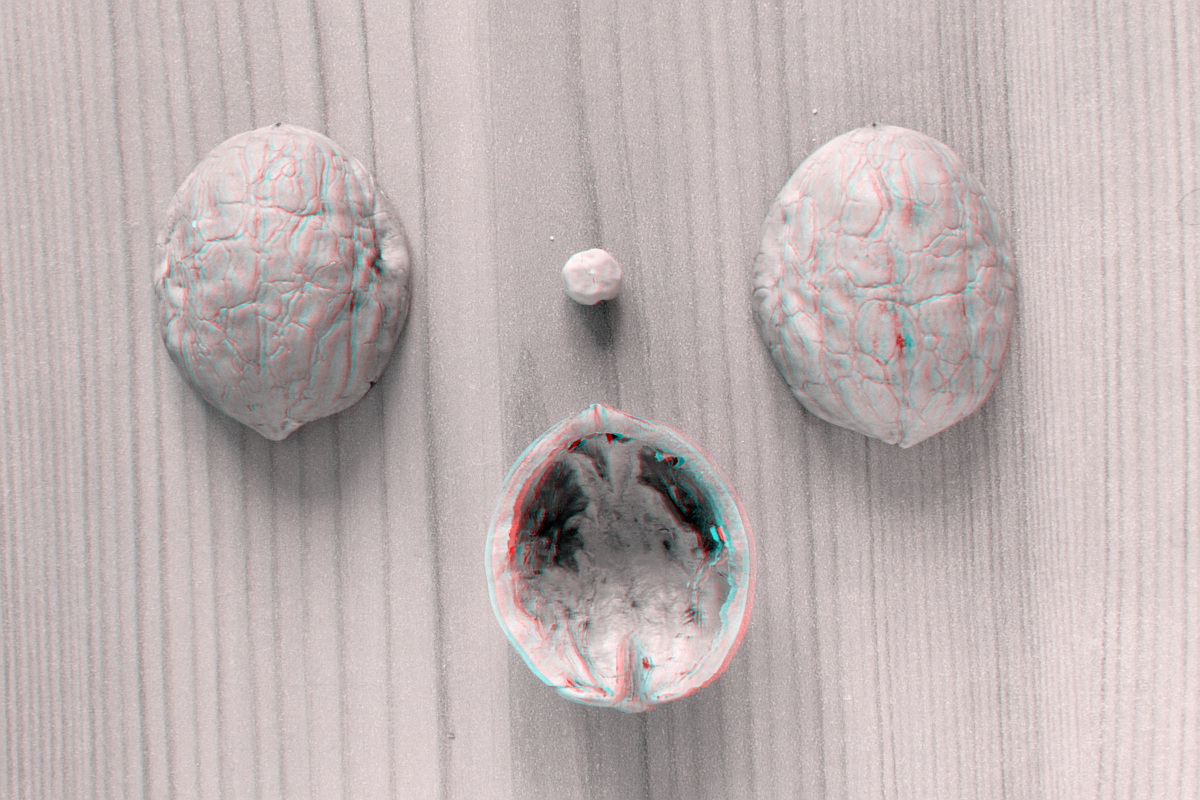
The shell game dates back at least to Ancient Greece and appears in European medieval paintings. Later, walnut shells were used; today, bottle caps or matchboxes are common. It was also called thimblerig because sewing thimbles could be used. The first recorded use of the term "thimblerig" is from 1826. The swindle became very popular in the nineteenth century, often set up at traveling fairs. A thimblerig team—operator and confederates—appears in William Powell Frith's 1858 painting *The Derby Day*. In his 1888 autobiography, Frith described encountering such a team. Fear of jail and the need to find new "flats" (victims) kept these "sharps" moving from town to town. One of the most infamous con men of the century, Jefferson Randolph Smith (Soapy Smith), led organized gangs of shell men across the midwestern United States and later in Alaska.
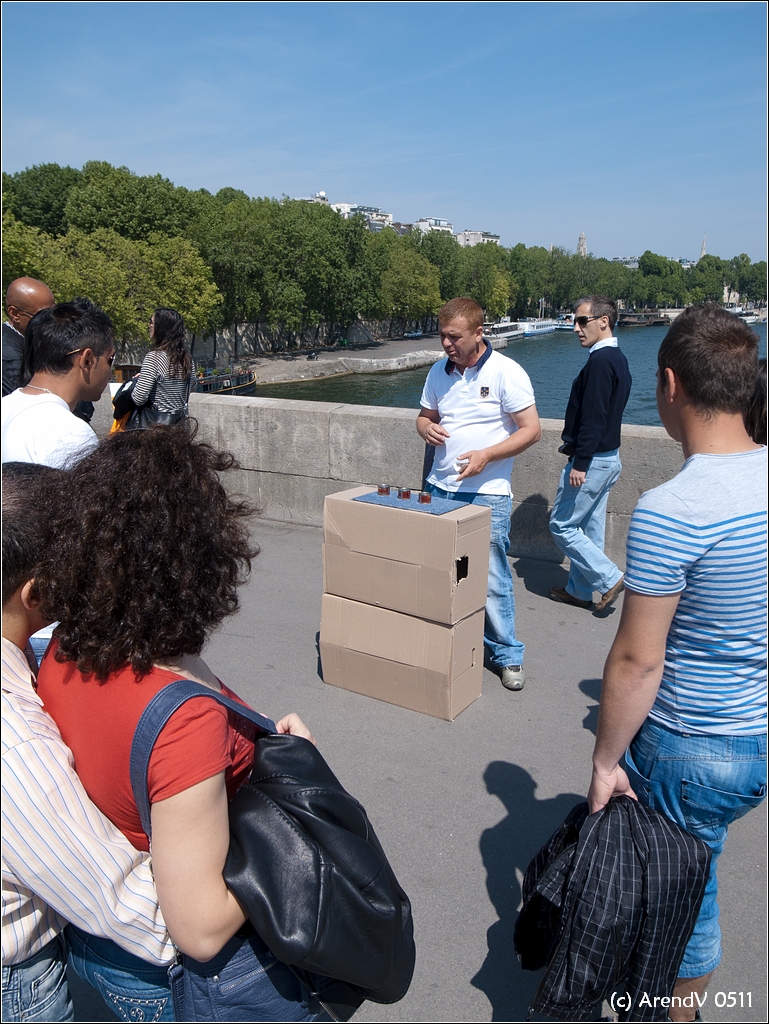
Today, the game is still played for money in many major cities worldwide, especially in tourist-heavy spots like La Rambla in Barcelona, Gran Via in Madrid, Westminster Bridge in London, Kurfürstendamm in Berlin, Bahnhofsviertel in Frankfurt, and public spaces in Paris, Buenos Aires, Benidorm, New York City, Chicago, and Los Angeles. It is classified as a confidence trick and is illegal to play for money in most countries. The game also inspired a pricing game on *The Price Is Right*, where contestants price small prizes to earn attempts at finding a ball hidden under one of four walnut-shell-shaped shells. The host shuffles the shells before the pricing part begins, but no further shuffling is allowed once the first prize is announced. Federal game show regulations ensure the game is legally winnable.
- also_known_as
- thimblerig, three shells and a pea, the old army game
- type
- confidence trick / gambling game
- earliest_known_origin
- at least Ancient Greece
- notorious_operator
- Jefferson Randolph Smith (Soapy Smith)
- modern_locations
- Barcelona, London, Berlin, Paris, New York City, Chicago, Los Angeles, and others
Lore & Background
The shell game, also known as thimblerig or three shells and a pea, is a public gambling swindle in which a small marker is hidden under one of several identical covers, such as shells, cups, or bottle caps. The operator shuffles the covers in plain view, inviting players to bet on the marker’s location, often offering to double the stake. In honest play, the operator wins if the player cannot follow the shuffle. However, the game is almost always a confidence trick, using sleight of hand to secretly move or replace the marker. This short-con relies on psychological tricks, including shills who pretend to win, to convince potential victims of the game’s legitimacy. The shell game traces its origins to Ancient Greece and appears in European medieval paintings. Historically, walnut shells were common covers; today, bottle caps or matchboxes are frequently used. The swindle flourished in the nineteenth century, with operators and accomplices working traveling fairs. Fear of arrest and the need for fresh victims kept these “sharps” constantly moving. One notorious figure, Jefferson Randolph “Soapy” Smith, led organized shell-game gangs across the mid-western United States and later in Alaska. In modern times, the illegal game persists in tourist-heavy areas of major cities worldwide, including Barcelona, London, Berlin, New York, and Los Angeles. The game also inspired a legitimate pricing game on *The Price Is Right*, where contestants find a hidden ball under walnut-like shells, with shuffling halted before play begins.
Reader's Guide
The shell game's significance lies in its enduring use as a short-con confidence trick, exploiting sleight of hand and psychological manipulation to defraud players. Despite being illegal in most countries for money play, it persists in tourist-heavy areas worldwide, such as La Rambla in Barcelona and Westminster Bridge in London. The game also inspired a pricing game on The Price Is Right, where contestants try to find a ball under one of four walnut-like shells, with federal regulations ensuring it is a legitimate game of chance. Its historical roots in ancient Greece and medieval Europe, along with its depiction in art and literature, underscore its long-standing notoriety as a swindle. The shell game remains a classic example of a short-con, quick to execute and difficult for victims to detect, cementing its place in the history of confidence tricks.
Did You Know?
- The shell game is also known as thimblerig, three shells and a pea, and the old army game.
- The game dates back at least to Ancient Greece and appears in several European medieval paintings.
- Jefferson Randolph Smith, known as Soapy Smith, led organized gangs of shell men in the mid-western United States and later in Alaska.
Gallery




Frequently Asked Questions
What exactly is the shell game?
It's a street gambling setup where a tiny marker is hidden under one of several covers and the player tries to track which one holds it. In practice, though, it is almost always a confidence trick in which the operator uses sleight of hand to secretly swap the marker between covers.
How does the shell game actually work in practice?
The operator shuffles the covers quickly while performing a sleight-of-hand transfer of the marker, so the player can never genuinely follow the correct one. It functions as a short-con swindle rather than a real test of observation.
Where did the shell game originate and where can you still find it?
The game dates back to at least Ancient Greece, making it thousands of years old. It is still commonly spotted on the streets of Barcelona, London, Berlin, Paris, New York City, Chicago, and Los Angeles.
Who is the most notorious shell game operator in history?
Jefferson Randolph Smith, widely known as Soapy Smith, is the name most often linked to the trick. He wove the shell game into his broader con operations in the American West, cementing its reputation as a swindle.
More in Card & Tabletop Games 1-24
Spotted an error? Know more?
This is a living reference — every entry is fact-audited, and reader corrections feed straight into our audit queue. Suggest an edit · See this site's audit record