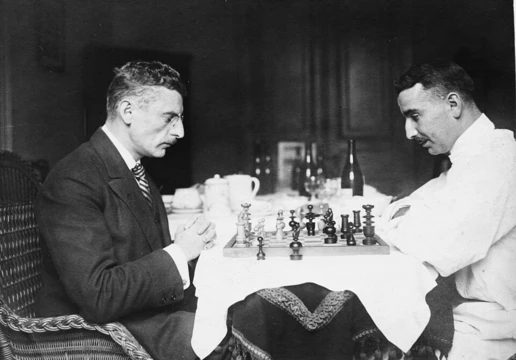
Tabletop game
Games normally played on a table or flat surface.

Tabletop games are games that are normally played on a table or other flat surface, encompassing board games, card games, dice games, miniature wargames, tabletop role-playing games, and tile-based games. They are classified according to the general form or equipment utilized. For instance, games like chess and draughts are clear examples of board games, while others such as Monopoly and many modern eurogames use a combination of attributes like a board, dice, and cards, making them less straightforward to categorize. Within these broad categories exist sub-categories and genres; board games alone include German-style board games, board wargames, and roll-and-move games, each differing markedly in style and general interest. The components used in tabletop games are diverse and specialized, including miniature figures, playing pieces, game boards, gambling chips or play money, scoreboards, timers like hourglasses or egg timers, rule manuals, and various randomizers. Randomizers can include coins, dice (including polyhedral dice), dice towers or cups, playing cards, tiles, tops such as teetotums or dreidels, drawstring bags, spinners, and even ancient items like bones, cowrie shells, or stick dice. Other aids may include gamemaster’s screens, modelling clay, card sleeves, and stickers used in legacy games. As an alternative to classification by equipment, games can also be categorized by the elements of chance involved. In game theory, two fundamentally different elements of chance play a role: outcome uncertainty, such as from dice rolls or unknown cards being dealt, which makes a game stochastic rather than deterministic; and state uncertainty, such as from an opponent’s hidden position or cards, or from simultaneous moves, which makes a game one of partial or imperfect information rather than full or perfect information. Numerous organizations sponsor events for tabletop games, including Board Game Geek, PAX, and Geek & Sundry, alongside many independent local groups and college-run organizations. Digital variations of tabletop games also exist, ranging from straight reproductions of physical games to video games using tabletop principles and virtual tabletops for online play.
- field
- Games
- known_for
- Games played on a table or flat surface
- categories
- Board games, card games, dice games, miniature wargames, tabletop role-playing games, tile-based games
- classification_methods
- By equipment used; by elements of chance (stochastic vs. deterministic; perfect vs. imperfect information)
Lore & Background
Tabletop games are played on a table or other flat surface and encompass a wide variety of forms, including board games, card games, dice games, miniature wargames, tabletop role-playing games, and tile-based games. Their defining characteristic is the use of specialized components, which may include a game board, miniature figures or pawns, playing pieces, gambling chips or play money, dice (including polyhedral dice), playing cards, tiles, spinners, and randomizers such as coins, tops like teetotums or dreidels, and drawstring bags. Other common equipment includes stopwatches, hourglasses, rule manuals, pencils, scoreboards, rulers, modelling clay, gamemaster’s screens, and card sleeves. Games can be classified by the elements of chance involved: outcome uncertainty, from dice rolls or unknown cards, creates stochastic games versus deterministic ones; state uncertainty, from hidden opponent positions or simultaneous moves, creates imperfect information games versus perfect information games. Many organizations sponsor events, including Board Game Geek’s BGG.CON, PAX Unplugged, and the Historical Miniatures Gaming Society’s Historicon. Digital tabletops are virtual reproductions or simulators of these physical games.
Reader's Guide
Tabletop games are significant as a broad category of recreational activity that includes many classic and modern forms of play. They are classified by equipment—such as boards, dice, cards, tiles, and miniatures—or by elements of chance, distinguishing stochastic games (involving outcome uncertainty like dice rolls) from deterministic games, and imperfect information games (with hidden cards or simultaneous moves) from perfect information games. Organizations like Board Game Geek, PAX, and the Historical Miniatures Gaming Society sponsor events featuring tabletop games. Digital variations exist as straight reproductions of physical games, video games using tabletop principles, or virtual tabletops for online play. The category's legacy lies in its enduring variety and the social, strategic, and chance-based experiences it provides.
Did You Know?
- Tabletop games include board games, card games, dice games, miniature wargames, tabletop role-playing games, and tile-based games.
- Games can be classified as stochastic (outcome uncertainty) or deterministic, and as perfect or imperfect information games.
- Components may include dice, playing pieces, game boards, rule manuals, randomizers like coins or spinners, and even modelling clay.
- Organizations such as Board Game Geek, PAX, and the Historical Miniatures Gaming Society sponsor tabletop game events.
Frequently Asked Questions
What exactly counts as a tabletop game?
A tabletop game is any game designed to be played on a table or other flat surface. The umbrella term covers everything from classic board and card games to dice games, miniature wargames, tabletop RPGs, and tile-based games.
What are the main categories of tabletop games?
The major subcategories include board games, card games, dice games, miniature wargames, tabletop role-playing games, and tile-based games. Each uses a distinct mix of components and mechanics while sharing the common requirement of a flat playing surface.
How are tabletop games classified or grouped?
They are typically sorted by the equipment they require (dice, playing pieces, boards, randomizers, etc.) or by their elements of chance. The latter splits games into stochastic versus deterministic and perfect-information versus imperfect-information types.
What components do tabletop games usually involve?
Common physical pieces include dice, playing tokens or pieces, game boards, and various randomizers. The specific set varies widely depending on whether you are playing a card game, a wargame, or a tile-placement game.
What does it mean for a tabletop game to be stochastic versus deterministic?
A stochastic game incorporates some element of chance, such as rolling dice or shuffling a deck, so outcomes are not fully predictable. A deterministic game, by contrast, relies entirely on player decisions with no random element, making every result a direct consequence of those choices.
More in Card & Tabletop Games 1-24
Spotted an error? Know more?
This is a living reference — every entry is fact-audited, and reader corrections feed straight into our audit queue. Suggest an edit · See this site's audit record