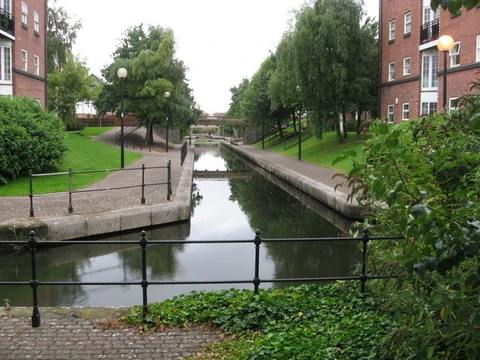
Moscow Canal
Canal linking Moscow to five seas via the Volga River.

via Wikipedia: Moscow Canal · see source
The Moscow Canal, originally called the Moskva–Volga Canal until 1947, is a 128.1-kilometer (79.6-mile) waterway in Russia linking the Moskva River to the Volga River. It runs through both Moscow and the Moscow Oblast, starting at the Moskva River in the Tushino district of northwestern Moscow and heading roughly north to meet the Volga at the town of Dubna, just above the Ivankovo Reservoir dam. Built between 1932 and 1937, the canal was constructed by 200,000 Gulag prisoners under the supervision of the Soviet secret police and Matvei Berman.
By the early 1930s, Moscow faced shortages of drinking and industrial water due to population growth, as the Rublevskoye water pipeline could not keep up. On June 15, 1931, the Central Committee of the Soviet Communist Party approved Lazar Kaganovich’s report on the water situation and adopted a plan to use the Volga River, 120 kilometers (75 miles) north of the capital, for both water supply and transport. On June 1, 1932, the Council of People’s Commissars issued Resolution No. 859, approving the canal route through Dmitrov and ordering immediate construction of the Volga–Moscow water canal, with labor allocated only until November 1934. Lazar Kogan, former head of the OGPU Belomorstroy, was appointed construction chief on June 9, 1932. On September 14, 1932, OGPU Order No. 889 established the Dmitrovsky corrective labor camp, led by the former chief supplier of the GULAG, and resources from the White Sea–Baltic Canal were transferred to the new administration, "Dmitlag."
At its peak, the construction site held 196,000 prisoners. Igor Kuvyrkov of the Dolgoprudny Historical and Art Museum estimated that over 600,000 prisoners passed through the site. Hospital records show 22,842 deaths linked to canal work, not counting those killed on the job or executed. On April 17, 1937, the gates opened and Volga water began filling the canal. Construction finished on July 1, and the canal opened in ceremonies on July 14, 1937. On April 14, 1938, at the NKVD’s request, former prisoners who had completed their sentences and voluntarily stayed for the canal’s construction and other projects had their convictions expunged.
The canal connects Moscow to Russia’s Unified Deep Water System, a network of canals and rivers in European Russia providing access to five seas: the White Sea, Baltic Sea, Caspian Sea, Sea of Azov, and Black Sea. For this reason, Moscow is sometimes called the "port of the five seas." Beyond transport, the canal supplies about half of Moscow’s water, and the shores of its many reservoirs are used for recreation. At Dubna, where the Volga and Moscow Canal meet, stands one of the world’s tallest statues of Vladimir Lenin, 25 meters (82 feet) high, built in 1937. A matching statue of Joseph Stalin was demolished in 1961 during de-stalinization.
During World War II and the Battle of Moscow, the canal was key to the city’s defense. Wehrmacht plans to encircle Moscow from north and south were thwarted by pumping water from the canal and reservoirs into the surrounding plains.
The canal has a minimum depth of 5.5 meters (18 feet), and its locks measure 290 by 30 meters (951 by 98 feet).
- Length
- 128.1 km (79.6 mi)
- Construction period
- 1932–1937
- Labor force
- Up to 196,000 prisoners at one time; over 600,000 passed through
- Recorded deaths
- 22,842 in hospitals, not including those killed at work or shot
- Minimum depth
- 5.5 m (18 ft)
- Lock dimensions
- 290 by 30 m (951 by 98 ft)
- Opened
- July 14, 1937
Verified Timeline
Lore & Background
By the early 1930s, Moscow faced a shortage of drinking and industrial water due to population growth, and the Rublevskoye water pipeline could not meet the capital's needs. On June 15, 1931, the Central Committee of the Soviet Communist Party approved the report of Lazar Kaganovich and adopted the recommendation to use the Volga River, 120 kilometres (75 mi) north of Moscow, for water supply and transportation. On June 1, 1932, Resolution No. 859 of the Council of People's Commissars approved the route through Dmitrov and ordered construction to begin immediately, with labor allocated only until November 1934. The former head of OGPU Belomorstroy, Lazar Kogan, was appointed head of construction on June 9, 1932. On September 14, 1932, by OGPU order No. 889, the Dmitrovsky corrective labor camp was organized, headed by the former chief supplier of the GULAG. Resources from the White Sea–Baltic Canal were transferred to the new administration 'Dmitlag'. The number of prisoners at the canal construction site at one time reached 196,000 people. Igor Kuvyrkov of the Dolgoprudny Historical and Art Museum estimated that more than 600,000 prisoners passed through the canal construction site. Of those, 22,842 deaths associated with work at the Canal were recorded in hospitals, not including people killed at work or who were shot. On April 17, 1937, the gates were opened and the waters of the Volga began filling the Canal. Construction was completed on July 1, and the Canal was opened at ceremonies on July 14, 1937. On April 14, 1938, at the request of the NKVD, former prisoners who had completed their sentences and voluntarily remained for the construction of the Moscow-Volga Canal and other sites had their convictions expunged.
Reader's Guide
With the canal, Moscow is connected to Russia's Unified Deep Water System, a large system of canals and rivers in European Russia, which created access to five seas: the White Sea, Baltic Sea, Caspian Sea, Sea of Azov, and the Black Sea. As such, it is sometimes called the 'port of the five seas' (Russian: порт пяти морей). Apart from transportation, the canal also provides for about half of Moscow's water consumption, and the shores of its numerous reservoirs are used as recreation zones. During World War II and the Battle of Moscow, the canal played an instrumental role in the defense of Moscow. Wehrmacht plans were to encircle the city from the north and south. To prevent this, water was pumped from the canal and reservoirs into the surrounding plains. One of the world's tallest statues of Vladimir Lenin, 25-meter (82 ft) high, built in 1937, is located at Dubna at the confluence of the Volga River and the Moscow Canal. The accompanying statue of Joseph Stalin of similar size was demolished in 1961 during the period of de-stalinization.
Did You Know?
- The canal was named the Moskva–Volga Canal until 1947.
- On April 17, 1937, the gates were opened and the waters of the Volga began filling the Canal.
- The canal provides about half of Moscow's water consumption.
- During the Battle of Moscow, water was pumped from the canal and reservoirs into surrounding plains to prevent Wehrmacht encirclement.
- A 25-meter (82 ft) statue of Vladimir Lenin, built in 1937, stands at Dubna at the confluence of the Volga and the Moscow Canal.
More in Canals And Waterways 1-24
Spotted an error? Know more?
This is a living reference — every entry is fact-audited, and reader corrections feed straight into our audit queue. Suggest an edit · See this site's audit record