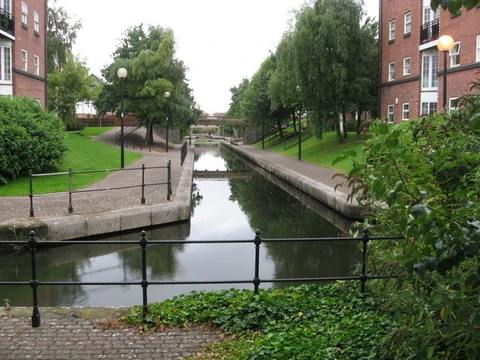
Khlong Saen Saep
A 72 km canal built for military transport, now a Bangkok waterway.

via Wikipedia: Sathon Road · see source
Khlong Saen Saep is a canal in central Thailand that connects the Chao Phraya River to the provinces of Prachinburi and Chachoengsao. It stretches 72 kilometers, passes through 21 districts, and links to over 100 smaller canals. The canal was constructed on the orders of King Rama III during a conflict between Siam and Annam over Cambodia, intended to transport soldiers and weapons by water. Building began in 1837, cost 96,000 baht (equivalent to 480 million baht adjusted for inflation), and was completed in three years. It was once filled with lotus plants; King Mongkut (Rama IV) later built Sa Pathum Palace, meaning Lotus Pond Palace, in the Siam District, from which the present-day Pathum Wan District takes its name. The canal starts from Khlong Maha Nak at Ban Krua on the border of Ratchathewi and Pathum Wan Districts and ends in the Bang Pakong River in Chachoengsao Province.
The canal serves as a major drainage artery for Bangkok but is heavily polluted. In 2015, Prime Minister Prayut Chan-o-cha initiated a two-year cleanup effort for 2017–2018. A Pollution Control Department survey of 631 buildings along the canal found 412 pollution sources, including hospitals, restaurants, markets, hotels, condominiums, department stores, and homes. Inspections of 210 potential polluters revealed that many hotels, hospitals, department stores, and condominiums were illegally discharging wastewater. The 49 worst offenders were fined 2,000 baht daily until they fixed their waste management; 363 others were ordered to improve treatment. The department refused to name the polluters. To maintain cleanliness, the Natural Resources and Environment Minister proposed charging wastewater treatment fees to households and tourists, with a recommended rate of 0.43 baht per cubic meter, projected to raise 5.3 billion baht annually, plus 50 baht per tourist. By June 2019, the department reported improved water quality, though no biochemical oxygen demand figures were provided. A later survey identified 720 pollution sources along the canal, with at least 253 facing daily fines.
An express boat service operates on a portion of the canal between Pom Prap Sattru Phai and Bang Kapi Districts, providing ferry service through traffic-congested central Bangkok. The service has a mixed reputation due to polluted water and its slapdash nature. The northern line ends at Golden Mount, the
- length
- 72 km
- construction_duration
- 3 years
- districts_passed
- 21
Lore & Background
Khlong Saen Saep is a 72-kilometer canal in central Thailand that links the Chao Phraya River with Prachinburi Province and Chachoengsao. It passes through 21 districts and connects to over 100 smaller canals. The canal begins at the Maha Nak Canal near Ban Krua, on the border of Ratchathewi and Pathum Wan Districts, and ends in the Bang Pakong River in Chachoengsao Province. Historically, it was built on the orders of King Rama III starting in 1837 to transport soldiers and weapons during a conflict with Annam over Cambodia; construction took three years and cost 96,000 baht. The canal was once abundant with lotus plants, and King Mongkut (Rama IV) later built Sa Pathum Palace in the Siam District, from which the name of Pathum Wan District derives. As a major drainage artery for Bangkok, the canal is heavily polluted. A 2015 government survey identified over 400 pollution sources along its banks, including hospitals, restaurants, hotels, and condominiums, many of which discharged wastewater illegally. Efforts to clean the canal began in 2017–2018, with fines imposed on offenders and proposals to charge wastewater treatment fees. By 2019, authorities claimed water quality had improved, though over 700 pollution sources were still identified. An express boat service operates along a portion of the canal in central Bangkok, providing public transport between Pom Prap Sattru Phai and Bang Kapi Districts, with routes running parallel to Petchaburi Road and passing through Watthana and Huai Khwang Districts. The service is known for its polluted water and informal operations.
Reader's Guide
Khlong Saen Saep is a 72-kilometer canal in central Thailand that connects the Chao Phraya River to Prachinburi Province and Chachoengsao, passing through 21 districts and linking to over 100 smaller canals. Historically, it was constructed on the order of King Rama III during a conflict between Siam and Annam over Cambodia, intended to transport soldiers and weapons by water. Building began in 1837, cost 96,000 Baht (equivalent to 480 million Baht adjusted for inflation), and was completed in three years. The canal was once filled with lotus plants, and King Mongkut (Rama IV) later built Sa Pathum Palace (Lotus Pond Palace) in the Siam District, from which the present-day Pathum Wan District derives its name. The canal originates from Khlong Maha Nak at Ban Krua on the border of Ratchathewi and Pathum Wan Districts and ends in the Bang Pakong River in Chachoengsao Province. Ecologically, it serves as a major drainage artery for Bangkok but is heavily polluted. A 2015 government initiative aimed to clean it up over 2017–2018; a survey of 631 buildings along the canal found 412 pollution sources, including hospitals, restaurants, markets, hotels, condominiums, and department stores. Inspections revealed that many hotels, hospitals, department stores, and condominiums were discharging wastewater illegally, with offenders fined 2,000 baht daily until compliance. The Pollution Control Department later identified 720 pollution sources along the canal, with at least 253 facing fines. Proposals to fund treatment included charging households and tourists a wastewater fee. In June 2019, the department claimed water quality had improved, though no biochemical oxygen demand figures were provided. For transport, an express boat service operates between Pom Prap Sattru Phai and Bang Kapi Districts, offering a ferry alternative to road traffic in central Bangkok, though it is known for polluted water and a slapdash reputation. The northern line ends at Golden Mount, and the southern line at NIDA, running parallel to Petchaburi Road through Watthana and Huai Khwang Districts.
Did You Know?
- The canal was built on the order of King Rama III during a conflict between Siam and Annam over Cambodia.
- The express boat service has a checkered reputation due to polluted water and the slapdash nature of the service.
Frequently Asked Questions
What was Khlong Saen Saep originally built for?
The canal was commissioned as a military transport artery, designed to move troops and supplies efficiently across the flat central plains. Over the decades it gradually shifted from a purely strategic route into a civilian waterway integrated into Bangkok's daily life.
What role does Khlong Saen Saep play in Bangkok today?
A stretch of the canal still hosts an express boat service that operates as public transit for residents navigating the city. Beyond its transport function, it remains a defining feature of the neighborhoods that grew up along its banks.
More in Canals And Waterways 1-24
Spotted an error? Know more?
This is a living reference — every entry is fact-audited, and reader corrections feed straight into our audit queue. Suggest an edit · See this site's audit record