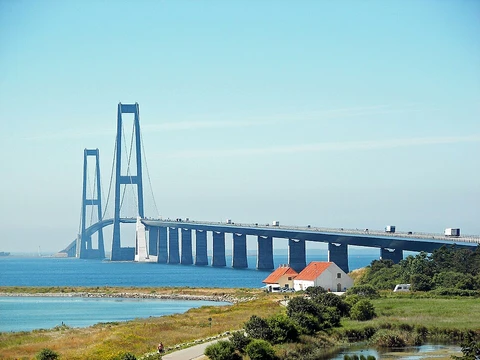
The Chain Bridge
First permanent bridge across the Danube in Hungary.
Last updated

Ruth Sharville · CC BY-SA 2.0
Where it is
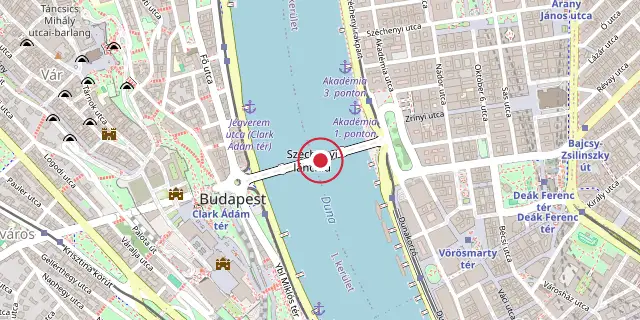
Coordinates: 47°29′56″N 19°02′38″E (47.4990, 19.0440) · Open in OpenStreetMap
Coordinates and connected clubs: the infobox of Wikipedia: Széchenyi Chain Bridge (CC BY-SA 4.0). Map: drawn by Codexery from OpenStreetMap tiles.
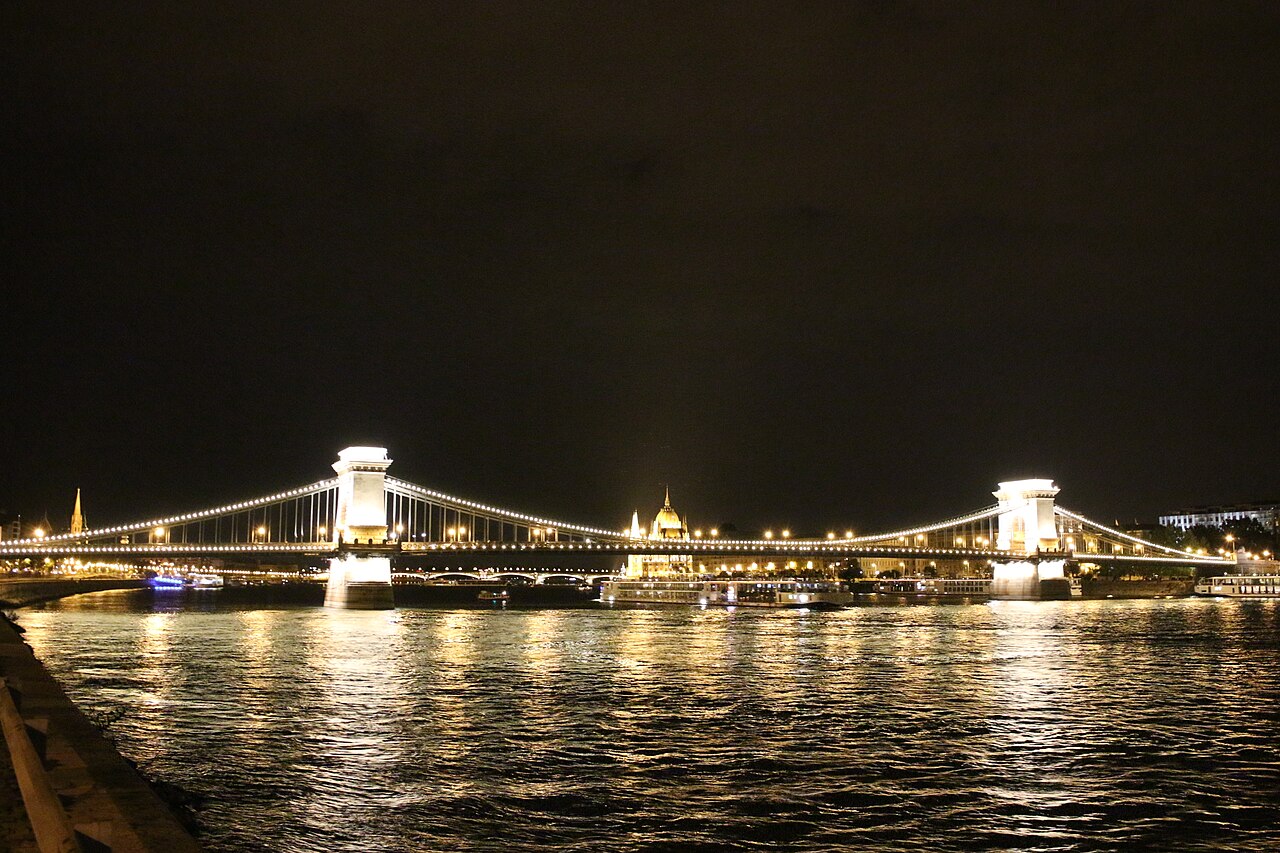
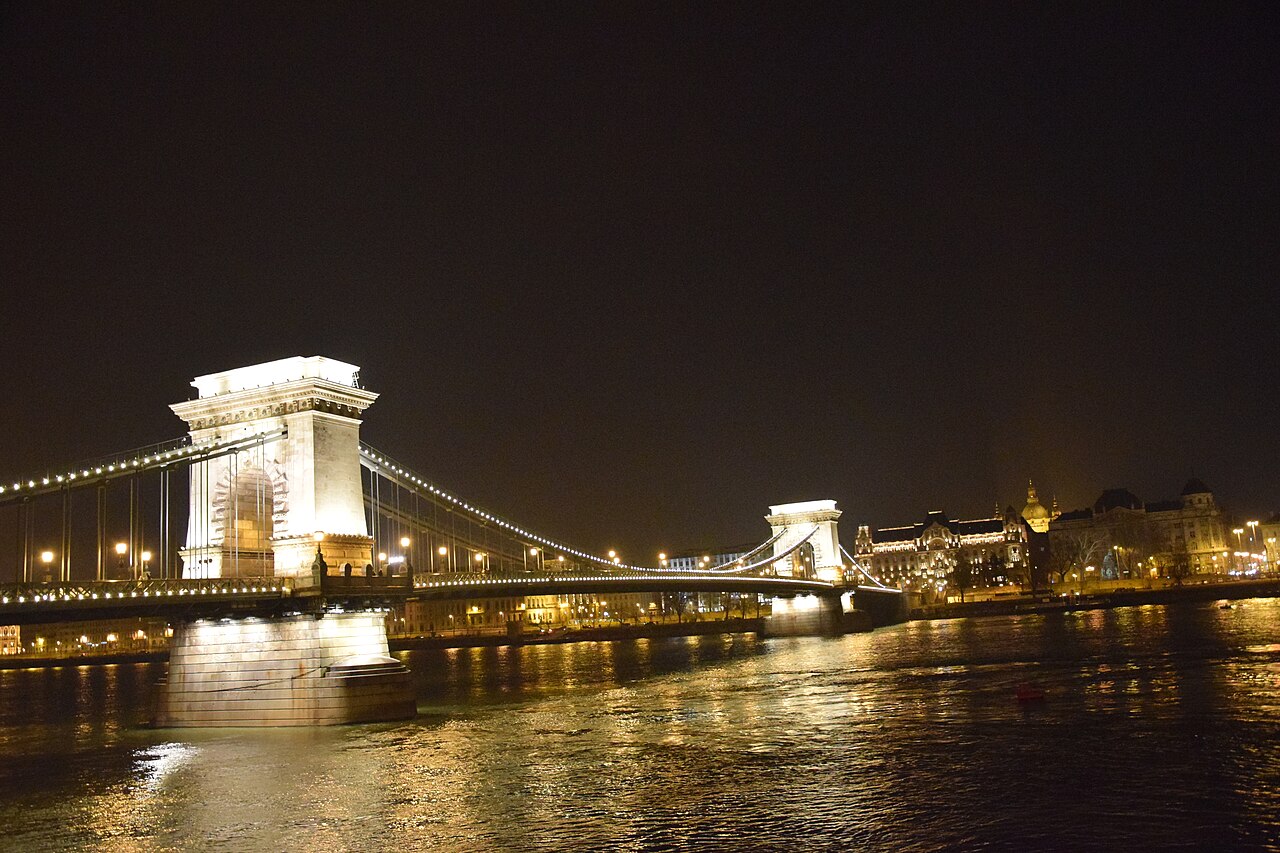
The Chain Bridge is officially named after István Széchenyi, who strongly supported its construction.[1] The Hungarian capital's first permanent bridge, the Chain Bridge, began carrying traffic in 1849.[2] When inaugurated, the 202-meter central span of the bridge ranked among the globe's longest.[2]
Geography and history
English engineer William Tierney Clark designed the bridge in 1839, following an initiative by Count István Széchenyi.[3] The bridge is a larger-scale version of Tierney Clark's earlier Marlow Bridge in England.[3] It was designed in sections and shipped from the United Kingdom to Hungary for final assembly.[3] Local supervision of construction was handled by Scottish engineer Adam Clark.[3]
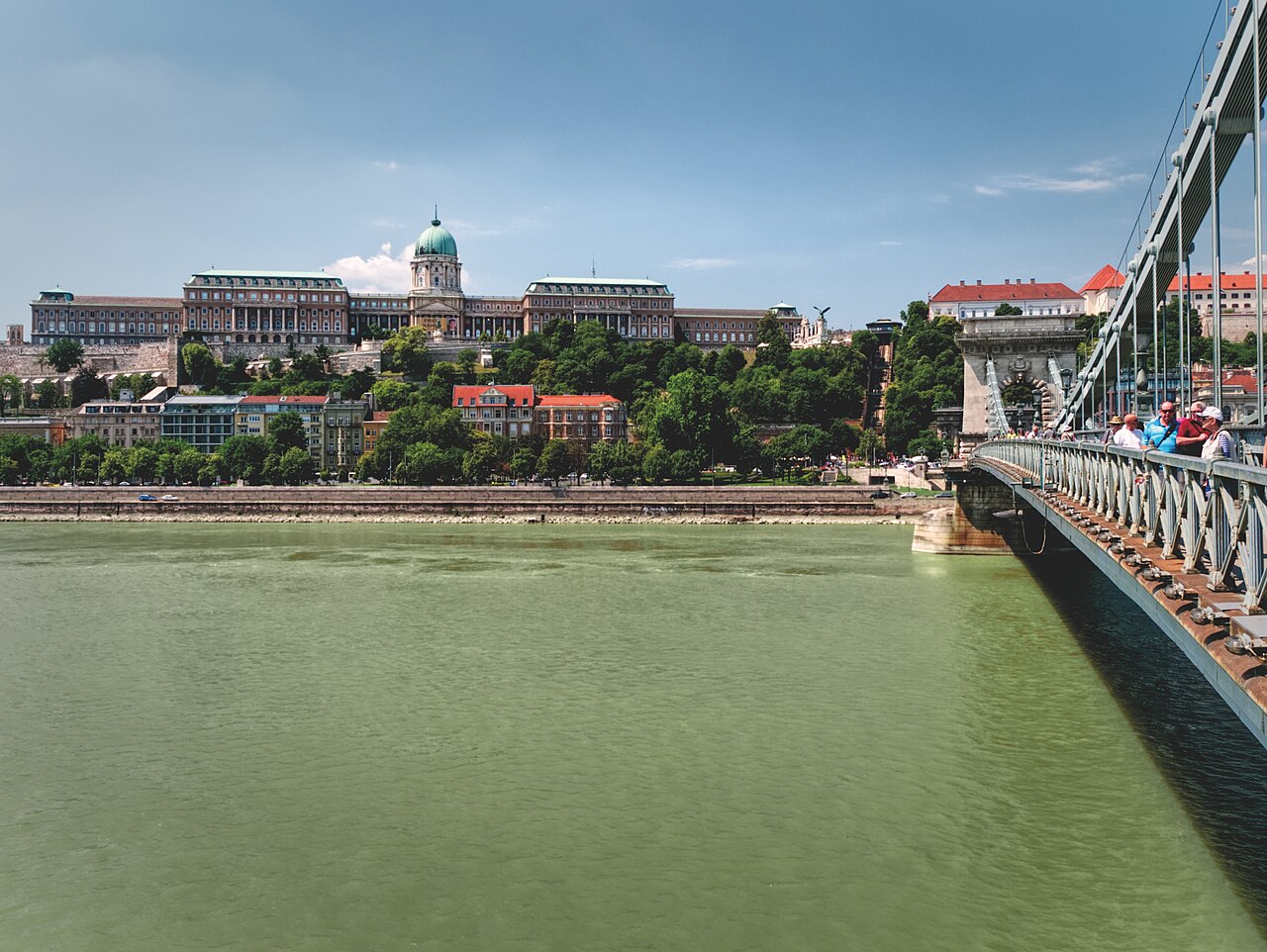
The bridge was funded largely by Greek merchant Georgios Sinas, whose name appears on the Buda-side southwestern foundation.[4] Stone lions carved by a sculptor were installed at the abutments in 1852.[2] During World War II, retreating German forces blew up the bridge on 18 January 1945, leaving only the towers.[5] Following the 1848 Hungarian Revolution, the bridge was opened to the public in 1849.[2]
In 1914, the bridge's cast-iron components received upgrades and reinforcement.[5]
What the cited sources add
The HungarianConservative.com article reports that in 2025 the Hungarian Museum of Science, Technology and Transport announced the identification of 185-year-old construction drawings by Adam Clark.[6][3]

References
- Wikipedia, "Széchenyi Chain Bridge" (CC BY-SA 4.0), which cites: "History of Chain Bridge, Budapest"; "History of Chain Bridge, Budapest" (original not read by us) en.wikipedia.org
- Wikipedia, "Széchenyi Chain Bridge" (CC BY-SA 4.0), which cites: "Budapest Tourist Guide - Chain bridge"; "Bridges of Budapest - Chain bridge" (original not read by us) en.wikipedia.org
- Wikipedia, "Széchenyi Chain Bridge" (CC BY-SA 4.0), which cites: "Rediscovered 185-Year-Old Plans Reveal Secrets of the Chain Bridge", HungarianConservative.com (we also read that source) en.wikipedia.org
- Wikipedia, "Széchenyi Chain Bridge" (CC BY-SA 4.0), which cites: Pfeiffer, Ida, "A Woman's Journey Round the World", BiblioBazaar, 2008, p. 514; Kohl, Johann Georg, "Austria: Vienna, Prague, Hungary, Bohemia, and the Danube; Galicia, Styria, Moravia, Bukovina, and the Military Frontier", Chapman and Hall, 1844, p. 126; "Budapest: a history from its beginnings to 1998", Social Science Monographs, 1997, p. 83 (we also read that source) en.wikipedia.org
- Wikipedia, "Széchenyi Chain Bridge" (CC BY-SA 4.0), which cites: Dent, "Painting the Town Red: Politics and the Arts During the 1919 Hungarian Soviet Republic", Pluto Press, 2018, p. 9 (we also read that source) en.wikipedia.org
- "Rediscovered 185-Year-Old Plans Reveal Secrets of the Chain Bridge", HungarianConservative.com. facts only, no text reused. hungarianconservative.com
Each numbered sentence above was checked against the source it cites before publication. Sentences citing Wikipedia adapt text from the English Wikipedia article Széchenyi Chain Bridge (contributors), used under CC BY-SA 4.0; this entry is available under the same licence. Other sources were used for facts only; no text or images are copied from them.
Ranked in
More in Great Bridges
Sources
Compiled from Wikipedia and the sources listed below. Text from Wikipedia is available under CC BY-SA 4.0; this entry is adapted from it.
- Wikipedia: Széchenyi Chain Bridge (CC BY-SA 4.0).
Spotted an error? Know more?
Reader corrections go straight into our review queue. Suggest an edit · How this site is sourced