
Lou Gehrig
Yankees first baseman whose battle with ALS led to the condition being known as 'Lou Gehrig's Disease.'
Last updated

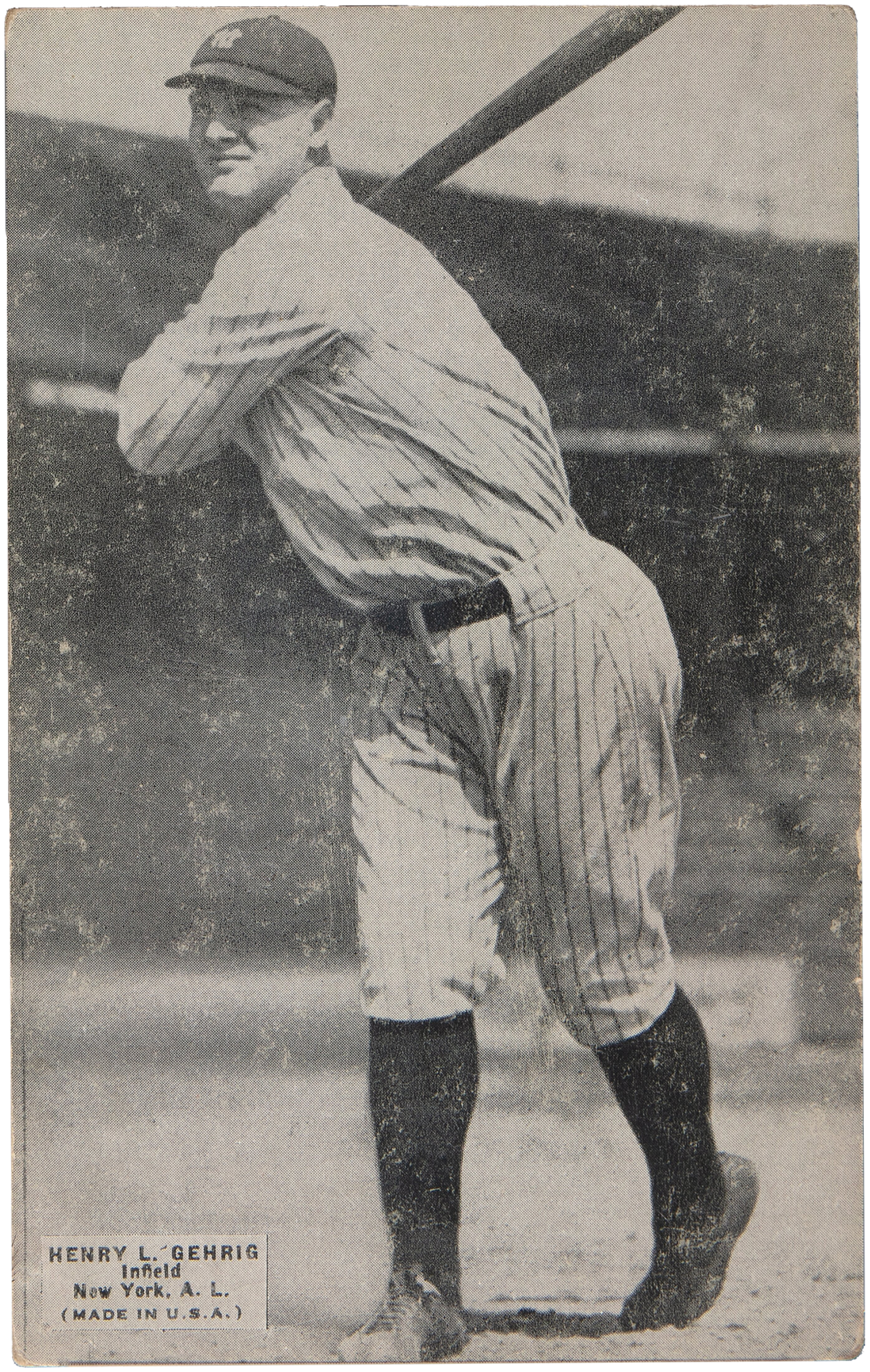
Exhibit Supply Company of Chicago · Public domain
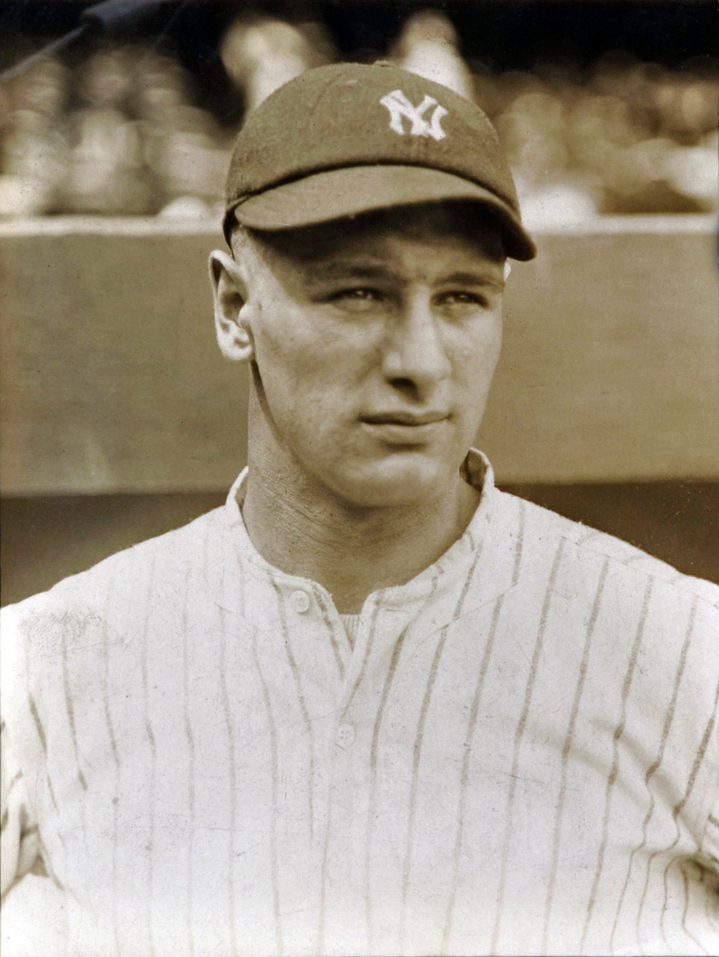
Lou Gehrig is the Yankees first baseman whose battle with ALS led to the condition also being known as 'Lou Gehrig's Disease.' Lou Gehrig Day is now recognized in the MLB on June 2, which is the date that Gehrig became the Yankees' starting first baseman and also the date he died.
Last updated 2026-10-03 from the source article.
Lore & Background
Lou Gehrig Day is now recognized in the MLB on June 2, which is the date that Gehrig became the Yankees' starting first baseman and also the date he died. Due to Pete Frates' efforts in creating Lou Gehrig Day, Frates is honored in the 'ALS and Baseball' exhibit in the National Baseball Hall of Fame and Museum, which also includes Lou Gehrig and Catfish Hunter.
Early life
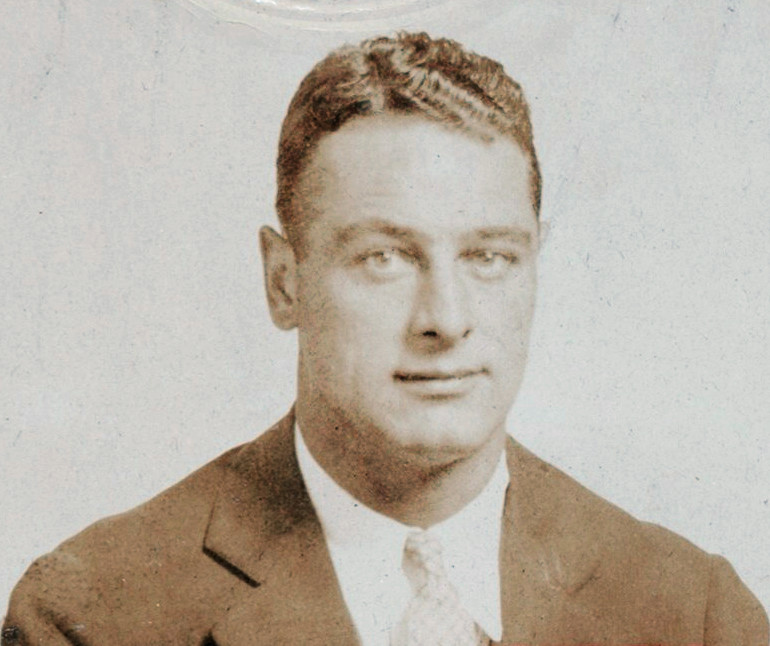
Lou Gehrig was born on June 19, 1903, in East Harlem, New York City, weighing nearly 14 pounds. He was the second of four children of German immigrants Heinrich Wilhelm Gehrig and Anna Christina Foch. His father, a sheet-metal worker, was often unemployed due to alcoholism and epilepsy, while his mother worked as a maid and was the family's main provider. Gehrig spoke German as a child and did not learn English until age five.
He helped his mother with chores like folding laundry. Two of his sisters died from whooping cough and measles, and a brother died in infancy. He attended PS 132 and Commerce High School, graduating in 1921. In 1920, playing for Commerce High at Cubs Park in Chicago, he hit a grand slam out of the major league park, an unprecedented feat for a 17-year-old.
College career
Gehrig studied engineering at Columbia University for two years but left due to academic difficulty. He had earned a football scholarship and later joined the baseball team. Before his first semester, New York Giants manager John McGraw advised him to play summer professional baseball under the assumed name Henry Lewis, which cost him his collegiate sports eligibility for his freshman year.
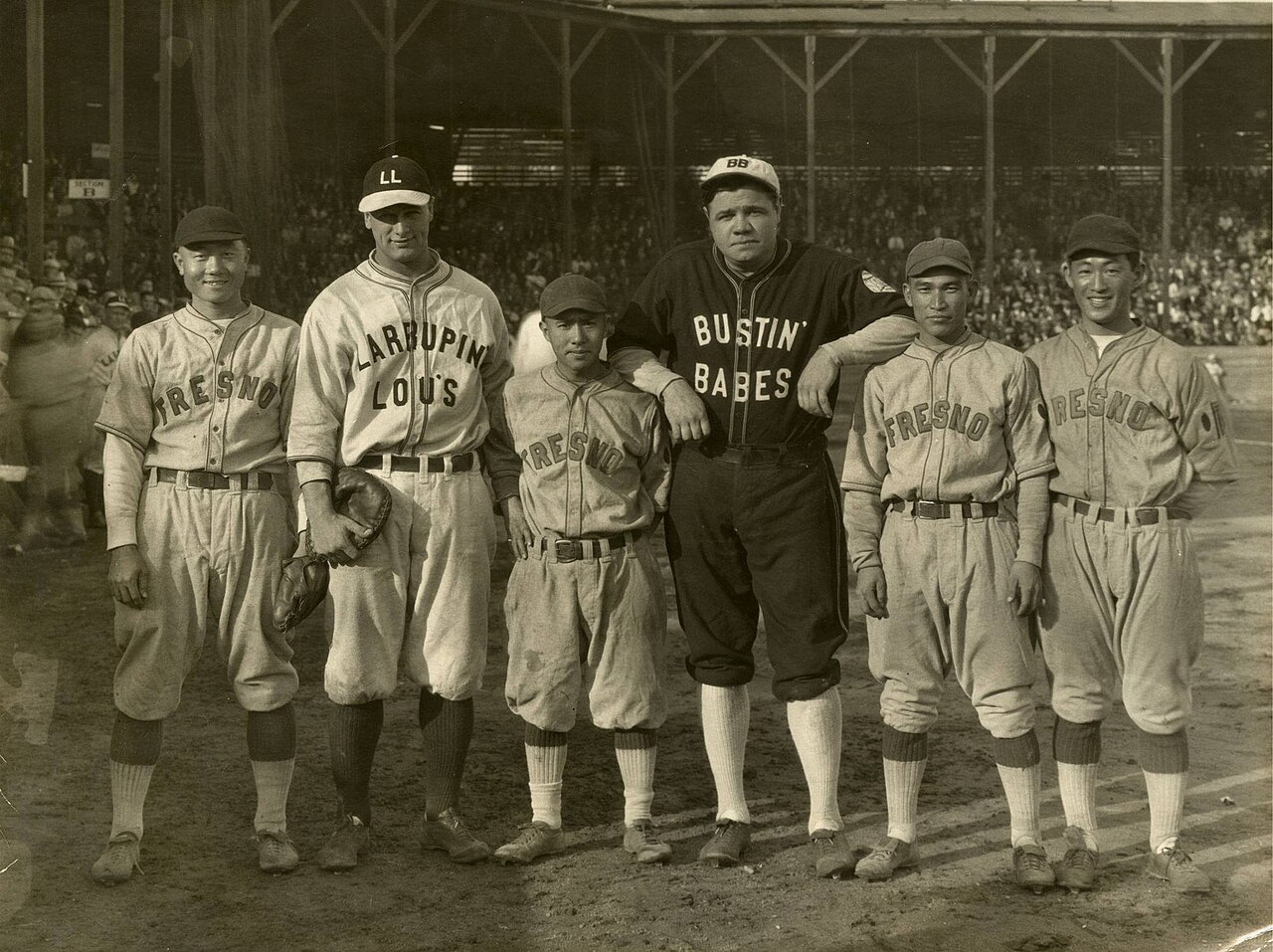
In 1922, he played fullback for Columbia's football team, and in 1923 he played first base and pitched for the baseball team. On April 18, 1923, the same day Yankee Stadium opened, Gehrig struck out 17 batters for Columbia, setting a team record. Yankees scout Paul Krichell, impressed by Gehrig's powerful left-handed hitting, saw him as "the next Babe Ruth." Gehrig was a member of the Phi Delta Theta fraternity.
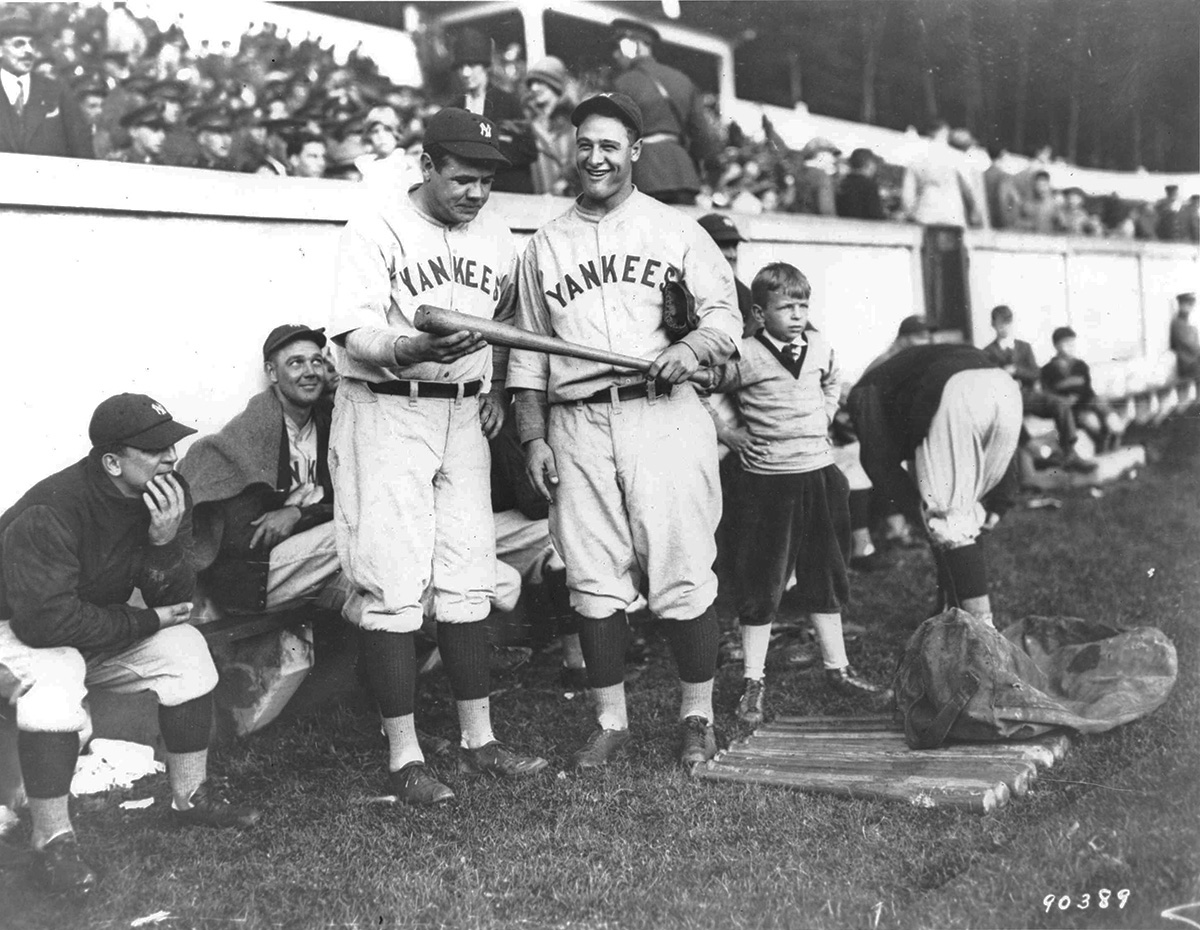
Minor leagues
Gehrig signed with the Yankees on April 30, 1923, and returned to the minor league Hartford Senators for parts of two seasons, 1923 and 1924. In 193 games, he batted .344 and hit 61 home runs. Except for his time in Hartford, Gehrig played his entire baseball career—sandlot, high school, college, and professional—with teams based in New York City. He joined the Yankees midway through the 1923 season, making his major-league debut as a pinch hitter on June 15, 1923.
Initially stuck behind first baseman Wally Pipp, Gehrig saw limited playing time. On June 2, 1925, Pipp sat out with a headache, and Gehrig replaced him, eventually playing every game until April 30, 1939. In 1925, Gehrig batted .295 with 20 home runs and 68 RBIs.
Career statistics and honours
Awards and honours
Records
| Accomplishment | Record | Refs |
|---|---|---|
| Most consecutive seasons with 120+ RBIs | 8 (1927–1934) | |
| Highest on-base percentage by a first baseman | .447 | |
| Highest slugging percentage by a first baseman | .632 | |
| Most extra base hits by a first baseman | 1,190 | |
| Single–season | ||
| Most runs batted-in by a first baseman | 184 (1931) | |
| Most runs scored by a first baseman | 167 (1936) | |
| Highest slugging percentage by a first baseman | .765 (1927) | |
| Extra-base hits by a first baseman | 117 (1927) | |
| Most total bases by a first baseman | 447 (1927) | |
| Single–game | ||
| Most home runs | 4 | |
Awards and honors
| Award/Honor | No. of times | Dates | Refs |
|---|---|---|---|
| American League All-Star | 7 | 1933–1939 | |
| American League MVP | 2 | 1927, 1936 | |
| Named starting first baseman on the Major League Baseball All-Century Team | — | 1999 | |
| Inducted into National Baseball Hall of Fame and Museum | — | 1939 | |
| World Series champion | 6 | 1927, 1928, 1932, 1936, 1937, 1938 |
Other accomplishments
| Accomplishment | Year | Ref |
|---|---|---|
| Triple Crown (.363 BA, 49 HR, 165 RBI) | 1934 | |
| Only player in history to collect 400 total bases in five seasons | 1927, 1930, 1931, 1934, 1936 | |
| With Stan Musial, one of two players to collect at least 500 doubles, 150 triples, and 450 home runs in a career | – | |
| One of only four players, with Babe Ruth, Stan Musial, and Ted Williams, to end their career with a minimum.330 batting average, 450 home runs, and 1,800 RBI | – | |
| With Albert Pujols, one of two players to hit 40 doubles and 40 home runs in a season three times | 1927, 1930, 1934 | |
| Scored game-winning run in eight World Series games | – | |
| First athlete ever to appear on a box of Wheaties | – | |
| First baseball player to have his uniform number retired. His July 4, 1939, farewell speech was voted by fans as the fifth-greatest moment in MLB history in 2002 | July 4, 1939 | |
| The Lou Gehrig Memorial Trophy was awarded to the most valuable player in the annual Hearst Sandlot Classic. | 1946 - 1965 | |
| A Lou Gehrig 25-cent postage stamp was issued by the U.S. Postal Service on the 50th anniversary of his retirement from baseball, depicting him both in profile and at bat (Scott number 2417) | 1989 | |
| On the 70th anniversary of his farewell address in Yankee Stadium, MLB dedicated a day of remembrance to him and to the awareness of ALS | July 4, 2009 |
Tables copied from the source article, totals included as the source gives them: Wikipedia: Lou Gehrig (CC BY-SA 4.0). Wide tables scroll sideways.
Frequently Asked Questions
Who is Lou Gehrig?
Lou Gehrig was a New York Yankees first baseman who spent 17 seasons in the majors, known for his power hitting and remarkable physical toughness. He is widely regarded as one of the most durable and consistent players in baseball history.
What is Lou Gehrig's most famous record?
Gehrig appeared in 2,130 consecutive games for the Yankees, a streak that held the MLB record for 56 years until Cal Ripken Jr. surpassed it in 1995. The run remains a benchmark for sheer physical endurance in professional sports.
What is Lou Gehrig's 'luckiest man' speech about?
After ALS forced his retirement, Gehrig gave an emotional farewell address at Yankee Stadium in 1939, calling himself 'the luckiest man on the face of the earth' for the chance to play beside his teammates. It is frequently cited as one of the most moving moments in all of sports.
How did Lou Gehrig die?
Gehrig was diagnosed with amyotrophic lateral sclerosis (ALS) in 1939, a degenerative motor-neuron disease that progressively robbed him of movement and speech. He died on June 2, 1941, at age 37, and the condition was later popularly renamed 'Lou Gehrig's disease' in his memory.
More in Baseball & Softball
Test yourself
Three questions drawn from this entry’s sources. Pick an answer to check it.
Answers checked against the source article
Sources
Compiled from Wikipedia and the sources listed below. Text from Wikipedia is available under CC BY-SA 4.0; this entry is adapted from it.
- Wikipedia: Lou Gehrig (CC BY-SA 4.0).
- Statistics, medals and awards: the tables of the source article.
Spotted an error? Know more?
Reader corrections go straight into our review queue. Suggest an edit · How this site is sourced